Recently, DeepSeek has proposed four criteria for the next-generation Super Agent: Continuity, Efficiency, Activity, Sustainability, which allows the intelligent body to call itself an AI colleague capable of doing the job.
In line with this idea, a joint team from the People's University of China and the University of Zhejiang has proposed CoworkOS, which integrates complex task collaboration, shared applications and durable working conditions into the same system.
The title of the paper is CoworkOS: Scaling Agent Coworkers for Real-world Automation.
The main page of the project:https://coworkos-ai.github.io/
Demo Gallery:
Link to the paper:https://github.com/RUC-NLPIR/CoworkOS/blob/main/CoworkOS_paper.pdf
Code address:https://github.com/RUC-NLPIR/CoworkOS
The following is a complete overview of how CoworkOS works and its associated products:
See the full presentation of CoworkOS
Beyond the concept of synchronous frequency, CoworkOS further explores a form of "super AI colleague".
Complexity of tasks: Smart entities must interact with multiple environments to complete complex office delivery tasks.
Time span: continuous work across days, sessions, and continuous progress after disruption.
CoworkOS is designed to enable AI colleagues to both handle complex tasks and continue to work for longer periods of time.
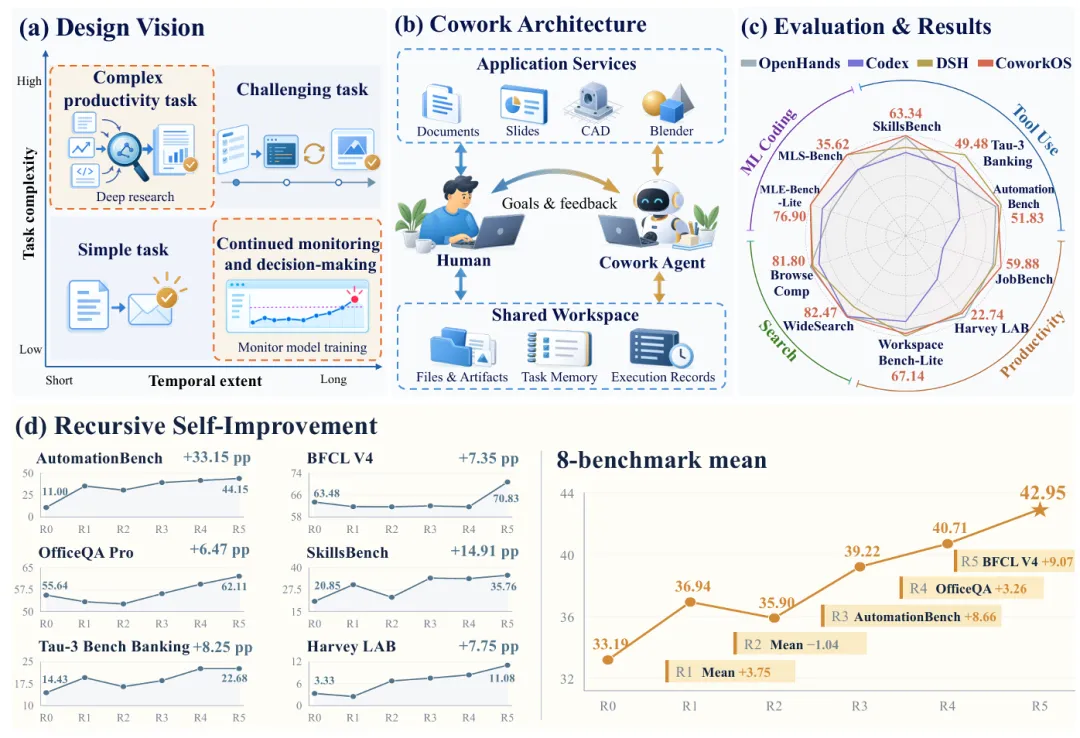
Figure 2: Overview of CoworkOS: The dual challenges of complex office delivery and continuous monitoring decision-making, three-tier collaborative architecture and experimental results.
Specifically, CoworkOS combines three core designs:
A three-tiered collaborative architecture, organized by the main intelligence with a strategy and acceptance, coordinating the scheduling and state of the management of the intelligence body, and sub-intelligence to perform sub-tasks;
Sharing an application environment that supports collaborative revisions in applications such as CAD, Blender, and others;
Permanent working status and asynchronous execution, supporting cross-session monitoring through work areas, memory and background tasks.
In 12 real-world benchmarks and 6 major delivery scenarios, as shown in Figure 2, the team compared CoworkOS to systems such as DeepSeek Harness, Codex, with end-to-end performance unmatched. In addition, the team used model-independent post-training exploration scenarios for RSI to allow CoworkOS to organize the five-cycle iteration of Qwen3.6-35B-A3B, increasing the average score on eight benchmarks from 33.19 to 42.95.
CoworkOS: Let's make AI work with us
A. Multi-Smart Collaboration: From Head Start to Joint Achievement
In the face of complex tasks, CoworkOS allows the main intelligence body to grasp the overall direction, allowing the sub-intelligence body to complete the specific task. A complex task usually involves multiple nodes: some can be carried out simultaneously, and some must be repeatedly checked and modified. As shown in Figure 3, CoworkOS is designed by the main intelligence body (main agent) to assign the specific task to different sub-intelligence bodies (main agent) and decide the next step based on the results returned.
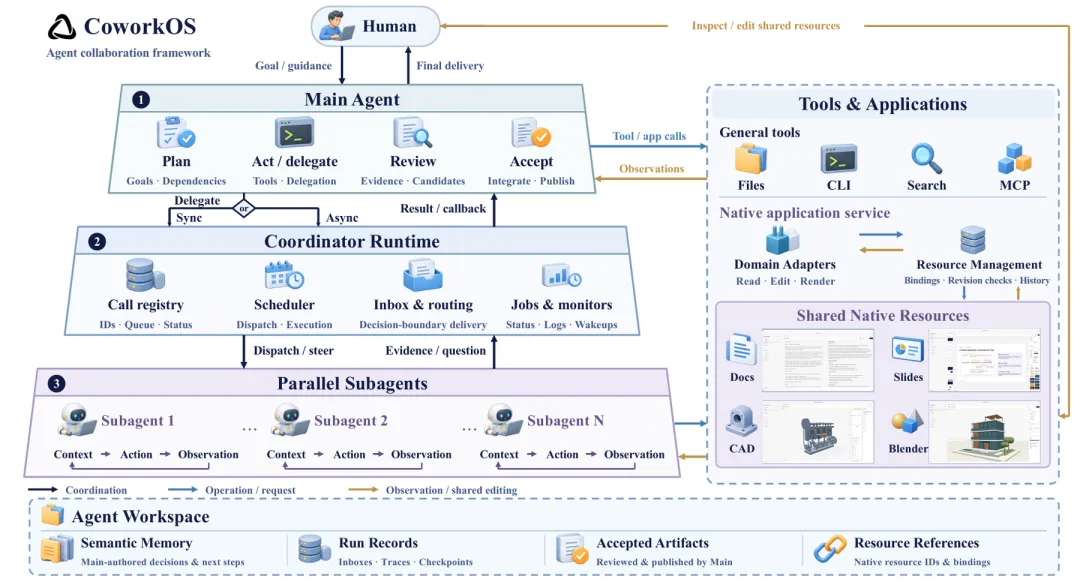
Figure 3: The three-tier collaboration architecture of CoworkOS.
Coordinator Runtime is set between the main and sub-intelligent entities, which is responsible for scheduling tasks, recording status and delivering results. Work that needs to be done immediately to get results can be waited in sync, while longer work can be performed asynchronously, allowing the main intelligence entities to continue to process other tasks. During the execution process, users can add guidance, and sub-intelligent entities that encounter uncertainties can also be asked with a temporary schedule. Watchdog checks whether the sub-intelligent entities will stagnate or be abnormal, and provides a report of problems for subsequent resumption or adjustment of task arrangements during the coordinated operation.
2. Shared application environment: allowing people and intelligent agents to collaborate around the same work
CoworkOS uses the work itself as a common basis for collaboration, allowing people to modify directly into the work of the next intelligent body. In the real office, users often don't just express their opinions through conversation, but also directly modify a document, adjust a page presentation. As shown in Figure 4, CoworkOS gives applications such as document, presentation, CAD, blender access to a shared environment, allowing people and the intelligent body to operate on the same work.
When multiple, multi-smart body co-editing, CoworkOS coordinates the modification through version verification with candidate review. If the smartphone reads the work, the user modifies the contents of the work, and the smartphone continues to write in the old version, it may cover the work of the user. Therefore, CoworkOS verifies the expected version at the time of writing; discovers that the version has changed, exposes the conflict, allows the smartphone to re-read and decide how to handle it. The modifications of the sub-smart body are kept in an independent candidate and re-integrated by the main smartphone after the review. This allows different participants to be separately prepared for changes while retaining the opportunity to check and adjust.
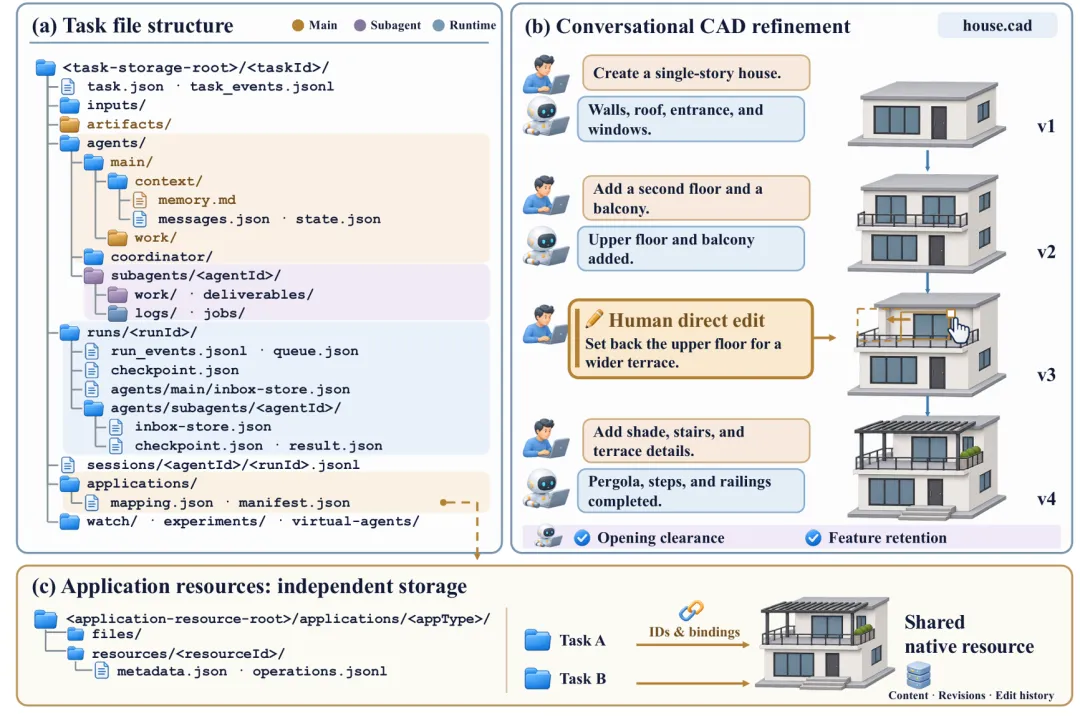
Figure 4: Shared application layer of CoworkOS: common tools and documents, CAD native applications, human and intelligent modification of the same resource.
Real-time operation demonstration of CoworkOS driven by Blender modeling
3. Persistent working status and asynchronous execution: Keep working across sessions moving forward
In order for the intelligent body to continue to take on the work, it needs to save not only the dialogue, but also the materials, decisions and execution progress. After a few days of a task, the intelligent body needs to know what has been done and what to process next. CoworkOS saves this information separately: the work area retains the materials and results, the semantic memory records key decisions and tasks, the execution process and indicators associated with the task desk. When switching sessions, the system first restores an accurate working state summary and then clicks on the raw materials and evidence.
For time-consuming execution and continuous monitoring, CoworkOS lets the task run in the background, recalling the intelligent body when it needs to be judged. Operations such as training, building, etc. can last a long time, the system will host them as the background tasks (Job), retain queryable status and logs for the intelligent body to continue to follow through sessions. For things that need to be continuously observed, the system recalls the main intelligent body by time or external events. After the monitoring conditions change, it can also decide whether to continue to execute, adjust the program, request user participation, or end the task.
Experiment Results: Testing the performance of real work on 12 benchmarks
The team first verified CoworkOS's ability to handle real work on four categories of tasks, 12 benchmarks. These tasks covered tool use, productivity, search and machine learning programming, and experimentally used GLM-5.3 as a base model to compare CoworkOS with OpenHands, Codex, DeepSeek Harness.
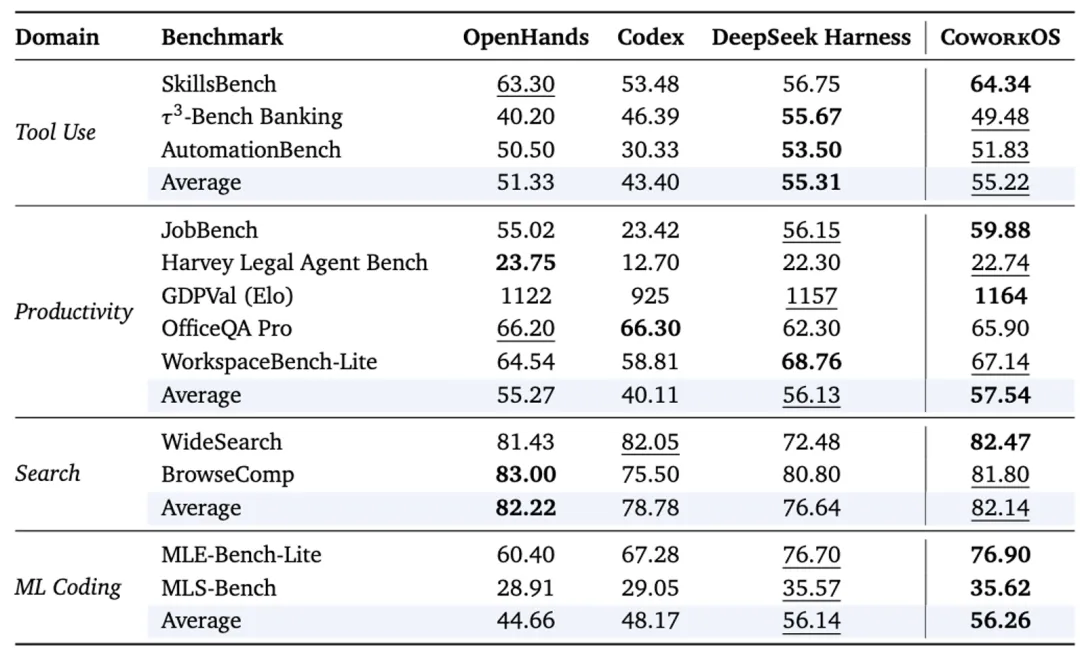
Table 1: The performance of CoworkOS and OpenHands, Codex, DeepSeek Harness on 12 benchmarks.
In the field of tool use, CoworkOS averages 55.22, close to 55.31 for DSH; in the field of search, CoworkOS is 82.14, slightly lower than OpenHands's 82.22. In the field of productivity and machine learning programming, CoworkOS averages 57.54 and 56.26, respectively, the highest of the four systems. These results show that CoworkOS can cover many types of work and remain more competitive on different tasks.
Specifically for each task, CoworkOS achieved the best results in six of them. These included SkillsBench, JobBench, GDPVal, WideSearch, and two machine learning programming benchmarks. DSH took the lead on Tau-3, AutomationBench and WorkspaceBench-Lite, OpenHands performed better on BrowseComp and Harvey, and Codex scored higher on OfficeQA Pro.
Experimental Results (2): Moving from benchmark scores to complete deliveries
In addition to the standardized evaluation, the team demonstrated the ability to deliver smart objects through six classes of 24 real-world tasks, covering websites, games, office presentations, interactive visualization, CAD and Blender scenarios. The team presented the final works of CoworkOS, Codex and DeepSeek Harness, enabling readers to directly compare visual presentations with functional completion.
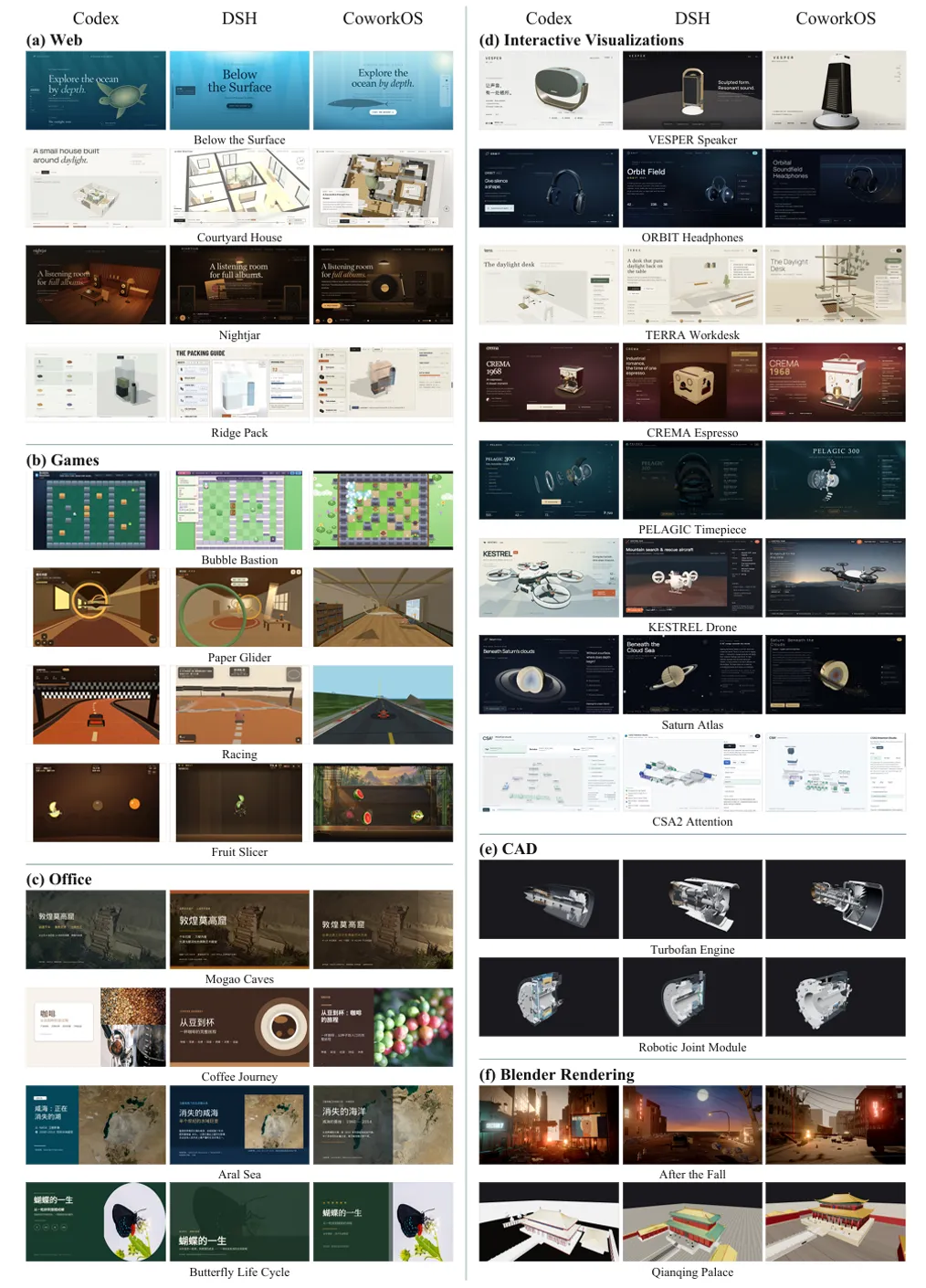
Figure 6:24 is a real-world task delivery contrast, covering sites, games, office presentations, interactive visualization, CAD and six scenarios for Blender.
Different types of work also make complex delivery requirements more intuitive. For example, After the Fall corresponds to the Blender scene of an end-of-life scrap style, Turbofan Engine corresponds to the CAD model of the fan engine, KESTREL presents the rescue drone in interactive visualization, and Courtyard House revolves around the contents of four co-op websites. These tasks involve different tasks: scenes need to organize spatial materials and lighting, models need to process component structures, interactive pages need to connect content, layout and operation.
After the Fall and the End of the World: Blender
Turbofan engine, turbofan fan engine (CAD)
KESTREL rescue drones (interaction visualization)
Courtyard House 4th Avenue (front page)
Experimental results: Research into recurrent self-improvement (RSI) and automated post-LLM training
Returning to self-improvement (RSI) focuses on whether AI can participate in improving AI and continuing to advance the next round of optimization based on feedback. Training becomes a representative AI assessment scenario as AI capabilities gradually evolve, after automation models. It involves multiple aspects such as evaluation, problem diagnosis, data construction and training. To continue to organize these aspects, the AI needs to complete specific operations, but also to maintain experimental progress, understand feedback, and adjust follow-up accordingly.
The team uses automated LLM post-training as a mission scenario to explore how CoworkOS supports multi-cycle improvement. The experiment was conducted by GLM-5.3 as a controller and data instructor, combining the harness of CoworkOS with a five-cycle iteration of Qwen 3.6-35B-A3B. The starting point R0 is a model that uses 1,345 seed trajectories to complete micro-modulation oversight; subsequently, data generation and training by CoworkOS, based on feedback adjustment follow-up schemes, five-cycle iteration scores, increased the average of eight models from 33.19 to 42.95, an increase of 9.76 points.
This process involves multiple adjustments made based on feedback. For example, the first round supplemented data with failure patterns such as tool selection, parameter filling and feedback processing; after the second round averages decreased, subsequent iterations further adjusted data coverage and training arrangements.
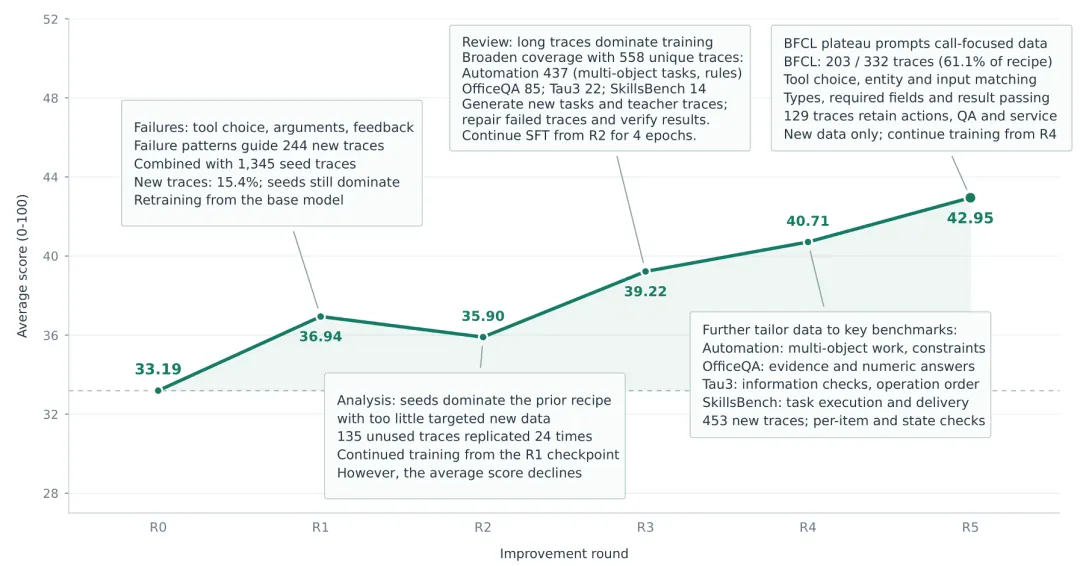
Figure 7: Large model automation post-training results showing: Average split changes in five rounds of post-training, as well as major adjustments made in each round based on feedback assessment.
Individual results show that the majority of capabilities have improved, but different tasks vary and vary. As shown below, seven of the final eight benchmarks exceed the starting point, six of which reached the highest scores between R0 and R5, containing the highest parallel situations. Automation increased from 11.00 to 44.15, SkillsBench increased from 20.85 to 35.76, and BFCL increased from 63.48 to 70.83. At the same time, the highest score for GDP Val appeared in the second round, and JobBench's final score remained below the starting point.
Figure 8: Eight benchmarks in five rounds of experiments show overall improvement with individual fluctuations in each roundabout.
Summary and Prospects
CoworkOS has implemented the vision of Super Agent as an operational system. Following the same set of standards, its subsequent evolution can be divided into six points:
Continuity: AI moves across devices, across sessions, and interacts seamlessly with contexts and works.
Efficiency: Moving towards larger, more subtle task organization and resource scheduling.
Activities: Towards a more reliable understanding of events and value judgments, reducing misjudgments and disruption.
Sustainability: Running towards abnormal self-healing and long-term unworthiness.
Ecological expansion: Further access to scientific computing and multi-modal tools, enabling people and intelligent entities to work together in more professional environments.
Self-improvement: exploring recursive self-improvement (RSI), enabling intelligent agents to diagnose problems based on evaluation results, adjust programs and validate effects, and extend multi-cycle improvement to broader research and engineering tasks.
Team of authors
CoworkOS was completed by a joint team of the Chinese People's University, the University of Pudong, Beijing University, the National University of Singapore, Shanghai Transportation University, and the University of Washington. Its core contributors include: Kim Ji-jeong, Dong-won, Pyeongchang, Wang, Shenzhen, Qingdao, Qingdao, Zhuyuan, Zhuyuan, Zhuyuan, Zhuyuan, Zhuyuan, Zhuyuan.
© THE