For the past four weeks, OpenAI's Codex users have been receiving a quota reset almost every day.
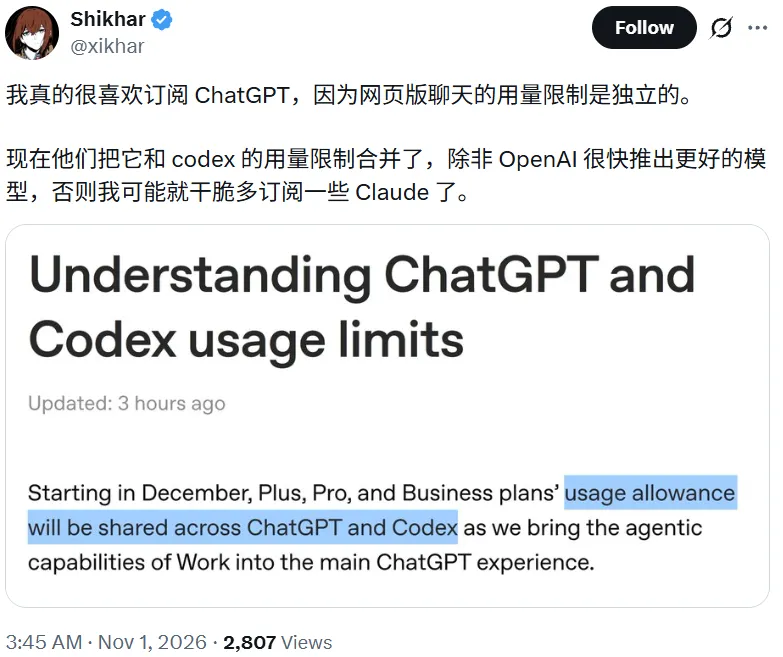
The OpenAI Help Center has just uploaded a document called "Understanding ChatGPT and Codex usage limits", where the first sentence changes: starting in December, the volume limits for the Plus, Pro and Business three-tier paid plans will be shared between ChatGPT and Codex. OpenAI's reasoning is that they are integrating the smart capabilities of ChatGPT Work into the ChatGPT experience.
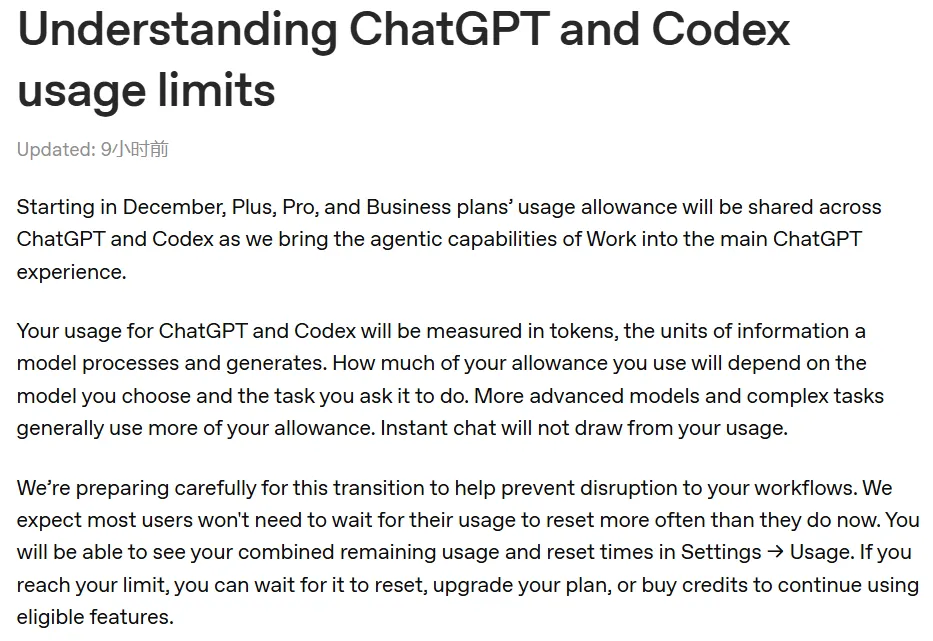
Previously subscribed to ChatGPT, web chat and code written in the Codex had different limits, without interfering with each other; after December, the two were pulled from the same pool.
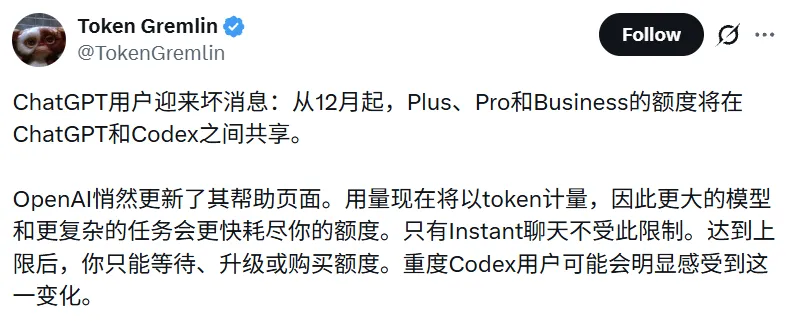
By token billing, only Instant is exempt.
According to the help documentation, users' usage in ChatGPT and Codex will be measured in tokens. Depending on the model chosen by the user and the tasks assigned to it, the more advanced the model, the more complex the task, and the more difficult the task.
OpenAI also reassures the document that it is preparing carefully for this transition and that it is expected that most users will not be overly affected and that the frequency of quantitative replacements will not be higher than now. After the merger, users can view the remaining total quantity and replacement time in "Set → Use".
At the end of the allowance, there are three options: pay-as-you-go, upgrade packages, or purchase credits to continue using qualifying features.
However, the document does not give a specific online date, nor does it disclose how many tokens each package can use.
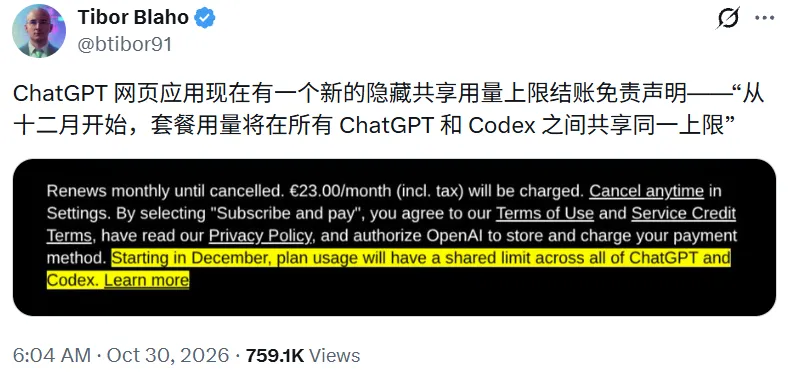
Tibor Blaho, who has been tracking OpenAI product dynamics for a long time, found a new tip on the checkout page of the ChatGPT web version: "From December, the volume of packages will share the same limit between all the features of ChatGPT and Codex".
The day before, Tibo (Thibault Sottiaux), the head of the Codex, responded to users saying that the team was working on this but had not started pushing.
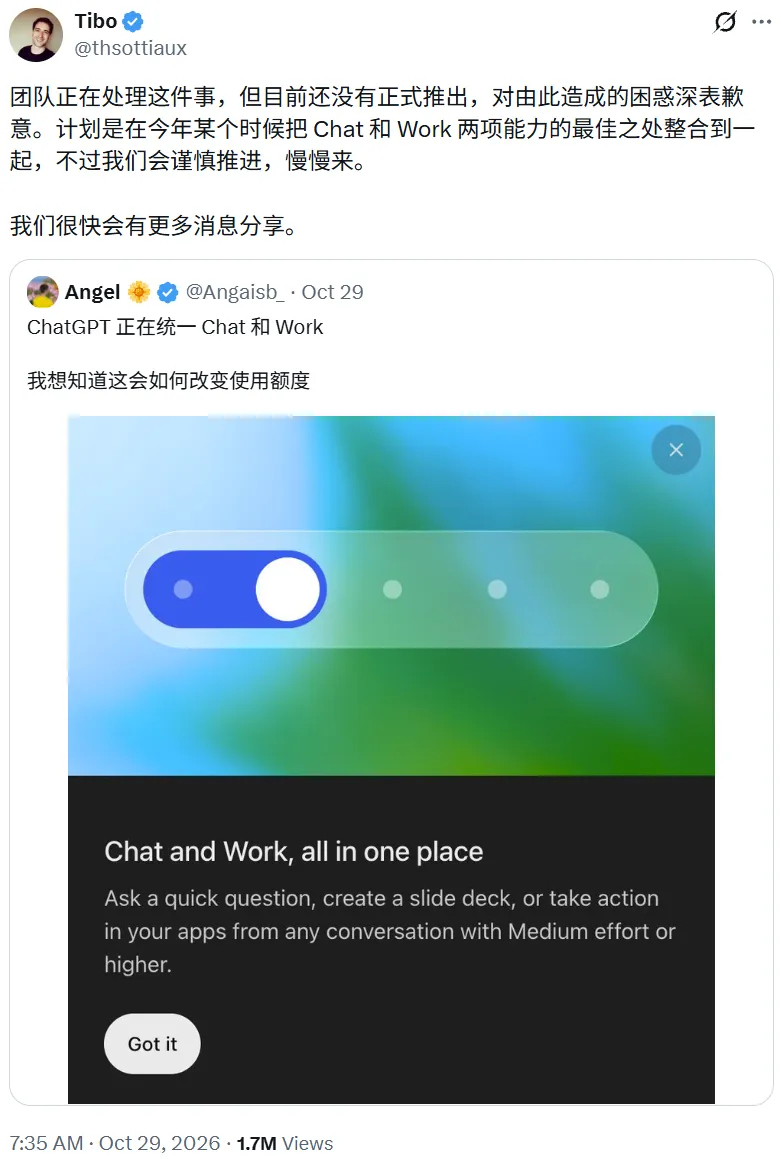
It is worth mentioning that according to OpenAI's previous description, Work and Codex share the same share. So this adjustment did not create a new pool by air, but incorporated ChatGPT's daily chats.
A device with multiple accounts may be locked
In addition to the quota merger, another rule was tightened at the same time.
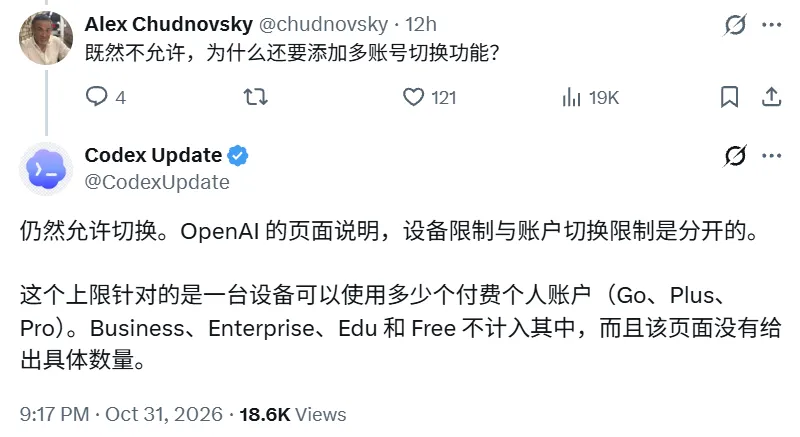
According to the Codex Update account, OpenAI has released a new help page on bank card and device restrictions. There is a limit on the number of paid accounts a device can use, covering Go, Plus and Pro 100/200/500 categories. Beyond the limit, users will see a "Device limit reached" prompt when logging in, or log in during use, even if payment has been successful. Withdrawing from another account will not release a number. Business, Enterprise, Edu and free accounts are not included in this limit.
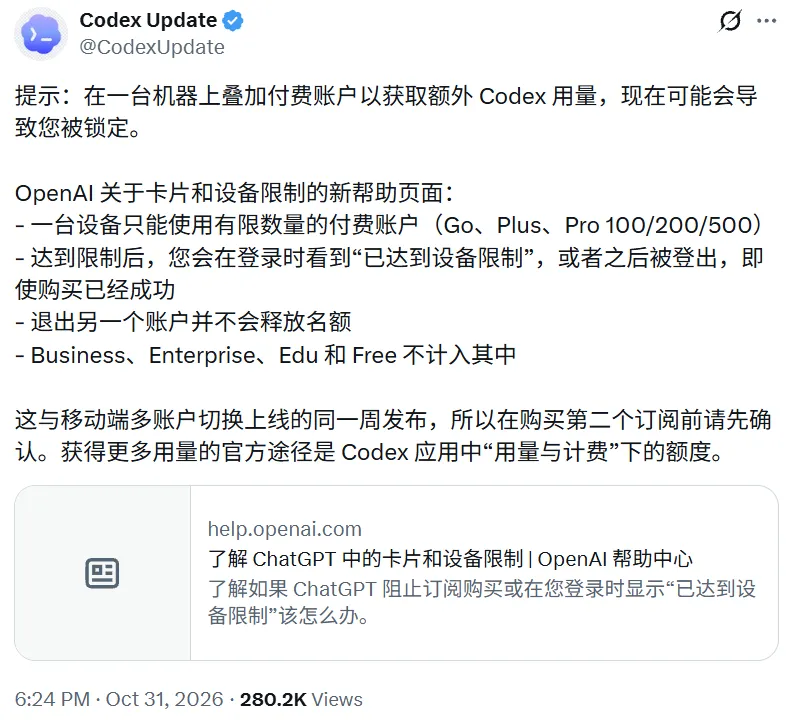
The timeline is subtle. The same week that the rule came into effect, Codex just launched the multi-account switching functionality on its mobile device. Many heavy users used to buy several subscription routines, and now this path is clearly blocked. The Codex Update also reminds us that the officially approved extension is to buy credits in the "use and bill" of the Codex app.
"Maybe I should buy more, Claude".
After the news spread, the community's response was not optimistic.
For many Plus users, the most attractive part of the ChatGPT subscription is that there is an independent, almost unlimited amount of web chat. X user xikhar, frankly speaking, likes ChatGPT subscriptions because of the ChatGPT subscription frequency.
Some have also noticed a detail: just a few days ago, OpenAI had just doubled the quota for Pro and Business Premium, and Plus was not among them.
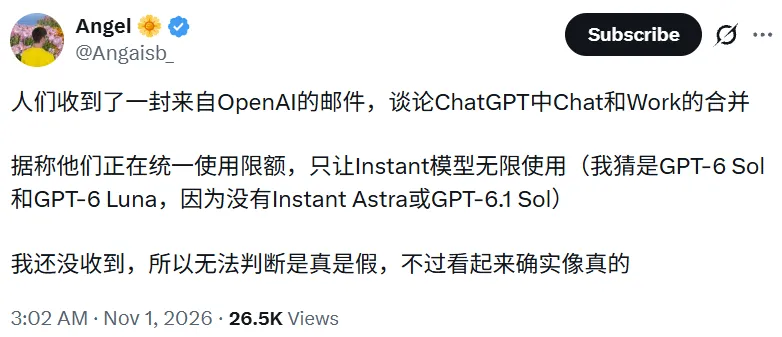
As for which models belong to the Unlimited Instant, there is currently only speculation. Angaisb_ speculates that only GPT-6 Sol and GPT-6 Luna models may remain unlimited.
The user also counts a check: Only Instant chat is unrestricted, only upgrades or credits can be purchased if the limit is reached, and heavy Codex users feel the pressure first.
28 days of Tibo
It's been a long time since I've been to a token company.
To understand how the community is feeling, we need to look back at what has happened in the past four weeks in the Codex community.
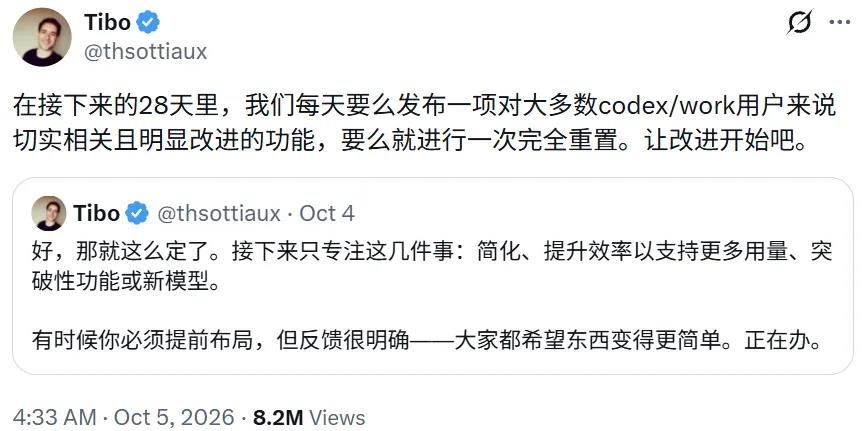
On October 4, Tibo posted a flag on X: for the next 28 days, each day, either a significantly useful improvement was released to most Codex/Work users, or a complete quota reset. The challenge lasted from October 5 to November 1, with a series of websites that tracked his daily dynamics in the community, some even voting, leading users to speculate that it was either an "Improvement Day" or a "Reset Day".
The first day, GPT-6 Astra and GPT-6.1 Sol improved the default speed in subscription products by about 50%; the seventh day, GPT-6.1 Sol's default context expanded from 272k to 500k; the twelfth and sixteenth days continuously optimized caching and request routing, making the same amount more active; the twenty-second day, GPT-6.1 returned to Terra, where Tibo said it was significantly better at writing, personalizing and understanding the details of requests, and consuming only 6.1 half of the total; the twenty-fourth day, users could text their friends as much as they did with the Sol Dot, leaving a voice message.
According to community tracking site statistics, there have been more than a dozen total resets and banked resets over the course of the cycle. Tibo's announcement is also increasingly random: on the 10th day, he says, "Rumors about the loss of my reset button have been greatly exaggerated"; and on the 23rd day, he announces the high-profile iCloud plugin, followed by the phrase, "Funny, it's reset today".
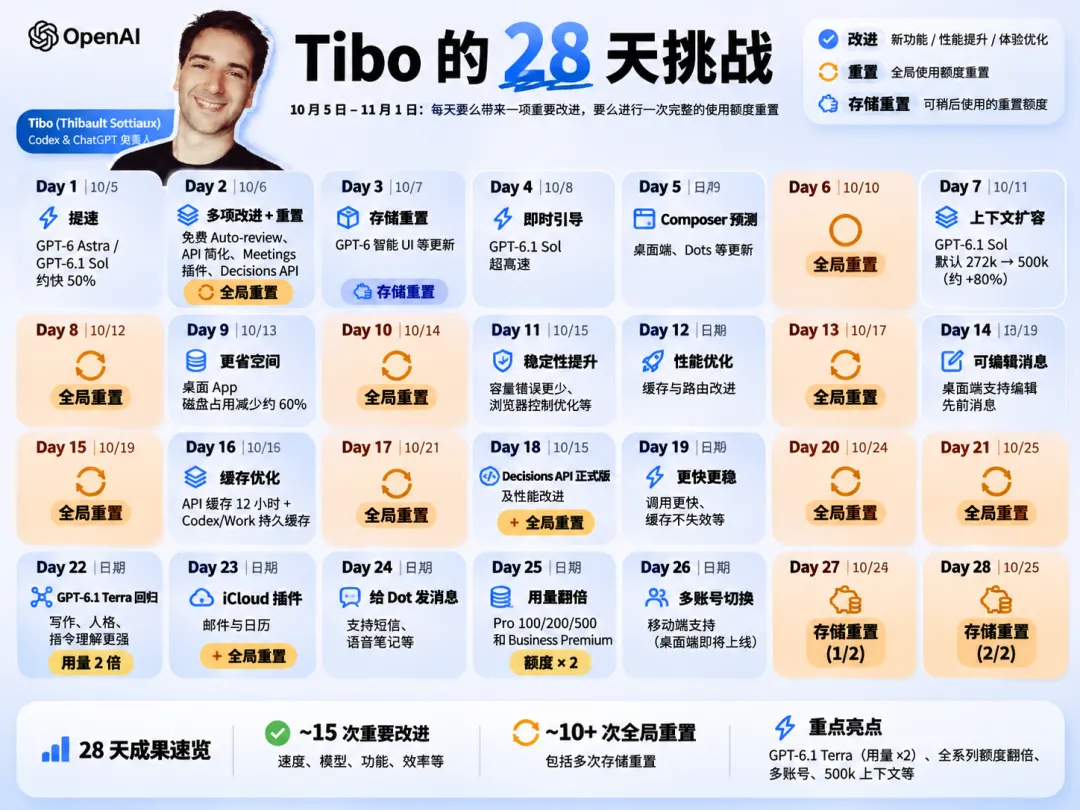
Image created by ChatGPT
Not everyone buys the bill. There are paid users complaining, and the whole setup sounds great, but it will clear the user's remaining quota and restart the 7-day schedule, disrupting the rhythm for those who plan the week's quota carefully.
On the 25th day, Tibo announced that the total allowance for the Pro 100/200/500 and Business Premium will be doubled immediately, and said that after hearing feedback from users, it would not reduce the allowance for the Pro 200 anymore.
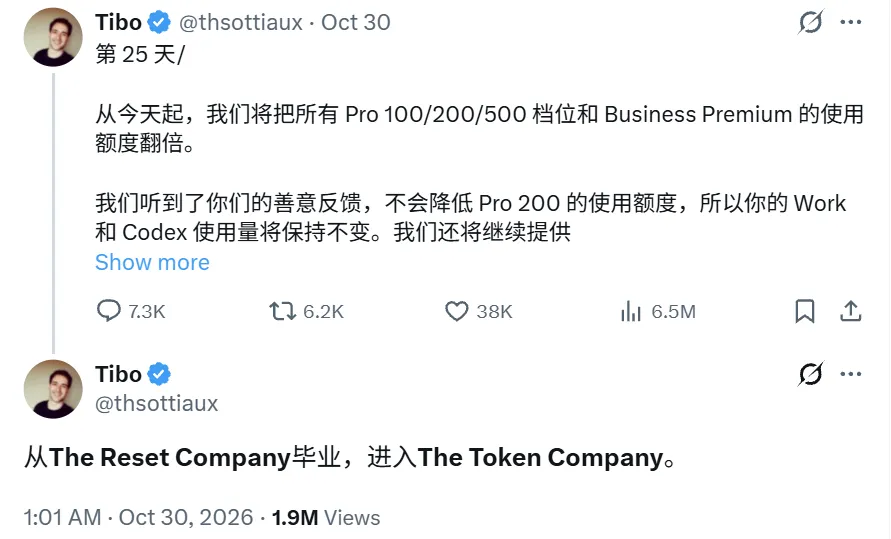
The background here is that OpenAI has previously announced that from October 30th, the Pro 200 quota in Work and Codex will be reduced from 20 to 10 times that of Plus, and Machine Heart has previously reported that this round of adjustments has sparked controversy. See OpenAI will reopen the $200 package, but Tibo was scolded.
On the 26th, multiple mobile accounts switched on, Tibo announced the next two days were banked resets; on the 27th, he issued "Banked 1/2".
Now, in retrospect, the joke "The Token Company" is almost a prediction of a quota merger.
"Unlimited" was supposed to be a subsidy.
When you put these two things together, it's not hard to understand what OpenAI is all about.
In terms of the number of message items, the cost of each question is essentially hidden in front of the user. Asking a question about the weather and allowing advanced models to reason for half an hour, in quantities that may be treated equally, the cost difference is digested by OpenAI itself. After being converted to token computation, subscriptions are more like a prepaid amount of a packed API, with how many deductions, extra part with credits complemented, and the computational cost is transferred to the user's perception at a specified code mark.
This was the result of ongoing computational pressure. Demand surged after the release of the GPT-6 Astra in September, and OpenAI once suspended a new subscription for the $200 Pro; when it reopened, Tibo confessed that the new program cost only half the API to spend on the old version.
For lightweight users, the impact may be limited, and instant can still be asked at any time. But for those who use advanced models to discuss issues on web pages during the day, and heavy users who run long tasks in the Codex at night, chats and programming have to be done in the same pool.

© THE