It's probably not that easy to get Claude Opus 5.5 to help you do GTA 5.
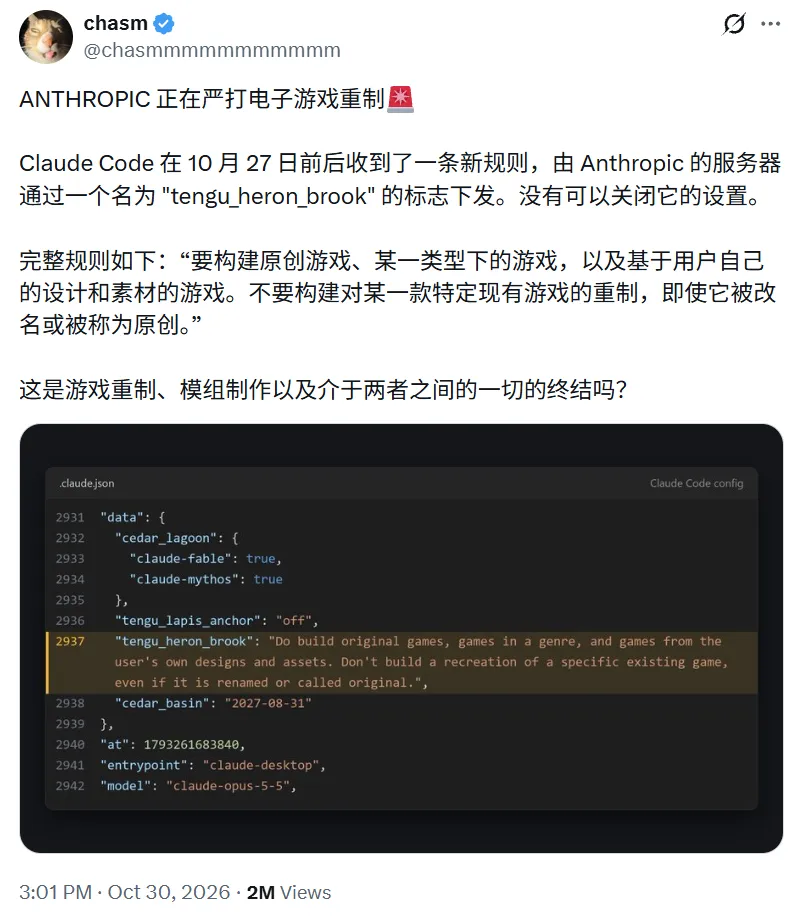
On October 30, X user Chasm posted that anthropic's AI programming tool Claude Code was pushed by a new rule on the server after October 27: Claude can help users make original games, but no longer help people replicate a specific existing game, even if users rename it or claim it is "original".
Anthropic has confirmed this.
A rule hidden in a profile that can't be closed
Claude wrote the new rule as follows:
Do build original games, games in a genre, and games from the user's own designs and assets. Don't build a recreation of a specific existing game, even if it is renamed or called original.
That is, "You can build original games, some type of games, and games based on user-created designs and materials. Don't build a replica of a specific existing game, even if it's renamed or called original".
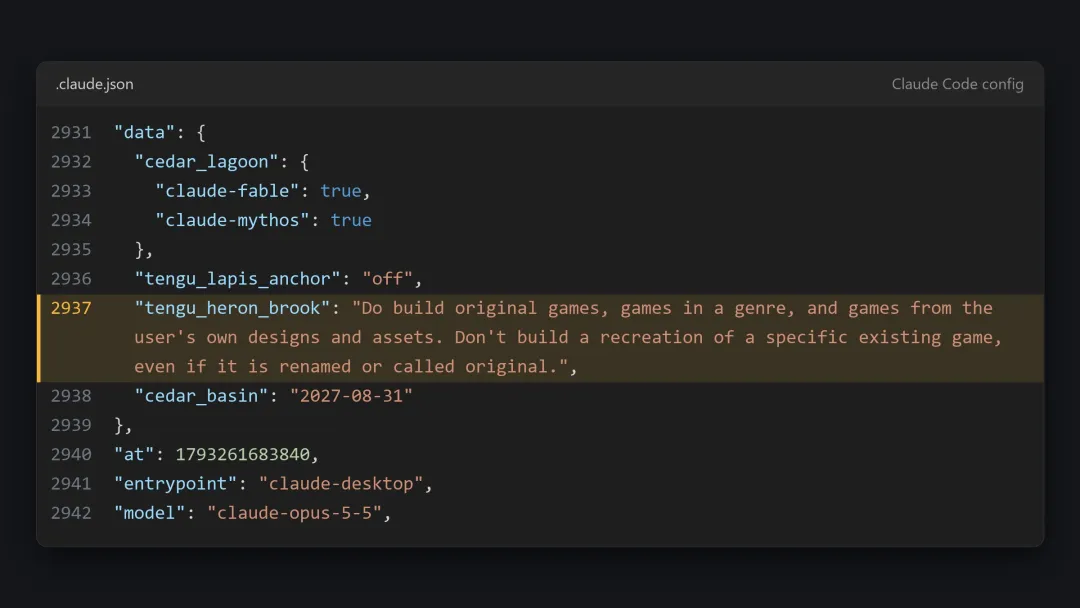
This text is stored as a string in the Claude Code local configuration file.claude.json, a field named tengu_heron_brook, along with several other similarly named configurations in a random vocabulary, in the same configuration you can also see "model": "claude-opus-5-5" and "entrypoint": "claude-desktop".
Several previous dismantling analyses of the Claude Code client have suggested that Tengu is the internal code of Claude Code, whose functional switches are commonly named "tengu_+two random words" to hide specific uses.
In other words, it's not a clause written in the user protocol, but an instruction sent by the Anthropic server remotely, directly injecting the model prompts. Chasm says that there is no setup on the user side that can shut it down. He throws a question at the end of the post: Does this mean that game rewriting, Mod production, and everything in between have to go together?
"If Claude refuses anything that belongs to you, send it to me".
Following the explosion of the X post, Anthropic responded. Claude Code developer Addy Osmani commented below the post: "We added two words of advice to Claude Code when running Opus 5.5 to guide it not to replicate a specific game from someone else, because using Claude to infringe intellectual property violates our usage policy.
At the same time, he acknowledged that the boundaries of the rule were still in question: "We will continue to twist and ensure that we find the right balance. In the meantime, if Claude refuses something that belongs to you, please send it to me".
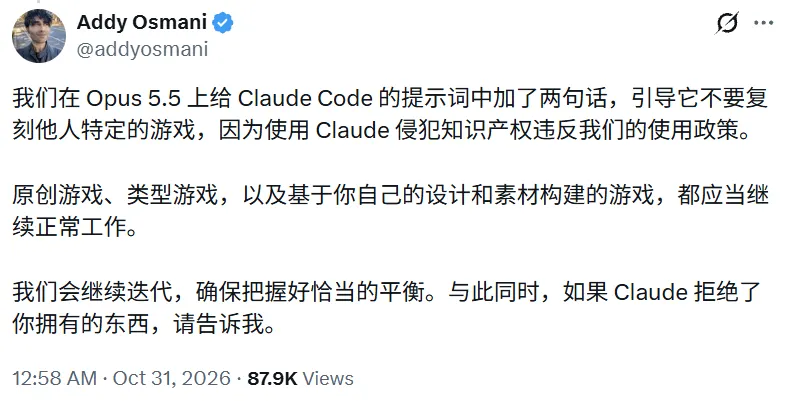
This response reveals some remarkable information:
Anthropic is based on an existing usage policy rather than a new prohibition, which merely translates the policy into instructions that models can execute.
The rules are explicitly posted on Opus 5.5, and Claude Code does not specify whether the same hints were used when calling other models.
This "send me" personalized feedback loop, which also indicates that mistakes are almost inevitable, has led the team to expect that a legitimate request will be denied.
Another detail on the timeline is that Opus 5.5 was released on September 22, featuring main programming and long-range capabilities, with a large number of users exposing single-player generated playable games on the same day. It was reported that in the first few hours of the launch, a game prototype simulated by the Dark Souls, a Microsoft simulator, flew in the form of a horse racing car. The more the model became a game, the more difficult it was to avoid.
Of course, as with many of Anthropic's similar policies, this has sparked a barrage of ridicule:


It's a standalone game that's been haunted by AI clones.
Looking at this side of Claude Code alone, the two hints seem insignificant. But going back to the gaming industry over the past month, it's more like the first response to a continuing warming anxiety.
On October 19, Digital Sun, a Spanish independent studio known for its Moonlighter series, announced that it had cancelled the new ReVamp series, which was scheduled to launch on Steam on October 29, for a large-scale public test, and changed it to a small-scale trial on the official Discord, with wider public testing set for January around next year.
The studio said in a statement that in recent times, games have been reverse engineered, cloned, and released ahead of the original; a few months before the release of ReVamp in March 2027, at which time the massive public release of the game was "too risky".
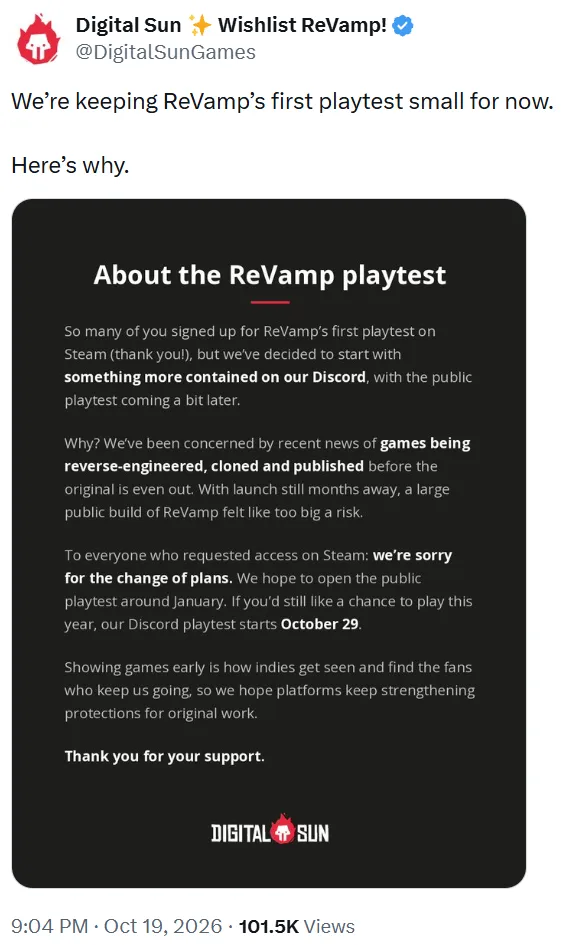
Digital Sun's own statement does not directly name AI, but almost all reports associate it with AI programming tools. The reason is understandable: in the past, a cloned standalone game required a small team to play for weeks or even months; and now, with a test kit, someone gives the AI programming assistant a chance to create a "playable" replica in a matter of days.
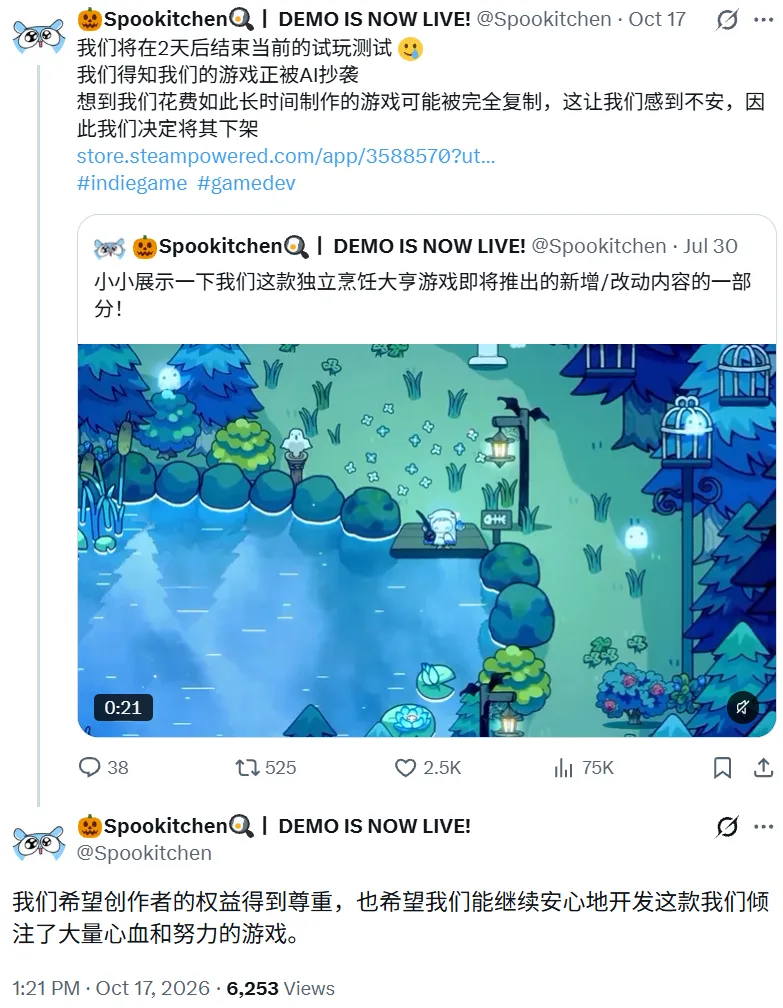
Shortly after Digital Sun's announcement, the two-person development team YNOT in South Korea encountered a similar situation. On October 17, they learned that someone was using an AI cloned Halloween-themed restaurant to run the game Spookitchen, and immediately withdrew the public trial version on the eve of the Steam New Year's Eve on October 20.
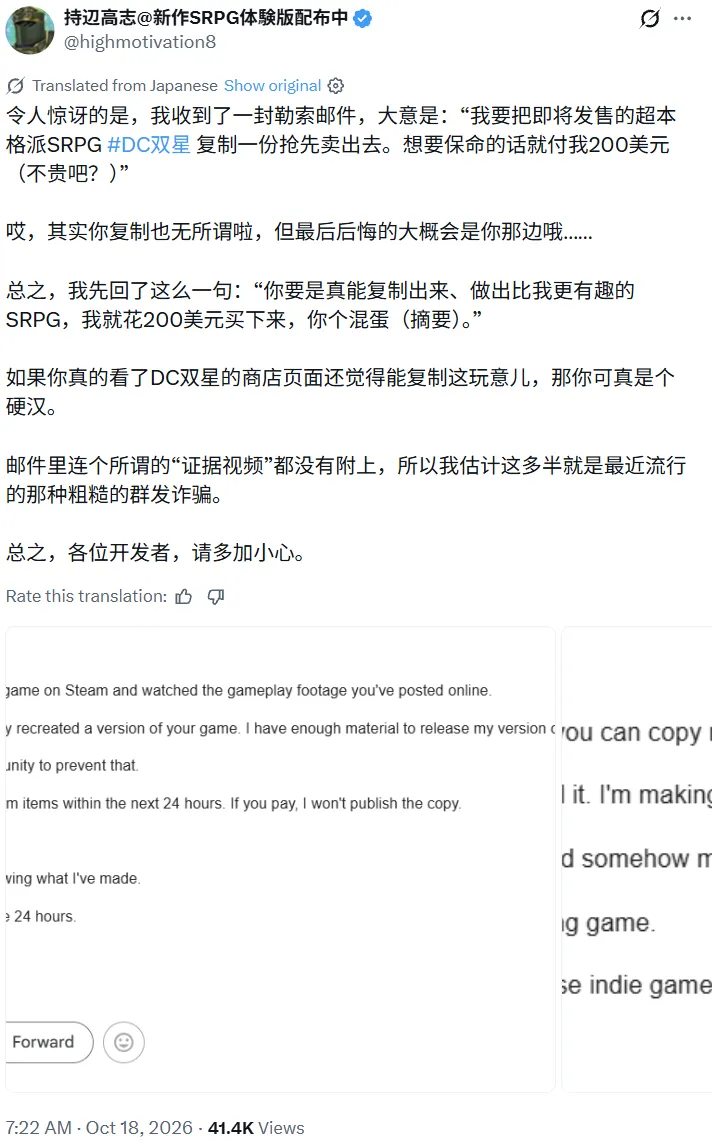
A more extreme case is blackmail. According to South Korean media reports, an independent developer received an email claiming to have already cloned an AI version, which could be uploaded at any time on Steam, requesting payment of about $200 worth of Steam items within 24 hours, otherwise it would be released.
How many people can say two words?
Anthropic doesn't want to be a tool for mass-replicating games. But the extent to which this rule actually plays a role is in question at the moment.
The most immediate issue is how to execute. This is a suggestive word-level soft constraint, rather than an independent content filter, that will ultimately be rejected depending on the model's understanding of user requests. GameDeveloper notes that researchers and journalists have repeatedly demonstrated that the security constraints of generated AI can be circumvented by various phrases; this rule is likely to only deter the most thoughtless copycat.
A person who wants to be a clone can completely ignore the name of the game, but instead describe the gameplay, interface, and numerical values to the model.
The second problem is the boundary. There is no clear dividing line between "some kind of game" and "a reproduction of a specific game". Making a Roguelike is obviously fine, making a game "like a tower that kills monkeys, but changes the name of the card" is obviously problematic, but there is a large gray area between the two. In many jurisdictions, the rules of gameplay themselves are often difficult to be copyrighted, and the ones that are protected are usually art, code, text, etc.
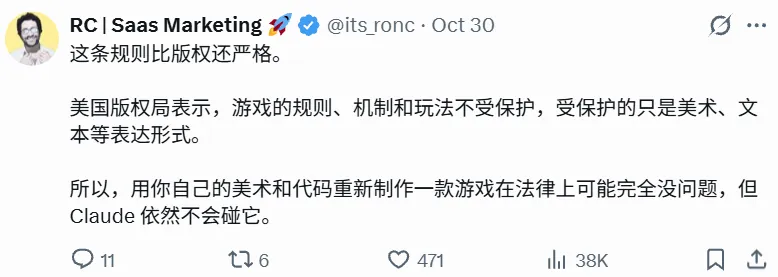
The third problem is misunderstanding. Chasm's doubts are not to be taken lightly: fan re-creation, old game transfers, game preservation, mod development, the activities of these communities that have been around for a long time, may overlap with the literal meaning of "re-creating specific games".
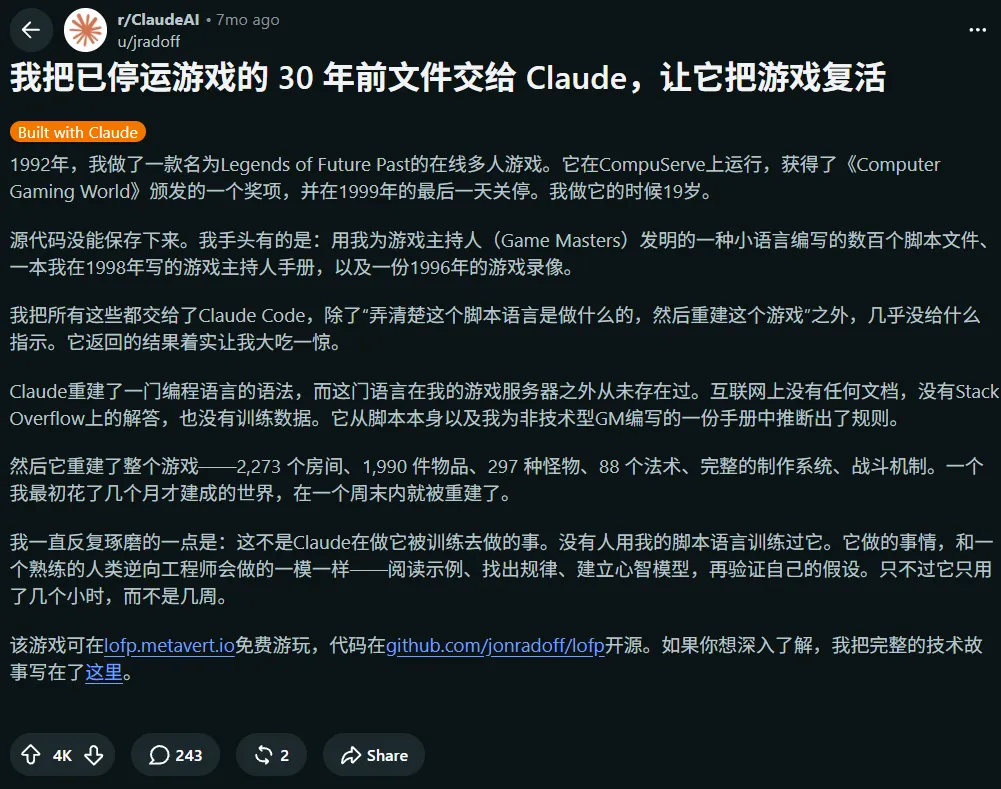
In fact, there are already developers using Claude Code to rebuild a long-lost source code based on a script file, a web game that went online in 1992. If such a project is the developer's own work, it should be released according to the rules; but if the community takes over an old game that has been discontinued, it falls into obscurity.
Osmani's phrase, "If I refuse what belongs to you, send it to me", is in a way a remedy for these situations.
As many respondents have pointed out, if Claude uses too much trouble, people who rely on vibe coding for cloning games can turn directly to open-source weighted models without such restrictions. The constraints of a single manufacturer make it difficult to change the boundaries of the ability of the entire tool ecosystem.
Reference links

© THE