It's the first time in the history of the world.
Last Friday, three things happened.
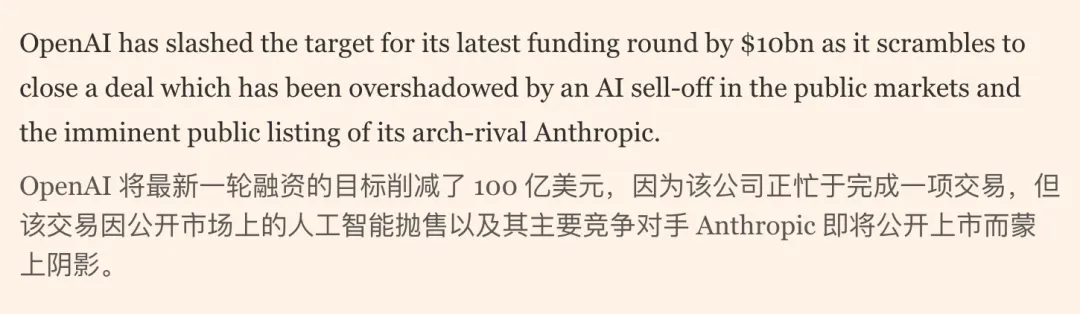
According to FT, OpenAI has lowered its target for this round of financing from $30 billion to around $20 billion, reducing its valuation from the original $14 trillion to $125 trillion.
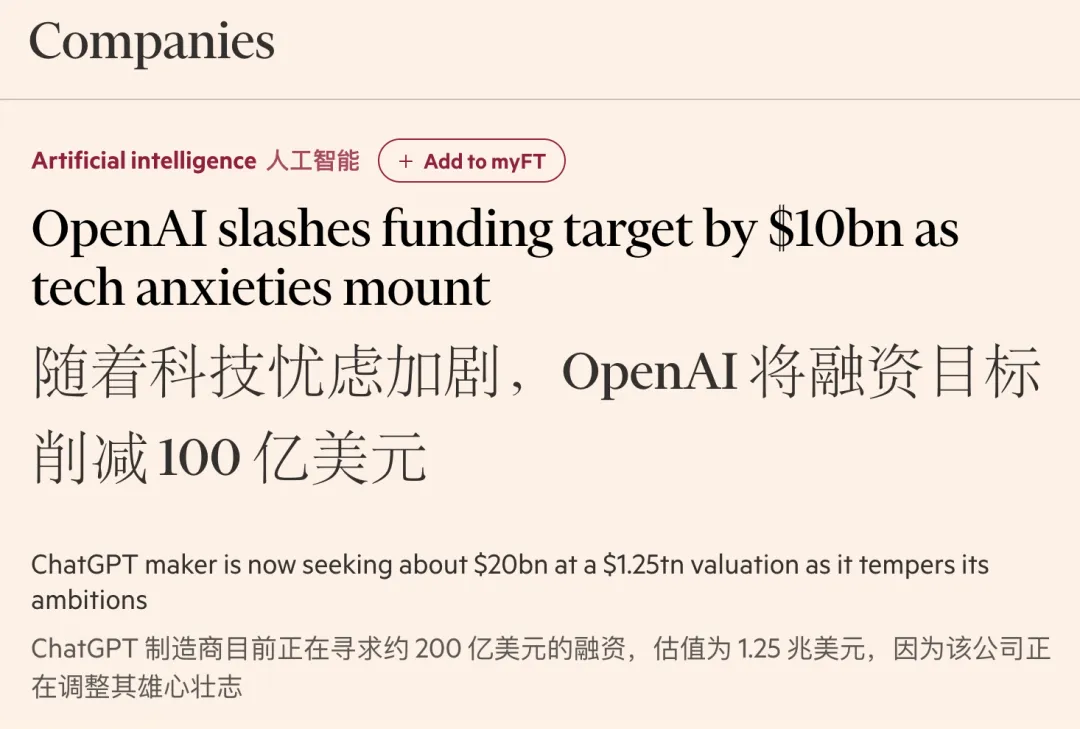
According to the Wall Street Journal, as of Friday, the first batch of subscriptions was only about $11 billion.
On the same day, the FT reported that Blackstone told investors that Anthropic might not get an investment grade credit rating once it goes public, and would be more likely to fall into the BB category.
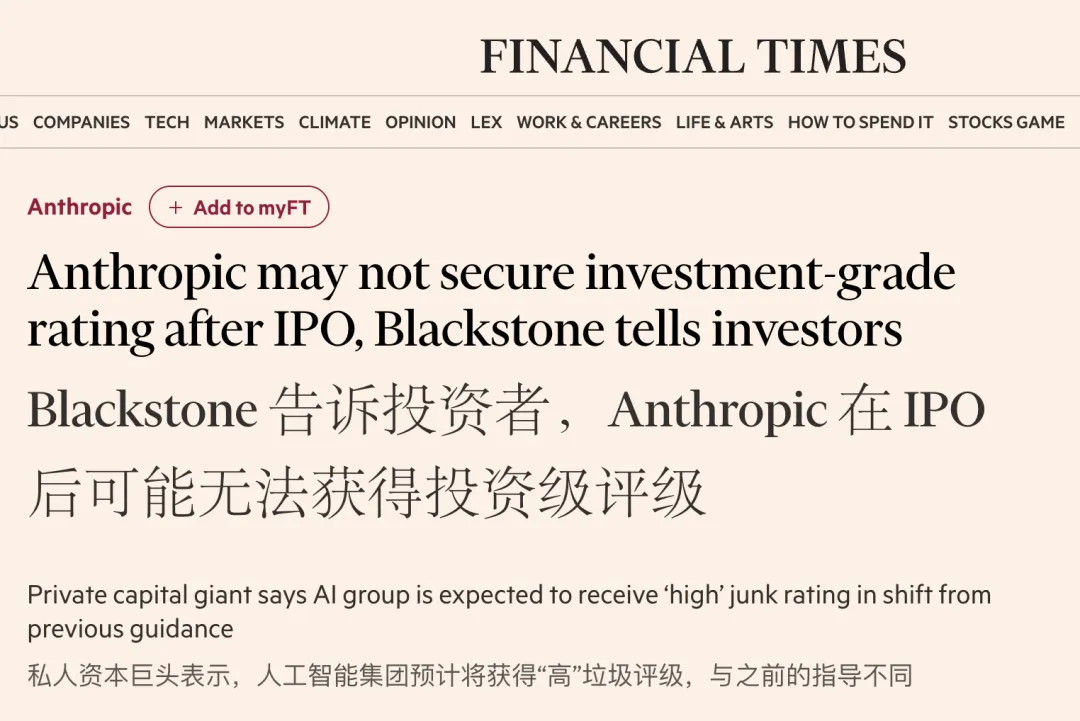
It's important to remember that Blackstone is the lead investor in Anthropic, a $63 billion chip financing company.
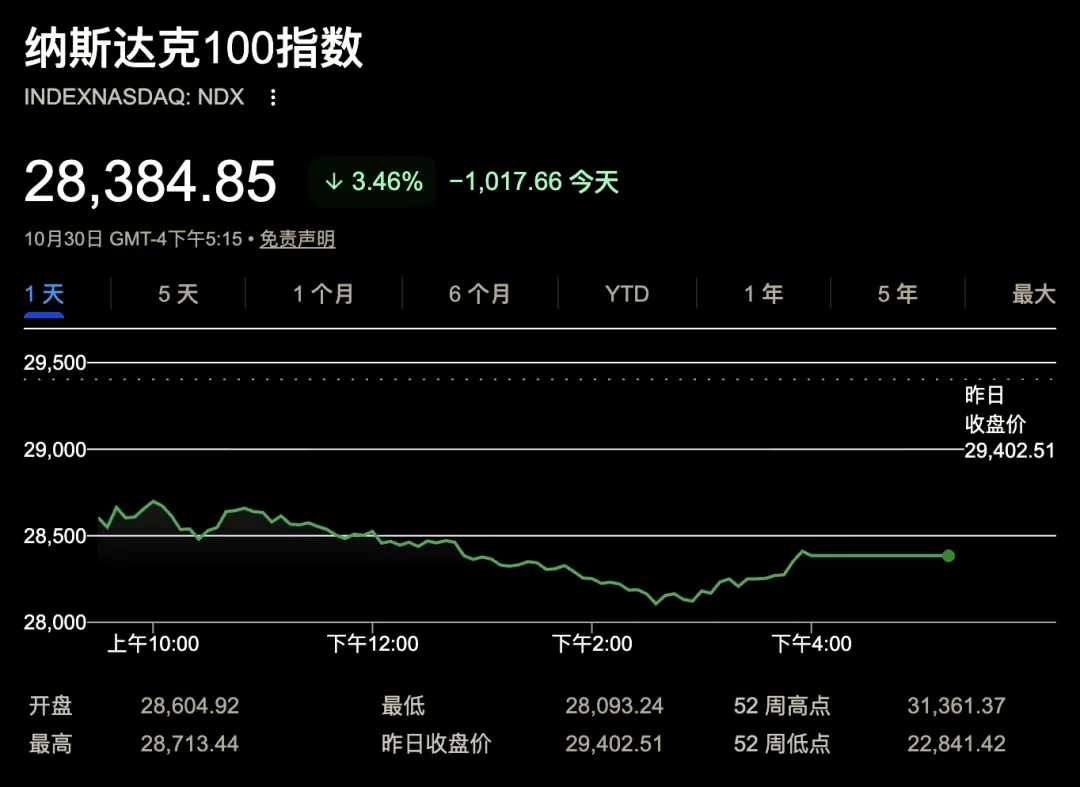
In addition, after the announcement of the profits of Intel and Amazon, the share price fell, and the NASDAQ 100 index fell by 3.5% on the same day.
After that, many interpretations appeared on the Internet, the most representative of which are these.
- OpenAI's financing failed and its valuation declined.
- Anthropic was sold by its own investors, rated as junk, and was at high risk of default.
- Anthropic's $80 billion plan is entirely borrowed, and after doubling interest rates, the financial model will collapse.
- The bad news of the first-class market has spread to the second-class market, and even the tech giants are out of money.
- All of this is the same as the Internet bubble of 2000.
These statements are based on some facts, but the majority of the conclusions are not supported by the FT's original text, the company's financial statements and Anthropic's publications.
The following are some of the most important changes.
One, the real change this week.Q1 What is the most important change in these matters?The demand for AI companies is so high that it is difficult to meet the demands of venture capitalists and they are beginning to borrow heavily.
Anthropic's $63 billion project, known as the Arctic Star Project, is used to lease 1.5 GW of chip computing from Google in the form of a loan.
Investors who invest in stocks see how big a company can be in the future, and those who lend money to a company see if the company can pay it back on time.
So, for the first time ever, credit ratings have become so important for AI companies.
Q2 How did Anthropic borrow the $63 billion?It is largely dependent on the credibility of suppliers.
The FT reported that over $420 billion of priority loans were guaranteed by Borrowing.
The chips, developed jointly by Botnet and Google, have an A-rating, which is slightly higher than that of Anthropic.
The remaining $18 billion in subprime loans will be paid off by Anthropic's own rent.
In other words, the companies that sell the chips are guaranteeing loans to the companies that buy the chips.
FT also mentioned that if it doesn't get an investment grade rating, Anthropic may continue to rely on credible suppliers to lend it money.
A similar approach was used in the 2000 telecom bubble.
These equipment companies borrowed money from the operators to buy their own equipment, and later the operators went bankrupt and the bad money went back to the equipment company.
Anthropic is in much better shape than the year's operators, according to the media's filing of the IPO, earning $1.63 billion in the first half of this year and operating cash flow is positive.
However, this would distribute the risks of AI companies to their suppliers.
Second, anthropic's rating issuesQ3 Is Anthropic already rated as junk?No, not at all.
The three major rating agencies, Fitch, Moody's and Semp, have not yet given an official rating to Anthropic.
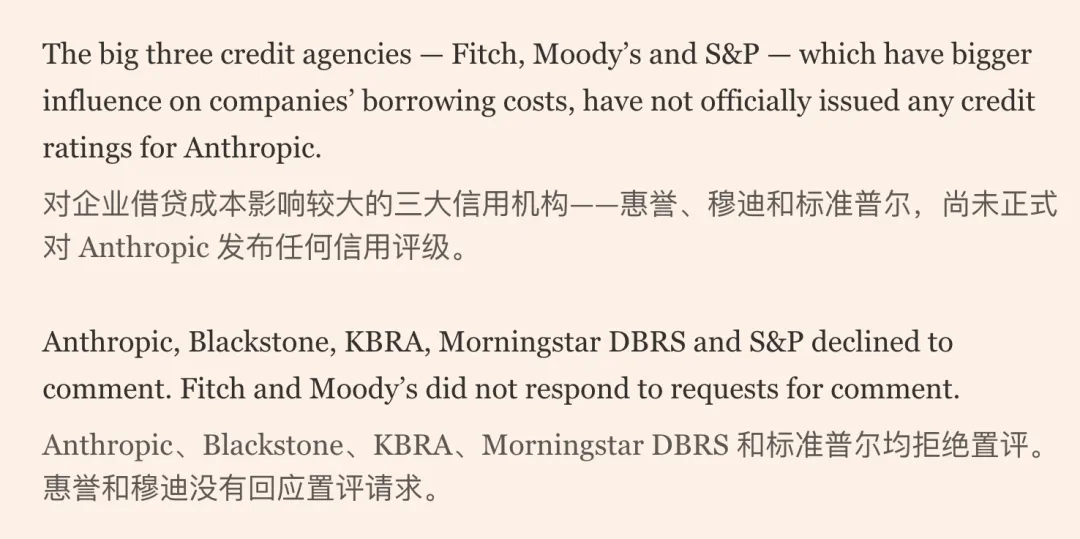
The ratings that have been released come from two smaller agencies that rated the $18 billion subprime lending in the Arctic Star program, not Anthropic itself.
Kroll gives BB+, DBRS gives BB.
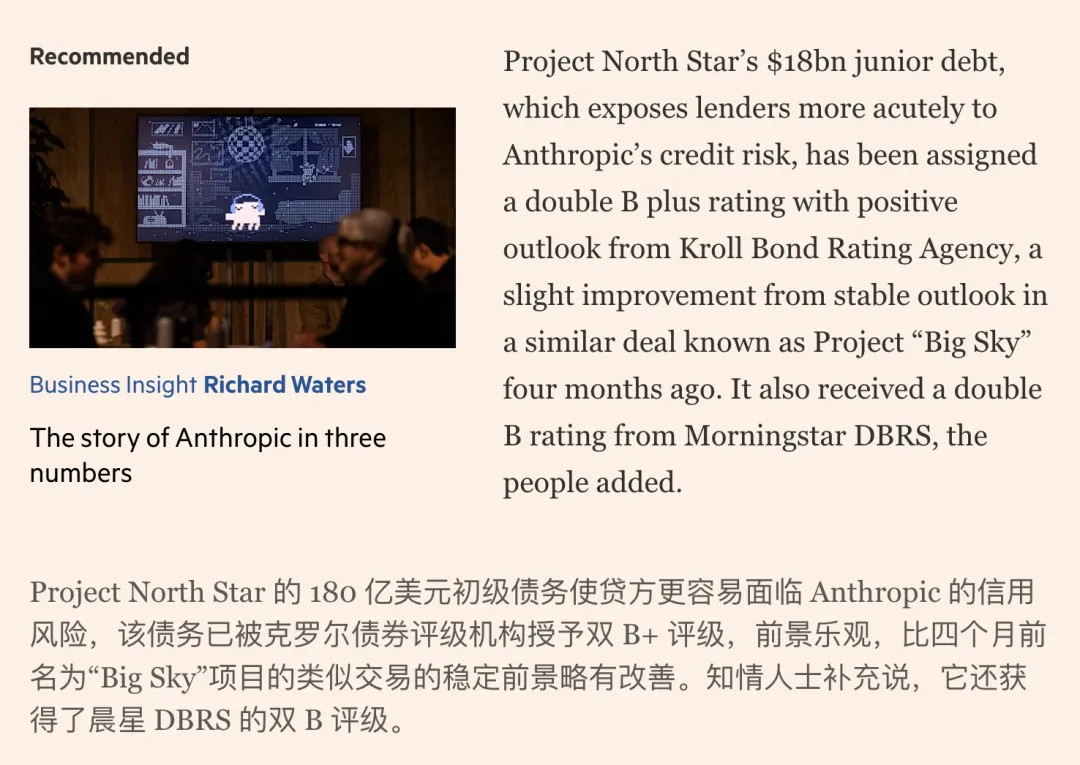
Four months ago, Kroll's rating outlook for a similar transaction - that is, its judgement on future ratings - was "stable", this time up to "positive".
The actual change is that Blackstone had previously expected Anthropic to get an investment grade rating by the end of the year, but now believes it may not get it in the short term after it goes public.
The timing is later than expected, and the rating itself has not changed.
Q4 Is Blackstone behind the knife?No, he didn't.
As previously mentioned, in this transaction, Blackstone is the debtor of Anthropic, whose subsidiary fund purchased a $9 billion subprime loan.
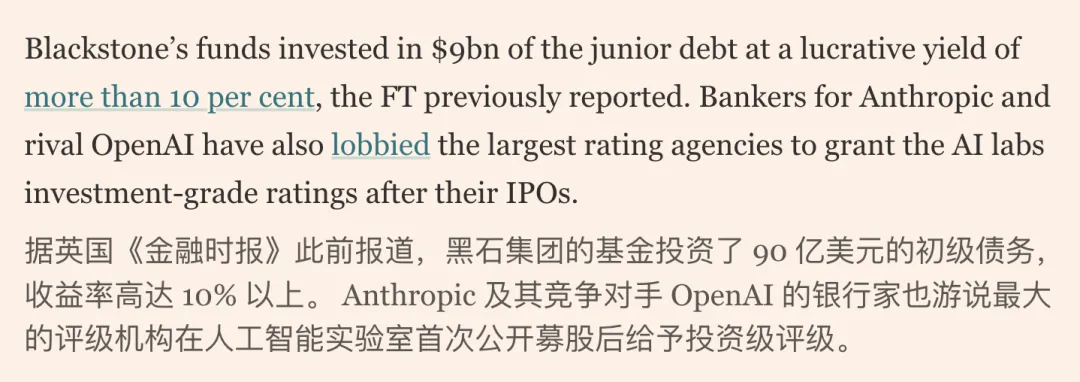
With an increase in the ratings of Anthropic, these loans will be appreciated, and Blackstone is one of the beneficiaries.
The Anthropic bubble is getting bigger, at least when it's on its own or when it's debtor.
Blackstone wants to sell the loan to other institutions, so it is necessary to inform them about the latest developments.
While it hoped that Anthropic would get a good rating, it proactively lowered expectations, making the message more credible.
Q5 Does BB represent a high risk of default?No. BBB- and above is an investment grade, BB+ is a grade just below the investment grade.
FT was originally titled "high junk", meaning "not the best in investment".

Tesla remained in this category for several years and was not upgraded to an investment grade until 2022.[citation needed]
Another detail is that this batch of loans bought by Blackstone has a yield of more than 10%, which is the price of non-investment-grade bonds.
The market does not consider it an investment grade when it buys.
Q. Will the financial model collapse after $80 billion is borrowed entirely and interest rates double?It won't.
US$80 billion is the total accounting expenditure from now to 2045, spanning nearly 20 years, averaging about US$40 billion annually.
More than $112 billion in cash is held by Anthropic, and the IPO is expected to raise another $10 billion.
It is said that interest rates will rise from 3% to 6%, and we have not yet found a way out.
The FT's reporting and other relevant mainstream media reports are absent and inconsistent with the actual situation.
According to the ICE U.S. Treasury Bond Index, the average yield on U.S. BBB bonds (the lowest tier in the investment grade) in October this year was around 6%, and BBB bonds were about 6.9%, a difference of less than 1 percentage point.
At the level of investments, borrowing costs are also down above 6%, there is no starting point of 3%, and at the level of BB, the overpaid interest rates are not nearly doubled.
After all, $63 billion of the Arctic Plan has been spent this week, and the money has been borrowed.
Three, the financing of OpenAIQ7 Has the valuation of OpenAI shrunk?No, not at all.
OpenAI was valued at $852 billion when it raised $122 billion in March.
Today's $1.25 trillion is about 47 percent higher than seven months ago.
The bottom line is OpenAI's own offer.
Valuation contraction refers to a new round of prices being lower than the previous round, which did not happen this time.
US$11 billion is the first round of subscriptions, not the final result.
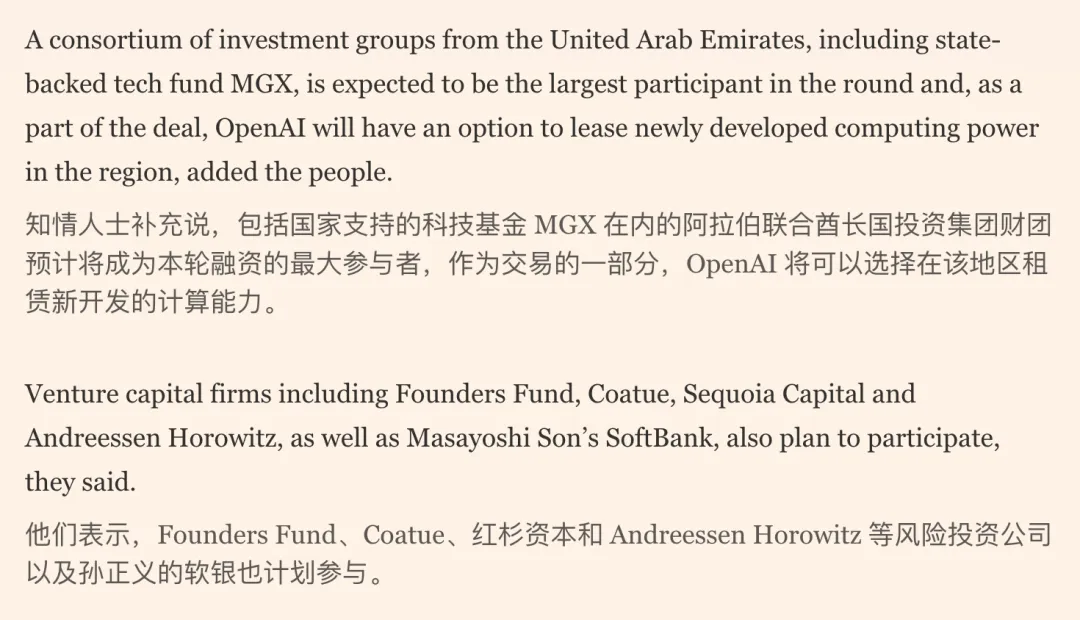
FT says some investors have reduced the subscription amount, but have not withdrawn, and institutions such as Red Bull, A16z, SoftBank are still among them, followed by subscriptions to high net worth individuals.
One is to catch up with the fall in tech stocks. One investor told FT that the market was still hot when it started financing, and I didn't expect it to change so quickly.
The second is Anthropic, which is valued at more than $1.5 trillion next month and is expected to finance about $10 billion. The agency has limited money to invest in AI, with OpenAI shares to be sold before it goes public next year, and Anthropic shares that can be traded on NASDAQ next month, which many institutions will prefer.
The funding has not left AI, and a portion has been distributed to Anthropic.
The order is reversed.
The FT reported that the market had fallen significantly before the news of the Anthropic rating, mainly due to the profitability of Intel and Amazon.
This news only drove tech stocks to their lowest point of the day.
OpenAI lowered its funding target after the stock market crash.
The secondary market declined first, affecting the financing of the first market.
Q10 Is the collapse of Intel, the downturn in Amazon's cash flow an indication that the AI bubble is breaking?I can't explain.
Intel earned $1.65 billion in the third quarter, up 21 percent over expectations.
The share price declined by 28% due to the lower-than-expected fourth-quarter performance indicator, due to the weakness of the PC market that will continue until 2027, and the rising price of memory.
Its data center and AI business grew by 78% in comparison.
Amazon's free cash flow over the past 12 months has dropped from $148 billion a year ago to $42.4 billion because it expects to spend about $220 billion this year building data centers.
However, it made an operating profit of US$28.1 billion in the quarter, a record high.
This suggests that the giant's investments have surpassed their earnings and are increasingly in need of external financing.
But the giants aren't short of money.
Q11 Is this the same as the Internet bubble in 2000?It's a long way off.
From March 2000 to October 2002, the NASDAQ Comprehensive Index fell by about 78%.
In October, the NASDAQ index dropped about 5.3% and began to decline from an all-time high earlier this month.
Waiting for the IPO to land, we'll see.Anthropic will launch next month as a direct test.
If it succeeds in reaching about US$10 billion, that's more than three times the US$29.4 billion record set by Saudi Arabia in 2019.
In a market that is really caught in the cold, it is difficult to accept such a large IPO.
If we can't "hold fast", then there's more reason to discuss whether the bubble is breaking, right?