It's the first time in the history of the world.
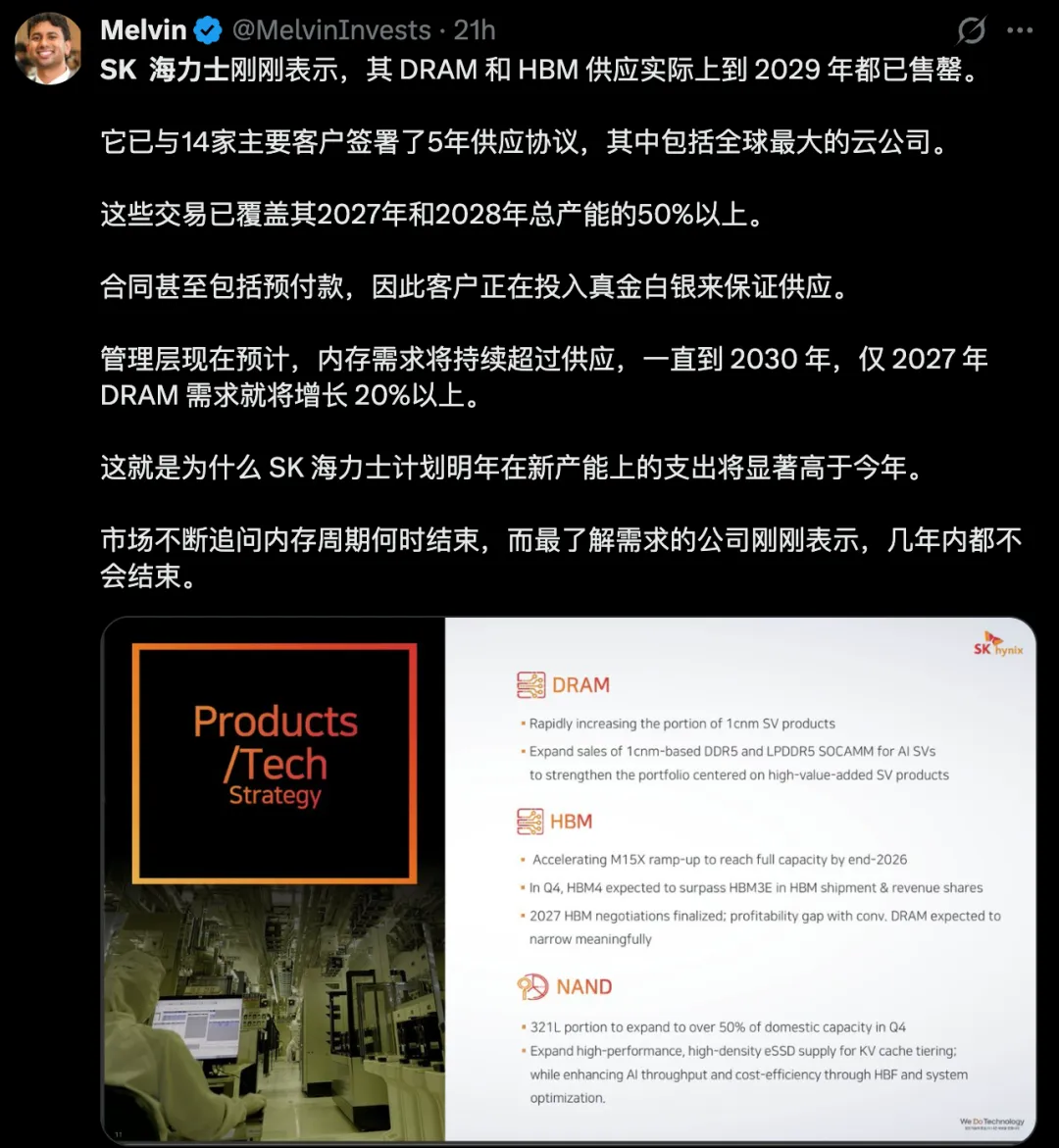
Over the past two days, SK Helix in South Korea has released a financial report that will make people cry.
In a quarter, operating profits were about $62 billion, compared with $632 billion a year ago, and operating profits were 80 percent.
A breath of fresh air, it is a sign from its hands.
The lack of demand for memory is expected to continue until 2030; the majority of the capacity for both 2027 and 2028 has already been foreclosed on in advance.
The next wave of "memory swallows up" is autonomous driving and robots.

A week earlier, at Tesla's third-quarter earnings meeting, Musk also acknowledged the reality: AI5 chips would need to be installed around April next year before the engine could be fully automated.
In order to fully unlock the memory, packaging, and logic chips of these cartridges, Tesla had to build its own Terafab chip factory.
Only by the beginning of 2028, tens of billions of dollars will have to be pioneered; in the long run, the total investment may even exceed 100 billion.
Nowadays, the size of the model parameters is getting bigger and bigger, and the chips and memory are completely out of date.
The question arises: without Tesla's thick foundation and the intention to build its own wavelength factory, can this road still be made?
Today, a Chinese chip company founded less than three years ago gave its answer.
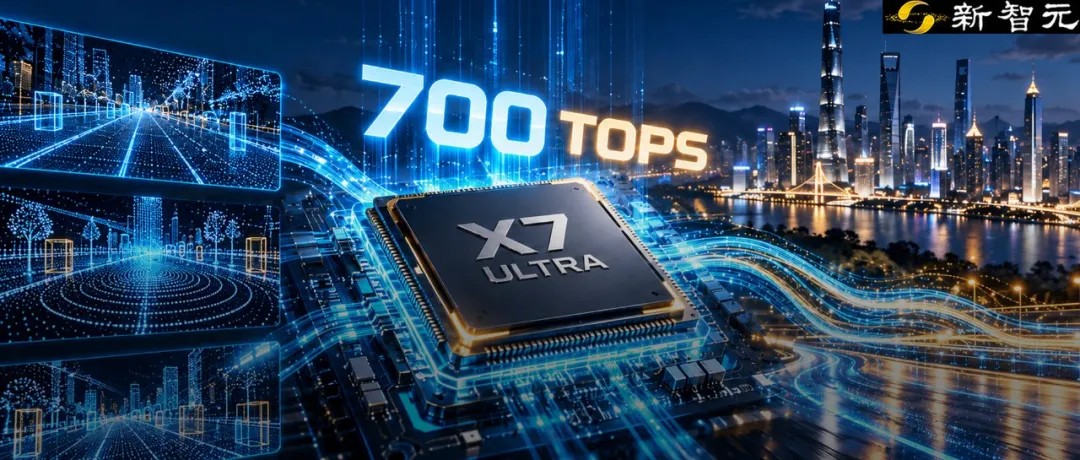
The XHEART new chip launches a new generation of large model X7 Ultra chips, which directly rushes to a billion-parameter smart-driving model with a capacity of 700 TOPS.
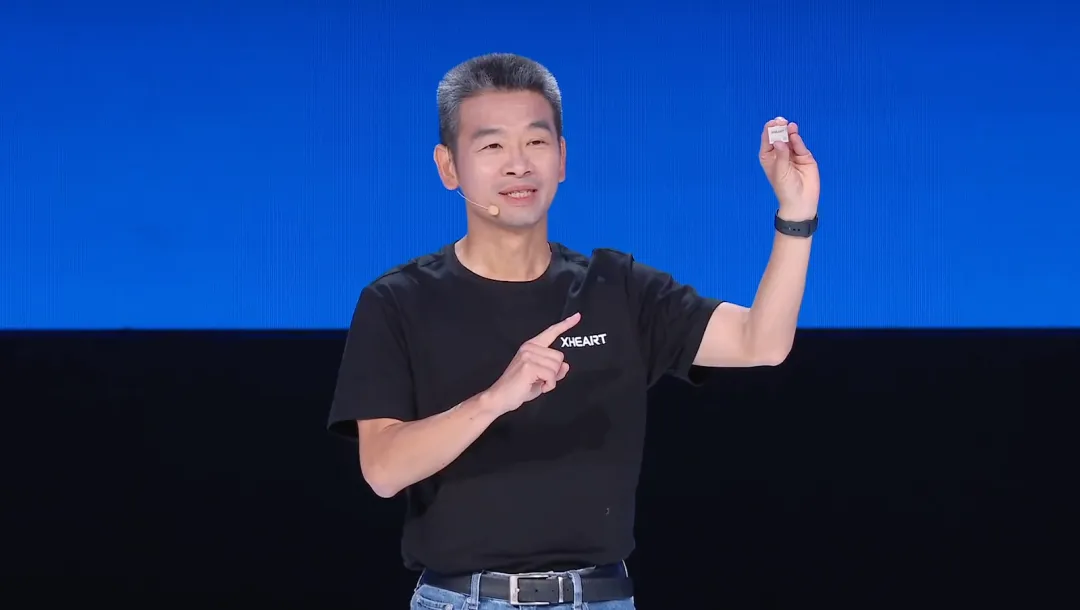
The X7 Ultra is the flagship chip in the industry, with the model performing reasonably well.Memory bandwidth consumption decreased by 80%
At the same time, the brother company Momenta shared the latest developments in the R7 Ultra world model.
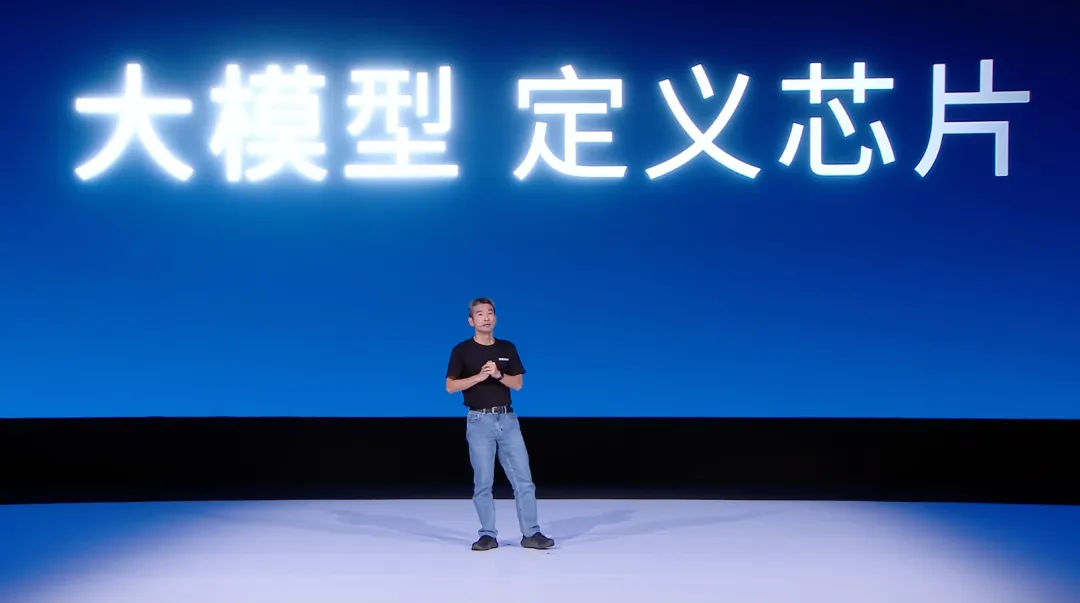
The solution to the XHEART breach is summed up in one sentence: let the big model define the chip.
Models changed their mindsThe problems with the chips have also changed.In the past, it was a collection of small models: perception, prediction, planning, and the passage of a pipeline downstream like a stream of water.
The information is pressed one at a time, the ceiling is low, the small model can do well, and the engineer thinks more and more. XHEART CEO Li Zhong said frankly on stage, "It's a human-driven system, engineers write rules, machines execute".
But when the Transformer came out, the end-to-end model took down the old desk, and the smart driver really turned into a data-eating monster.
The algorithm switched the kernel, ran the algorithm's chip, and immediately hit three new walls.
Can paper-face computing work in a real system?
Calculating the number of TOPS is like the bottom of a sports car: 300 yards can be gained, and 20 yards can only be gained on the highway.
For large models, the place of congestion is the data transfer: the parameters and intermediate results roll back and forth between the memory and computing units, the computing units calculate the speed, and then dry the data.
Even more lethal is accuracy. In order to cut accuracy faster, critical computing makes decisions on the car "going the way". Users don't care about paper data, only about the car reacting quickly, judging and not on time on the road.
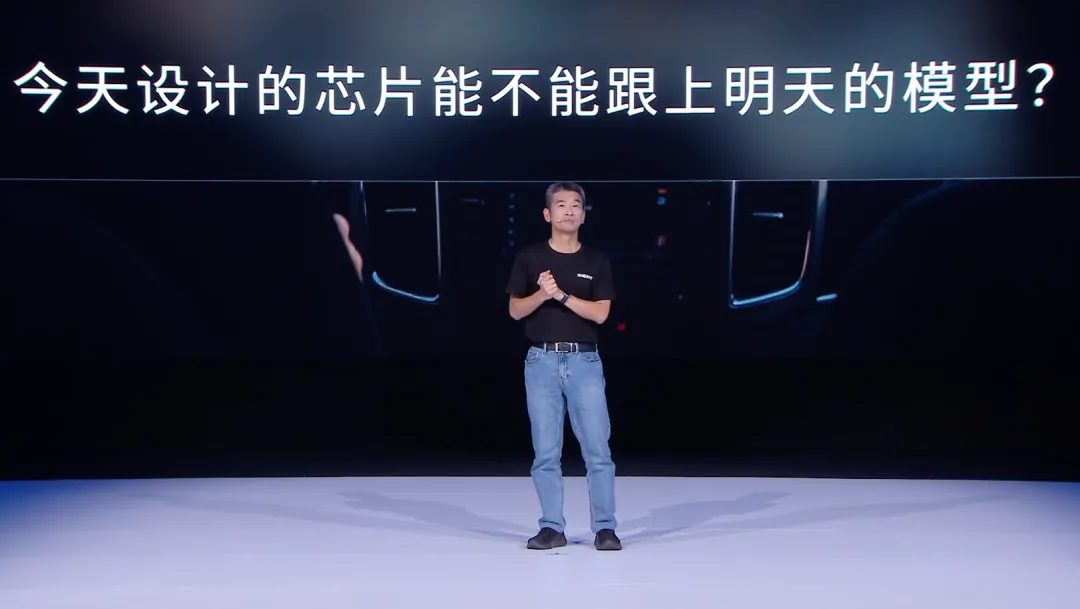
So today's chips don't match tomorrow's models?
The chip has been dormant for a few years from the definition to the start of the car, but the model has been a large version for half a year.
Can we use reasonable energy and the capacity we need in return?
The most direct way to calculate is a stack of transistors, because the heat dissipation on the car will always have a hard border, and it is difficult to drive on a large scale. This year the price of memory has doubled several times, data is running a ton in memory, and the flowers are pure gold and silver.
The reality is that these three questions need to be answered together.
Tesla broke away from Mobileye 10 years ago, developing its own chips, and that's what it's all about. It's just that its chips never work for itself.
Big model defines the chipWhat defines it?The industry norm is to make the chips first and then make the models fit.
The idea behind XHEART was to try to figure out how the model actually runs in the car and then design the chip.
XHEART is a mass-produced clothing, sized from large models, and measured in the hands of its sister company, Momenta: real models, real data running on millions of mass-produced cars.
The architecture of the chip, how to allocate resources, how it works, where it is generated, revolves around the big model.
On the X7 Ultra chip, XHEART has several very accurate knives:
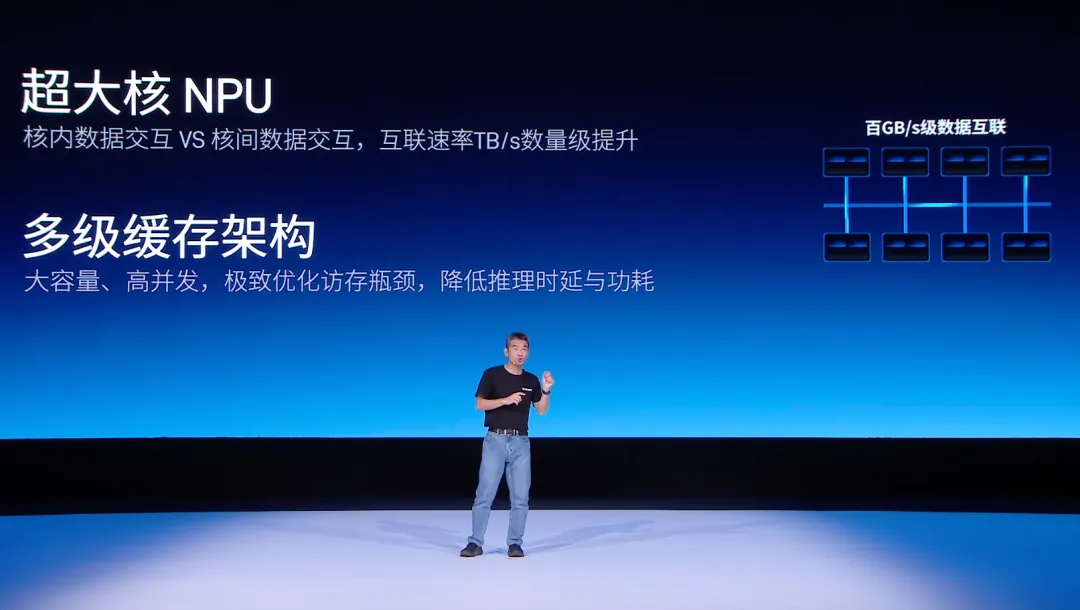
The first blade, directly to the super-nuclear NPU.
The traditional practice is to operate a small number of nuclear units, transmitting data between the nucleus and the nucleus at a rate of one hundred GB per second.
The X7 Ultra combines them into a super-large core, with intrinsic data interactions directly pulled down to TB per second, equivalent to replacing rural roads with eight lanes of traffic. Additionally, large capacity, high concurrent multi-level caching, as much data as possible moving inside the chip, less outward memory runs, and computational wait and power consumption are followed by decreases.
The second knife, a dedicated calculator accelerator engine.
In the early days of NPU design for convolutional networks, in the Transformer era, some computations could only be fed to the CPU to switch back and read and write memory.
This time, the X7 Ultra provided them with dedicated hardware acceleration, natively supporting FP16 high-precision computing, both fast and accurate.
Third, unlock the NPU hardware in parallel.
The calculation units run simultaneously, calculating objects and loading weights are carried out simultaneously. As if the production line, raw materials are sent to the workplace in advance, the machine can always turn full load.
Fourth knife, reconstructedAIThe tool chain.
Every step of conventional reasoning is completed and the middle result is written back into the external memory and read back the next step.
X7 Ultra's toolchain integrates the entire network into a "big algorithm", with the middle result no longer entering the external memory, the external memory being only input, output and weighted, and the entire network memory being zero copies.

What did these changes mean?
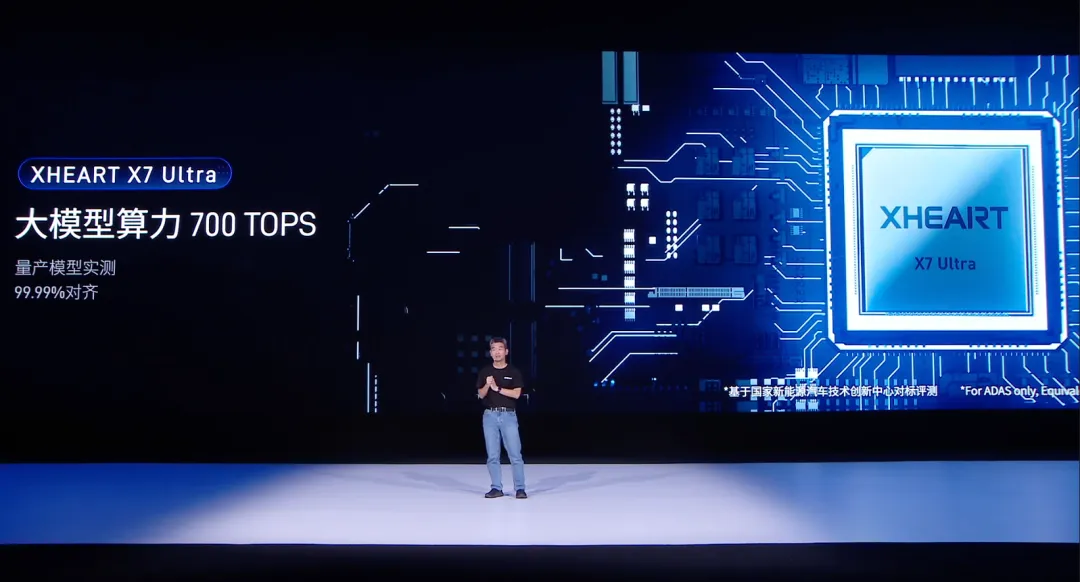
The X7 Ultra is aimed at a multi-billion-parameter smart-driving model design with an algorithm-crazed 700 TOPS.
The problem is its test rules: it runs on a mass-produced smart-driven model, with chip output deployable accuracy of "four nine", or 99.99%.
In this outline, the results are very prominent:
The project is being implemented with the collaboration of Transformer's Mass Production Intelligent Driving Model.Computational utilization rate of 98.7%It's almost a drop of computing power that's gone.
At the same time, the company's flagship chips, which are the flagship chips of the flagship industry, can be used under comparable model performance conditions.Memory bandwidth consumption decreased by 80%。
Under the same conditions, compared to the industry's flagship products,Rational energy efficiency is 100% improved.
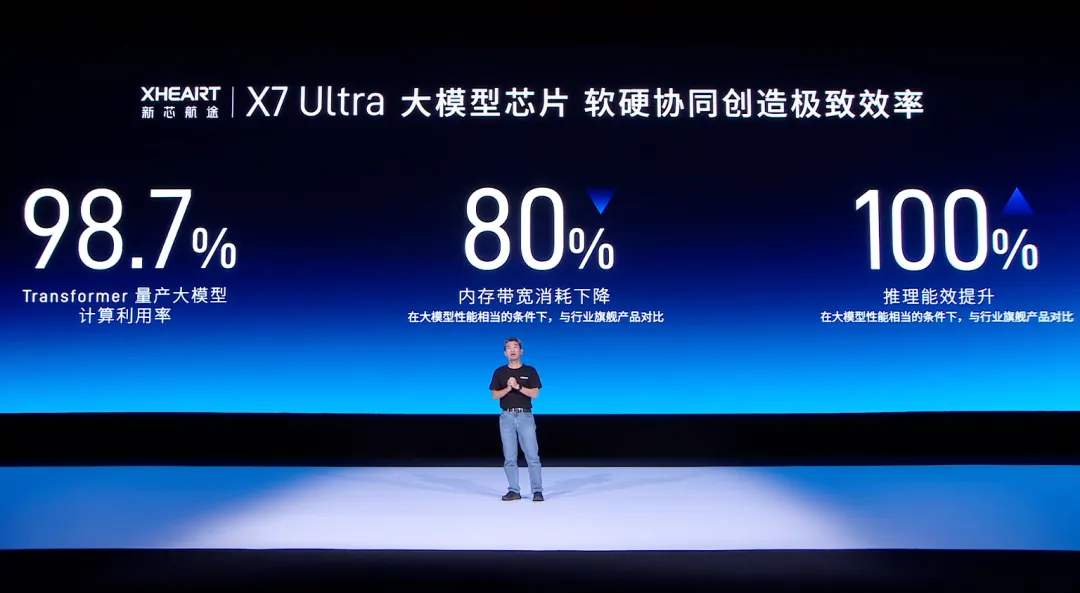
98.7% answered the first question and doubled the third. As for SK Helix's "missing until 2030", others were still in line for the in-house tax, and XHEART beat itself twice.
In the configuration directly loaded, the Armv9 vehicle standard CPU used in the X7 Ultra, XHEART took over China's first mass production qualification.
Laser radar has been rolled up to thousands of lines, and the X7 Ultra is equipped with an accelerator that processes 20 million points per second. On the camera side, the X7 Ultra is specially equipped with a locally computed multi-core processor that tests the stability of the camera's processing, which is 100% better than the competitors.
In addition, the all-new chip functionality security meets ASIL-B, the built-in MCU achieves the highest level of ASIL-D, and information security meets state-secret level 2.
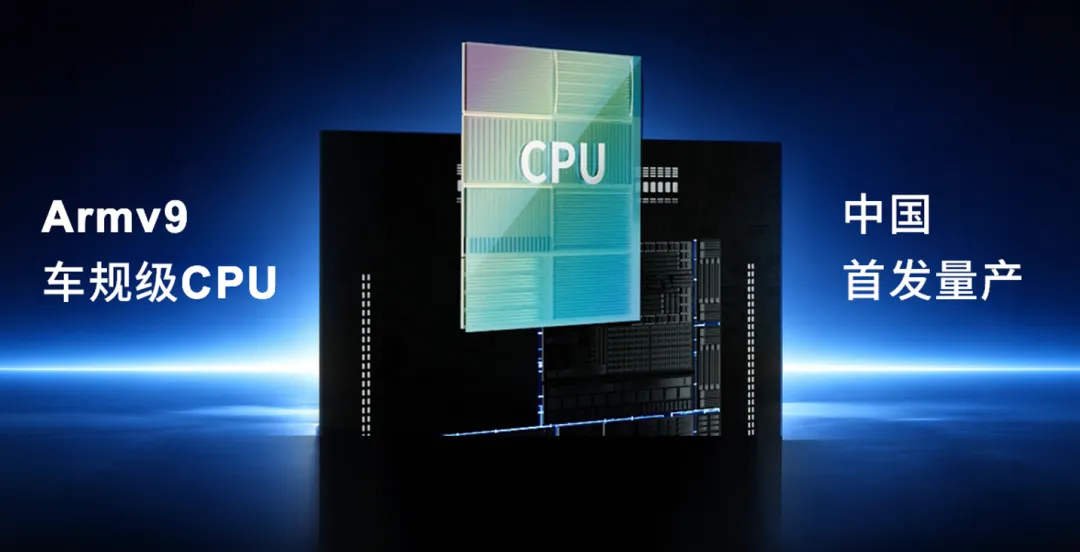
All of the above designs and starting points are the same: first understanding the big model, then designing the chip.
The first-generation X7 has proven that the same chip resources and deployable model parameters are about 10 times the size of a general-purpose chip.
A three-year-old unicornWhy do companies dare to sign tickets?It's so nice that the car company finally asks, "Could you give me the car?"
A chip will take several years from the point of arrival to the start of the car, and it will be sold for several more years after the car is on the market, but the model will replace a wheel in half a year.
It's not enough to think ahead of time, in the circle, to trust this thing only with a real knife and a real gun.
He has worked extensively in the chip industry for more than two decades, becoming the head of wireless communications at the Unified Communications Department and later as the COO of OPPO's philosophy library.
When he re-entered the startup wave in 2023, he and Cao Cao discussed two judgments: the big model will change the mind drive and the design of the chip; the car is the starting point for the big model to benefit ordinary people, and the chip has to do well with performance, energy efficiency, and cost.
Half of the core team comes from leading chip companies, half from first-tier smart-driving algorithms.
If you look at the specifics of the game, the main player is a "fast bowler".
Momenta pre-verified the mass-production model in the chip in advance, the chip has not yet been made, the model has been "tested" in the simulation; manufacturing is handed over to the assembly of electricity, and the performance of the entire car is refined with the car company.
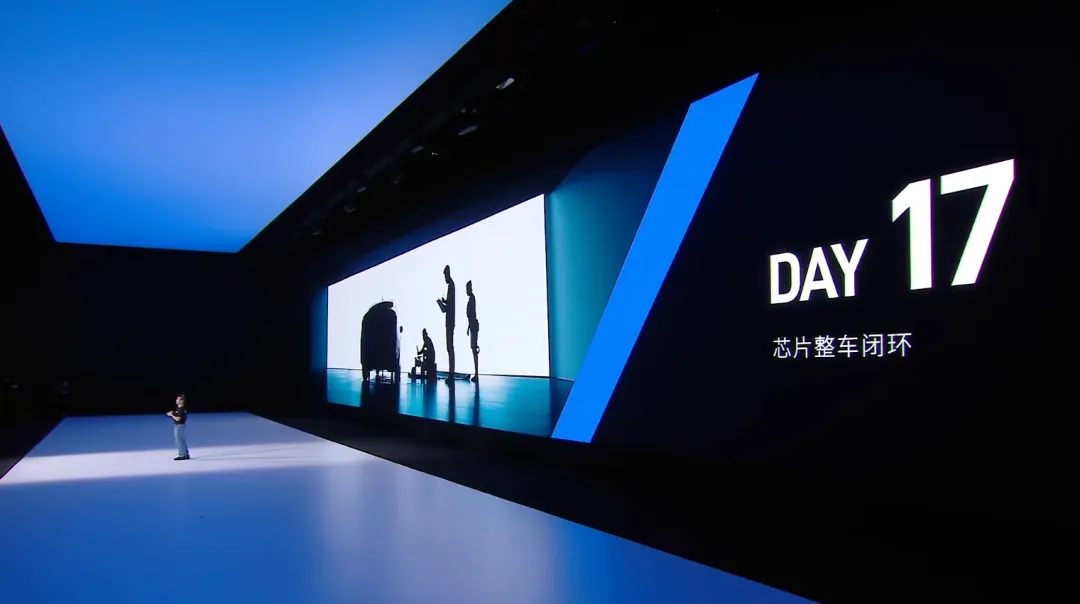
So after the X7 film, the speed is incredible: less than 24 hours to light the whole chip, 17 days to complete the complete shutdown cycle, 21 days to receive the in-car inspection of the partner.
XHEART is not suitable for Tier 1, but the reference design is validated according to the mass production standards of the host plant and can be developed by the car company. Two X7 models with a unified "two-brain" architecture, a set of hardware compatible with L3 and L4, the key link is completely redundant, has received several model fix points.
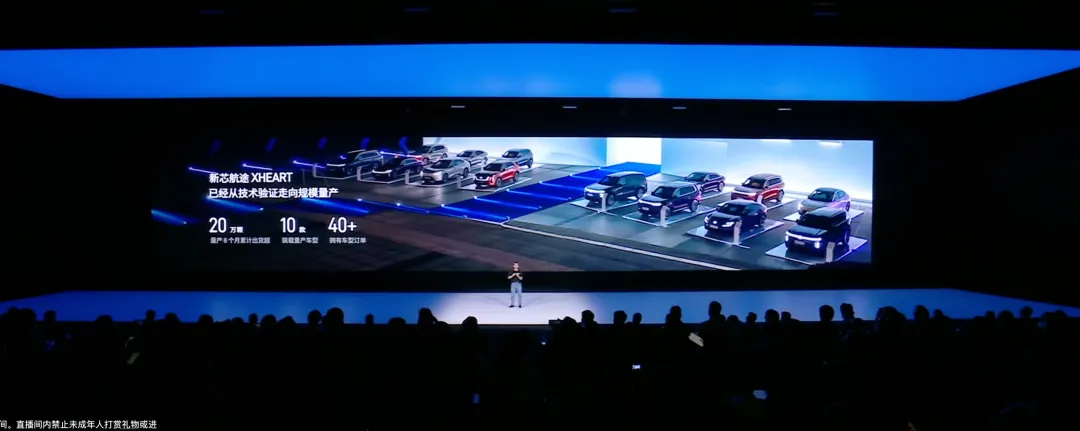
The X7 series was mass-produced for eight months, with a cumulative shipment of 200,000 units, 10 mass-produced models, and more than 40 model orders.
The first car was the Suzuki Volkswagen flagship SUV ID.ERA 9X, followed by the Volkswagen V07 and MG07 and some models from Cadillac and Cherry.
It is worth mentioning that capital is also voting with both feet. Just a few days ago, the unicorn just finalized a new round of financing, totaling nearly $5 billion.
In the list of investors, there is the European car company Renault, and the national memory leader Longchamp Technology. A memory factory is actively investing in a large model chip company, which is worth checking out.
The world's first R7 UltraThe future of chips will only be bullish.At this conference, Momenta brought the next generation of R7 Ultra to the world.
The parameters were 5 to 10 times larger than the previous generation, the safety performance improved by more than 5 to 10 times, and the ability to "drive everything" began to emerge.
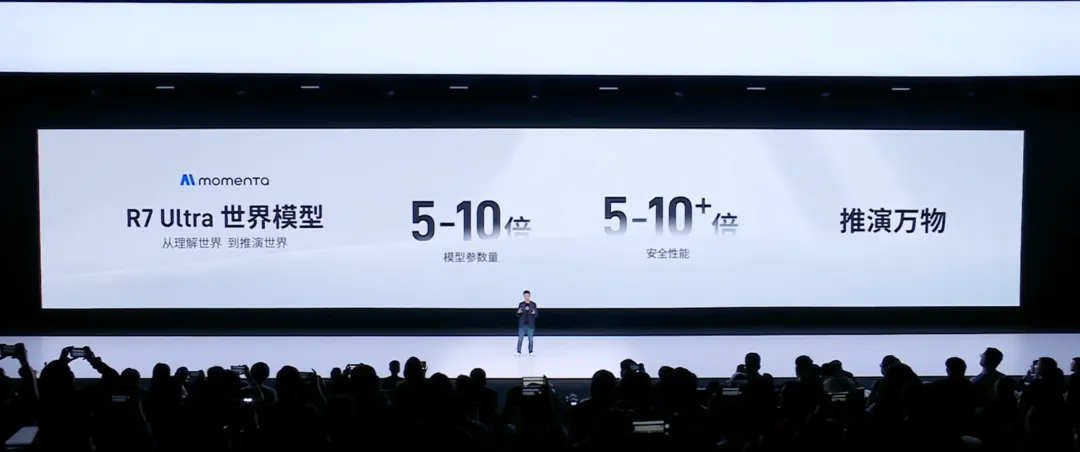
The X7 Ultra is based on the R7 Ultra, and together they build a "world model base platform": Momenta tells the model where to go in advance to the chip, XHEART to adjust the architecture according to demand; the actual conditions of the car's end-to-end calculation, and in turn, the model's research and development.
Momenta's CEO, Cao Tzuong, has proposed the "Smart Moore's Law" for the safety and performance of intelligent driving, which is upgraded tenfold every two years; while large model chips, which are accelerating "Smart Moore's Law", are further upgraded to tenfold annually.
This also led him to make a new judgement that after 2028, the L4 will set the stage for the industry's explosion, and by 2023 it is expected to enter a large scale landing.
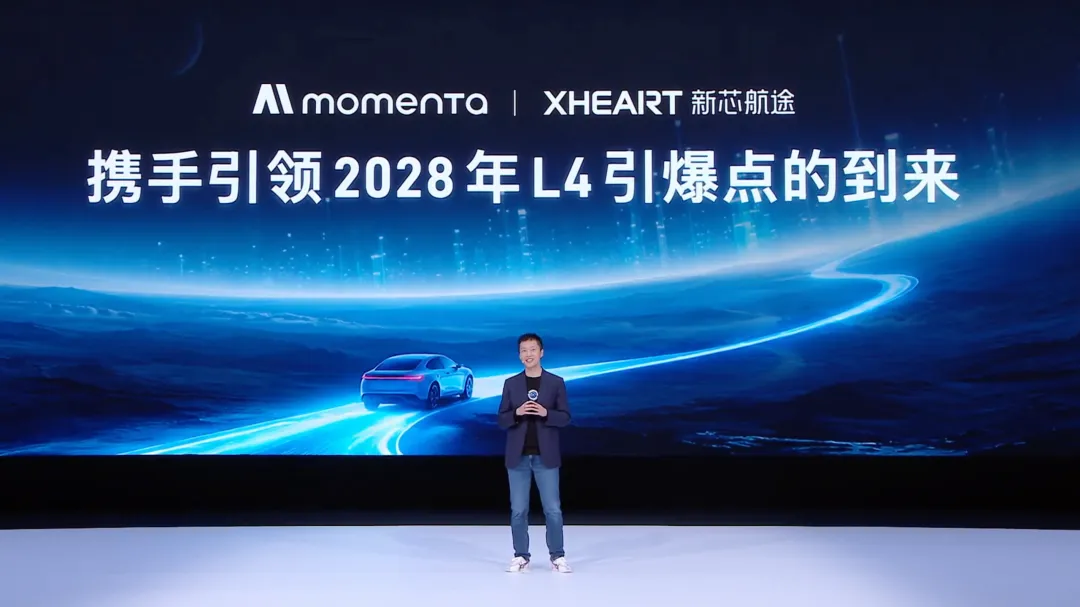
In order for this law to be valid, the model has to be long and the chip has to keep up.
On the other hand, XHEART is moving forward at the pace of "generation of mass production, generation of development, generation of pre-development", and the next generation of X9 is already in development, targeted at higher-demand L4 autonomous driving and physical intelligence.
Tesla proved that the soft-hard drive was the hardest, but it closed its doors and had to pay its own factory bills. Momenta and XHEART opened up models, data, and chips and opened up the soft-hard drive capability to global automotive companies.
Musk has been preparing for this for a decade and is still making money.
On the other hand, XHEART, in the words of Lee Seong-yeon, went from the first to propose "big model defining chips" to the "first" to make big model chips mass-produced in less than three years.
The answers to the three questions have already been given. The next score is the average person who drives these cars every day and goes to work.