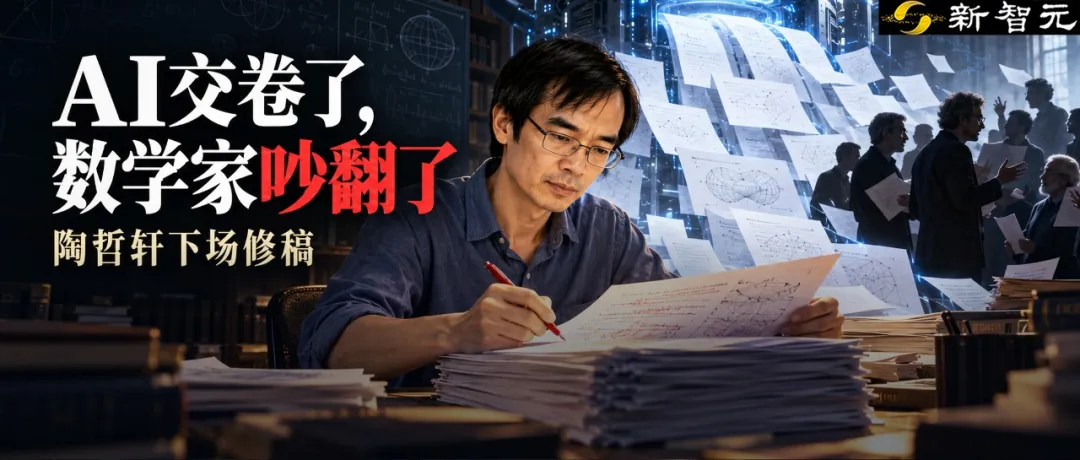
It's the first time in the history of the world.
The sky of mathematics is falling apart!
For the first time, mathematicians who have ruled the world for thousands of years on the heights of human logic have felt the coldness of "the plague of extinction".
In those two days, the mathematics department of the world's leading universities immediately sparked a massive collective uprising.
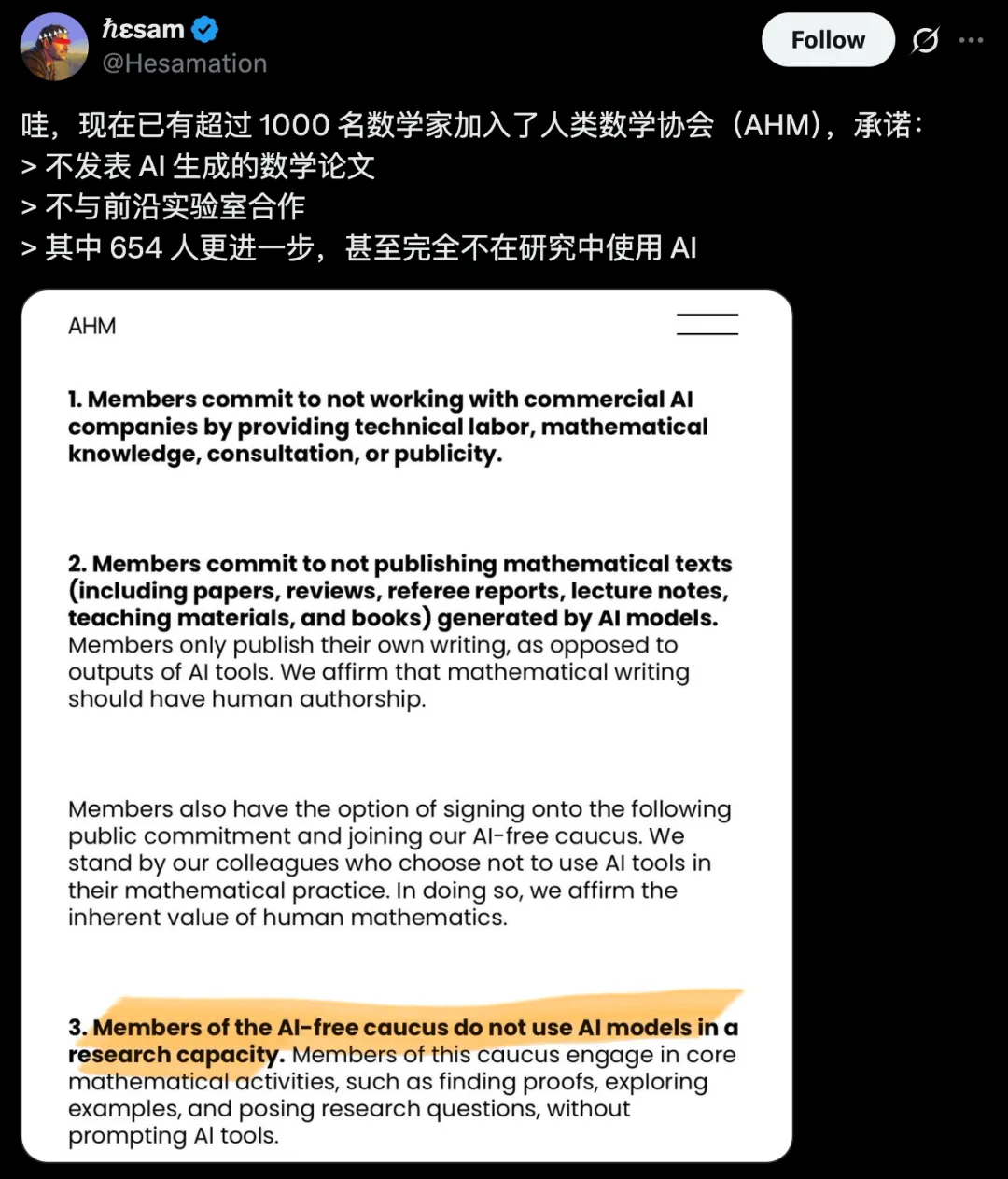
To date, a total of 1,008 mathematicians worldwide have joined the newly formed "Human Mathematical Society" (AHM).
I've seen the signatures, and I can't wait to see what they look like.
They're putting up a military order: from now on, they're not going to give commercial AI half the power, and they're not going to send any mathematical paper written by AI!
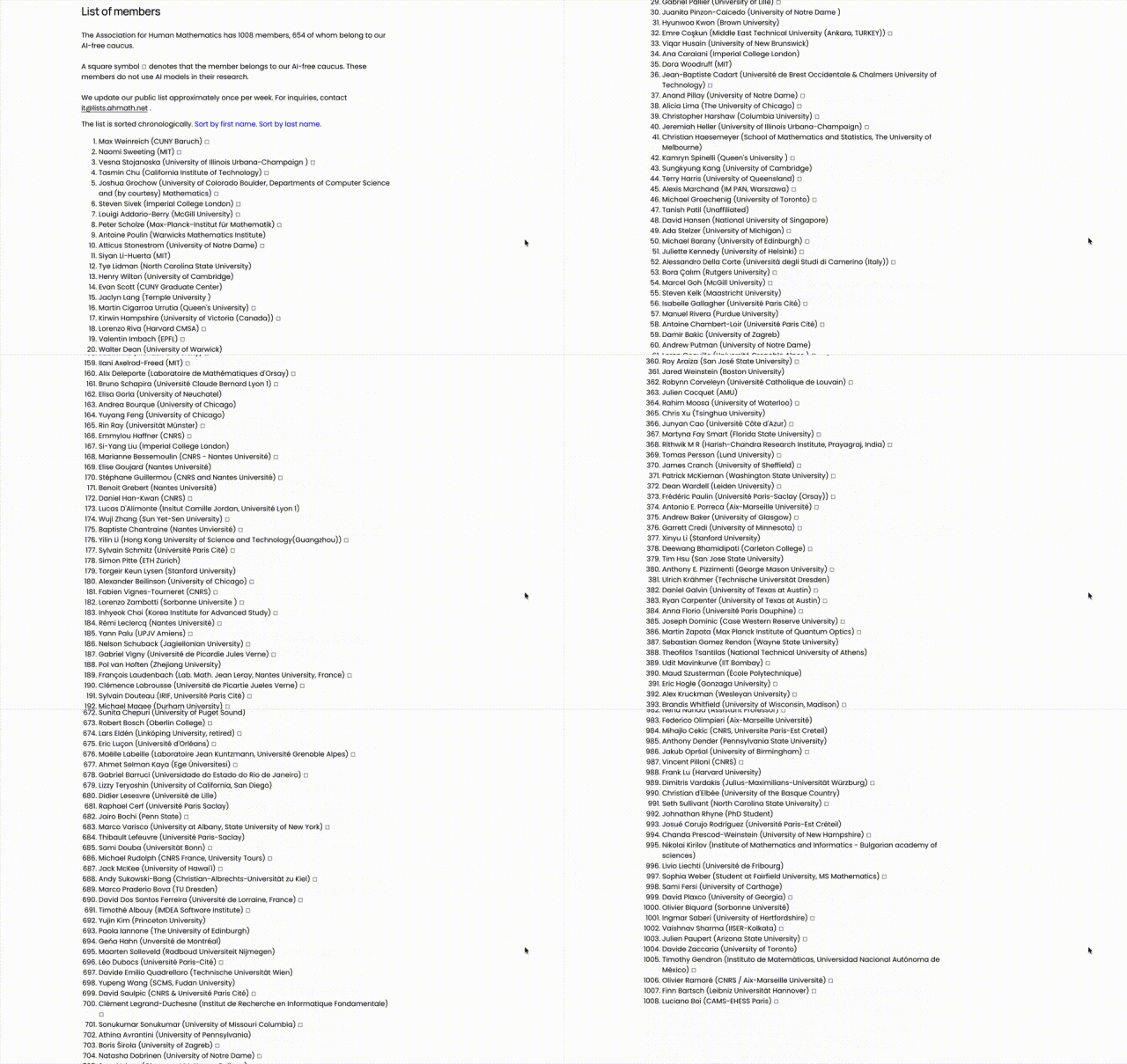
What's even more shocking is that 654 top academics have joined an internal "AI-free core group" and openly pledged their allegiance to the world.
In the subsequent day-to-day scientific research, whether it's proving ideas, proving counter-examples, or introducing new topics, 100% no AI is used.
Even the winner of the Fields Prize, Tao Zedong, personally sent a statement to the contestants.
The same week on arXiv, 26-year-old Barry Simon's suspicions collapsed. He pushed the paradoxical parameters to the limits of ChatGPT, surprising even the two human authors.
Scroll down and see
This is the first time that I've been able to do this.The comment section is overturned
At the beginning of the month, OpenAI dumped over 700+ manuscripts overnight, becoming the catalyst for all this.
At the time, OpenAI tested about 4,000 unresolved problems, each of which consumed three hours of ChatGPT Pro thinking and 719 texts.
The manuscripts belong to the 372 question families, about 42% of which have Lean formalisation validation. Although logically valid, the supporting natural language proves to be fragile and misses a large amount of previous human literature.
Faced with these semi-finished products, four academics, including Abhinav Nellore and Johannes Schmitt, built an open source GitHub warehouse called oai-math-revised.
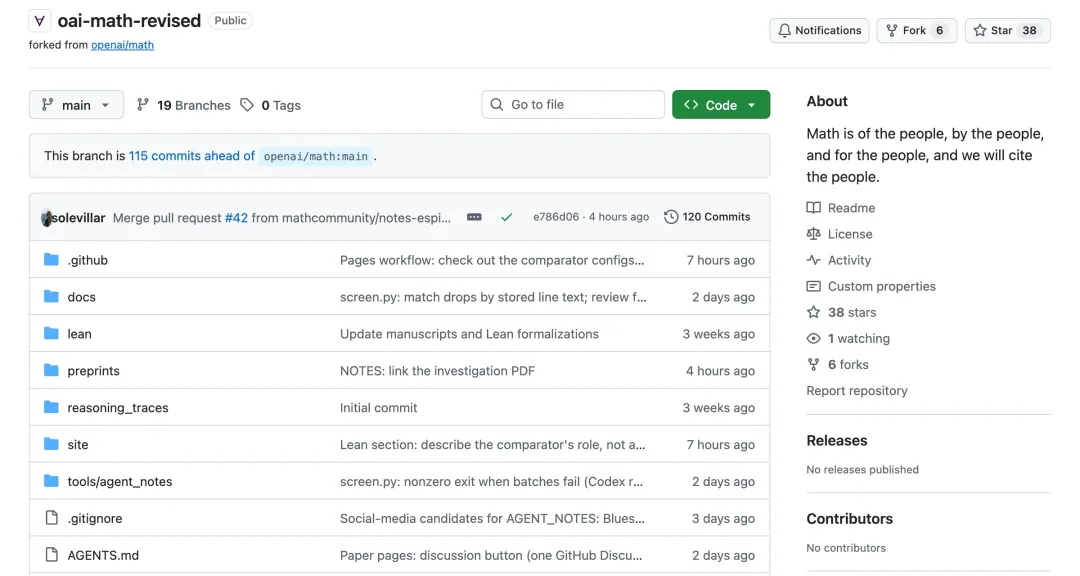
On October 24, Tao Zedong posted a blog post with the names of the four scholars. The article invited colleagues from around the world to submit a code merger request to supplement the documentation and rewrite the inference process for this set of AI documents.
A very dramatic detail is hidden in the warehouse's filing records. A few days before the warehouse was opened, the account, called Teorth, was already in full swing.
He submitted a merger request No. 2 and No. 3 for the "Landau-Siegel zero-zero consistency exclusion problem" (number 003) related to the numerical problem of prime distribution homogeneity.
Unsurprisingly, it was Claude Code (Opus 5.5) who drafted the two amendments.
After verifying his integrity, he changed the document's signature to "Open AI (community contributions) " and added to the literature of Banks, Green and himself.
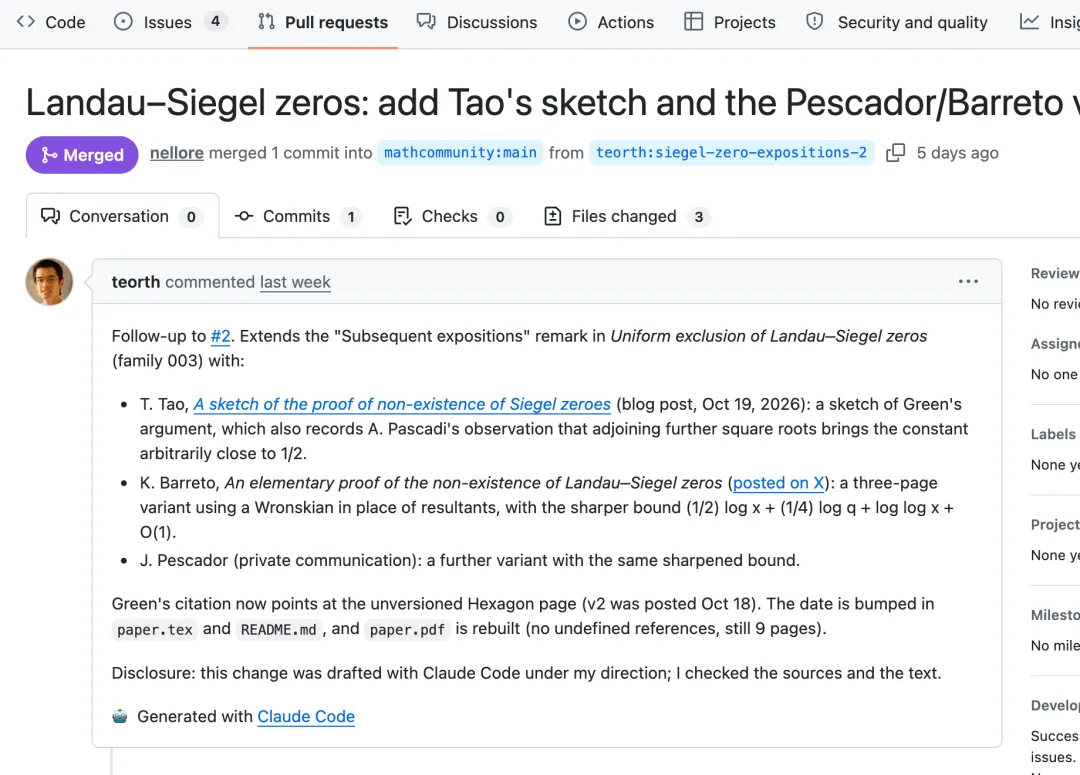
As of October 25, eight of the warehouse's 13 revised records were marked as being drafted with the assistance of Claude Code.
The human mathematician with a companyAIThe programming tool to patch another business giant's AI mathematics paper. This was an act of ridicule in the mathematical community this fall.
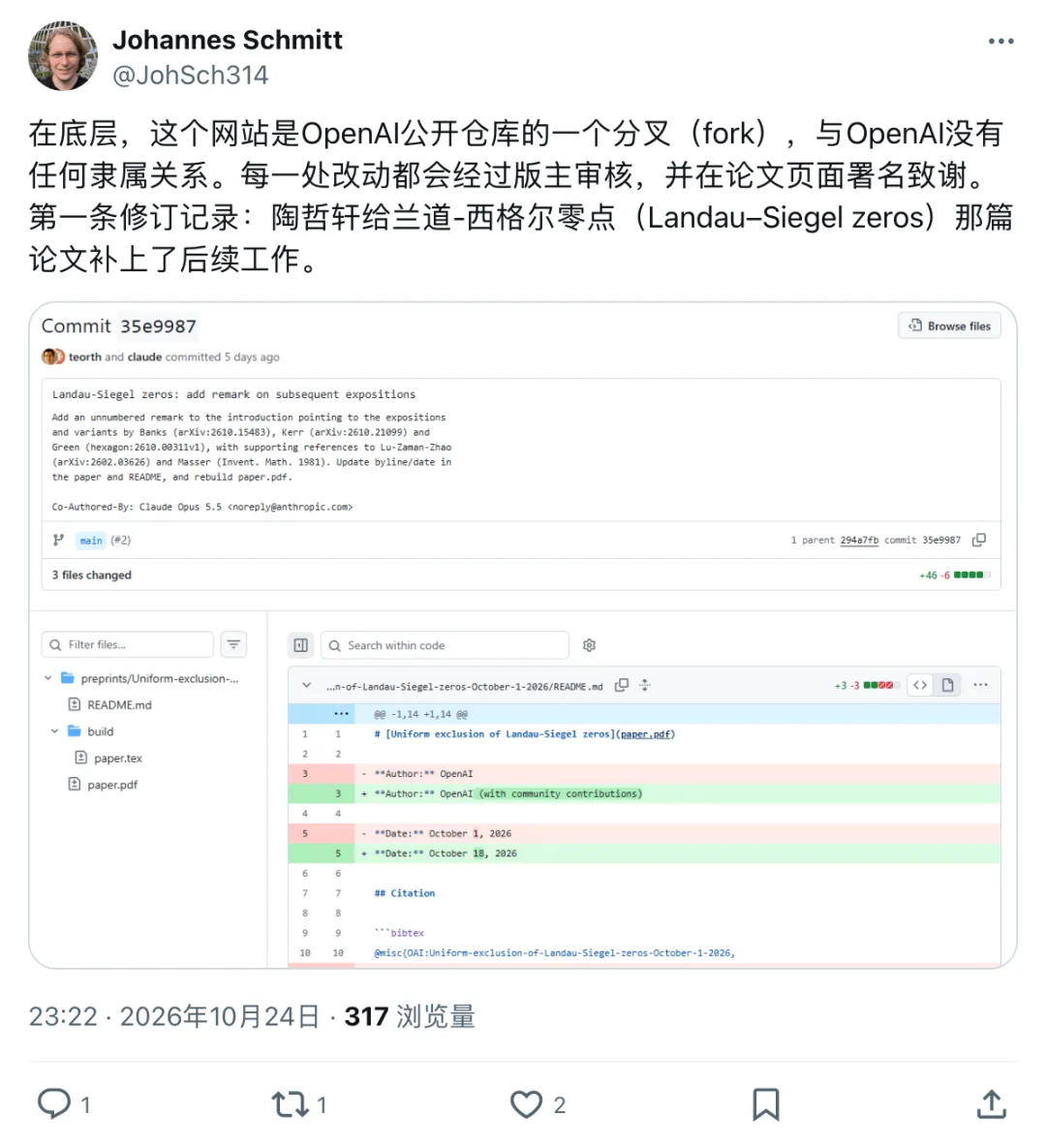
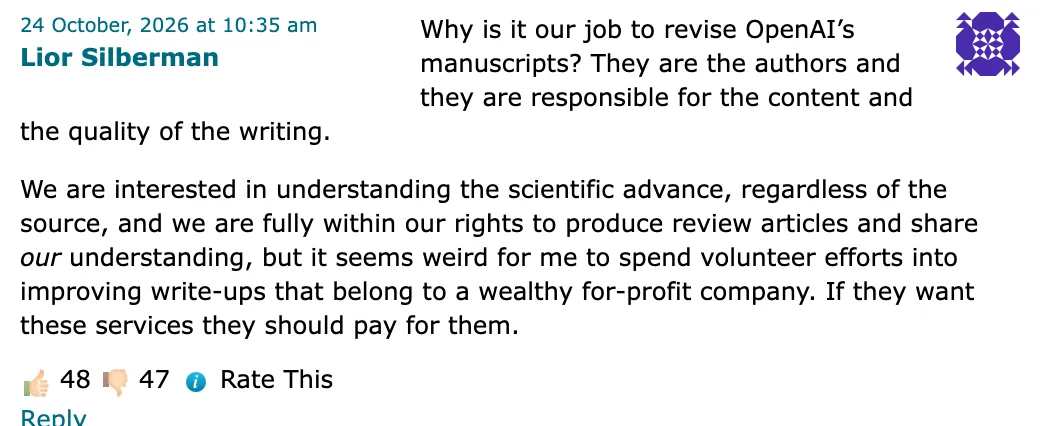
This recruitment post sparked a positive uproar in the Taoiseach's blog commentary area, with 21 main reviews quickly divided into two groups.
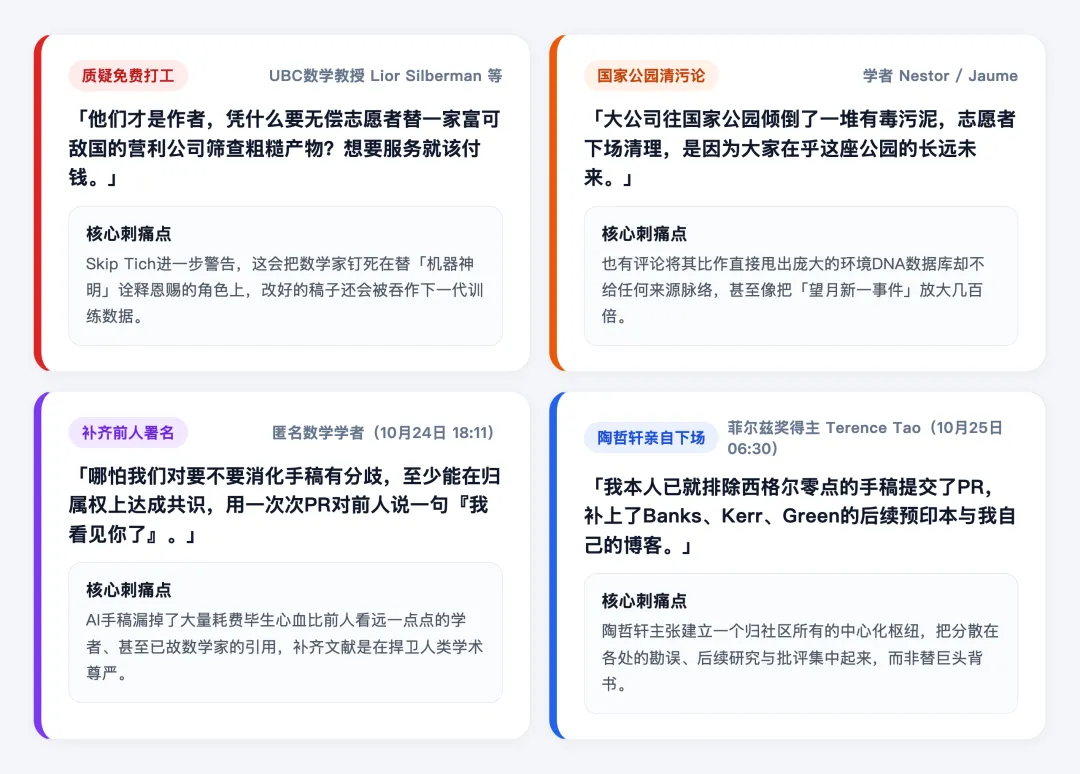
Lior Silberman, a professor of mathematics at the University of British Columbia, has a clear stance. He said that since the authors of the manuscripts were OpenAI, they were organizing the documentation and making it clear that it was the author's job.
In his view, if a commercial company wants to provide reviews and coloring services to the academic community, it should earn money at market prices.
Commentator Skip Tich broke the training data arithmetic behind it. He pointed out that the high-quality proof that colleagues made for free would be absorbed into the next generation of model training sets.
Scholars who support the manuscript also give strong reasons.
Commentator Nestor illustrates that multinational giants have dumped toxic dirt in national parks. While the pollution is not the fault of volunteers, the entire academic ecosystem will be damaged if it is not cleaned up.
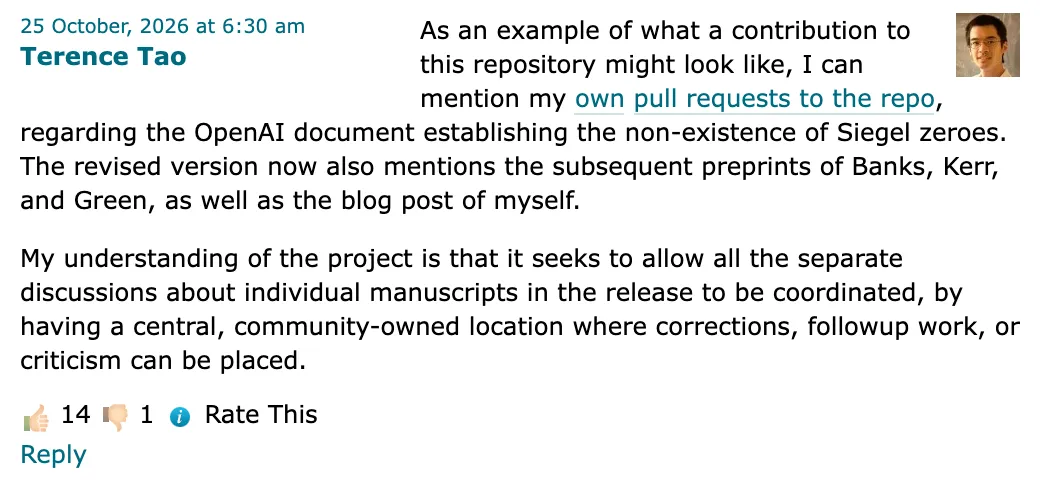
Faced with the question, Tao Zedong wrote his own response on the morning of October 25, adding an example of his submission of Siegel's zero-point literature.
He said this.WarehouseThe aim is to create a way for the academic community toCommunitiesIt is a self-contained public base, so as to bring together scattered error correction, follow-up research and critical voices.
Even if the Fields Prize winners themselves came out to put out the fire, the cracks about "humanity shouldn't pick up leftovers for a business model" were still ripping apart.
1008 mathematicians publicly dismissed654 people shut down AI completelyThousands of mathematicians chose to build high walls directly because they did not want to become free laborers for the good of business giants.
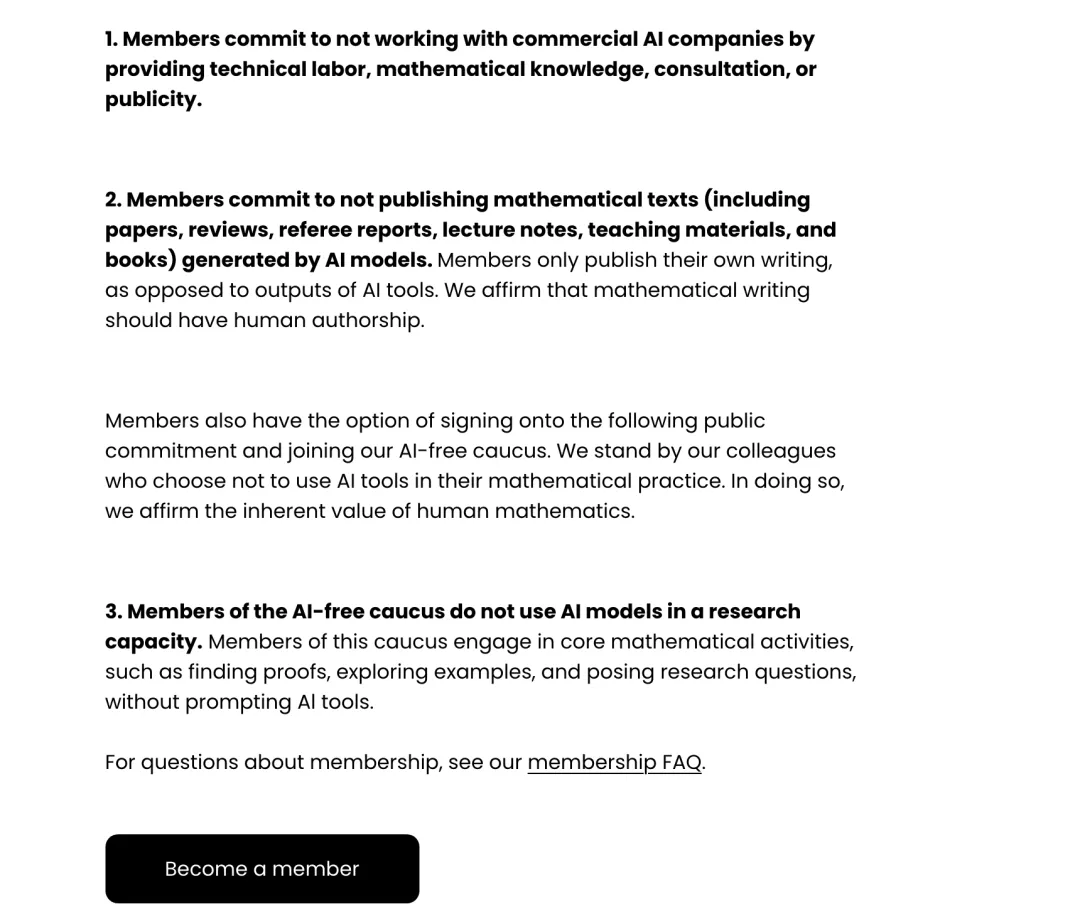
As of October 25, the newly formed "Human Mathematical Society" (AHM) has over 1008 full members, all of whom have signed two core commitments.
The first is that no automated mathematical commercial entity provides labor, consultation or publicity. The second is that no AI-generated text is ever included in the signed text.
Of these, 654 have joined the "AI-free movement" within the association, which has pledged to completely eliminate AI in the search for proofs, exploring algorithms and even asking questions about the entire process of scientific research.
 OpenAI is challenging global mathematicians
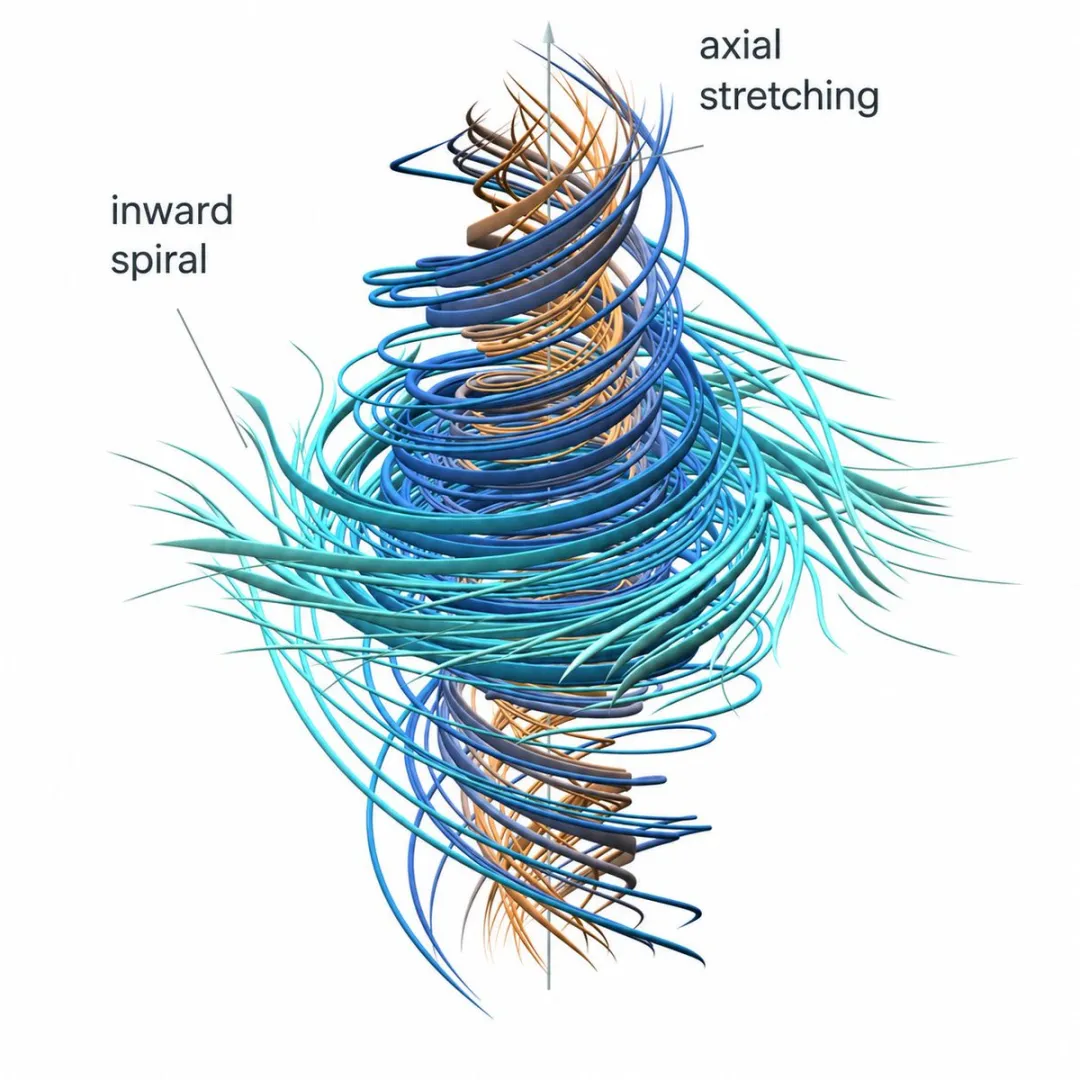
Forcing these thousands of mathematicians to openly divide their seats was the wave of OpenAI's high-profile campaign against the "Navier-Stokes equation" (one of the seven great mathematical puzzles of the millennium).
At the time, a mathematician entered the unpublished manuscript in ChatGPT orange. OpenAI subsequently mobilized about 10,000 Agents and ran for 88 hours, generating a huge proof that even experts couldn't verify.
The mathematical phenomenon was subsequently packaged as a landmark event in which AI broke the million-dollar prize puzzle, sparking outrage in academia.
In its first statement, the association pointed out that the recent intensive build-up of business giants "exhibited a mathematical mastery and had nothing to do with rigorous academic research".
The statement criticized the giants' attempts to replace human understanding with opaque statistical black boxes, turning mathematicians into "verification technicians" who output stamps instead of machines.
Three days later, the Society's journal working group called out to all the major mathematical journals. If the review link is to use AI, the author must first pass this link, and no one can put an unpublished manuscript behind the author's back to a business model.
The 1,000-seat announcement was soon ridiculed by AI circles.
Tech entrepreneur Hesamation takes Chess King Carlson's example, saying that mathematicians reject AI is as absurd as chess players reject chess engine replicas.
After 26 years of speculation, ChatGPT was a great success.However, to stop AI today is far more costly for mathematicians than to abandon an orange tool.
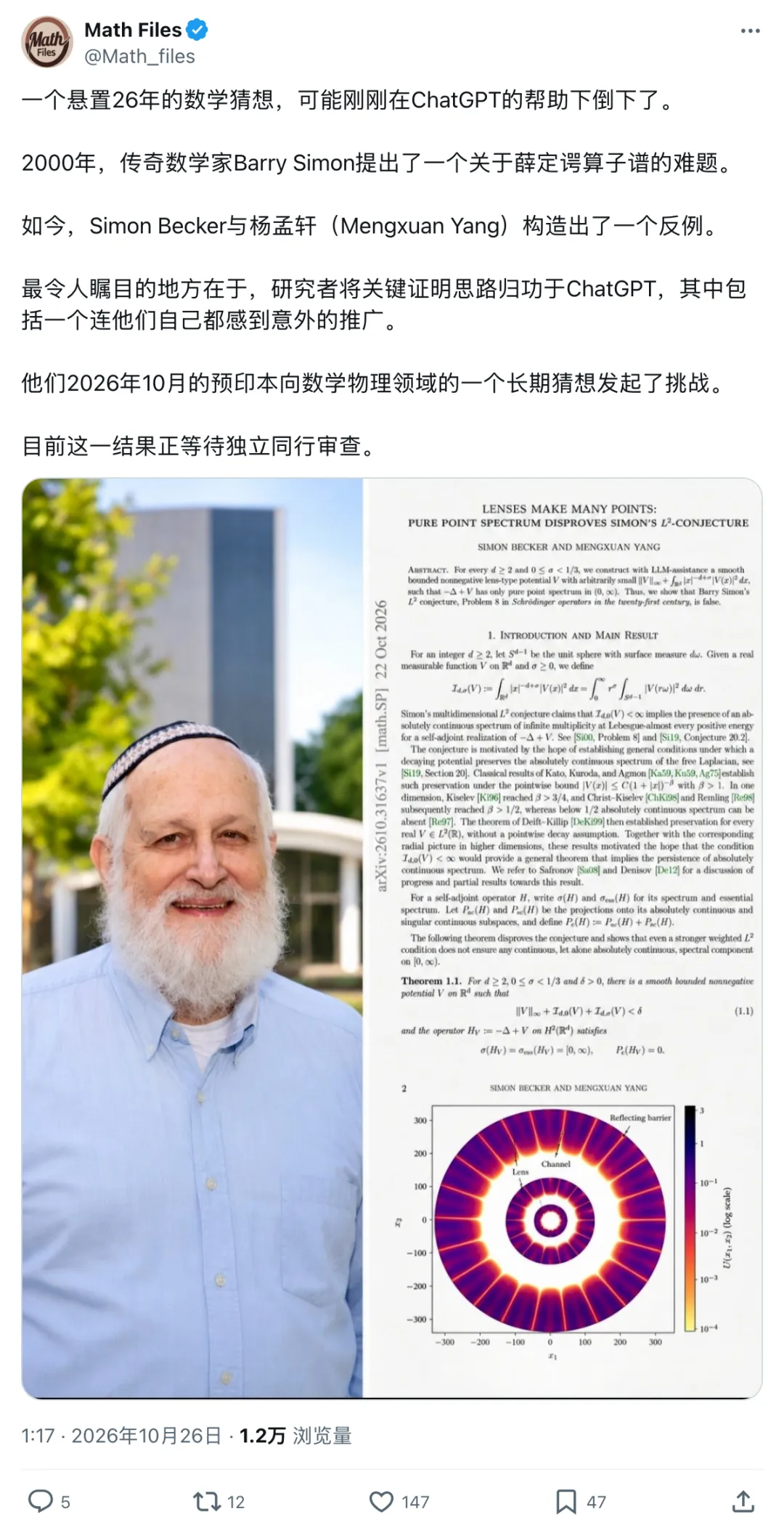
On October 22, Simon Becker of Bocconi University published a paper on arXiv in collaboration with the nightmares of Texas Agricultural Institute of Technology.
This paper denies the "Dover L2 conjecture" proposed by the mathematical physicist Barry Simon in 2000.
The 26-year-old puzzle arose from the quantized hydrogen algorithm in quantum mechanics. The "spectrum" of the algorithm determines whether particles can be scattered freely to infinity (absolute continuous spectrum) or trapped in a local region (pure point spectrum).
In three-dimensional and higher-dimensional space, particle scattering channels are much wider than one-dimensional straight lines.
Barry Simon then speculated that as long as the spherical cubic points of high-dimensional space remained limited, absolute continuity would be maintained on the right half axis. In other words, particles would not be completely trapped.
For 26 years, countless mathematical physicists have been trapped in the geometrical barriers of high-dimensional space that are difficult to shut down from all escape angles.
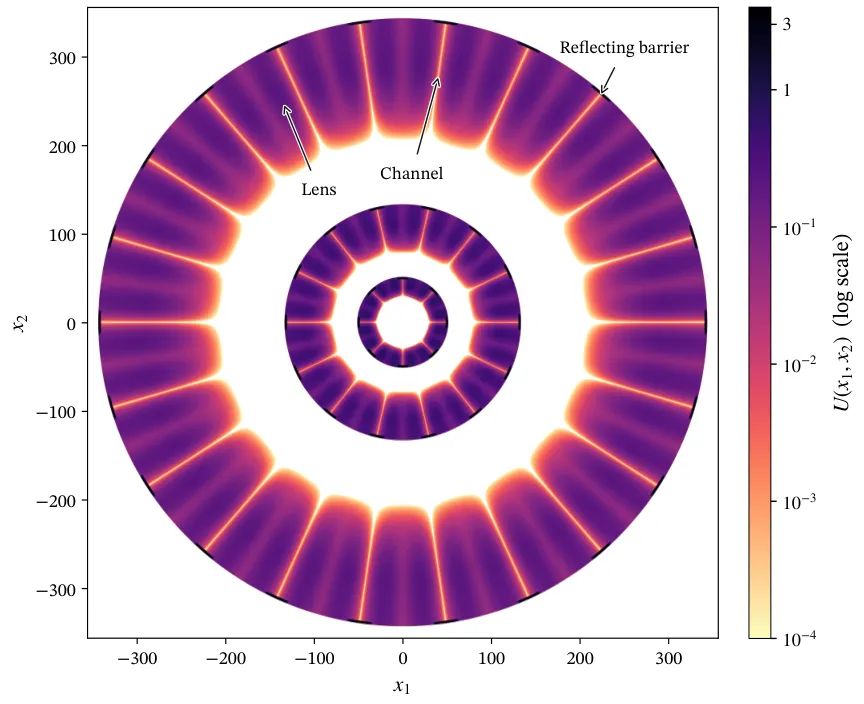
Three-dimensional sphere inverse constructions, each sphere containing a focal-wave lens area, a lens, a narrow-angle channel, and a cyclic reflection barrier.
The paper explains how the two authors came up with the idea, explaining how they and ChatGPT worked their way through the speculative process in three steps.
First, the two authors examined the 719 OpenAI manuscripts and found that the topic was not yet recognized, and worked with ChatGPT to design the heartbeat function.
This set of constructions uses weak angle forces as a "weak lens" to focus the balls into narrow corners of the channel, and then use cyclical forces as a "reflective barrier". The pair successfully erased absolute continuity spectrum within the boundary energy range.
In the second step, the two scholars, based on their experience, decided that the best way to build the set was to go this far, without thinking that ChatGPT gave an unexpected advance.
Models minimized the parameters without changing the geometric structure, introducing the "Combes-Hislop spectral mean rule" (a tool for eliminating energy-level simplification and locking index decreases) and demonstrating a stronger purity spectrum within boundary ranges.
The third step was the most surprising of the two scholars.In their own words, "What surprised us was that ChatGPT then pushed the parameters to the limit, extending the properties of the pure point spectrum all the way to the right hemisphere".
Anthropologists believe that the weapons in their hands can only hit one side of the shield.
After taking this unexpected path of argument, the two authors re-evaluated the entire 35-page manuscript from beginning to end, proving themselves to be complete.
It's time to show who's going to be honored.The three waves collided for the first time in hundreds of years of "asking questions, earning honors, reading and verifying answers".
In the past "age of proof of scarcity", humans had to think of a way to reach the top of the mountain. To get the answer first, nature was to contribute a deep understanding.
Now that it is "the time to prove excess", mathematics has opened up this equation.
The machine is able to calculate the results by stacking agents first, translating books into human knowledge at the expense of scholars.
If honour were only for the first entity to calculate the results, the giant could reap the headlines, and the scholars who refined their ideas became free laborers instead.
It also pushes for a shift in academic evaluation and youth education from rewarding "who counts first" to focusing on "who can ask good questions, create new frameworks".