Musk said SpaceX decided to only use Nvidia's GPUs because of their superior performance.

Many people in the commentary area have praised Mr. O'Hare's remarks. However, this is not a simple statement, and the collaboration between SpaceX and UKIDA has entered a concrete landing stage.

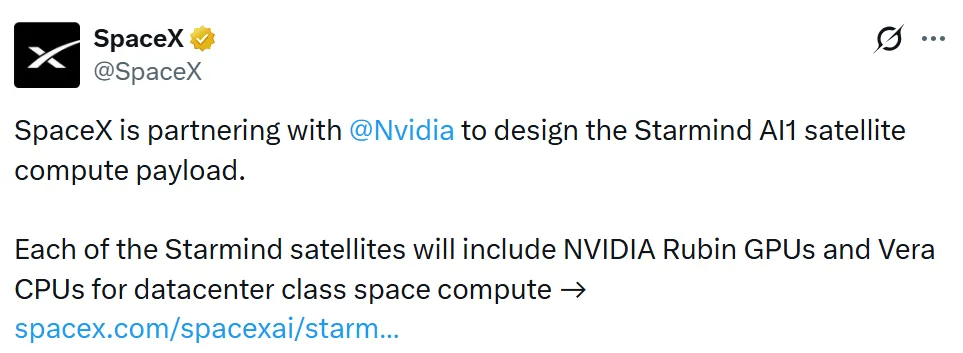
SpaceX has announced a partnership with Intel to co-develop the Starmind AI1 satellite for computing payloads. Each Starmind satellite will be equipped with NVIDIA Rubin GPUs and Vera CPUs to deploy near-data center-level computing into space.
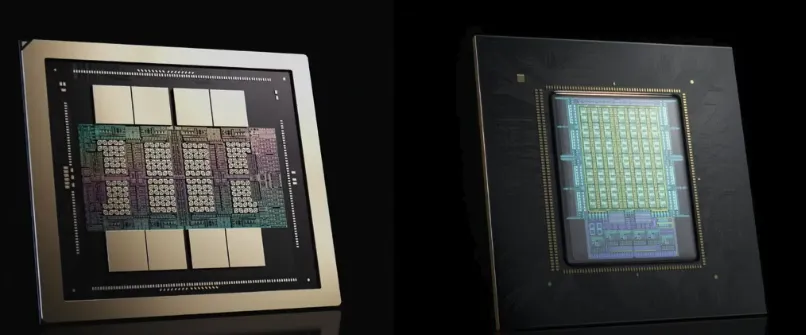
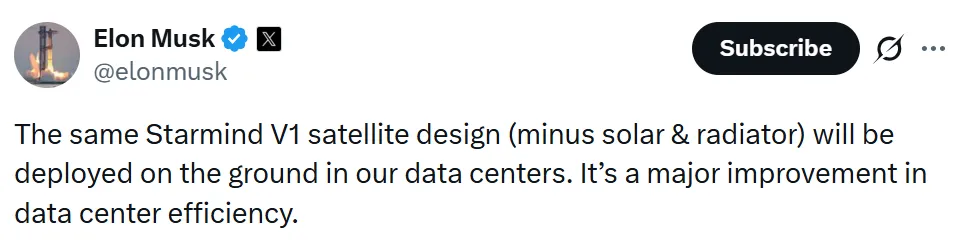
Musk also revealed that the same design used by the satellite will be deployed in ground-based data centers, only to remove solar components and heat exchangers.
This suggests that Starmind will cover space and ground at the same time, allowing both types of data centers to share the same efficient computing architecture.
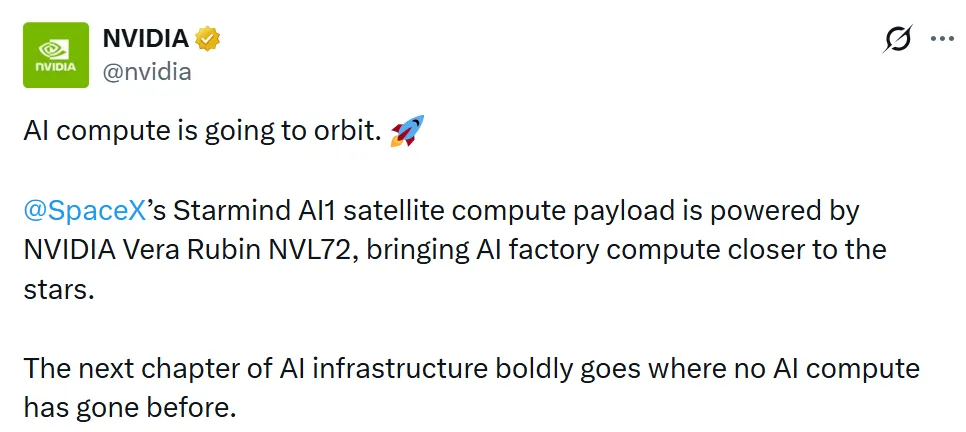
Invidia summarized the collaboration as: AI is about to enter space. SpaceX's Starmind AI1 satellite computing load is supported by NVIDIA's Vera Rubin NVL72, bringing AI's factory-level computing capabilities closer to the constellation.
The next chapter of AI infrastructure is boldly heading towards an orbit that has never been reached before.
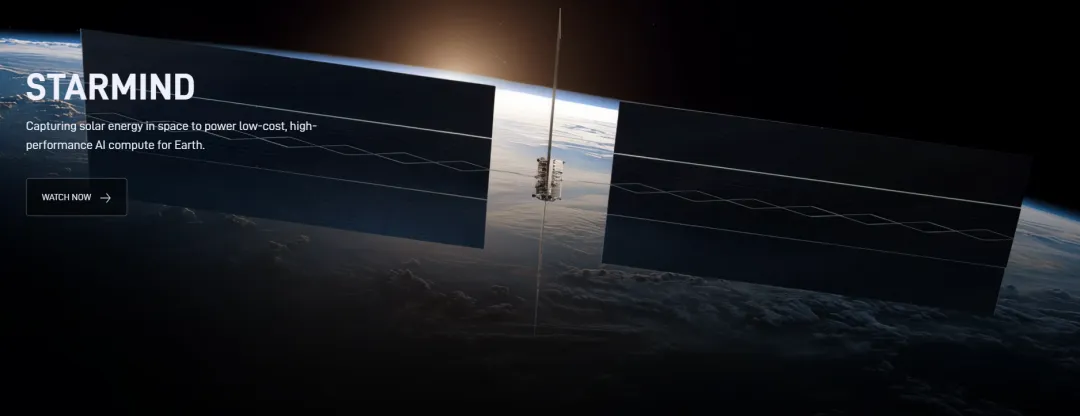
When we entered the SpaceX homepage, the project was described as: using solar energy in space to provide low-cost, high-performance AI computing for Earth.
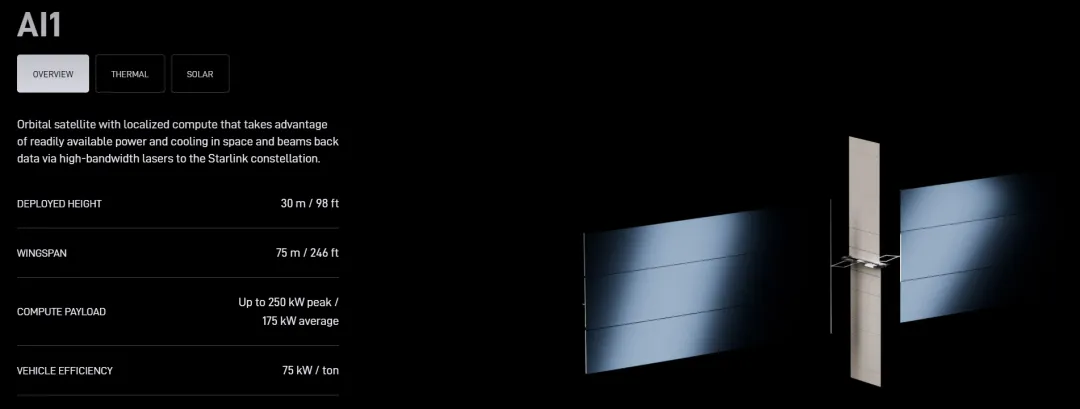
According to published design parameters, Starmind AI1 is more like a micro data center put into orbit. When fully deployed, the satellite is about 30 meters high, with a wingspan of about 75 meters, calculating a peak load power of up to 250 kilowatts, an average power of about 175 kilowatts, and a power density of about 75 kilowatts per tonne.
It will use readily available energy and cooling conditions in space to perform orbital calculations and transmit data back to a network of satellite chains via high-bandwidth laser links.
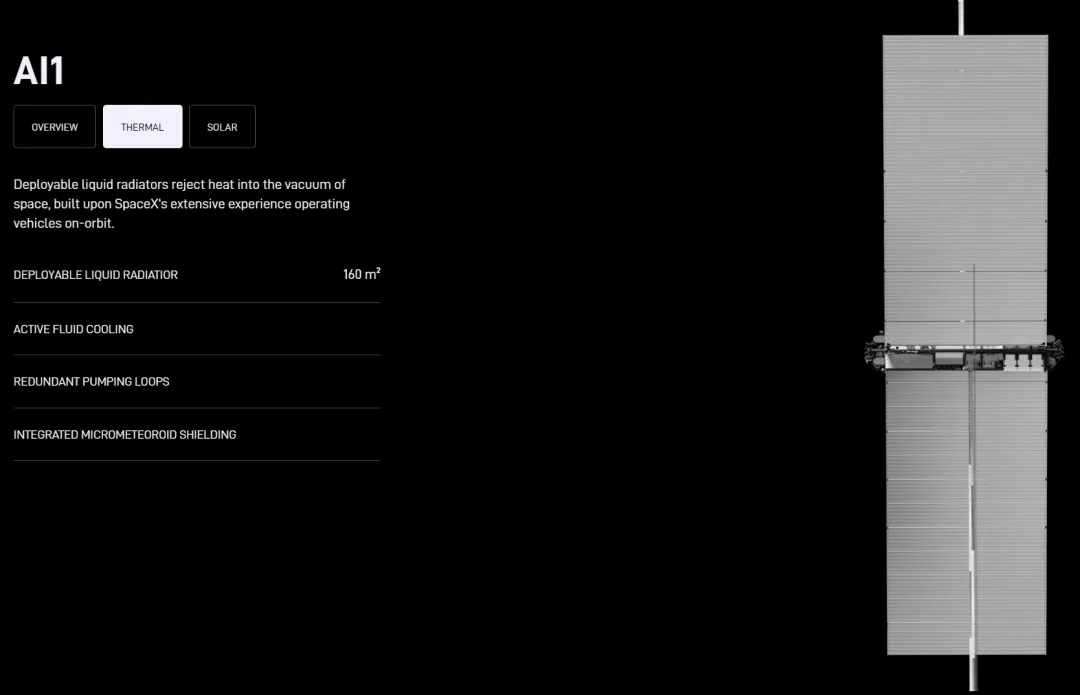
In terms of heat dissipation, the AI1 is equipped with a set of deployable liquid cooling heaters with an area of about 160 square meters, designed based on SpaceX's extensive experience in orbiting spacecraft.
According to SpaceX, deploying local AI computing to satellites and transmitting computational results back to Earth from a low-delayed solar synchronous orbit is currently the fastest way to expand computing in the context of an increasingly difficult energy supply on Earth.
The real test of mathematics is about to begin.
When the news was released, the comment section felt fresh. In addition to a good shout of water, many people discussed some real issues.
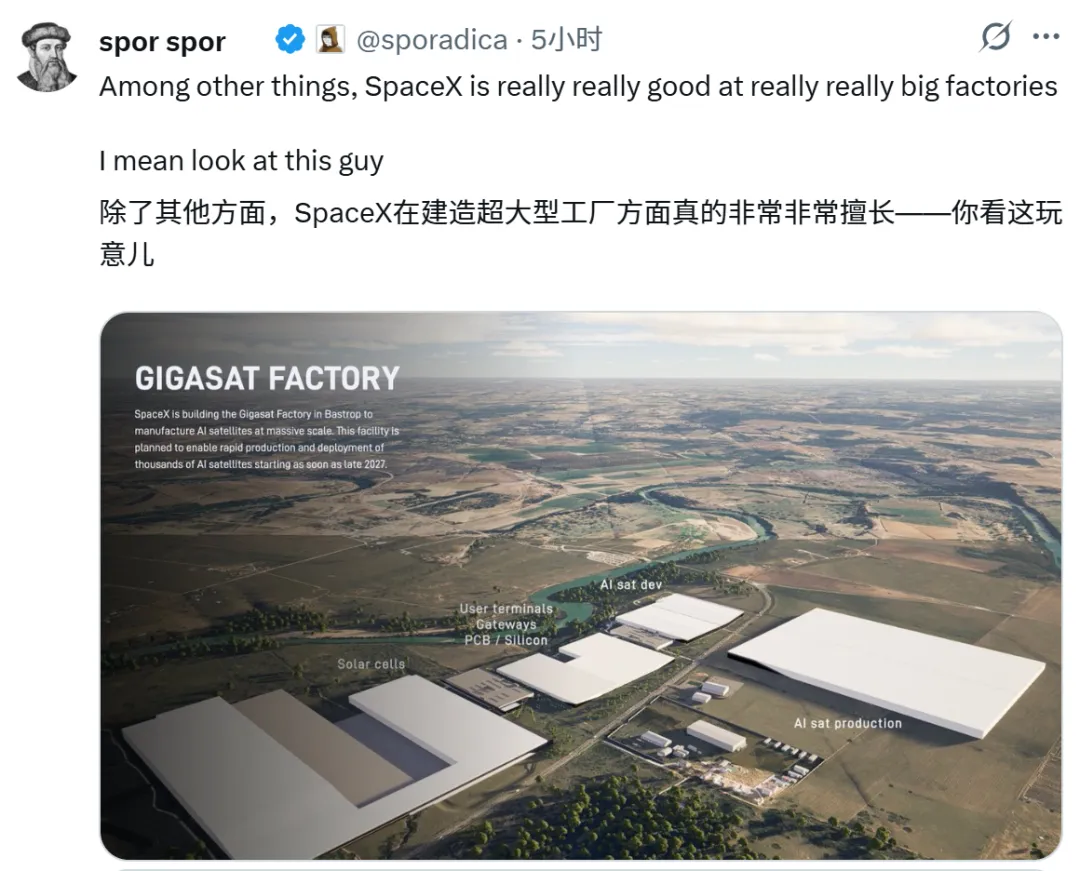
The commentary depicts the Gigasat Factory in SpaceX's plans.
The Texas-based plant plans to cover multiple production links for AI satellites, solar cells and user terminals, and aim to mass-produce and deploy AI satellites starting in 2027.
With SpaceX's existing plants alone, Starlink's weekly production could reach 70 satellites. Once the plan is fully in place, the AI satellites will be converted into industrial products on the flowing waterline and put into orbit using the Starship once and for all.
It's a great idea, but the investment in this series is not small.
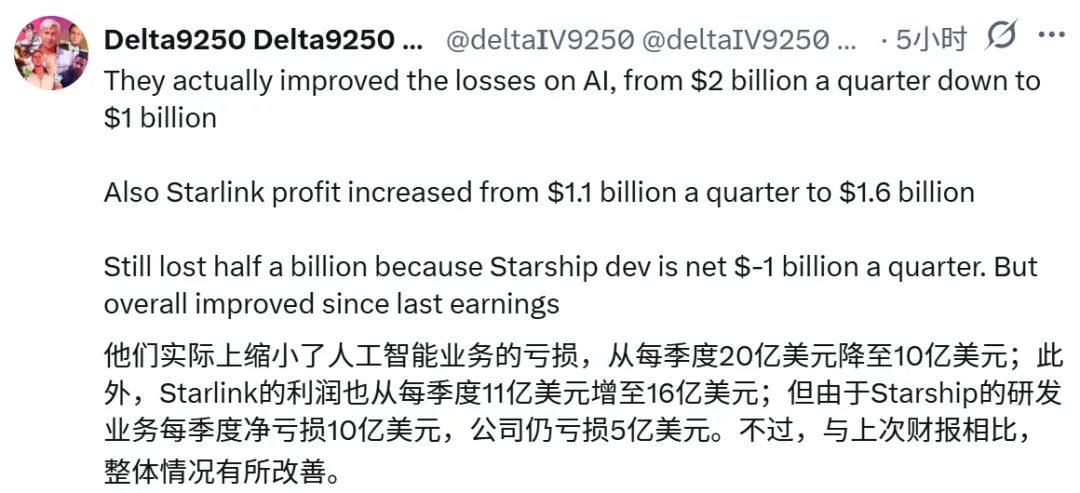
The "Starlink profits" mentioned in the comments are, more accurately, operating profits from the Connectivity business, which also includes business and government connectivity services.
Currently, SpaceX is trying to build a mutually supportive business structure, while AI is still at a huge investment stage, and Starship is continuing to spend R&D.
In the second quarter of 2026, connectivity generated $4291 million in revenue and $1656 million in operating profit, making it SpaceX's most stable revenue source to date.
In addition to SpaceX's own funds, there has been speculation as to the position of British Airways in these plans.

Some have also noted the difficulties that Mathematics in Heaven may encounter.

If SpaceX is really going to deploy thousands of satellites, how to manage such a constantly moving, ever-changing cluster of distributed computing will be a problem that must be solved.
How many potential beneficiaries will there be in the process of such a deployment?
Such "supply chain mining" coincidentally proves that SpaceX's image as a "Space AI Infrastructure Company" is gradually building.
What do you think?