
It's the first time in the history of the world.
Claude Code evolved overnight!
Just today, Anthropic officially released an epic-level update to the Claude Code desktop version!
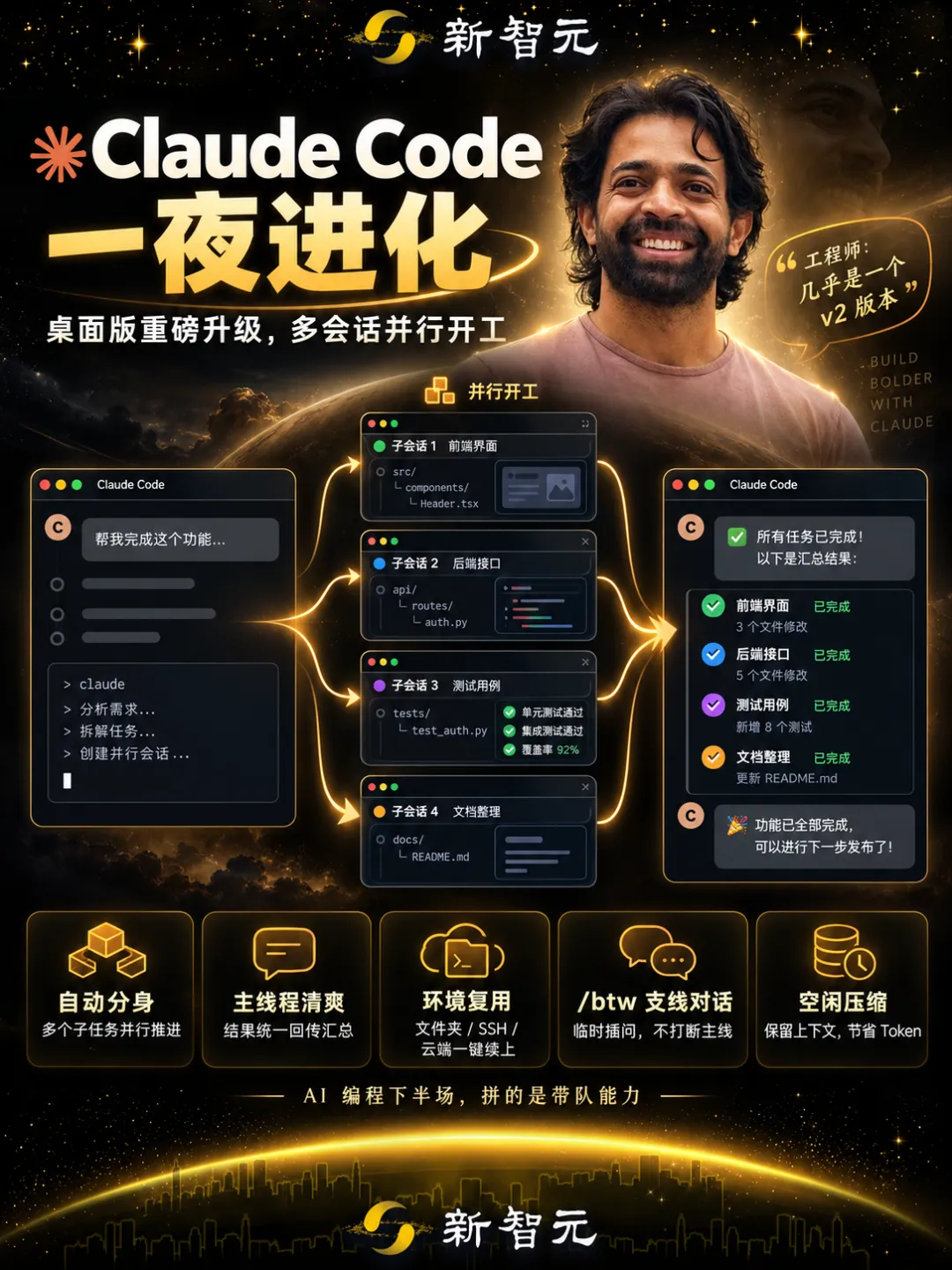
It can simultaneously pull multiple conversations, multiple thread running tasks, and whoever finishes first returns the results to the main session.

Moreover, the new interface has completely redesigned meeting management.
It's not just about supporting environmental reuse, pulling a button on follow-up tasks, but touching a button with your hands./btwYou can also cut to the new tag page to run separately.
Almost all the time, the global developer community has been scrubbed by the same message.
Anthropic engineer Tariq was even more excited, exclaiming, "It's almost a v2 version!"
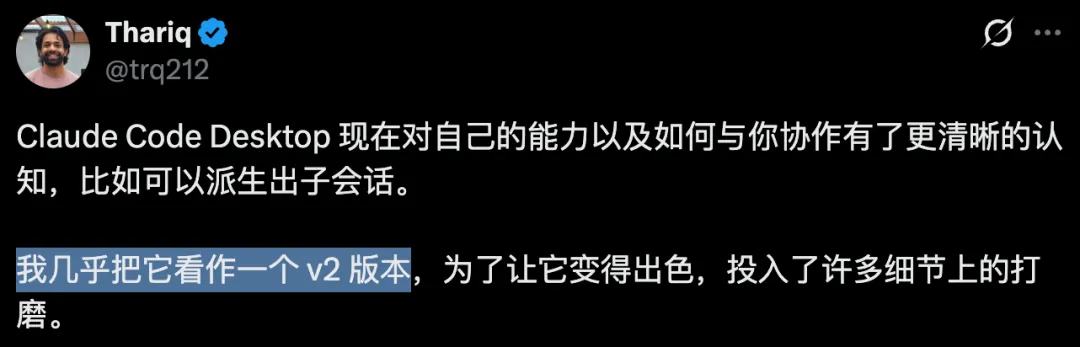
 Claude separated himself automatically.Multiple sessions open simultaneously
Let's take a look at the most exciting feature: Automatically create a nested session.
In the past, if you wanted an AI to do three things at the same time, you had to manually open three windows and then verify the results one by one.
Worse, the more tasks, the more the main threads become disaster scenes: the front-end code and the back-end error mixed together, to go back one step to the modification, to have the mouse roll crazy in front of the screen.
Now, that logic has completely changed.
In the new Claude Code desktop version, all you need to do is switch out all tasks at once in the main dialog box.
When Claude recognizes that these tasks can be handled in parallel, it instantly performs "Shadow Separation" and automatically creates a separate nested session for each subtask!
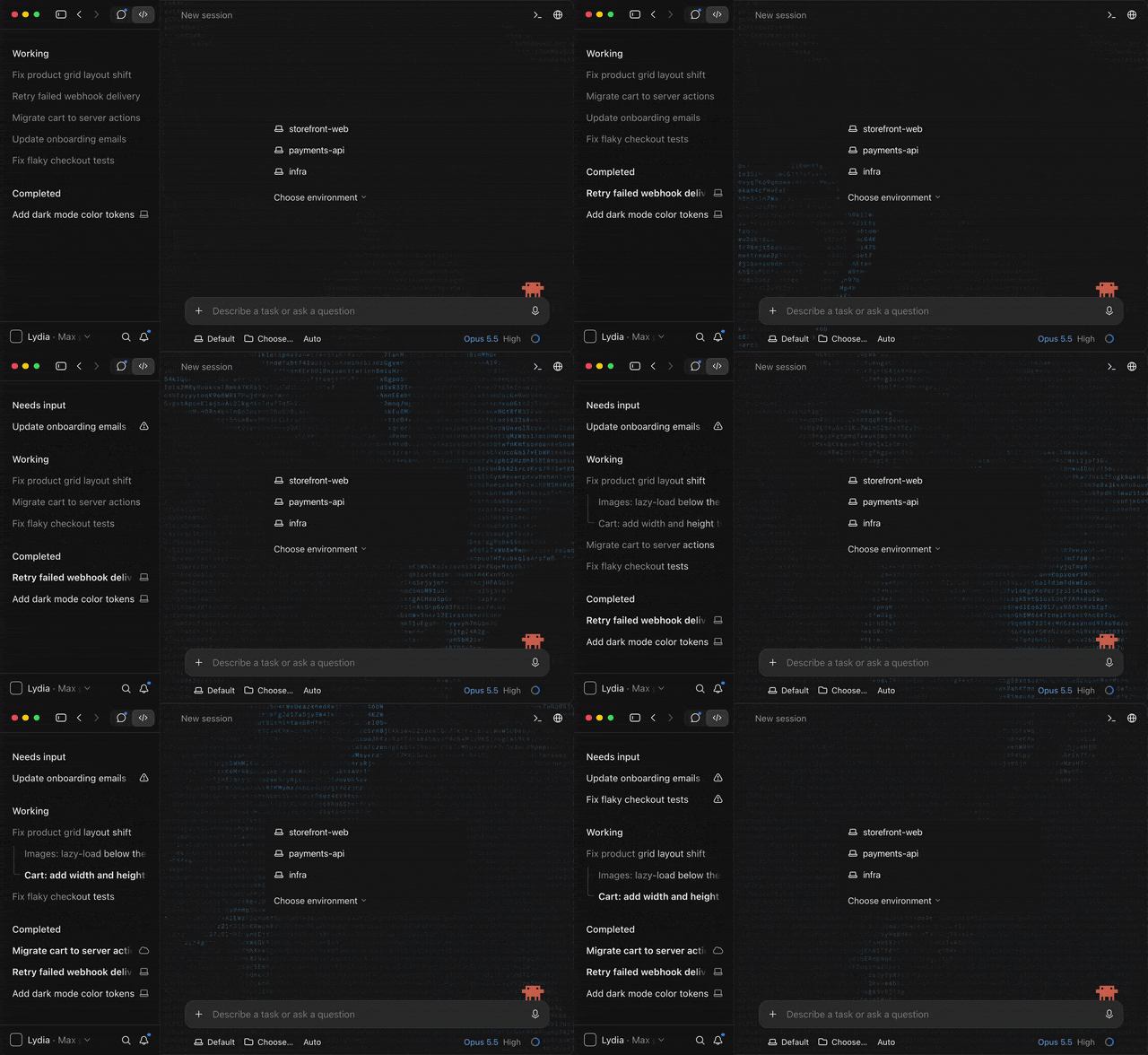
What's even more interesting is its mechanism of information flow:
The bottomand distributedImplementation:Several sub-sessions run simultaneously in the background, each reading the context, modifying the code, running tests, and not interfering with each other.
The main thread is very clear:They're those busy middle trials, hundreds of terminal outputs, that don't contaminate the main dialog interface at all.
The following is a summary of the report:When each sub-session is complete, it reports automatically to the Director, as the subordinate would, and summarizes the final execution results neatly back to the main session.
In this way, the main thread maintains a very high readability from start to finish.
Humans don't have to worry about the hundreds of rows of erroneous checks in the middle, they just have to sit in the main meeting and look at the final answers given by each AI, like a bunch of rhymes.
If a Claude is stuck or you want to see the details, you can get in any moment and get to the bottom of it.
This round of upgrades will make it easier for AI to operate autonomously.
How did people get away with all the AI conversations?A couple of Claude's start working together, and the next second comes up with another question: Who should I look at?
One is still analyzing the code, one is running the command, and the other may have stopped waiting for you to make a decision.
The new version moves these states to a more prominent position.
The sidebar allows users to see which sessions are working and which need their own input.
After entering the session, the real-time waiting list will follow Claude's plan; when it needs a user response, a review card will summarize this round.
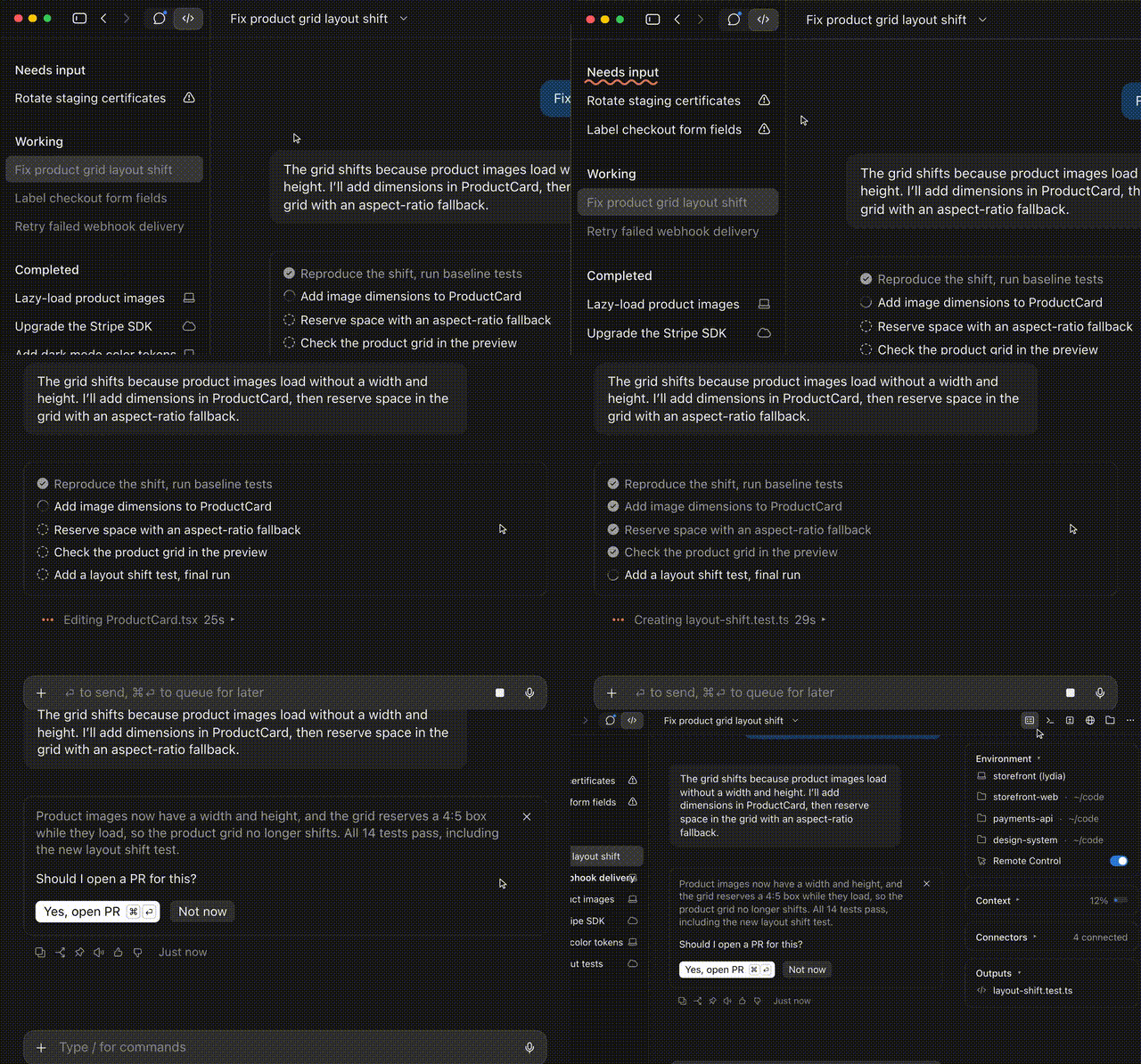
The sidebar shows the location of the task, the context and the code changes.
The secondary level is switched to "the battlefield".One-key environment reuseIn addition to the simultaneous execution of the mission, Anthropic also involved "pre-launch preparation".
The daily development environment of many full-service architects is very complex, with front end in one folder, back end microservices in another folder, and even some long-cycle tasks that need to be left running in the cloud.
It takes half a day to reconfigure these directories and connections every time you restart the software or switch projects.
The new edition of Claude Code reworked the "Newly Built Session Interface" with a large knife axe.
The core goal is four words: uninterrupted continuity.
Commonly used in directory directories
When you open the interface, the "Recently Used Folder" is placed directly in the most prominent position, without the need to search the system directory tree, with the click of a button.
Customized "Environment" packaging and storage
Now, a complex set of development configurations can be directly packaged and stored in a well-named "environment".
For example, a combination of multiple local folders, a specific SSH remote host, or a cloud operating environment. The next time it needs to be used, a single button can instantly pull an entire set of multi-directories, cross-end workstations.
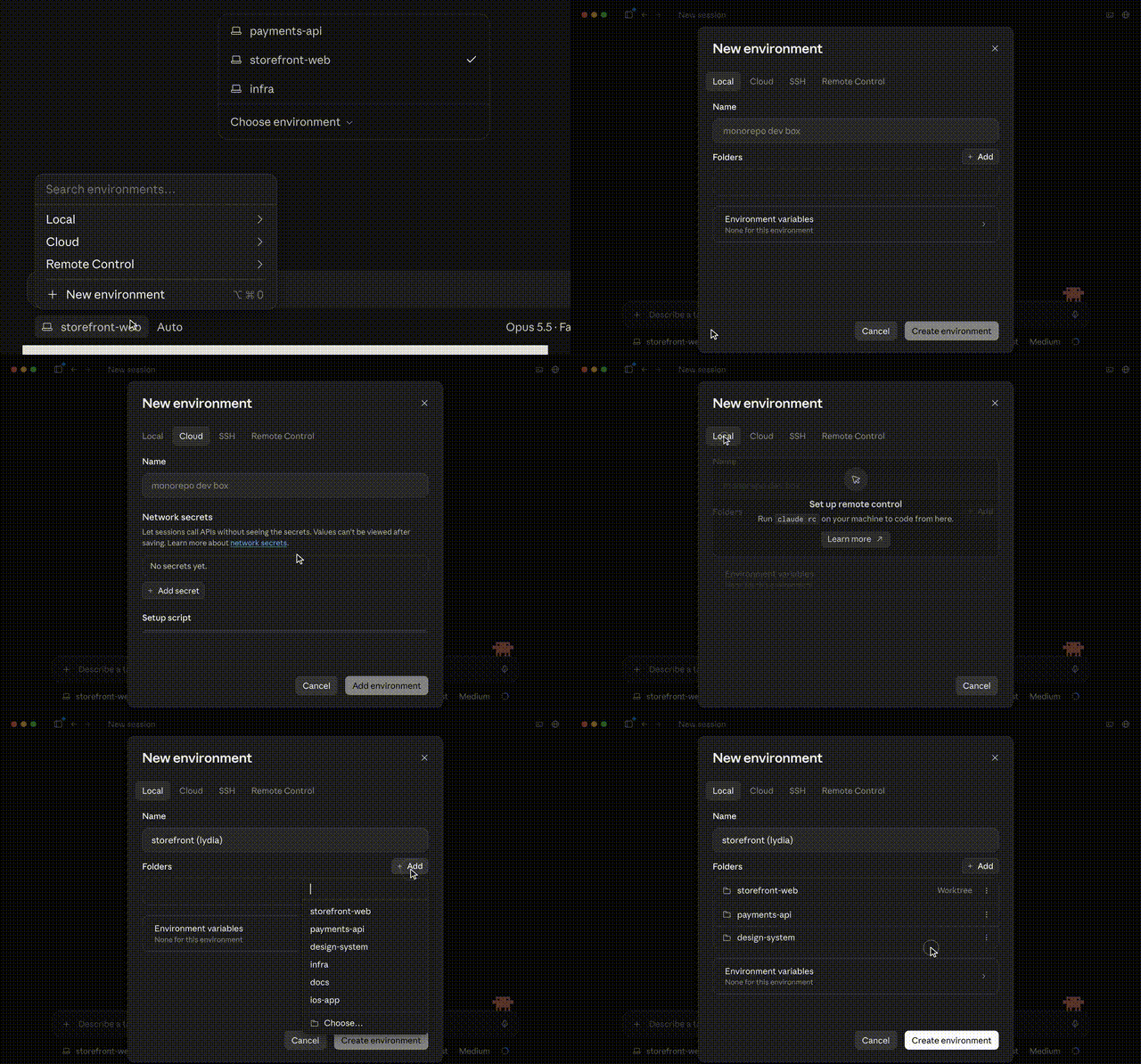
The original Git Worktree is isolated.
Since there are multiple sessions in parallel, wouldn't it be a fight if two AIs changed the code in a local folder at the same time?
This, Anthropic, has always been good for you!
When multiple sessions are launched, the new CC directly provides the option to "Worktree independent of each folder".
With just a hint, Claude will automatically use the Git Worktree to branch out independent work trees for different parallel sessions.
A session rebuilds the underlying architecture, B session rebuilds the emergency bug on the line, the two are completely isolated at the physical file level, and there is no need to worry about code overlapping or the local environment collapsing.
Detailed control of the seal/btw whenever you want, actively recommend follow up tasksWhy would Tariq admire the new version of Claude Code's desktop as "extremely self-aware of his abilities"?
The answer lies in two very clever interactions:/btwIt's a linear conversation.
In the past, AI tools were called "calculator beads".
While the new version of CC is in operation, it will follow up the next step based on the current modification of the "active recommendations".
There is no need to type confirmation, just click on it, and the subsequent suggestion will run directly as a standalone session in the background!TabThe key is instantaneous.
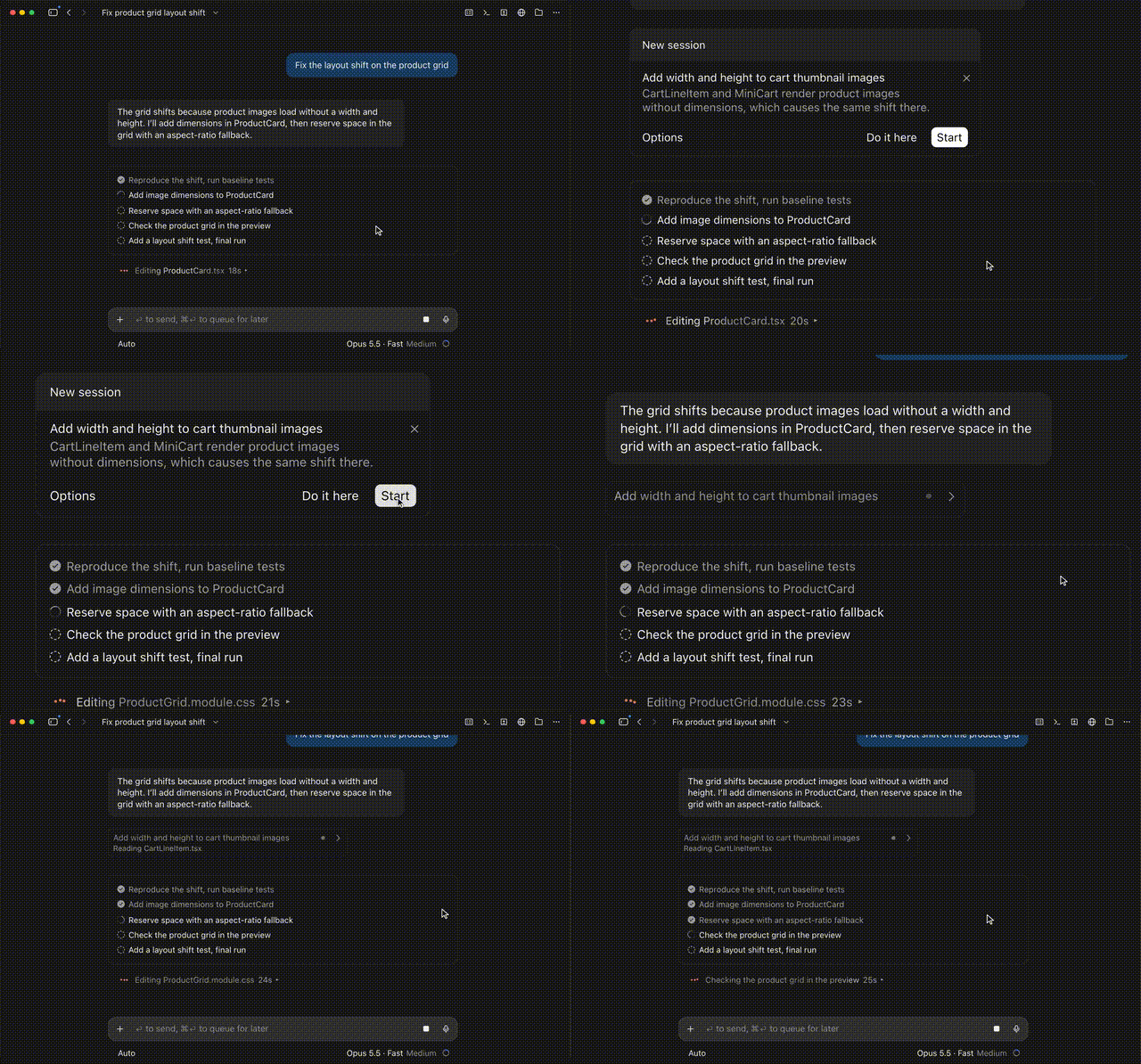
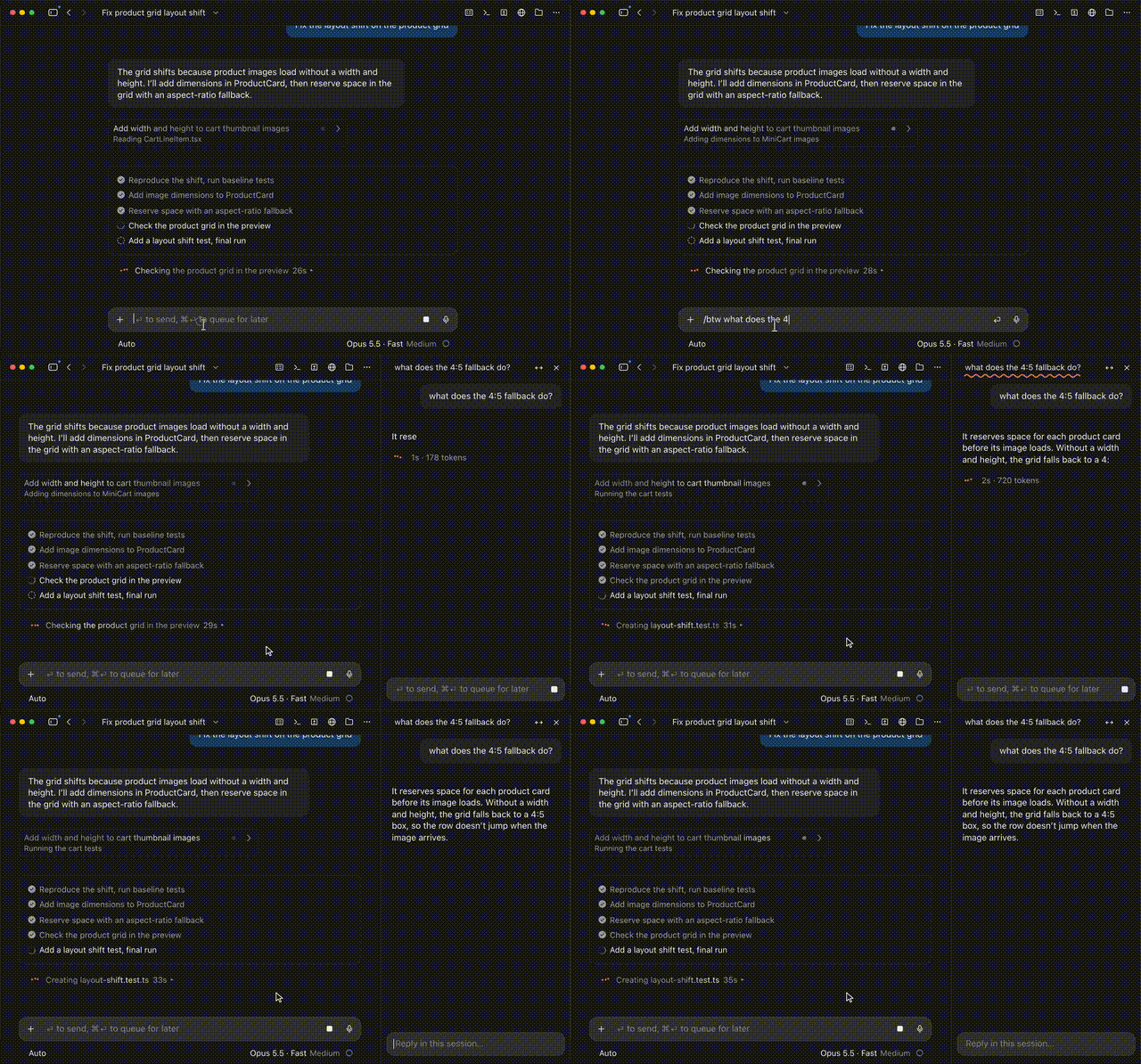
Another design that allows programmers to screw up a case is a new one./btwI'm going to have to ask you a question.
In the process of advancing the mainline assignment, you can avoid the temporary question, "By the way, how long has the token expired as a default?"
Today, in CC, all you need to do is input./btw(or press the shortcut)Cmd + ; / Ctrl + ;):
The system immediately opens a linear dialogue on the independent tag page, fully inheriting all of the above contexts of the main session so far, without having to reinterpret the context.
The main line questions will never contaminate the main thread records. Until you clear your doubts, turn off the tag page, and the main line work is still clean.
This function seems simple, but it solves a very basic pain point: "heart flow" should not be interrupted.
What programmers fear most is a "context switching tax", which can take up to ten minutes to get back to deep work every time it's interrupted.
/btw allows temporary questions to be solved without disrupting the mainstream process, and in many cases, efficiency is the least that can be avoided.
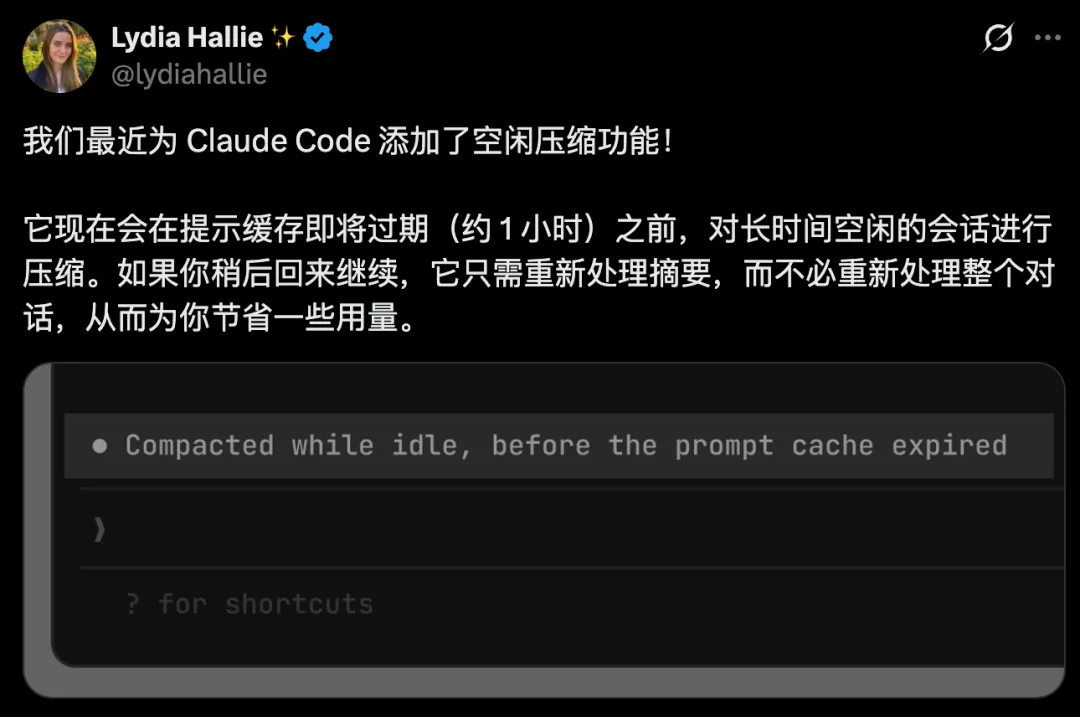
Not only that, but Claude Code also added the "Idle Compaction" feature.
When a session is empty for an extended period of time, the CC automatically compresses the context of the session before the prompt word cache expires (about 1 hour).
This can both preserve the key in context and reduce Token consumption, saving usage limits.
 In the second half of AI programming, the tagline is "Team Capability".
Claude Code's work on the desktop was a big change, and it was a direct advance for AI programming in the second half of the game.
It is evolving from a single "AI Programming Assistant" to a "Multi-Agent Collaboration Desktop".
In the last two years of the AI Coding Competition, we've been working on single-point code replenishment, single-generation accuracy, and running scores on the SWE bench.
But today, the bottleneck has become "how to get AI to develop 10 modules at the same time without messing with engineering".
According to Thariq, Claude Code is highly aware of his abilities and knows how to interact with human beings through hypnotherapy sessions.
Most importantly, under this new paradigm, there is a fundamental shift in the role of human developers.
The era of single-line work is coming to an end, and everyone's "Multi-Agent Parallel Engineering Corps" is officially online today.