
It's the first time in the history of the world.
STEPX Neo, the world's first large-scale native smartphone, has been officially unveiled at a conference called "Ready Builder One" in Shanghai. It features the native smartphone operating system Step AOS 1.0 (Step Agentic-native OS) and a new generation of personal smart phones named Amu.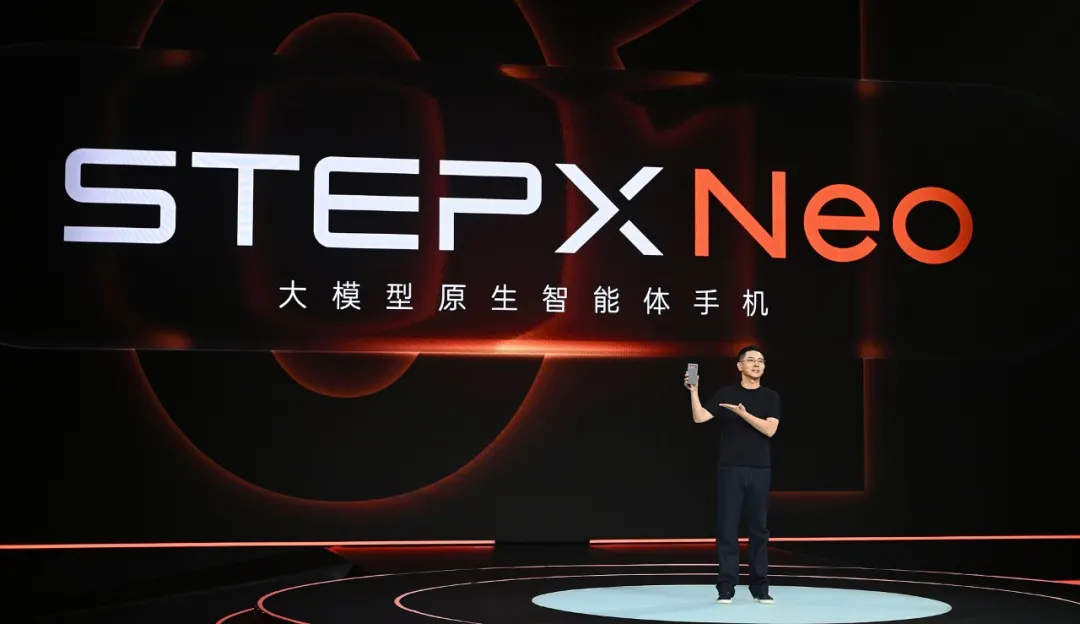
Time goes back a hundred days.
On July 13, at the launch of the Stage Jump terminal, when Incheon, holding a mobile phone, said his first words to the individual Smart Jump Amoo, the people on the platform had not yet come to touch the real machine.
It was a "100-day deal" that stayed that night.
Now, it's here!
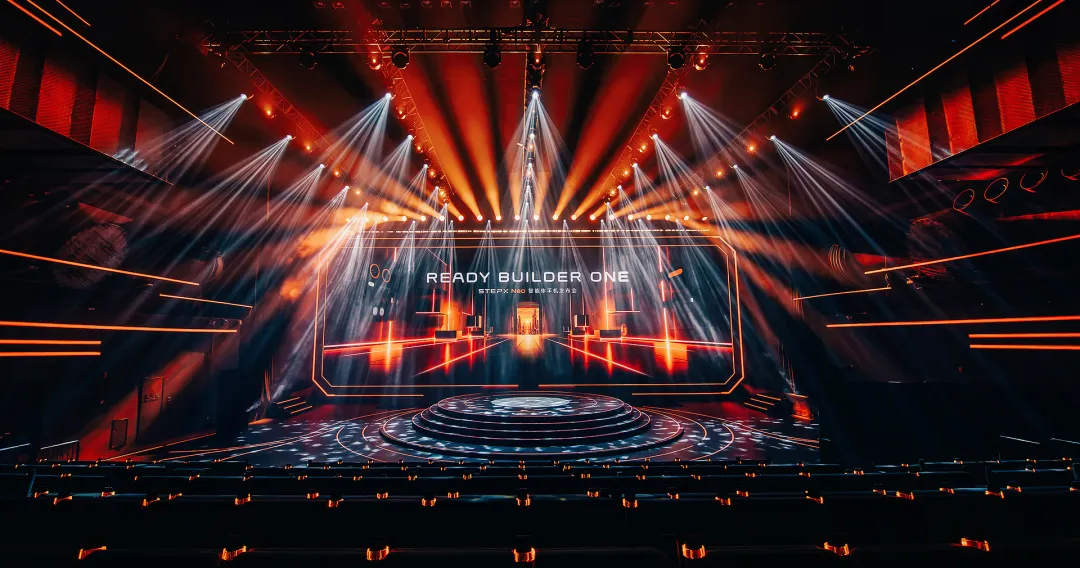
Over the course of 100 days, the mobile racetrack is like a boiling water, everyone is yelling at the AI phone, you can look at the bottom, the vast majority of them are adding a layer of AI capability to the traditional system, clicking and sliding with unobstructed interface simulators.
It's like putting a battery pack in a gasoline truck and then calling it new energy.
And when everyone's going to go to their cell phones and they're going to go to AI, from this conference, we're going to see that the step-by-step terminal is trying to answer a deeper question.
What is it like to have a smart phone in the age of smart phones?
STEPX Neo is the prefix for this answer. Read it and I see what the future phones look like.
Born to be intelligentNot to add AI to your phone.Understanding the STEPX Neo is a way of thinking: don't use a traditional phone framework to understand it.
From day one, the STEPX Neo didn't build hardware and AI, but instead asked a question: "What does a smartphone need to work properly?" and then pushed the design of the entire phone.
This gave rise to a step-by-step terminal architecture called the "soft-hard model" triad:
The hardware is the body that AI enters into the physical world. STEPX Neo uses both physical sensing and feedback.
This generation focuses on the "ears": a six-micron matrix, the Whisper 1.0 algorithm, plus a low-power audio sensing chip.
The environment is noisy, and Amu can be heard; you speak softly, and Amu can be heard; the power consumption is extremely low, and Amu can be heard all the time.
The key to the AI entity on the machine is a key that evokes the neural synapse of the machine. Tapping the key, the Amu is online: say a word, search for information, find documents, remember memories, do something, and the next life is his.
The MiniLED back screen on the back of the body is Amou's exclusive expression space.
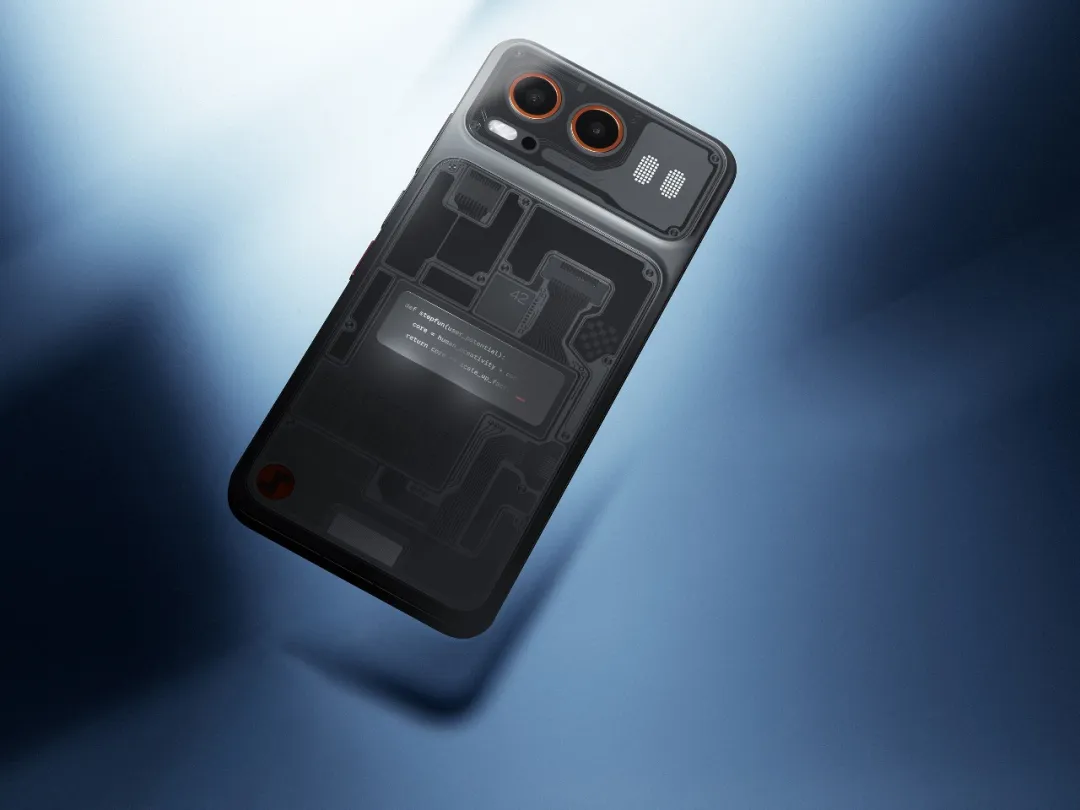
What's it doing? A round of six conversations, all-in-one; what do you need to know? It picks the most critical line out of a bunch of notifications and shows it directly to you, without having to turn over your phone; what do you want it to show? Custom text and patterns, with you.
The system provides a stable operating environment for intelligent entities to enter the physical world.Step AOS is an operating system designed specifically for smartphones. It handles perception, memory, tool calls, task scheduling, and permission management, all of which are "organs" that do not exist on traditional phones.
The model matrix constitutes the intelligent "brain" of the STAP jump Amu. The STEPX Neo synchronizes with the end-cloud to achieve "end-side fast response, cloud-side deep thinking".
Models, systems, hardware, all three have grown together since the beginning of design.
One of the most direct advantages of this native architecture is that the Stage Jump terminal calls it:The intention is to serve.
All you have to do is say what you want, and the rest is to understand, dismantle, schedule, and execute, all done by an intelligent organism.
It sounds simple, but it's another thing to do.
If you say "help me handle tomorrow's report", that's a very vague instruction. A traditional voice assistant will probably ask you, "Please ask what you're dealing with".
But Amoo can break the sentence: schedule tomorrow's events, scan the unread messages for relevant material, and, based on your habit of judging, "processing" is more likely to be about preparing the PPT than cancelling the meeting.

In order to do this, Amoo relies on two things: one is memory and one is ecology.
Speak of memory. How can it know what you mean? Because it remembers you.
STEPX Neo's memory system is called "two-dimensional six-dimensional, three-step memory", which sounds very technical, and it's actually quite understandable: the user domain stores your personal information, using habits and historical preferences; the smart domain stores the field knowledge and work experience it accumulates itself.
Through the three steps of "remembering, thinking, remembering", it silently records, continually organizes, and evokes each interaction as needed.
The more Amoo knows about you, the more it will work.
This differs substantially from traditional AI assistants. Every time Siri wakes up, you have to change your mind; while Amoo remembers which hotel you stayed at the last time, and what time you usually get up.
Like a partner who's getting to know you.
In other words, ecology. Understanding the intention, only the first half. It is the ratio of the two words "service" that can help users to do things, do things, do things.
Over the course of 100 days, the Scale Jump terminal hasn't been connected to the ecosystem.
The platform has partnered with nearly a hundred companies or products in the fields of payments, messaging, transportation, drip, screening, quality, merchant, and others to create an underlying ecosystem in the areas of local life, travel, office improvement, and content creation.
Step AOS is compatible with H2A2A, human-host agent-service agent, and integrates third-party expertise into the Amou mission process. Amou is responsible for understanding, dismantling user intentions, matching services, and creating personalized task cards and execution results with partners.
For example, if you say, "Help me arrange a trip to Hangzhou tomorrow", Amoo will check the ticket booking with a smart car and then make the payment through PayPal without you having to jump across multiple apps.
It also reminds you not to forget the scheduled meeting.

The greater the capacity, the more important the borders.
The security framework for step-by-step terminals can be summarized in four points: credible, data-sensitive, authorized, visible, operation-wide transparent, traceable, controllable, high-risk, secondary confirmation, authorized suspension withdrawal, reversible, misoperation support withdrawal.
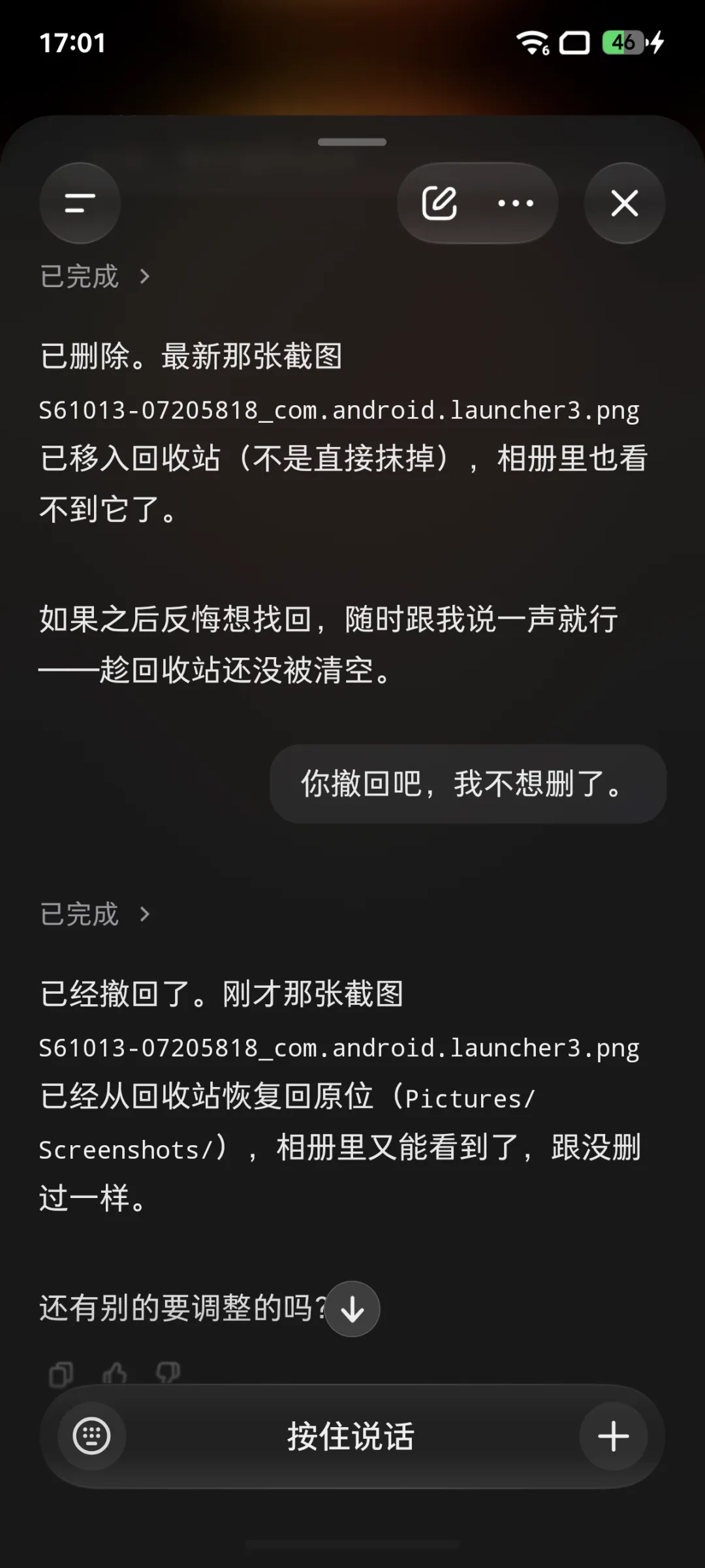
The security concept behind these four points is clear:AII have the right to serve you, but I do not have the right to serve you as your master.You can always see what it's doing, you can call it off, you can turn it off.
With AI BuilderMaking your imagination workAmoo can hear, remember, act, and obey the rules. The next question is: What else can it do?
As the first-generation product of the Jump Terminal, it is more of an AI Builder-enabled smartphone for those who are not satisfied with "using" but want to "create".
Most smartphone stories about "helping you do your job" have stopped.
STEPX Neo takes a step further: it not only allows users to use the Amu, but also allows users to create the Amu themselves.
StepStuido delivered this open-source smartphone to the creators, launching its first AI terminal native development tool, Step Stuido, in the AI era, the ability to turn ideas into works, handed to everyone. Users can make combined calls to a variety of packaged one-way, three-way atomic capabilities on this page to easily complete the development in the form of a conversation and push it to STEPX Neo with a single click.
A typical development platform is a model API, and Step Studio provides the capabilities of an entire smartphone.
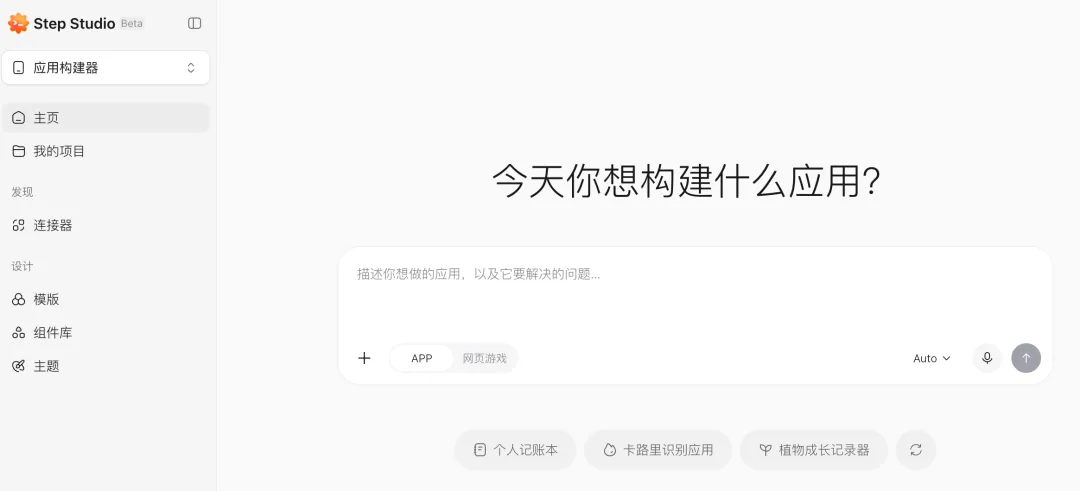
We need to open up models, systems, hardware and ecosystems.AICreators develop their skills and application scenarios.
Models are open so that creators can call upon the ability to understand, generate, and reason about models. You don't have to pull the model yourself, because your phone would have a smart brain in it.
The second is system openness, the ability to open the system's underlying atomic capabilities, and the ability to manage powers, tasks, and states to support creators in organizing their movements so that intelligent agents can continue to execute tasks.
The hardware allows the creators to design environmental perceptions, task triggers, and state feedback through sensors, cameras, dashboards, and AI buttons.
Finally, it's eco-openness. It's the ability to access services from external eco-partners like Paypal, Cargo, Didi, Merge. It allows you to have the skills to not only tune in to what's on your phone, but also connect to real-world services.
For example, someone gives you a pencil, a step-by-step terminal gives you paint, canvas, lights, models, or even an assistant who can help you get your coffee.
Creators create a complete body of intelligence capable of perceiving the environment, calling services, performing multi-step tasks. The skills of an ordinary person, and the skills of an official team, run on the same set of capabilities.
This is the fraction of the phrase "born for AI" that gives the right to create to everyone who has ideas.
In the last 100 days, many entrepreneurs and Amou have joined forces to bring ideas to life.
At the event venue, STEPX's fanatical creator, Ayu Ayou, walks into the spacecraft he built with Amou, and "Javis" in the science fiction film is instantly imagined.
At the end of the media experience, I also tried out what a few creators had come up with.
B-station UP owner Daniel_official has created a "society icebreaker" skill for new students. To start a week of learning to recognize dozens of new faces, what do you do?

There's also the "collection bugs don't eat ash" skill of B-station UP owner Yuboi. Often when the videos are forgotten, or the podcasts are too long to be heard, the complex content that is scattered in the collection bucket, is managed uniquely by Amoo, so long as a shared action, text automatically organizes, so that the user's collection bucket doesn't eat ash.

After trying it out, my biggest feeling was that it was all from a real desire.
There is the idea of a horse walking empty, there are small pain points in everyday life that are possible in the age of the intelligent body.
Individual creativity becomes the ability to share, and creators and users form a positive loop.
Once the steering wheel is turned, the boundaries of the STEPX Neo's capabilities are no longer defined by a single company, but are continually expanded by countless creators.
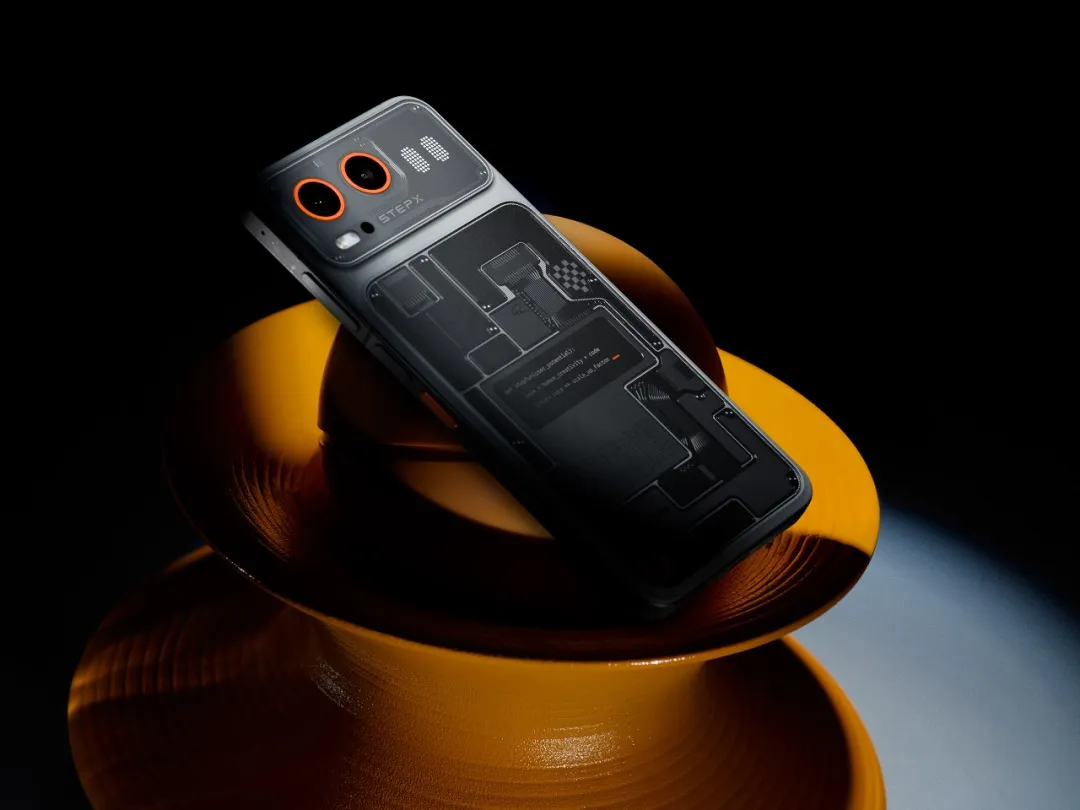
It's the ability of an intelligent body to become a human being.The retro-futuristic aesthetics of the STEPX Neo have left an impression. The look and feel of the design, sometimes like a brand card, tells the incomplete story of functional parameters and passes it on to everyone.
Retro-futurism is a design style that combines the aesthetic and technological imagery of the past with the elements of futurism. It presents the "future imagined by the people of the past", or to deconstruct and reconstruct the future from a retrospective perspective.
Underneath the grinding glass backdrop of Neo, the symbols of the early computers, cyborg circuits and AI civilization are combined.
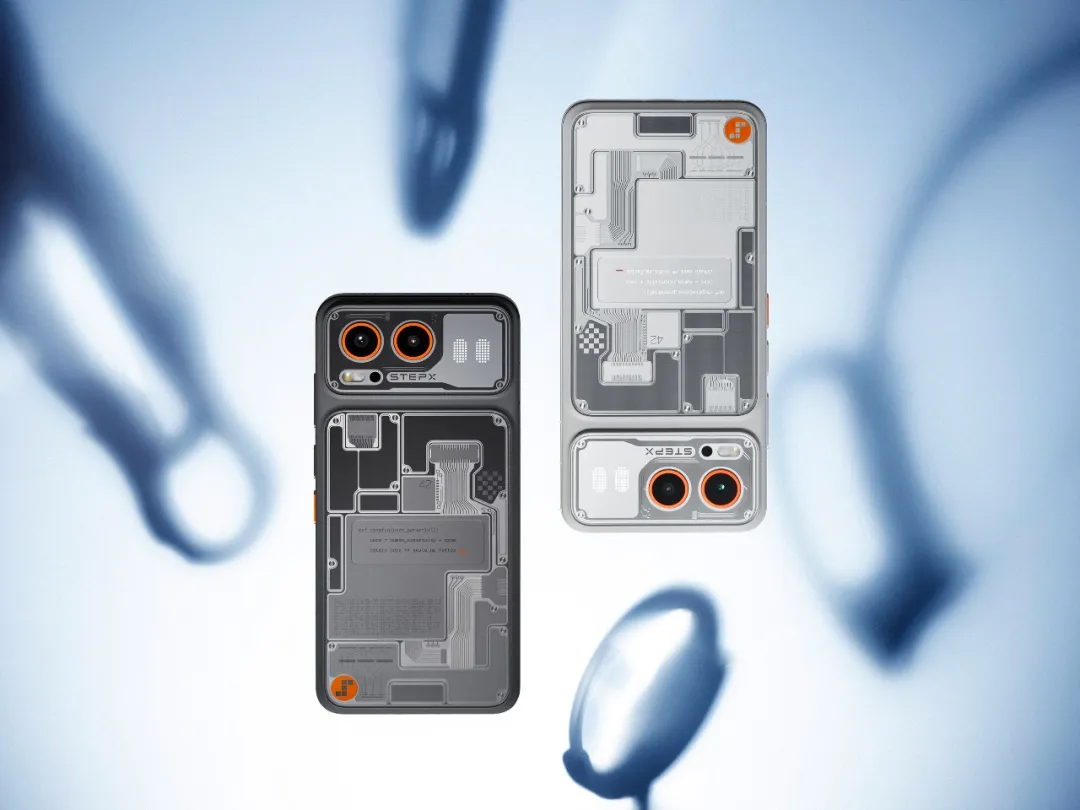
Above are the "perception modules" and below are the "smart core" membrane film textures, connecting the two regions with circuit textures, like an AI civilization map wrapped in glass.
What it means is simple: make intelligence tangible, make imagination visible.
On the map, there is a line of code:
def stepfun(user_potential):return (human_creativity + code) ** scale_up_factor
The name of the function is the name of the parent company of the terminal. The user_potential parameters refer to the potential of each user.
In functional physics, human_creativity + code is the belief that the team writes in the skeleton that AI is not an alternate black box, but a carrier of human creativity.
People's creativity, combined with technology, is not 1+1, but exponentially enlarged.
That's what the STEPX Neo prequel really meant: letting users turn ideas into experiences, making the ability of an intelligent body into a human ability.
Take a look at the logic of STEPX Neo and you'll see a complete link from the bottom to the user.
The original architecture provides a capacity base, models, systems, hardware, ecological open release to create space, ecological collaboration to connect real services, and user co-creation to sustain product growth.
This link starts with technology and ends with people.
STEPX Neo is priced at $3,999: models, systems, Step Studio, mobile phones, a full package, carbon black, two colors of silver and silver.
I bought and sent 10 billion tokens a month for 12 months to feed the creators.
What's even more interesting is the "Step-Up Amoo Growth Plan": the top 10,000 mission-reaching users get a "Star Trek Ship Ticket" to replace any new STEPX terminal with this Neo within the next five years.
You run with it, it gives you back.
Of course, the first batch of deliveries was not the first batch of deliveries.
It cares about something else: whether it can run alongside AI's original generation to use the new class of "smartphone" to generate user demand, create creativity, ecologically embrace services, and continue to evolve in this cycle.
It's a new human-to-human relationship behind it: it's not that people control a cell phone, or that it's a masterpiece for people, but that people grow with an intelligent body. You teach it to know you, and it helps you grow.
That's probably what it means for humans to live together.
One hundred days ago, Incheon said "Welcome to this world".
One hundred days later, the world is ready. Not because the technology is perfect, but because more people are using it and more people are creating ideas.
STEPX Neo's story has only just begun. The protagonist of the story is not just a cell phone, but everyone who has it.