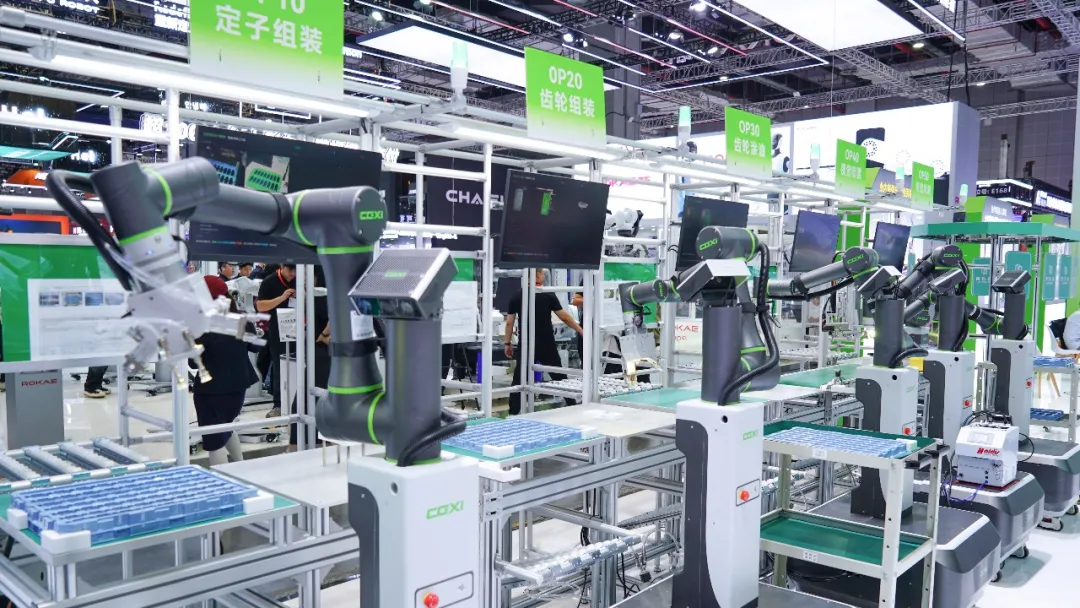

The entire process, with no man-made interruption to intervene programming, when one workpiece model is done, another workpiece is transferred and taken to the plant, the robot automatically adjusts the process and end equipment, and restarts on-site assembly.
These long single-armed and two 3D visual cameras are the latest release from the company's body-smart product line.
Targeting demos in the field of physical intelligence, unreliable industry difficulties, and AI technology accumulated in almost two years, combined with operational control capabilities for verification of volume production in the automotive sector, the migration to the industrial scene, delivered this volume.
Vehicle-class main body + triple modelThe first pipeline to the production lineSome might ask, what's the difference between a single-armed silicon robot and a conventional robot?
Compared to traditional collaborative robots or humanoid robots, the biggest feature of the silicon industrial AI is that it is rooted in a real industrial scenario, without the need to demonstrate its autonomous execution, in the form of an intelligent body to help workers complete production and manufacturing tasks in the field.
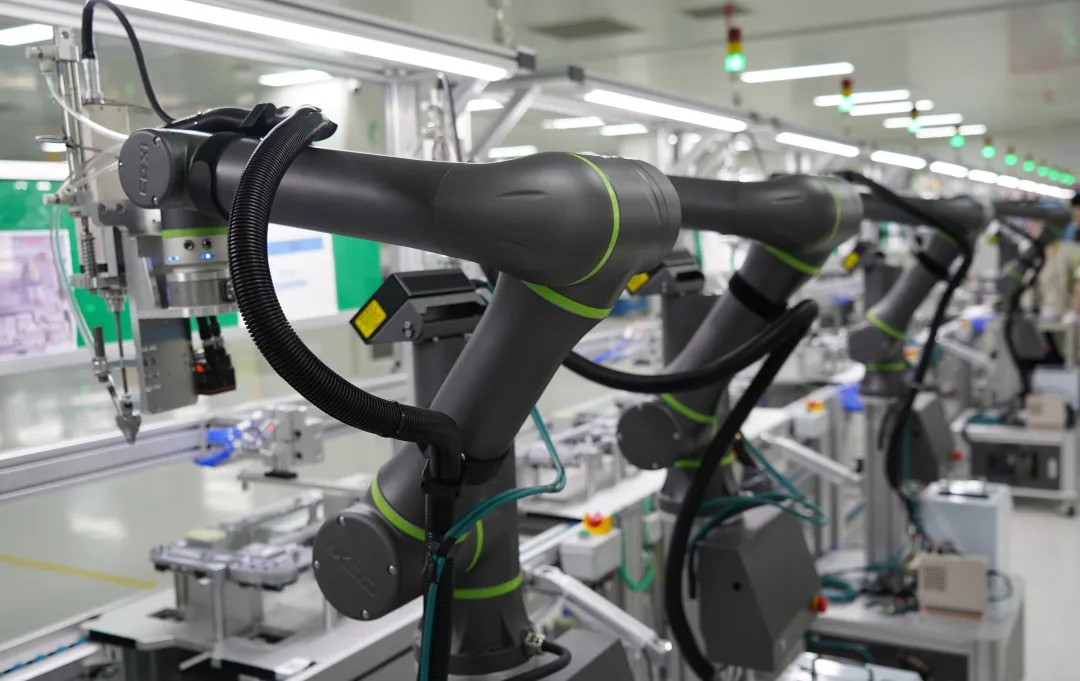
Intelligent industrial pumps for real production line assembly
The shape of aluminum products should not be the focus of the aluminum industry's pursuit of intelligent agents, it is the cleverness and genuine functioning that is central to aluminum.
The shape of the industrial smart body is not limited to single-arms, the single-arms + dual 3D vision + power-controlled precision assembly scheme presented at this trade fair is based on the assembly of real production line fittings, can complete the precision assembly requirements of up to 0.1 mm under double calibration with the hand, and has the ability to generalize the adaptation of different tools and fittings.
In order for robots to master autonomous workpiece positioning, model building, and bias correction capabilities, the Long Creek Intelligent Research and Development team conducted a more precise functional allocation of the cerebrospinal fluid, as distinguished from the traditional size brainstorming architecture, and equipped the cerebrospinal fluid with a triple model of the cerebrospinal fluid space understanding planning model, a decision-making interaction model, and a motion execution model based on multi-models (seeing + force control).
This design formed a chain of production lines to identify, understand, make decisions, and execute pumps, which was able to quickly adapt to the rapid learning needs of multiple varieties, small batches, and small samples in industrial settings, ensuring efficient delivery in industrial locations.
Through the dual recognition of external shoulder cameras and arm cameras, new workpieces require at least one study, complete a single sample study in three minutes at the earliest, aimed at the mixed flow processing link of multi-varieties, small batches of workpieces, to truly achieve the generalization of the assembly process of automotive parts.
In addition to the application of automotive parts assembly, based on the self-developed triple model architecture, the aluminum industrial smart body is also suitable for flexible production lines such as CNC machining, spraying, welding, self-planning, error adjustment, compensation, and abnormal task automation.
If the disruptive innovation of the silicon industrial smart body is concentrated on the level of model algorithms such as perception, decision-making, then the components and essence of the long-range vehicle class of the silicon industrial smart body is a reliable steel frame.
In the logic of long-range AI, the first link in the production line of industrial intelligence is not that AI is not smart enough, but that the standards of reliability of implementing institutions are not high enough.
Based on the long-range, intelligent brake production system, the R&D team has optimized servo motors, gear reducers, and operating control algorithms to migrate the rigorous reliability standards of automotive parts and features such as anti-vibration, anti-interference, and wide-temperature to machine life.
Multiple characteristics of a single-body aluminum industrial smart body, high-speed communication response, weather-resistant robustness, and wide temperature range adaptability of 40°C to 100°C.
Vehicle-level mass production + high dynamic operation control response + vehicle-level kernel + self-development generalized model, constitutes the core of industrial intelligence in the face of different complex manufacturing scenarios, which is behind the deep cultivation of long-range intelligent in industrial operation control technology and the underpinnings of automobile + robot twin-wheel drive business.
From mass production of cars to industrial production lines
Where did the technological underpinnings of industrial intelligence come from?
Throughout the representatives of domestic and foreign robotic enterprises, the company is unique in that it is a flexible production bottle for the manufacture of silicon-based industrial smart bodies, through the entire process of collaborative robotic core components and integrated engine development, while also involving the interaction of automotive intelligent movement components, forming three core smart manufacturing business segments.
There seems to be a range of barriers to business, behind which there is a set of technical interconnections, business complementary logic. High reliability, real-time control, high resistance to interference, are the technical commonalities between robots and automotive intelligent motor components.
A series of automotive intelligent sports components introduced by Longkang Creek Intelligent Manufacturing, such as the New Energy Seat Lifting Standards, AGS, mid-screen actuators, and more, have been delivered to leading automotive companies such as Siemens, Red Flag, Chevrolet, Volkswagen, Audi, General, and Cadillac.
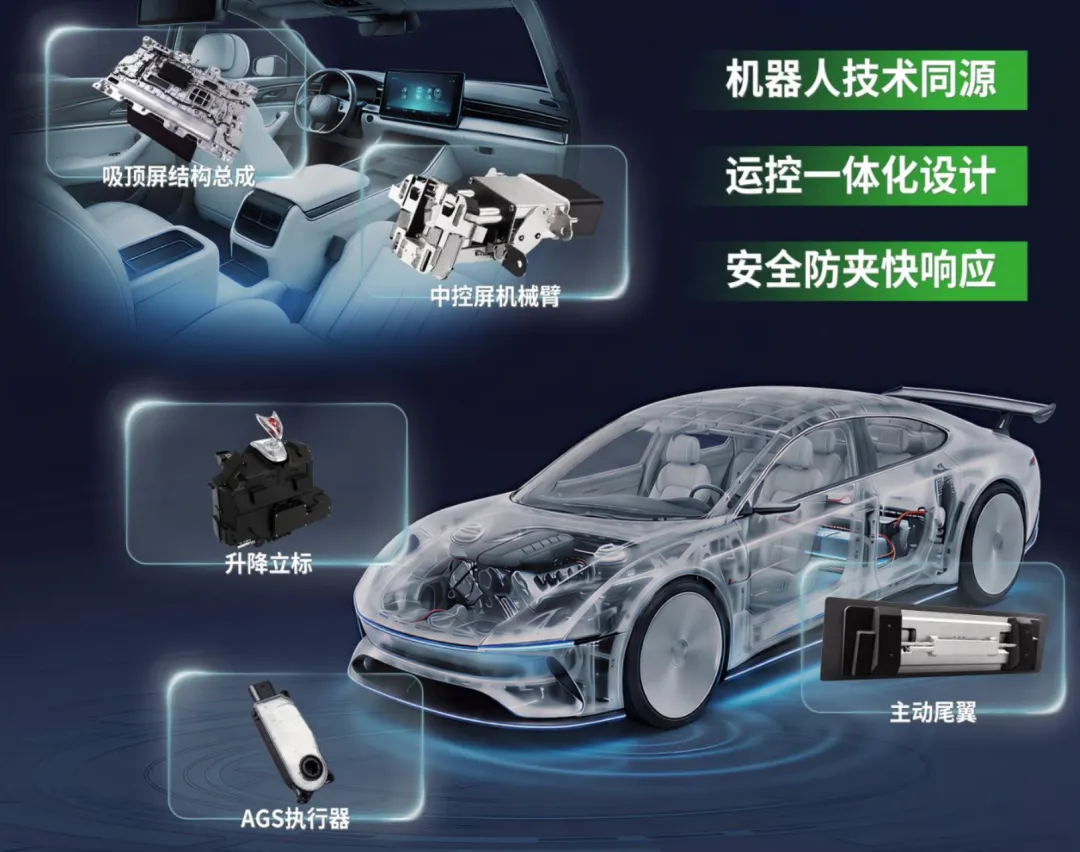
In the midst of one-off product deliveries and demand clashes with automotive industry customers, the company will migrate self-developed server drives, high-precision operating control algorithms, and reliable structural design technology to the automotive parts industry to complete the technical verification of its headquarters in the field of robotics.
The mechanical and electrical integration of these motor components with the executive bodies, such as operation control, high bandwidth response, anti-vibration, high safety protection, wide temperature adaptability, and other vehicle-grade technologies, have also been transferred to the field of robotics.
Compared to conventional collaborative robotic products, robotic products under the company have higher operating stability, high rigidity and anti-interference capabilities, currently C (consumer level), G (industrial level), X (special level) three series have successfully passed the IATF16949 certification for vehicles, with high speed, high rigidity, high precision characteristics, able to overcome complex processes and application scenarios such as automotive seals, assembly parts, welding, spraying, etc.
Gifeng said that the car is currently the closest mobile intelligent carrier to consumer landing, the universality of the operation control technology mastered by Longjiang Creek, which has been verified by the industry, is also the core technology link for longjiang Creek to have cross-sectoral business migration.
In this regard, whether it is the process accumulation and production line know-how of the automotive production line, or high reliable physical production capacity, high-precision operation control algorithms and vertical process models, laid the natural foundation for the birth of intelligent products.
In addition to the single-arm shape, the wheel-shaped robot shape introduced under the banner of Long Guangxi Intelligent Manufacturing has been a cross-process, multi-tasking collaborative work in the production workshops of East Wind Map.
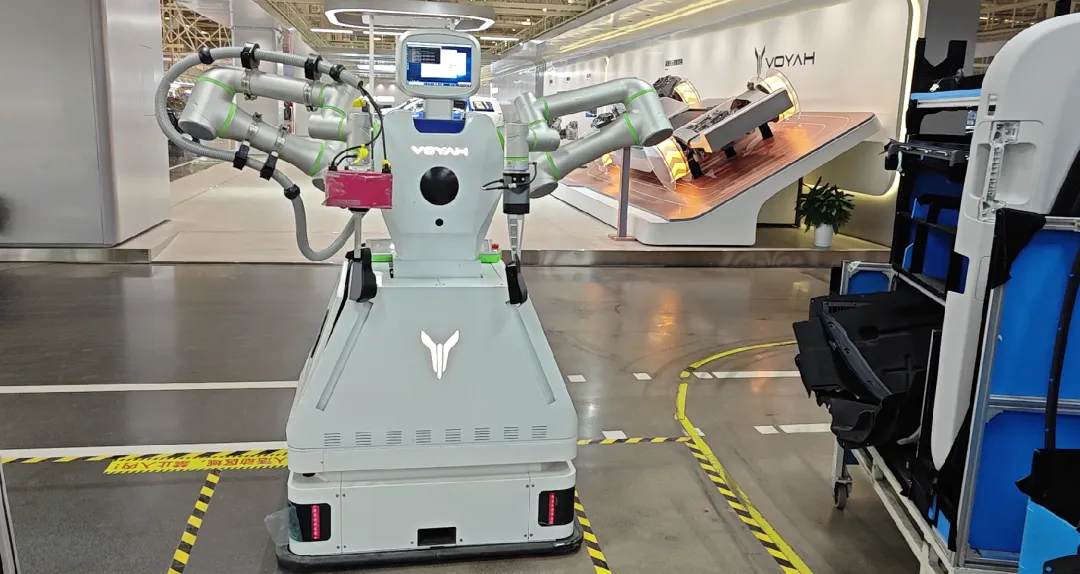
Two-armed robot used in East Wind Car Factory
On the basis of the assembly line, the shape will be optimized for single-arm brake industrial smart body brake, which has been verified at the automotive parts production base under the ownership of Long Guangxi Intelligent Manufacturing.
It was observed that in the assembly line, the production time of industrial smart bodies was reduced by about two-thirds compared to the traditional production lines, which greatly reduced the waste of materials and manpower in the traditional production process, while maintaining a high level of product quality and production consistency.
Gifeng said: "Let's test the mass production of motion controls in the automotive industry first, and then use this well-established base to carry industrial intelligence to enable AI to make decisions with reliable 'hands and feet'.
A real training ground, on the line
It would be more interesting to look at the selection of long-range AI in the industry's coordinate system.
The Collaborative Robotics Raceway is undergoing a fairly brutal rebranding round. GGII data shows that the average price of domestic six-axis and above collaborative robots has dropped from 11.04 million yuan in 2022 to 55,000 yuan in 2025, with some 5-6 kg lightweight models falling below 20,000 yuan in a key range.
At the same time, the competition in the collaborative robotics industry has expanded from a single price to product quality, sales channels, and service guarantees.
The development of intelligent software hardware technology, the capital frenzy of humanoid robots, once again added fire to the industry, in line with the focus on capital, and the R&D routes of most enterprises began to weigh heavily on model algorithms and light hardware execution.
With no intrinsic pricing, no stacking of model parameters, no blind pursuit of hotspots, and a firm commitment to enterprises that use silicon-intelligentized technology to empower genuine production lines of silicon, Longjiang opened up another path: establishing a high-reliability motor execution base, superimposing model intelligence capabilities, and moving out of the silicon industry to scale up the silicon-intelligentized system.
For long-distance manufacturing, brake regulations are not only a threshold standard at the technical, product level, but also have a profound impact on all aspects of the company's operational management model, upstream supply chain system, and talent development system.
With this distinctive label of brake-level braking, Longchurch has attracted not only the trust and orders of a large customer base in the automotive industry chain, but also the technical awareness and demands of the automotive industry chain for the development of body-smart technology. These expectations and technological collisions have driven Longchurch to move into the deep water area of the large-scale application of body-smart, taking a steady, cost-controllable and scalable energy delivery path.
Written at the end:
After the exhibition, Guangxi will move the industrial smart body from the showcase to the real production line pilot, focusing on the flexible manufacturing scene, such as automotive manufacturing, machine processing, spray welding, and driving the process of verification and conversion of small batch multi-product replacement, precision assembly, on-site processing of raw materials.
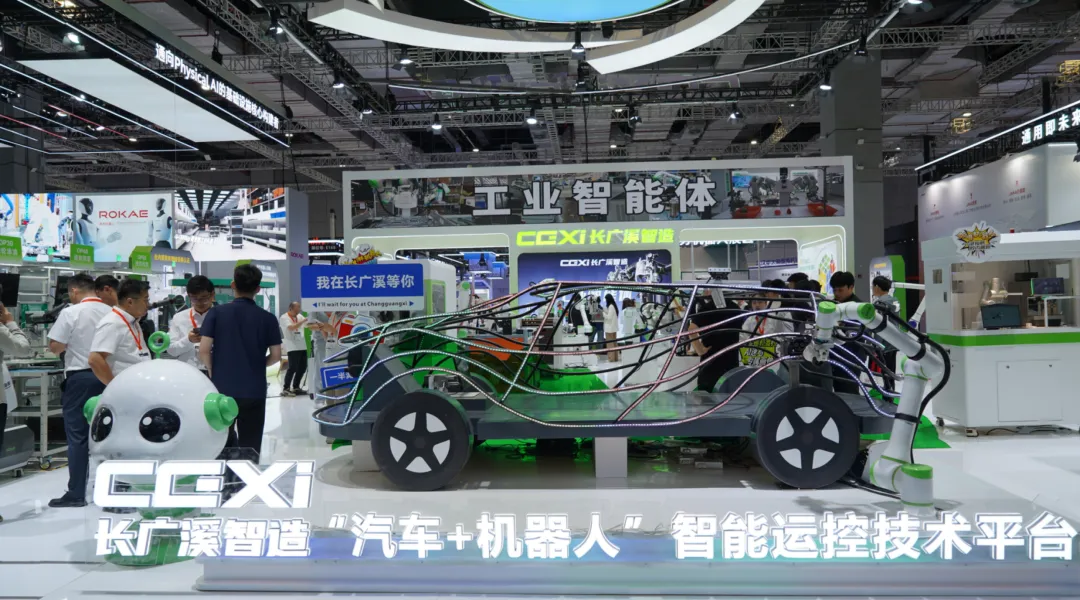
On October 12-16, the Shanghai Industrial Expo 7.1H-E016 will be a window for manufacturing customers to take a closer look at the technology; it will also be an opportunity for integrators and parts factories to directly connect to process needs.
The trade fair is just the beginning, because the value of an industrial smart body is never determined by the demonstration on the stand, but by the goodwill on the production line, the beat, the buy-back decision of the customers of the production line.