It's the first time in the history of the world.
In the comments section of the blog of the Nobel Prize-winning philosopher, you will feel an unprecedented shock from the world's top mathematicians, physicists, and AI leaders gathered here today, with all their opinions and enthusiasm.
In the meantime, it explores the "survival of the fittest in mathematics" and "the ultimate value of anthropology".
The chain of events that triggered the great debate of the century was a dramatic earthquake that occurred over the next few days.
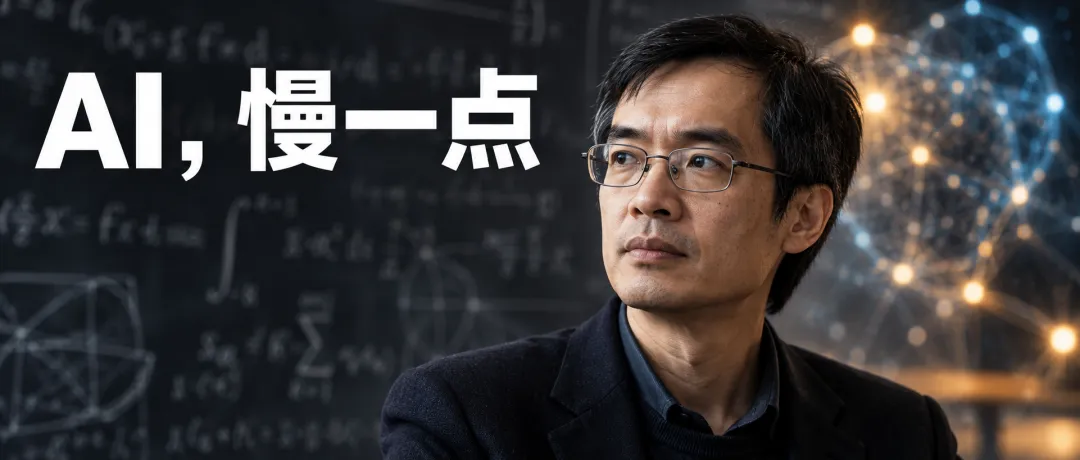
The day before the eruption, a video about Taoiseach's call to "slow down AI development" just went viral.
In the video, the top scholar who has always embraced new technology gives an unprecedented serious warning:
"We have to slow down AI. It's crazy fast, there's no reason to go so fast, no reason to go so fast!"
He went on to say: "It is surprising that we are willing to change everything so willingly, in a situation where we have no idea what the consequences will be. This is an extreme non-linear dynamic".
What makes it feel even more magical is that the clashes on the timeline began just last weekend, when Taoiseach himself proposed and vigorously promoted the project "SAIR: The Open Source Mathematical Model and How to Contribute".
Last week, he personally recruited horses for AI open-source mathematical models and planned blueprints; yesterday, he suddenly sounded the alarm, chanting "speed is crazy, it must slow down"; today, his blog has become the final battleground for AI in mathematics.
In just a few days, the violent clash of Taoist attitudes has completely ripped apart the horrific reality facing the current academic community: the continuation of almost a millennium of mathematical research and doctoral training mechanisms is facing a dead end completely destroyed by AI.
The old days are dead: will anthropologists be turned into mechanical engineers?Why would Taoiseach be so cautious and even consider this to be an "extreme non-linear dynamic"?
As AI has taken over the mathematical world, it has surpassed the limits of the human mind.
In the past, mathematical research was the crown jewel of human wisdom.
A Ph.D. in mathematics often takes years to look for inspiration in literature like a sea of smoke in order to prove a small argument. If you can make even a small "original contribution", you can graduate successfully and earn a place in academia.
But now the times have changed.
With the rapid evolution of AI models, especially automated theorem provers such as Lean, combined with the depth of the big language model, AI has gained a chilling mathematical discovery capability.
Ironically, Taotze's highly publicized collaborative solution with the Lean formalisation verification tool, originally designed to facilitate human communication, has now become the ultimate weapon of humanity's "barrier" of robotics. Thousands of AI entities are tirelessly collaborating on short message boards to explore every dark corner of mathematical potential space at lightning speed.
In the face of tireless, limitless computing machines, requiring an ordinary human mathematician to make an original contribution to "proving theorem" has become extremely difficult.
Some pessimists lament that the traditional method of pure-human mathematical research has come to an end. After a brief transition period, a new era dominated by machines will unfold, and that future humanists may be sadly reduced to ordinary engineers who will only "understand machine discovery".
Is mathematics, a thousand-year-old discipline, really the only thing left for AI to crawl up the list of "tasks"?
At this dead-and-dead crossroads, today's hottest Taoist blog post is like a lighthouse in the middle of a long night. This guest post by Grant Sanderson, founder of the renowned mathematical group V, 3Blue1Brown, is titled "Declaration of War":
Well, if mathematics isn't just proof, we need to praise the rest of it better.
This article, for the mathematical community facing an AI shock, points to a whole new path to self-rescue.
The truth of mathematics: not generative proof, but "human understanding".Grant Sanderson makes a deafening comment at the beginning of the article:
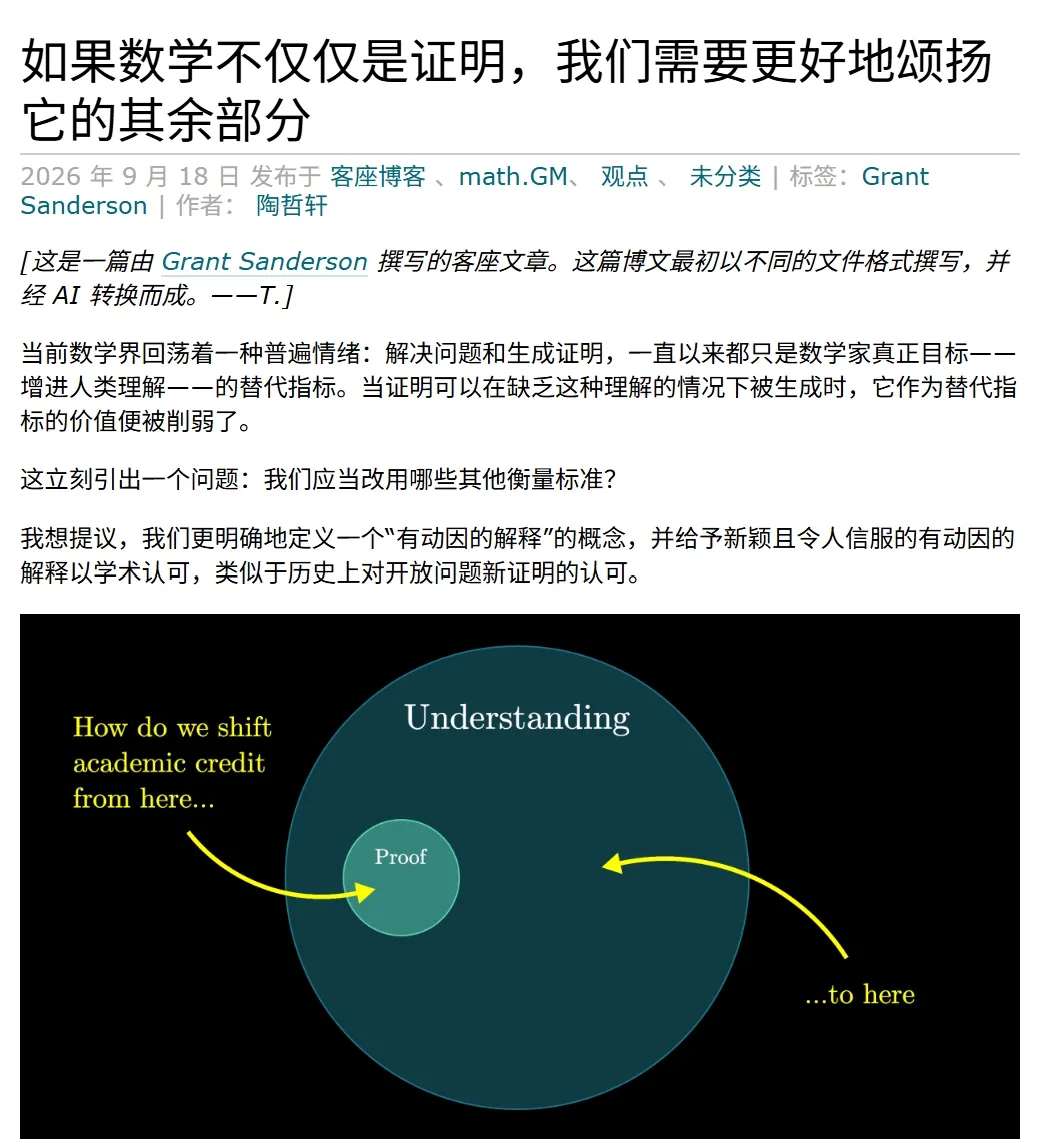
"There is a consensus in the current mathematical community that problem-solving and proof-making have always been the 'proxy indicators' of the real goal of mathematicians. The real goal of mathematicians is to increase human understanding. When AI can produce proof without any 'understanding', the value of proof as a measurement indicator is completely weakened".
This is a phrase that sheds light on the long-standing shadows of academia.
Since then, the academic community has focused on "proving" and lightly "explaining".
You prove a Millennium Grand Prix puzzle, you're God, and you can win the Nafields Prize; but if you just go deep into a complicated theorem, even for a million students, you'll be labeled a "Kopper" in a traditional academic evaluation system, regardless of your hardcore academic contributions.
Sanderson pointed out bluntly that AI is now a ruthless "proof generator".
If the outside world believes that machines that can write proofs make mathematicians superfluous, then the mathematical community must stand up and use a whole new incentive mechanism to proclaim to the world the core value of human mathematicians, the pursuit of connections and clarity within knowledge, and not just a proof machine!
To this end, Sanderson formally proposed a new concept that could change the future of mathematics: "motion explanation".
What's a "motivation explanation" and what's the difference between it and a "proof" of cold ice?
In proofs, the definition is often placed at the beginning. Traditional mathematicians prefer to directly derive an entirely new, rigid structure and then start coldly inferring its nature.
In motivational explanation, the definition sits in the middle. Only when the problems we want to solve are clearly established and new structures are allowed to be introduced. You tell the reader why we invented the concept?
In the proof, each sentence must be 100% correct, and each claim must be the inevitable inference of the preceding one.
In motivational commentary, you can start with an idea that is "simple but wrong". It's called "exploratory fiction". You can lead the reader through the process of "putting out the wrong ideas -> finding where to crash -> fix the problem -> finding new problems". Because this is the real process of the human brain knowing the world!
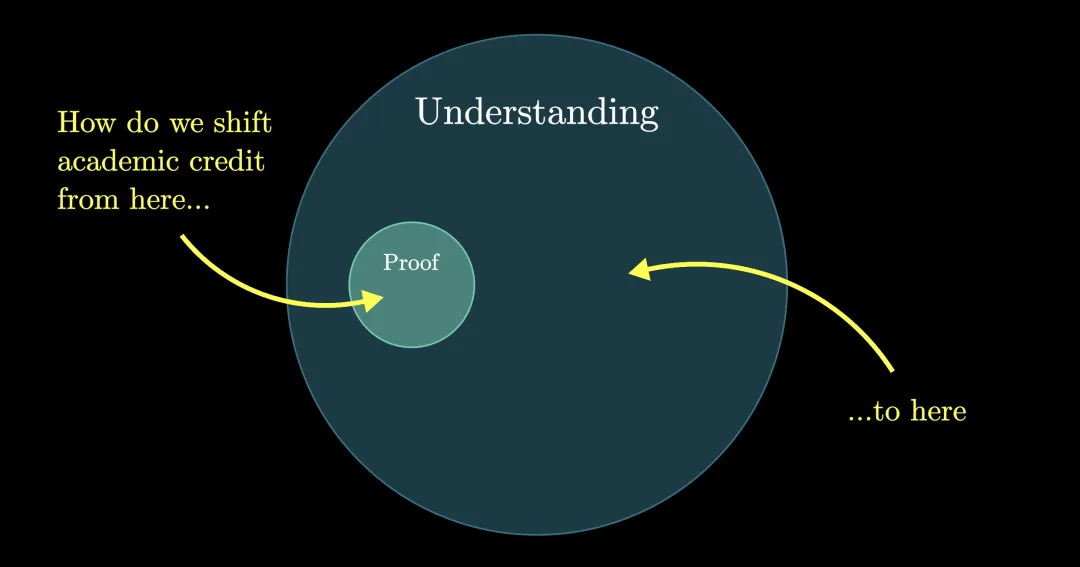
The purpose of proof is to tell you, "This theorem is true".
And the purpose of motivational explanation is to tell you, "Why is this theorem right? How did it come about? Why are we going to ask this question in the first place?
Networker Mark Miner makes this very clear in a vivid passage in the comments section: "100% agree. If my sixth-grade niece doesn't understand this proof, then it's not explained well enough to be considered proof".
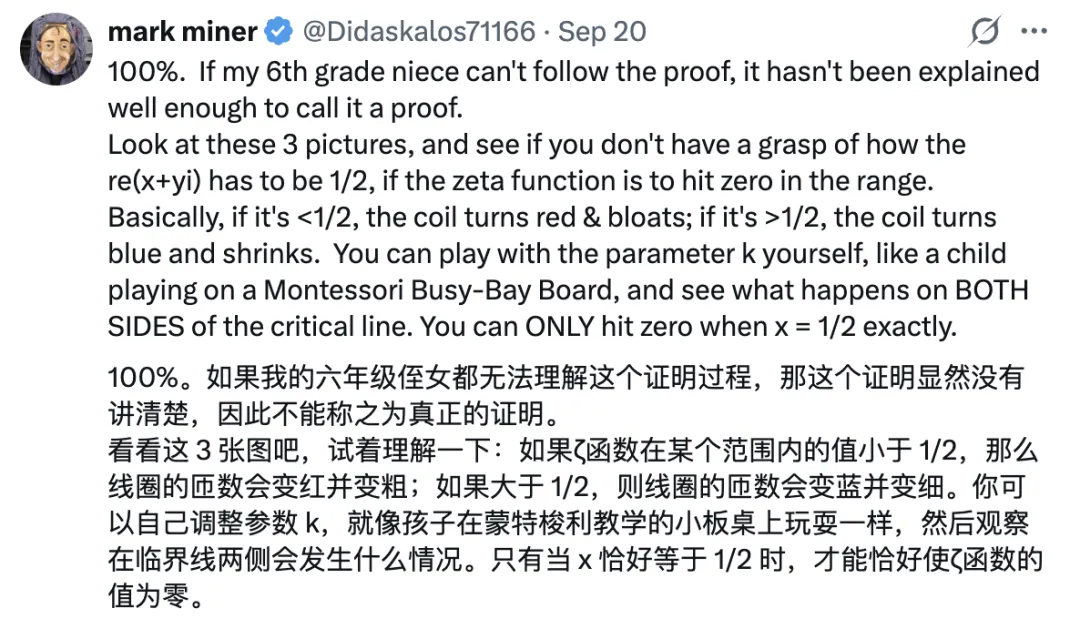
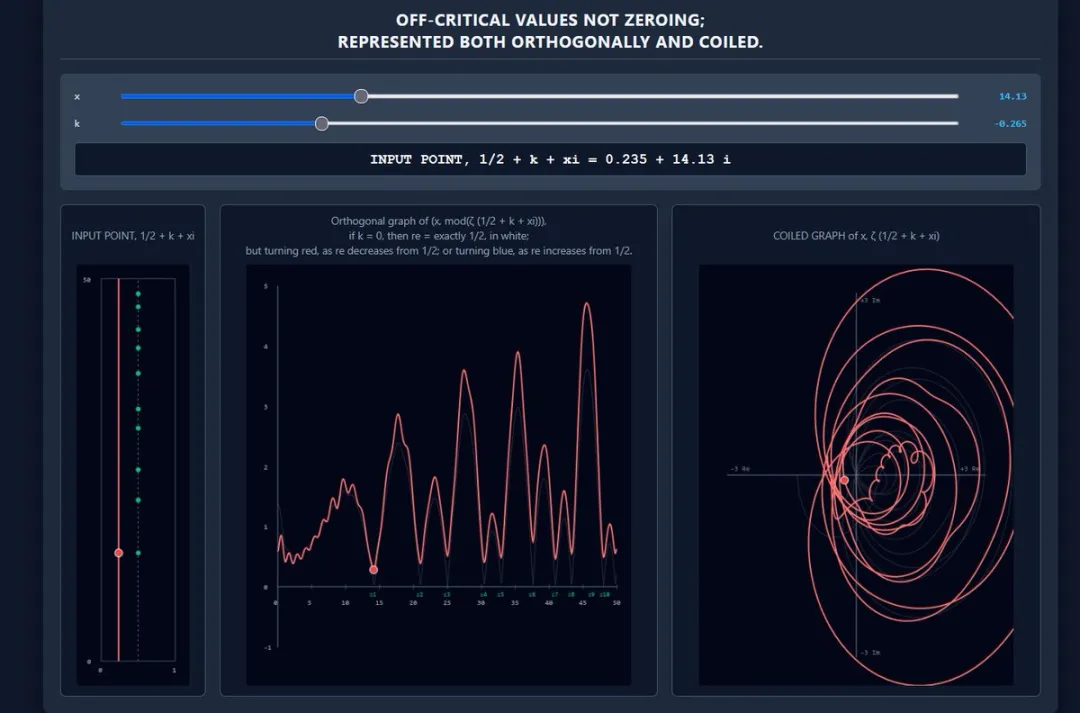
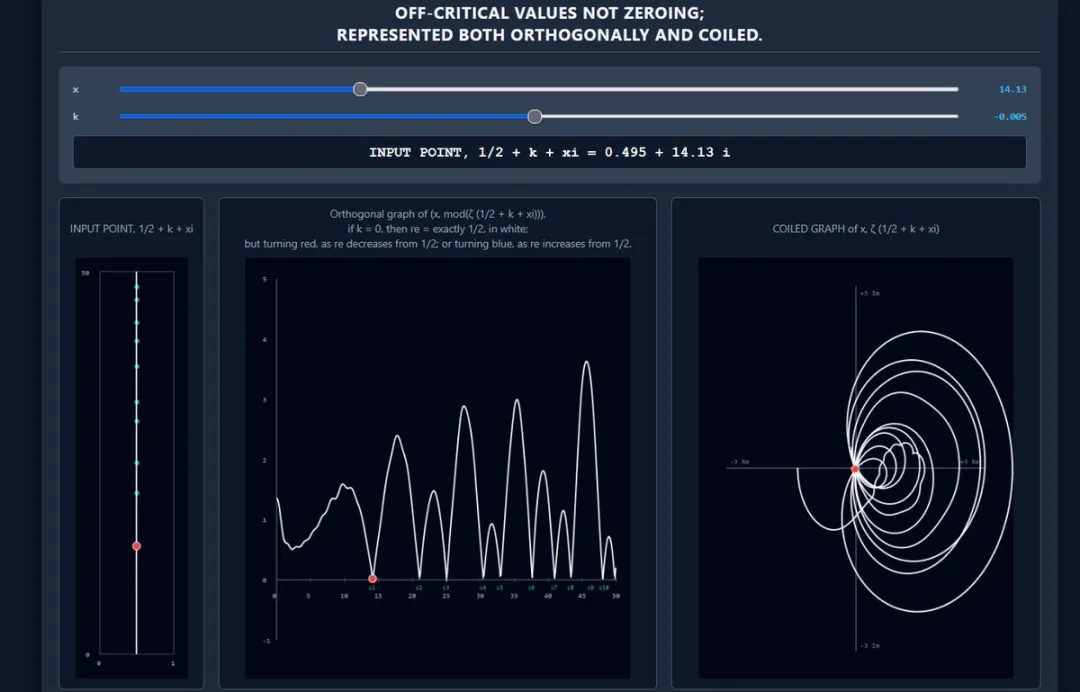
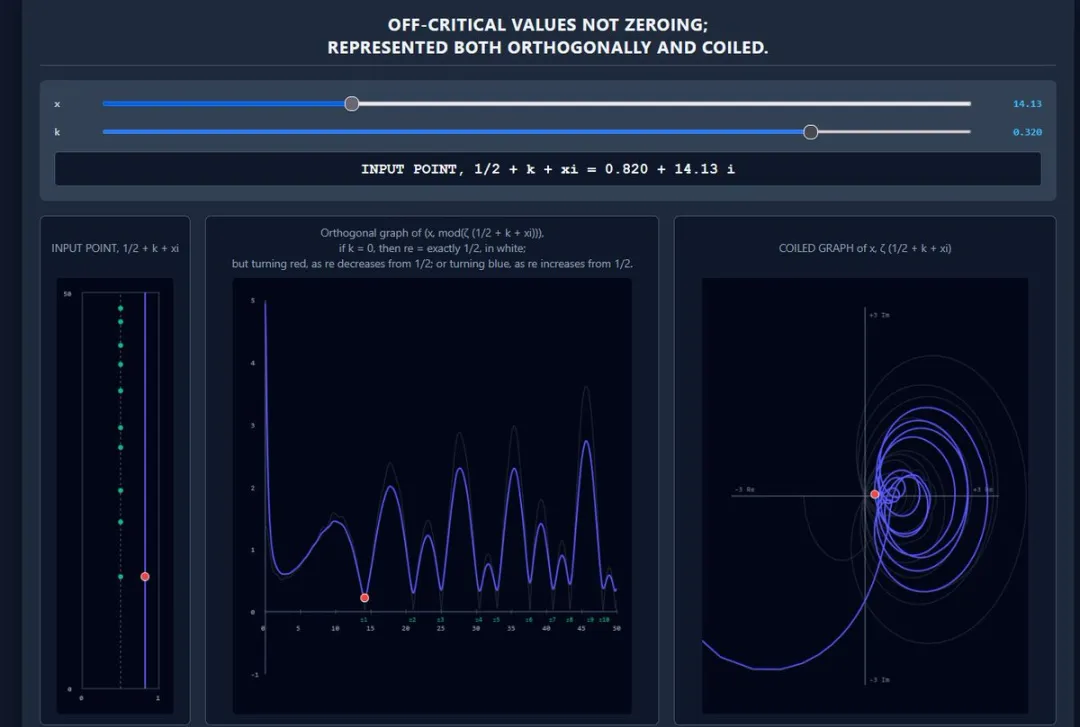
He gave an example of the Zeta function in Lyman's conjecture: "If you look at the visualized graphs, you can intuitively sense why the kernel must be 1/2, and the function will fall to zero in the range. If less than 1/2, the wire becomes red; if larger than 1/2, the wire becomes blue. You can adjust the parameters yourself like a child playing Monty Python toys. That's the real understanding!"
In order to make "motivated interpretation" no longer an academically unprofitable "use of electricity generation", Sanderson proposed a highly disruptive initiative on the Taoiseach's blog: to create an "open interpretation problem".
This idea has been around for a long time.
As early as 2007, mathematician Timothy Chow proposed a similar concept: solving an "open interpretation problem" that means explaining a mathematical subject in a completely transparent, clear way. Every step should be motivated; the ideal state is for students to feel "I'm on my way too", and they can derive the result themselves.
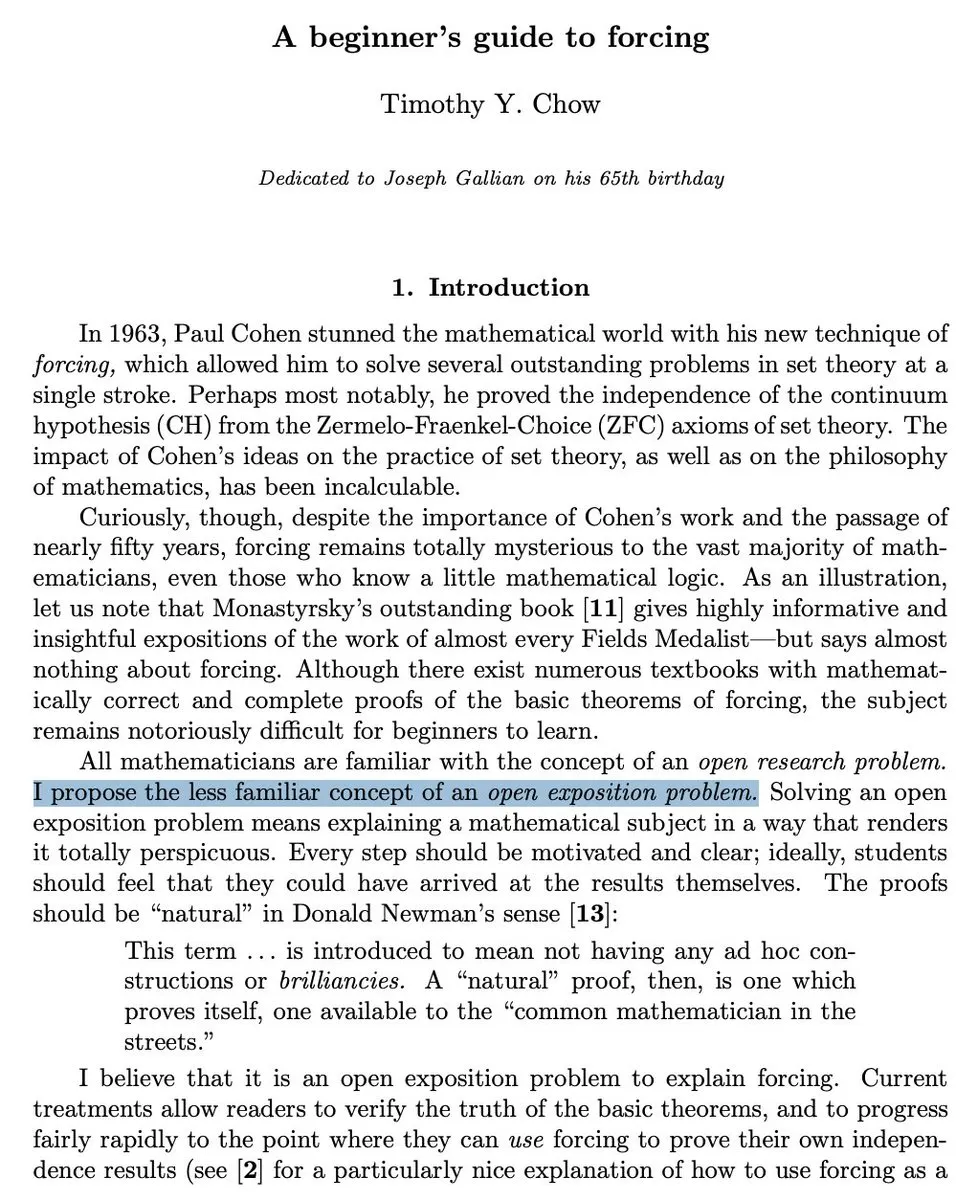
But that year, the proposal was met with a lukewarm response, because at the time, humanity was still trying to prove the theoretical brittleness.
Today, however, things have changed. Sanderson notes: "Currently, every proof that AI generates is an 'unsolved explanatory problem.'"
Imagine that in the next few years, AI will spit out thousands of freezing ices, unreasonable beauty, and even thousands of pages of code-level proof.
It's like a machine throwing a mine at a human being, and these "truths" would be meaningless to the human mind if humans didn't dig up, explain, build bridges between concepts.
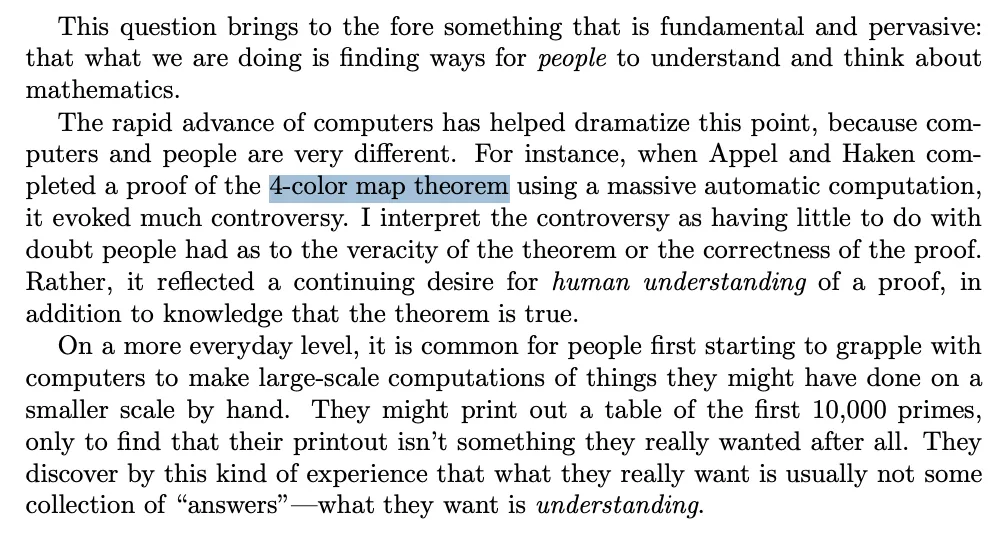
The late Fields Prize winner Bill Thurston wrote in his famous 1993 paper on the proofs and advances of theoretical mathematics:
This is highlighted by the rapid development of the computer... a huge controversy arose when Appel and Haken used mass computation to prove the four-color theorem.
I don't think this represents a question of the validity of the theorem, but rather reflects a persistent human desire to know that theorem is true and that we want to truly understand it through the human mind.
In order to promote this transformation, Sanderson made a number of highly practical appeals:
1. Dr. Reform responded:Teachers don't just let PhD students solve problems, they can use AI to solve them, but the final criterion is: you have to give a talk, prove this puzzling problem, or AI, and make it clear to the entire faculty.
2. The modern version of Hilbert's question:Calling on leaders of the mathematical community such as Tao Te Ching to publish a list of "unsolved explanatory problems" to tell all humanity what important theorems we still have are "knowing but not knowing why".
3. Reform the assessment of lifelong learning:Writing excellent textbooks, producing highly inspirational academic content, placing and publishing top journals on an equal or even higher level.
Recently, researcher Liam Price used the GPT-5.4 Pro to solve the difficult-to-conquer Erdős 1196 problem.
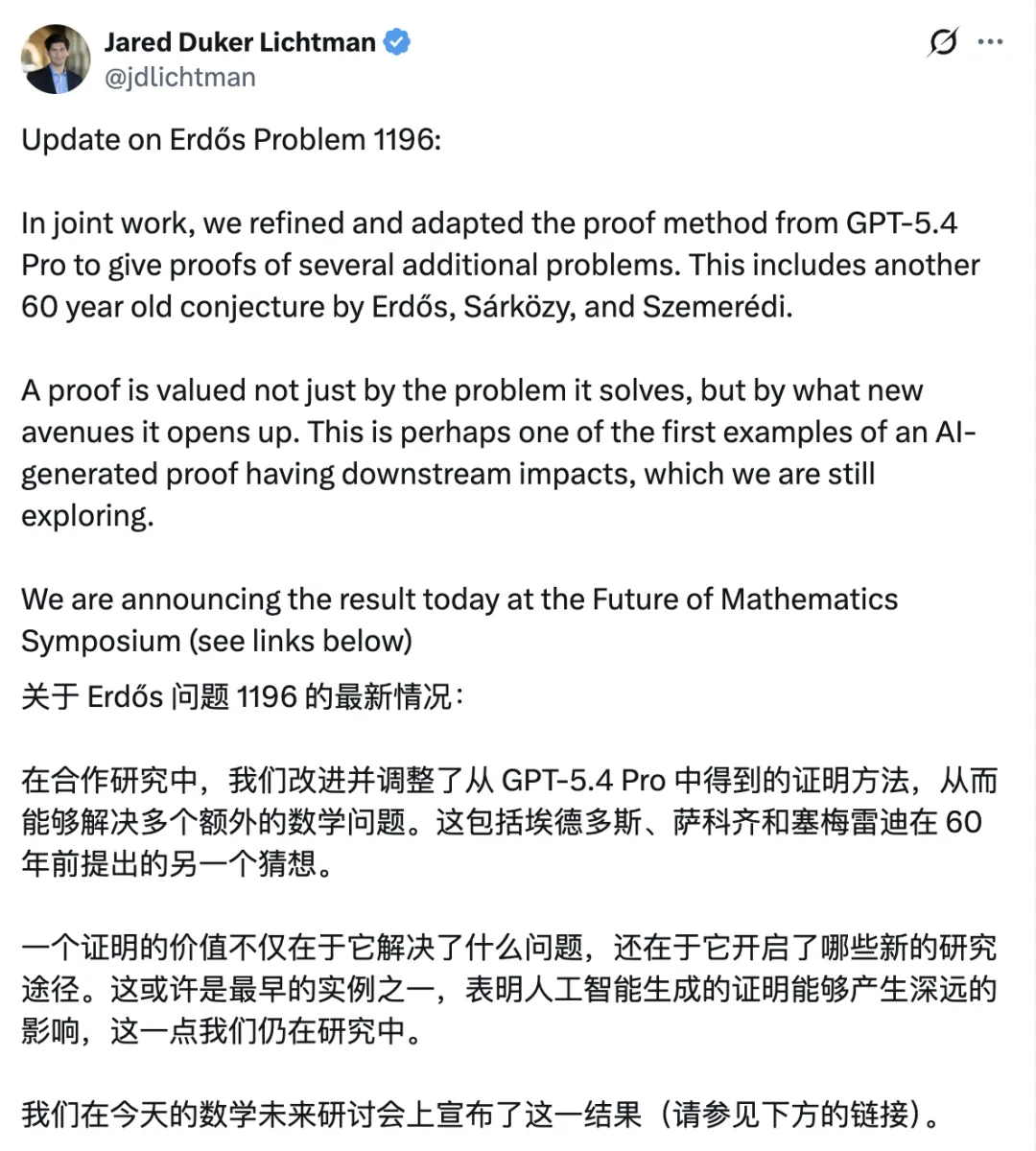
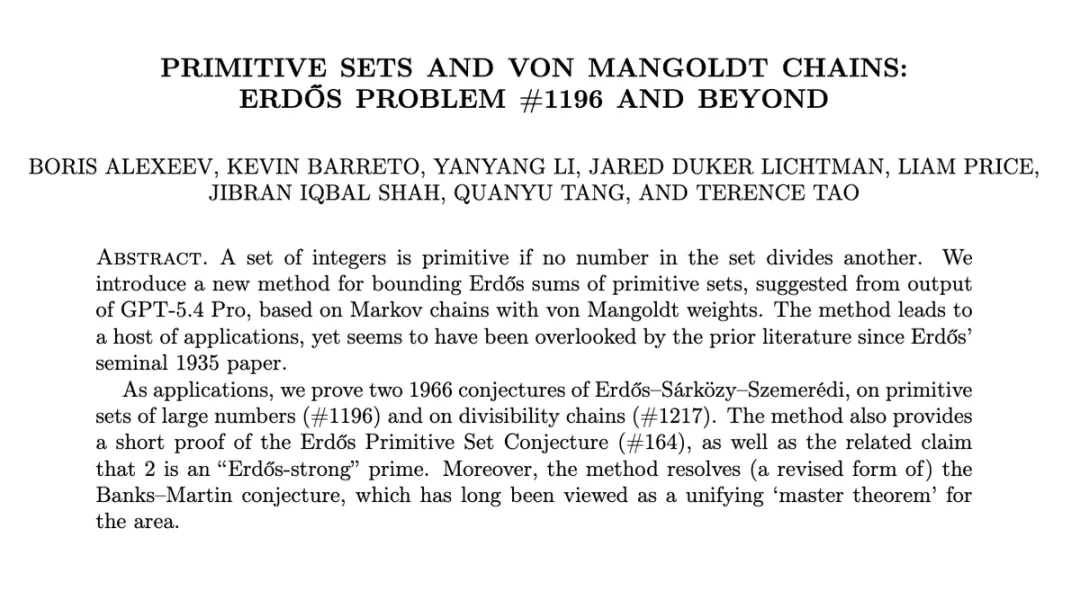
However, the original AI proved that, although it existed, human understanding, like the book of heaven, was not advanced by it.
Subsequently, a number of human mathematicians (including Tao Te Ching himself) took over this "heavenly book". They deciphered the methods of AI, extracted the core ideas, and organized them into human-readable papers. More importantly, anthropologists clarified this core idea not only to solve the original problems, but also to clarify many related speculations around it.
In the process, AI is just a "mining machine", and human mathematicians are the real "jewel designers". The human paper that clarified the connections and uplifted ideas is much more to be celebrated than the original code that AI produced.
Intense conflict: Physicists mocking conservative concernsAfter the publication of Taotze's blog, X and the comment section immediately became a large "field of academic debate".
The first to come up with the "mocking" and the "welcome" was a fellow physicist from the neighboring community.
Renowned physicist Lenka Zdeborova tweeted with a flavor of fire and a sense of humor:
"For 25 years, we've been told by theoretical physicists, 'You don't call it mathematics,' because we prioritize 'understanding' rather than 'strict proof.' Now that I see this kind of debate about AI in mathematics, I'm really excited. All of a sudden, many mathematicians are starting to explain that mathematics is about understanding, not just proving. Welcome to our world!"
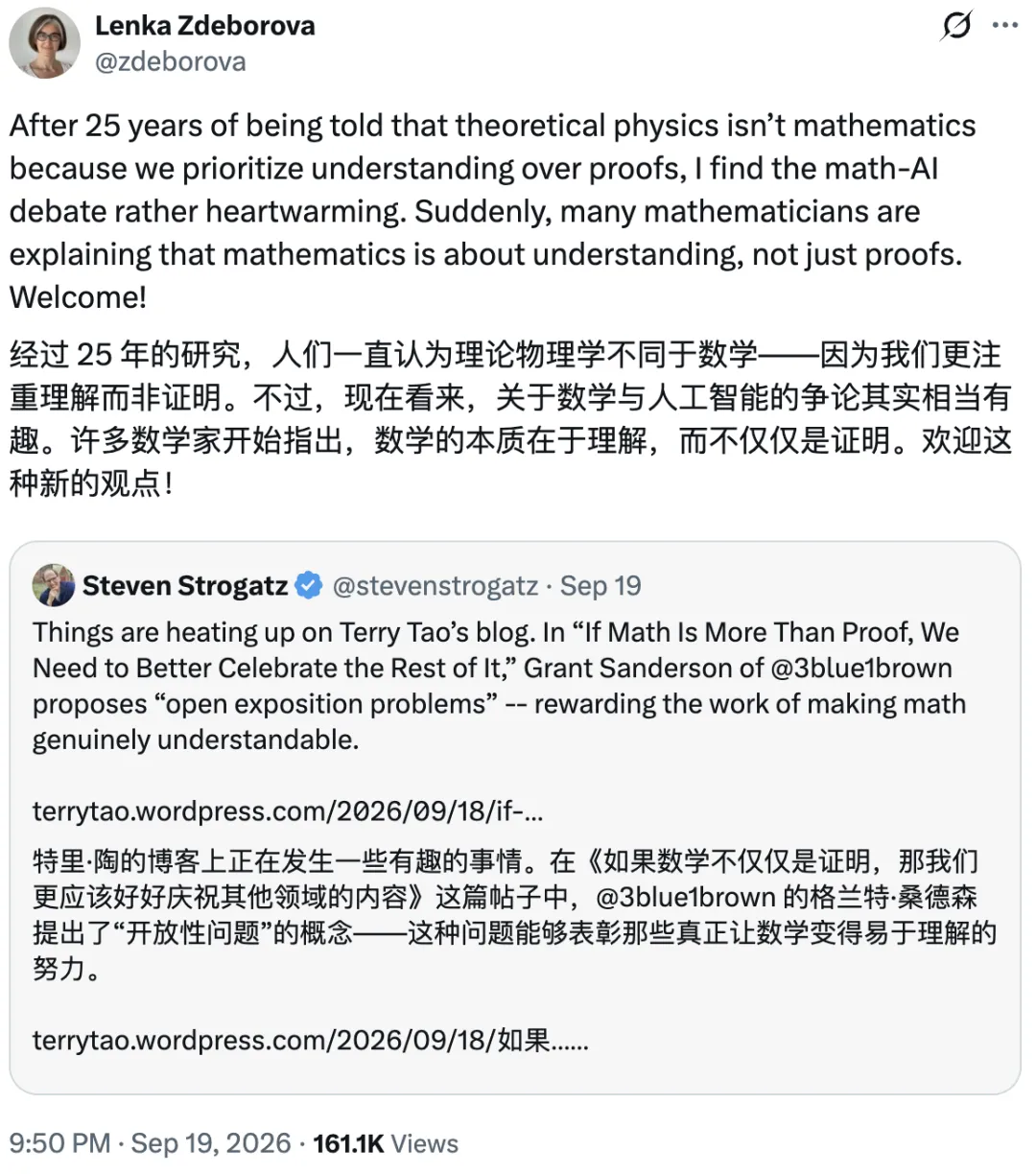
"The core philosophical disagreement between physicists and mathematicians is that physicists believe that there is a reality behind mathematics, that mathematics is only trying to approach reality; and mathematicians believe that mathematics itself is reality. Now that AI has shattered the 'divine nature' of mathematics, mathematicians are finally returning to human intuition".
Of course, this trend is not uncommon within the mathematical community. Many scholars have expressed deep concern:
Opposition One: This is the burial of the genius of bad talk!
There have been comments about the late mathematical genius Jean Bourgain.
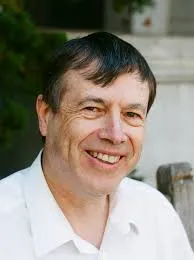
Burgan is known for his rough, straightforward, and even extremely hard-to-read style of writing, but his ability to solve problems is at the level of a nuclear bomb.
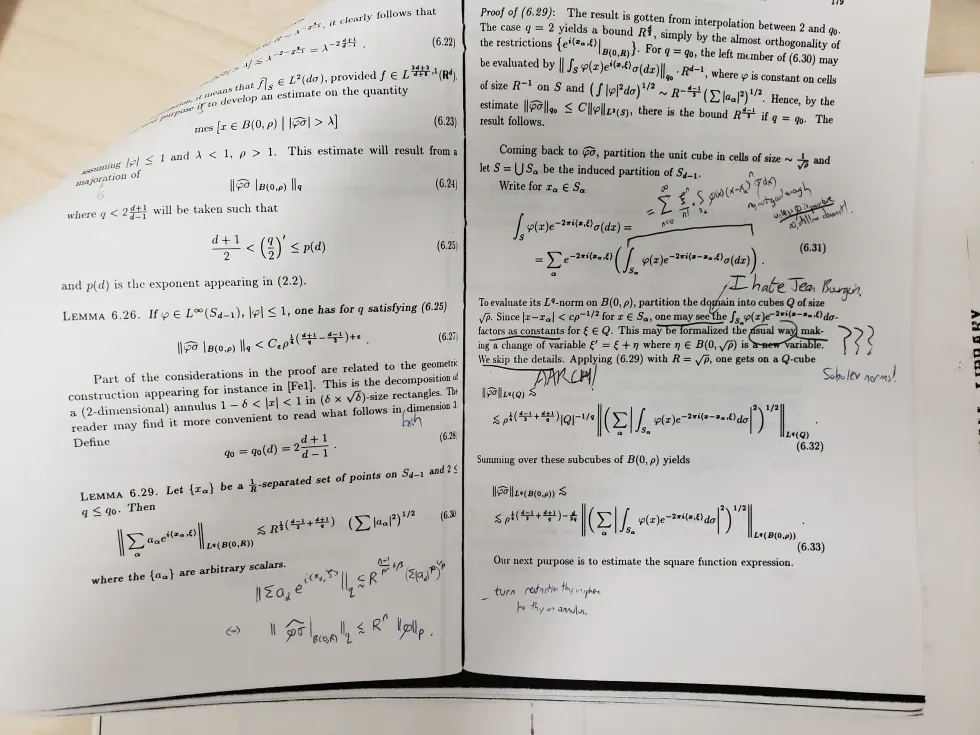
"If you turn the evaluation criteria to 'explanatory', would you have buried the genius of Nebuchadnezzar's unkind words that could prove the theory of evolution? Would you have left the future of Nebuchadnezzar in the industry?"
To this, Tao Zedong himself responded on the spot.
He gently but forcefully replied: "I think that Bulgan's 'consequences' and focus on solving the problem at the expense of explanation are the 'consequences' of the reward mechanism of the time, rather than the rational 'proof' of the mechanism. I have personally contacted him, and he has perfectly excellent explanatory skills. If the academic environment of the time gave more weight to 'explanation' and he adjusted his writing style, his contribution to the mathematical community and even to the wider community would definitely be greater than it is now!"
Opposition 2: Sooner or later AI will take over「Perfectly explained」!
Some scholars, such as Timmerman, point out that don't be so naive.
AI's present explanatory capabilities are general, but it is certain that future models will produce "motivated explanations" at a more perfect textbook level than humans.
If even "understanding and interpretation" is enveloped by AI, what else can human mathematicians do?
One anonymous netizen responded bluntly to this "all-power theory":
"I'm amazed at some people's blind admiration of AI. What is the 'best explanation'? It's highly dependent on trying to understand that particular human being in mathematics.The reason we should focus on illustration is to promote "human understanding of mathematics" rather than "machine understanding of mathematics".」
Yes, even if AI makes food delicious, humans need their own food and digestion to get nutrition. Mathematics is not about filling the server's hard drive with cold truths, but about elevating the human mind.
One scholar who proposed classifying "limited single-group" as the first "millennial explanatory question" made a stirring comment:
"This proof involves thousands of pages of papers that even many professional mathematicians can't fully understand. As older generations of experts retire, the craft is in danger of becoming a 'lost craft.' If we don't want to get bogged down in the face of the thousands of pages of future AI-generated proofs, we have to start now and work across borders on a massive scale to provide a 'motive explanation' for these magnificent mathematical buildings. This is an exercise in human self-defense".
Crisis or Transition?Going back to the beginning of the article, and working on an open-source mathematical model last week, why the serious warning of "crazy, AI must slow down" in the video yesterday?
Because extreme nonlinear dynamics mean that there is no control.
The despair and appeal of Tao is not because humans have lost to machines in computing, but because we are culturally, institutionally and psychologically unprepared for this great change.
If the academic community continues to hold on to a rigid system of "only proof theory" and "only paper theory", then thousands of young scientists will indeed face a dead end in this sea of AI and human mathematical beliefs will be devastated. We are destroying thousands of years of academic ecology without knowing the consequences.
But what if we press the pause button and look at this "cultural shift" proposed by Grant Sanderson?
As he says at the end of the article:
"For young students today, this is the most exciting time to enter mathematics, because there is nothing more exciting than entering a field that has 'extremely strong plasticity' and you have the opportunity to actively shape its future".
When arduous, boring logical drift is taken over by AI, human mathematicians are finally able to evolve from "proof workers" to real "mathematical architects" and "philosophers of thought".
We could have more time to ask "why", to look for the incredible connections between different domains, to translate deep-seated cosmic codes into jumping charts that even sixth grade girls can understand.
As Alexander Wang, founder of Scale AI, quoted by netizens: "As I told my cousin, mathematics will set you free".
In anything you dig deep enough, you will find mathematics. Mathematics is the web that connects the entire universe, the language of physics to define the world, and the most beautiful imprint of human existence in a sea of seamless truth.
AI can give us a bag full of answers called "truth", but in the face of this endless sea of truth, it is only a deep "human understanding" that can transform us into the rollercoaster of our journey.
The old days are falling apart, but a mathematical renaissance that truly belongs to the "understanding of the human mind" may be just beginning.