Shared Lease Model Innovation Breaking the Black Hole
Self-driving cars are not a new species. In automotive factories, logistics warehouses, airport warehouses, such devices have been running for years. Magnetic bar navigation, 2D navigation, SLAM laser navigation, technological routes have changed several times, product maturity has long been a bottleneck, and the real problem lies at the bottom of the purchasing decision-making table.
The first is the unknown quantity of steam. Traction vehicles naturally have cluster properties, and it is difficult to calculate precisely how many units a production line requires and how many units a warehouse requires at its peak before the project starts.
For the manufacturing and logistics industries, where the profitability rate has not been high, dozens of devices have been single-handedly deployed to power hundreds of thousands or even millions, and the decision-making chain is long and difficult to approve.
The current flexible industrial production line is often faster than the speed of equipment turnaround. Today, the production line runs well with magnetic stripe navigation, tomorrow the process is adjusted, the ground is re-oxygenated, the magnetic stripe is scrapped, the car is also parked, and changing a navigation method is equivalent to changing a car.
The third option is to get out without a door, which is the most hidden and the deadliest pain point. The second-hand market for industrial equipment is extremely immature, a set of AGVs used for a year and a half to try to upgrade and replace, the old cars almost stuck in their hands and could not sell, dismantled unfortunately, kept in place, the high cost of sinking caused manufacturing users to drag and drag this matter to make no one on the door.
These problems, which are not mentioned in the technical parameters table, but each one of them is a large-scale landing of unmanned aerial vehicles.
Zhang Yi, Vice General Manager of Wingfei Technology and General Manager of Mobile Robotics, said:The best thing about a utility vehicle is that it's never owned, it's rented on demand, just like you don't buy a truck when you move, you don't buy an excavator when you build a house.
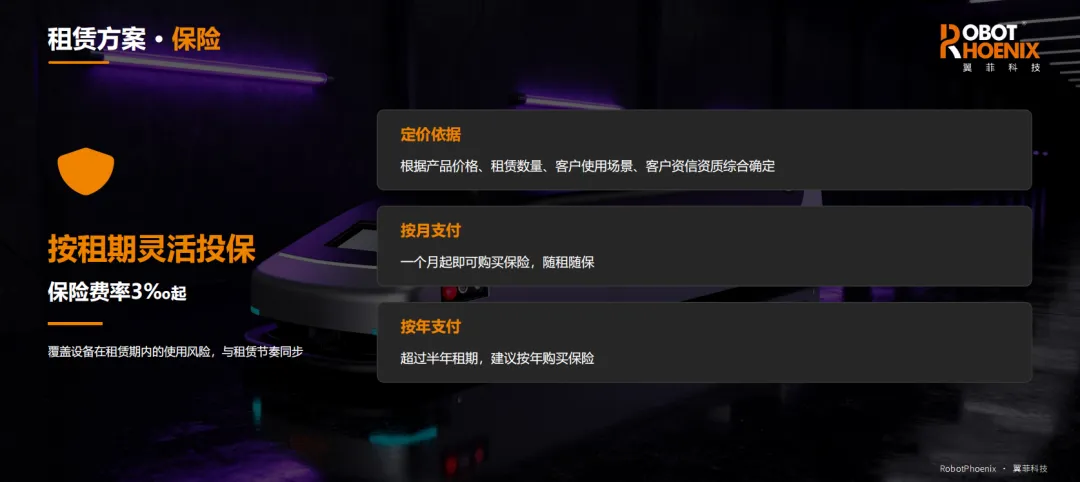
For this purpose, WingFi Technologies has introduced a flat rate of 499 yuan per month, zero deposits, insurance from 60 yuan/month per month, up to 100% of the next year's rental fee.
Two of the biggest startupsThe rise of AGV sharingWithout a very hard product base, there is no way to support the high-intensity folding business of leasing this car.
Because the rental model is somewhat more demanding on the equipment than the buy-break model: good deployment, good maintenance, good scheduling, the three are indispensable.
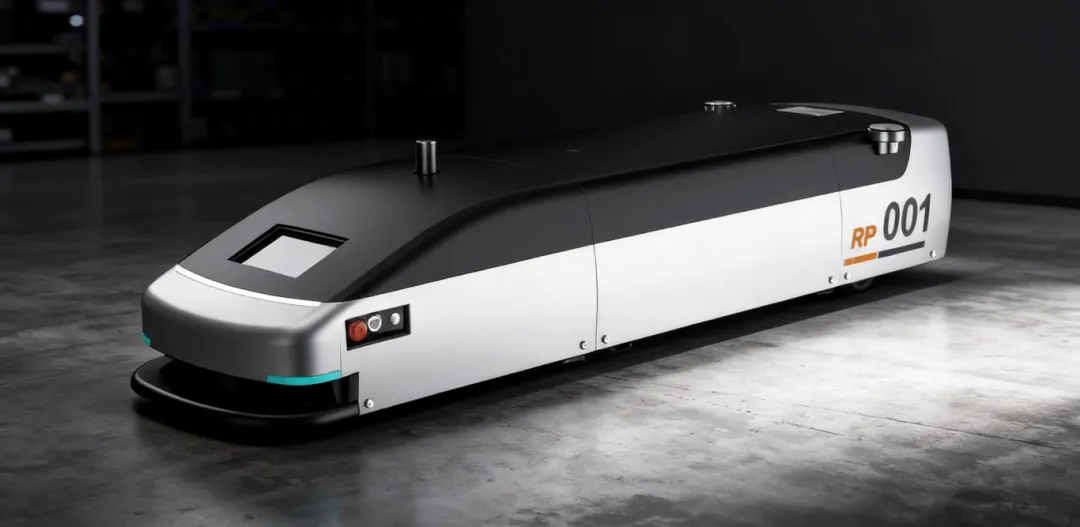
The newly released Camel-T1000 from WingFee Technologies is designed to meet the needs of rental services, from the design logic, unloading methods, and maintenance of parts to the whole machine.
The Camel-T1000 has achieved two industry breakthroughs: full-frame design, a set of products, multi-use scenarios; and support for magnetic stripe + two-dimensional hybrid navigation, flexible adaptation to line planning and scheduling needs.
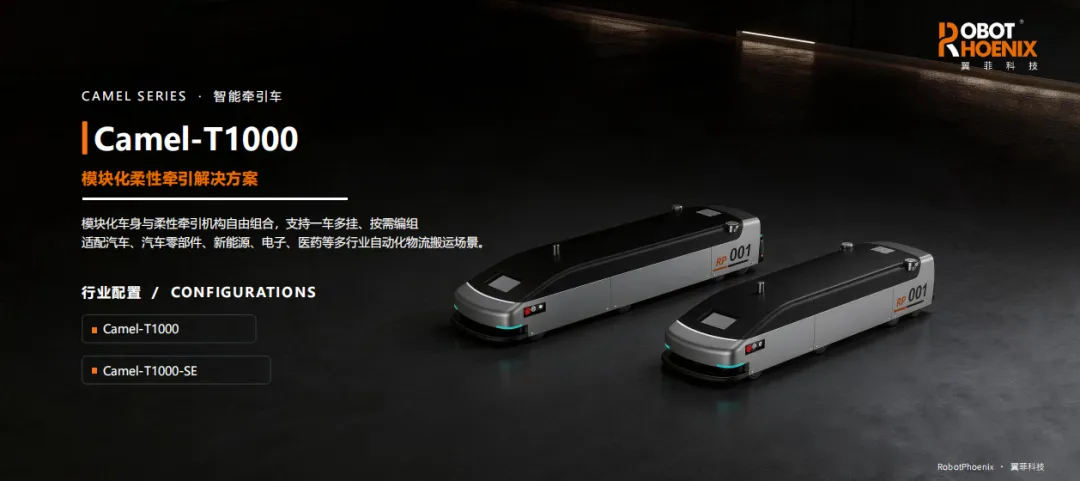
The traditional AGV manufacturing method is based on aluminum welding and molding, poor consistency, rough appearance, long maintenance cycle.Full body molding processThe head, middle, and tail three-piece module structure, single-head/double-head, can be disassembled, and the length can be adjusted in the range of one-way 1600-2200mm, two-way 2280-3200mm.
The body product module uses a line bundling link, the line bundling of each part of the body is regulated, enhancing the protection and anti-interference functions on the component module, making daily maintenance, fault screening, after-sales repair and maintenance work easier and clearer, reducing costs.
In the lease mode, the vehicle needs to move between different customers, different scenarios, and modularity and adaptability directly determine the reuse efficiency of the assets. A set of platforms can be adapted to the needs of different production lines and can be replaced on site without having to return to the factory.
Magnetic bar + two-dimensional code mixed navigationThere are deadly flaws in a single navigation mode in a lease scenario, and you never know what the real-world conditions will be like for the next customer.
Magnetic strips, two-dimensional codes, mixed navigation multi-mode options, a set of vehicles adapted to multiple locations, without the need to change cars for different scenarios.
In addition to 90°-360° native rotation and support for the native VDA5050 protocol, the Camel-T1000 has virtually no barriers to scheduling compatibility and is very easy to use for multi-car mixing and cross-stage calls in scenarios such as auto parts factories, home plants, etc.
In the service directory provided by WIFI Technologies, the T1000 model's load can also be upgraded to 1500 kg, in addition to supporting self-developed version controllers, Siemens version controllers for the adaptation of software hardware at home and abroad, as well as charging services, system software, remote controls, buttons and other options.
It's about the WIFI technology.The release of the new product will not only revolutionize the service model, but will also lower the decision threshold for upgrading to enterprise-sized smart warehousing logistics.
What is the concept of the starting rental price of 499 USD/month? The price range of the Wing Phi Camel-T1000 is between 16999 USD and 29999 USD, and the rental is only about 3% of the sale price.
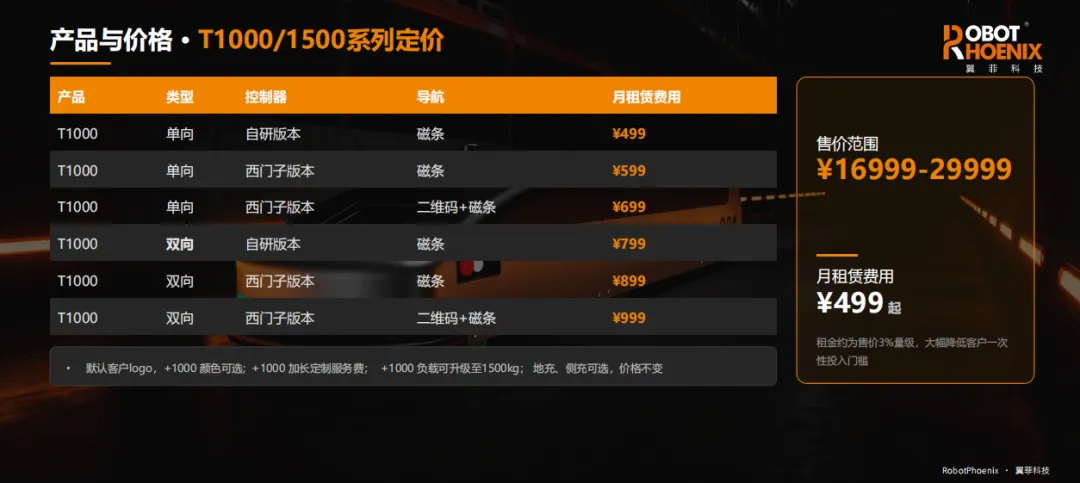
If the user wants to test an unmanned tractor on their own production line, the minimum threshold for testing is 17,000 yuan, which is now 499 yuan a month. WingFi Technologies also innovatively introduces a flexible deposit insurance mechanism, assessing different pricing and payment methods, to make on-site delivery and subsequent use as safe as possible.
One of the oldest and most difficult problems of the traditional rental model is the depreciation and withdrawal mechanism.
WIFI Technology, referring to the car rental ecosystem, introduced a rental transfer and buyout mechanism: from the second year of the rental period, 80% of the monthly rental is automatically converted into a purchase voucher, which can accumulate 100% coverage of AGV purchase prices.
The full repurchase of old cars is another big bomb dropped by WingFee. Unlimited brands, referring to the five-year depreciation cycle of billing residues in the robotics industry, received products of mainstream domestic AGV brands.
Lease-insurance-repurchase-transfer pumps, using this closed-loop process to replace the original sales, will allow small and medium-sized enterprises to run faster, run at low PoC costs, then decide not to buy, turn asset depreciation losses into short-term transportation tools, and turn one-time purchases into long-line operations + value-added services.
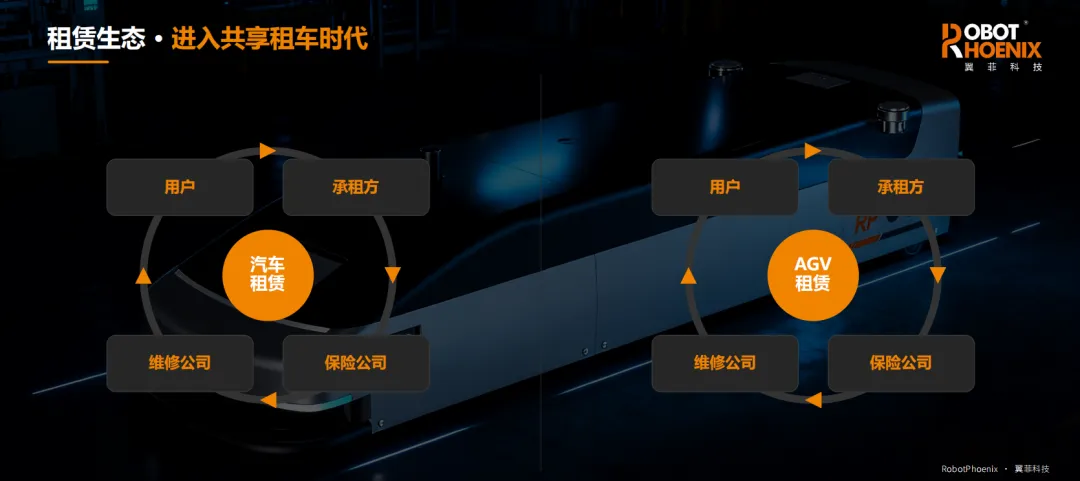
The innovative logic of WingFee Technologies is simple, reducing the cost risk of customers buying entire cars and turning them into rental cars.
The answer to the classic question of how many pumps to buy is as simple as that given by WIFI Technology: basic quantities to buy, resilient expansion of capacity to rent.
At its peak, 100 users would be needed, according to WIFI Technology, saving about 50% using a flexible expansion model.
From selling tools to selling services
Signs of a Turning Point in Industry
Looking at the larger coordinate system, this step by WingFee Technologies is a key turning point in the driverless car industry.
The global market for automatic trailers is undergoing a subtle transition from selling silicon products to serving silicon to delivering silicon. In e-commerce fulfillment centers and large manufacturing bases, procurement decisions for trailers are shifting from buying equipment to logistics.
This shift is particularly evident in the Chinese market. China's driverless tractor market, driven by the dual drive of e-commerce logistics and manufacturing intelligence, continues to grow rapidly, but the customer structure is fragmenting.
Key customers still tend to scale up purchases to get the best single price, while a large number of mid-sized customers who have small production lines and limited budgets, but who have real needs for automation, are trapped in a trap that they want to use but do not dare to throw.
The RaaS model of WingFee Technologies is targeted at this niche market.
Of course, the lease model has never been an easy road. Asset holders have to bear the pressure of capital, undervalued risk and operating costs. WingFee Technologies introduced insurance companies to conduct credit assessments, design lease transfer payments, and promise to buy back old cars, essentially by building a closed loop to make leases economically sustainable.
This model can't run and takes time to validate. But it poses a question that the industry has to face: When technology trends, hardware differentiation shrinks, will the competitive dimension of driverless cars shift from driverless to driverless to driverless?
WingFee raised the issue with Camel-T1000 and a monthly rental price of $499.