It's the first time in the history of the world.
The GPT-6.1 Sol ultra-fast version is finally here!
Today, OpenAI officially launched Ultrafast High Speed Models, APIs, Codes, and ChatGPT Work.
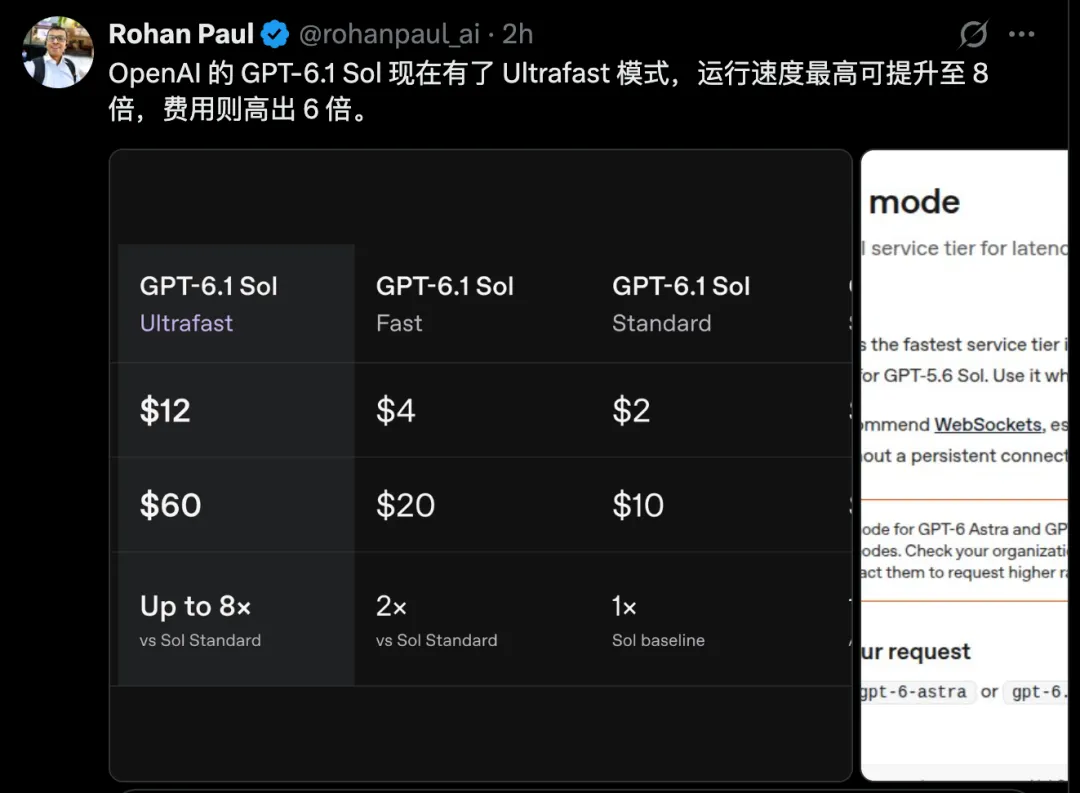
The most powerful GPT-6.1 is eight-fold, but the price is also six-fold, with $12 input and $60 output per million tokens.
The GPT-6 Astra is a high-speed version of the GPT-6 Astra, priced at five times its price.
The flagship's brains grew so rapidly that the door was cut in one-fifth overnight.
GPT-6.1 Sol racing at eight times the speedAll three prices are open
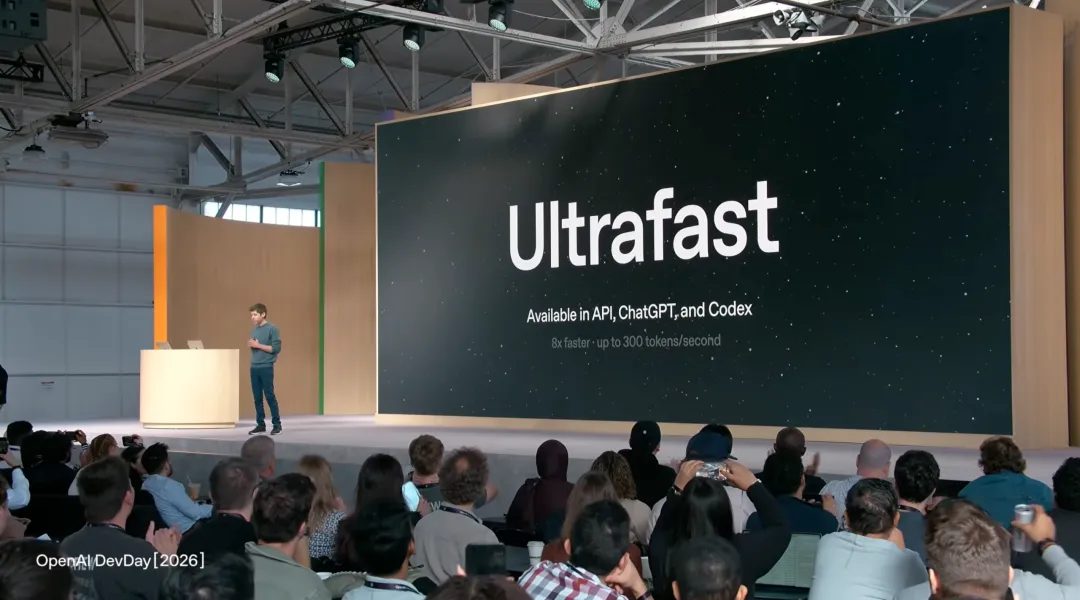
On OpenAI Developer's Day, Ottman made his debut with the "Ultrafast Logic Model".
They first installed the Astra, which was eight times faster than the standard model, with about 300 tokens per second.
In the live demonstration, the same "rocket-building" mission, Ultrafast's rocket has already been launched, while the standard model has not been completed.
Today, this model is finally being passed on to Sol.
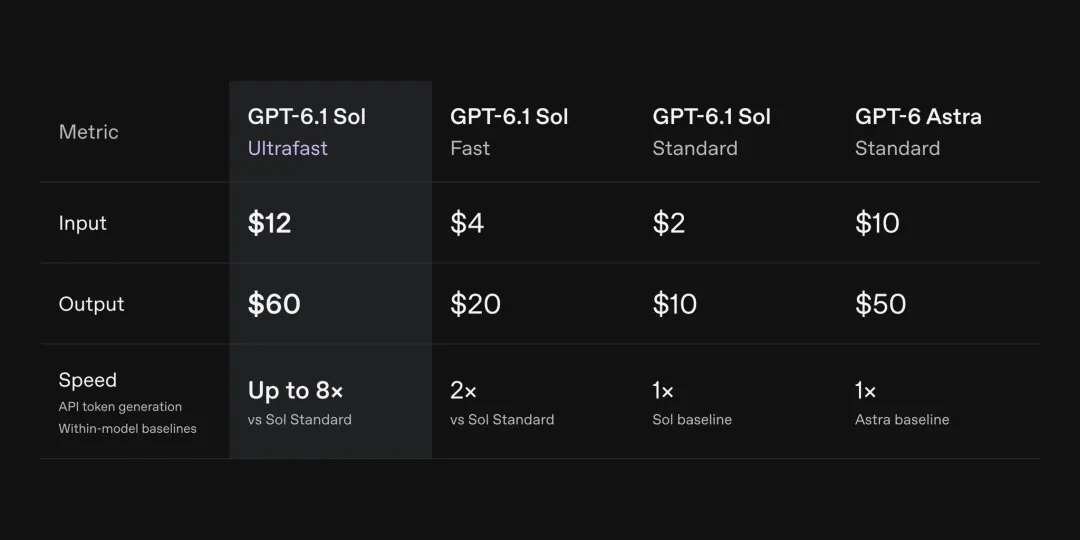
Sol now sells in three orders of magnitude. The cheapest standard version is $2 per million in tokens and $10 per million in tokens.
The fast rate is doubled, and the price is doubled, with $4 for imports and $20 for exports.
In comparison, Ultrafast is the lowest of the three grades.
OpenAI dares to sell this price because 6.1 Sol is very close to its flagship Astra on several key runs.
In DeepSWE v1.1 for long-range software engineering, Sol and Astra were tied, costing only about one-fifth of Astra.
On OSWorld 2.0, which is run by a computer, Sol is 2.1 points lower than Astra, and the cost of a single mission is only one seventh of Astra's.
In Artificial Analysis, a third-party rating agency, Sol's intelligence index is based on 52 points, just one point less than that of Astra.
The standard version of Sol's real shortboard is slow.
Artificial Analysis shows that the standard version of Sol produces about 67 tokens per second, which is a fraction lower than the median of similar models.
The brain is enough, the speed pulls the back leg, and the Ultrafast is the one to replenish.
500 knife members to useOn the API side, the ultra-fast version of Sol is available today, all supported regions are open, and users in the United States and the European Union can choose their data residency.
Long text is also calculated. More than 272,000 tokens are entered at a time, and the price rises to $24 for input and $90 for output.
OpenAI has also advised developers that the fastest version of WebSocket is best to connect. The agent's task is to connect multiple tools, and each time the connection is rebuilt, expenses on the network will consume the time saved.
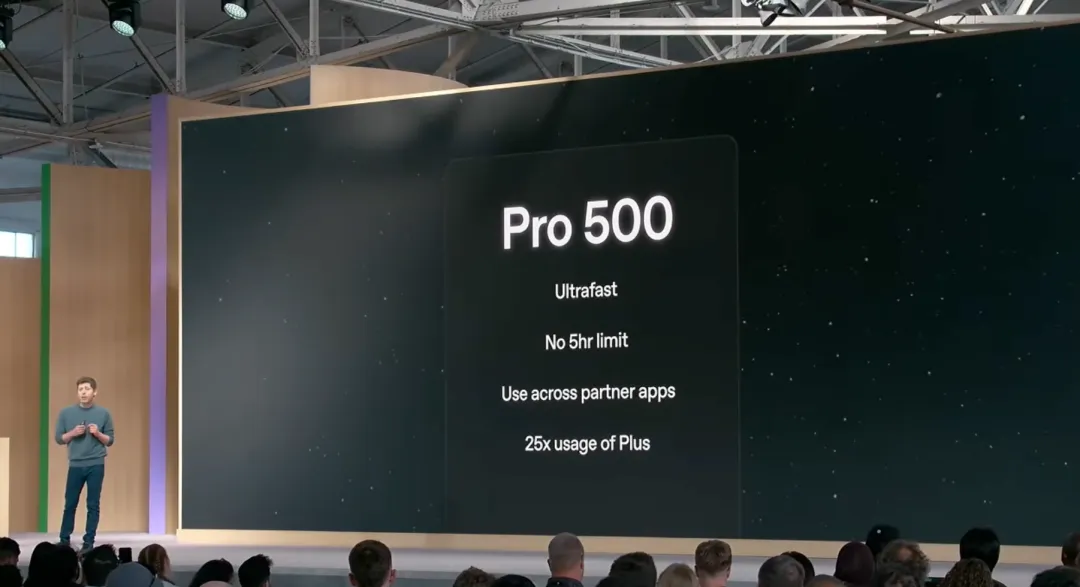
Specifically, for Codex and ChatGPT Work, the Pro 500 is available for only $500 per month; the enterprise version, which is billed by volume, and the enterprise version, which is billed by point, must also be opened manually by the administrator.
Other self-service packages can't be used, even if they've earned their own points.
Even on the Pro 500, it's extremely fast and not cheap.
The quota in Ultrafast coupons is 8 times the standard rate; the quota is 6 times the adjusted number of coupons.
The Pro 500 was the most expensive package launched at DevDay at the end of September, with a quota of 25 times that of the Plus.
ChatGPT is fixed in real time without looking at AI fools.In addition to the high-speed version of Sol, on OpenAI Day 4, Tibo also introduced a new "Instant Steering" capability.

In the past, the idea was changed in the middle of the codex, the model reacted after a while, and the previous part is dead.
Let it paint a cat, and when it had just finished drawing a warm cat portrait with the art of drawing, the user added the phrase "a dog" and it immediately changed its name to "that's a dog".
The dog didn't draw it yet, and the user shouted, "Three chicks!" and it changed to, "That's three chicks!"
Ten seconds later, three green heads floated on the water.

Tibo's original words were:"When you use two together, it works very well".
Morals are not difficult to understand. Models run slowly, people can only act; models run fast, they can be pulled back at any time, and people and AI are actually working together.
There are also tweaks from netizens, high-speed redirects, you haven't finished correcting, the model has changed 10 times.

It's the biggest thing about Day 4 that most people can't touch.
It was not until the third in a series of announcements that OpenAI made a single mention to the Pro 500 that the details were buried too deep.

Chubby moves out of Tibo's opening line and asks, "If you're going to spend $500, which gateway will work for most users?"
Some people are shouting Tibo, everyone accepts the cuts, and the $200 should be used very quickly.
Full web testingUltrafast is not worth itThe first person to feel the speed is the one who is really up.
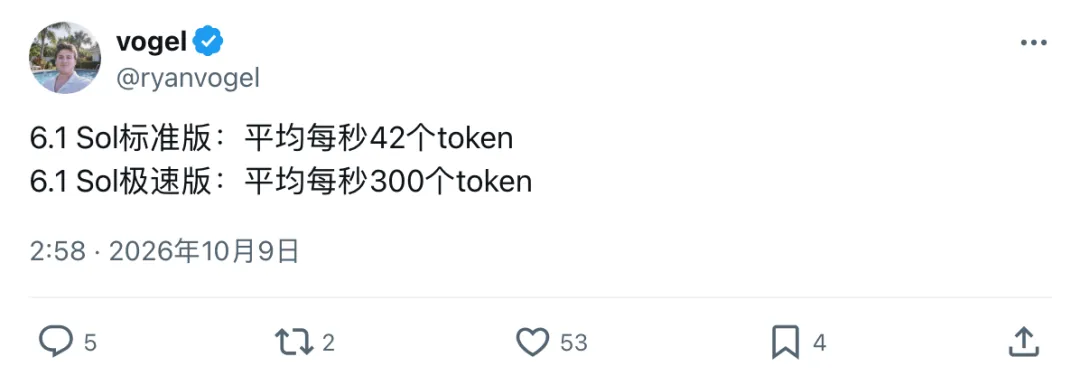
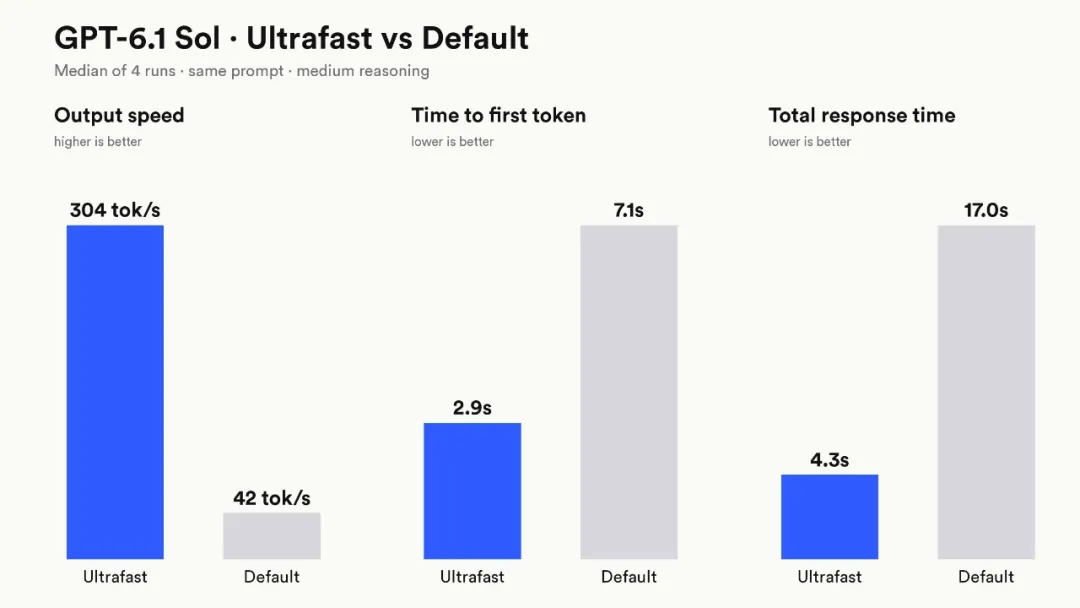
The developer of OpenCode, Vogel, ran four rounds with the same cue word, taking the middle.
The standard version of Sol output 42 tokens per second, and the ultra-fast version 304, which is more than seven times faster.
From the question to the first word, the standard version takes 7.1 seconds, the ultrafast version only 2.9 seconds.
OpenAI employee Thomas Ricouard says it's really nice to get back into the flow with ultrafast work, but he also admits that Ultrafast isn't something everyone can afford.
Developers DeWaldt Huysamen took a real task to do the opposite. In the Codex, Sol used Three.js to recreate Sonic at a cost of $1.02.
The same token was exchanged for the ultra-fast version for $6.14, which was more expensive than $5.96 for the Astra to run the same cue word.
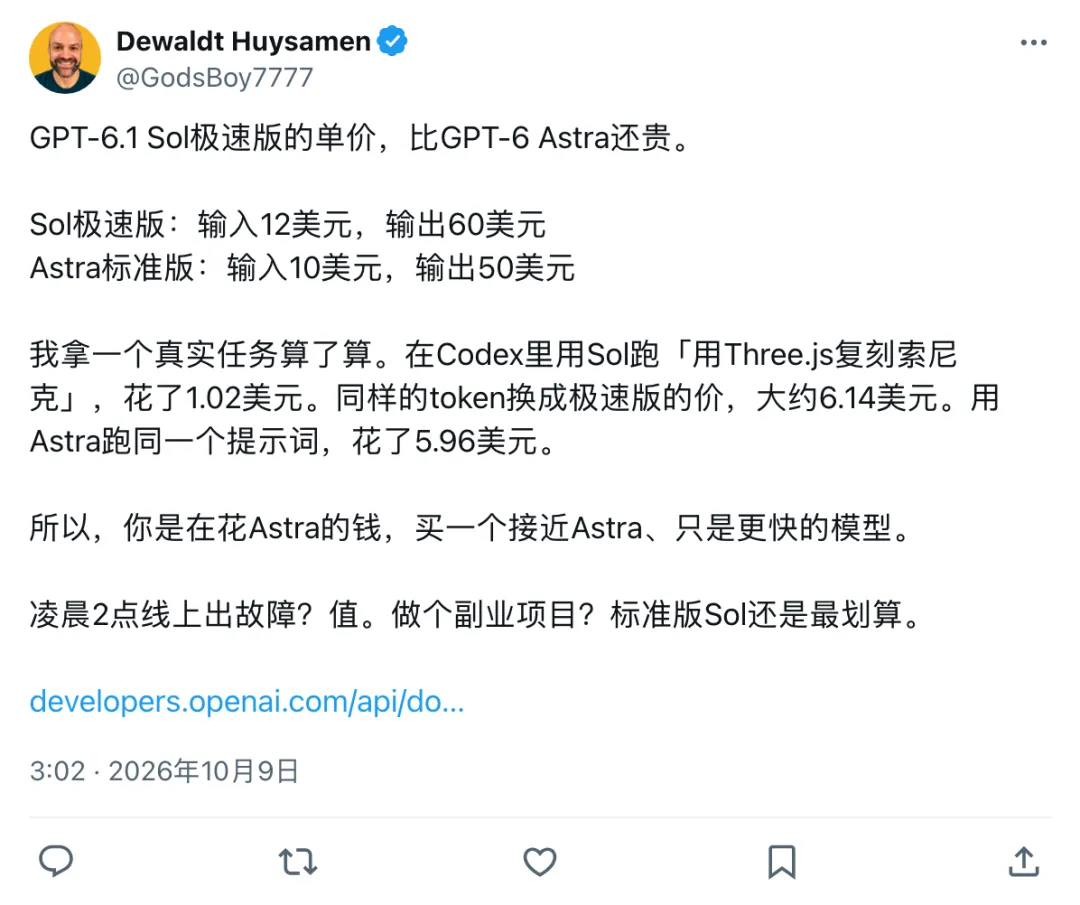
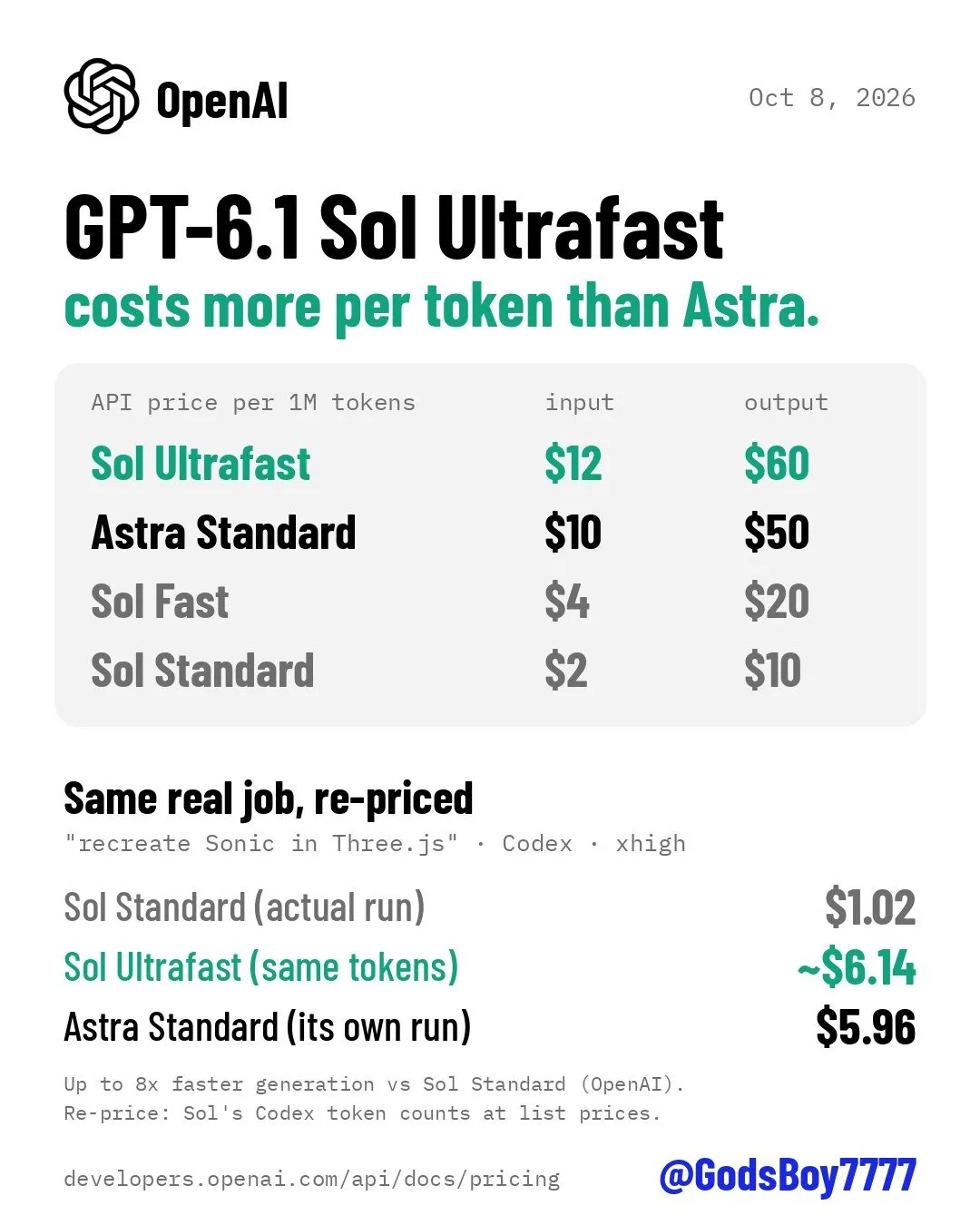
His conclusion was that a failure on the line at 2 a.m. was worthwhile; as a side project, the standard version of Sol was still the most economical.
Pro 500 users are more intuitive.
One user tried using the XHigh reasoning file, burning 1% of the weekly allowance every 3 to 5 minutes.
He wanted to get rid of the Pro 500 along with all the OpenAI accounts: "Are they an AI lab or a slot machine?"
Well-known AI blogger Matthew Berman thinks that 6.1 Sol may be the most attractive model at the moment.
The model is eight times faster, can run tests, load dependencies, etc., and takes less than a second to load.
Speed is the new price line.
For the past two years, the price list for large models has been smart, small models cheap, and flagships expensive.
OpenAI, this time in the same model, is cutting a knife slowly and quickly.
It's named after the three live, fixed-line failures, Agent back-to-back operations in the app, real-time experience of calculating every second.
Some netizens say that many live models are already smart enough to make more money, only speed.
Plus users are still wondering when it's their turn.
OpenAI's answer is already on the price list.
RoboInd editorial channelResearch, robotics companies and market intelligence for cross-border sourcing.Explore the channel ↗
Share this
End of editorialExplore more from Global Robotics News ↗