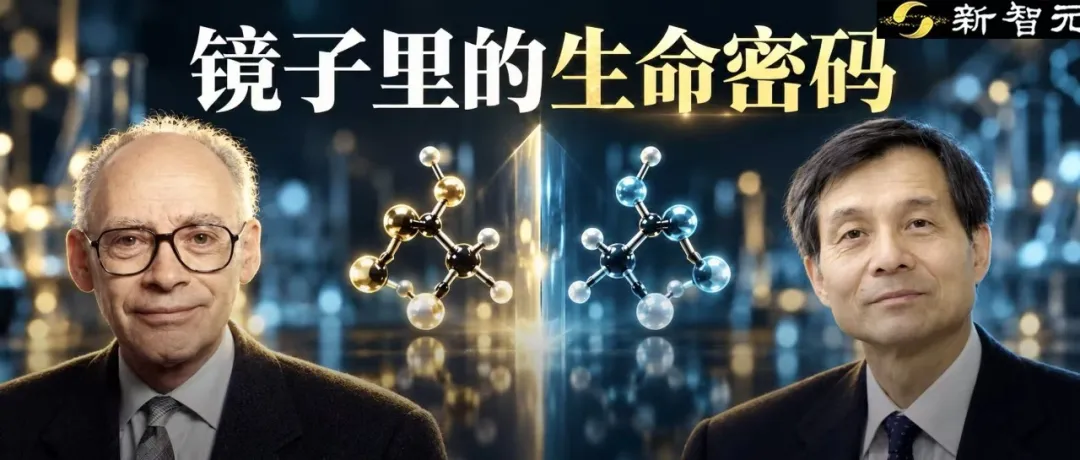
It's the first time in the history of the world.
The 2026 Nobel Prize in Chemistry has just been announced!
The prize in chemistry was awarded to Henri Kagan of the University of the South of Paris, France, and Kenso Soai of the Tokyo University of Technology, Japan, in recognition of their discovery of nonlinear effects and self-catalyzing effects in asymmetric organic synthesis.
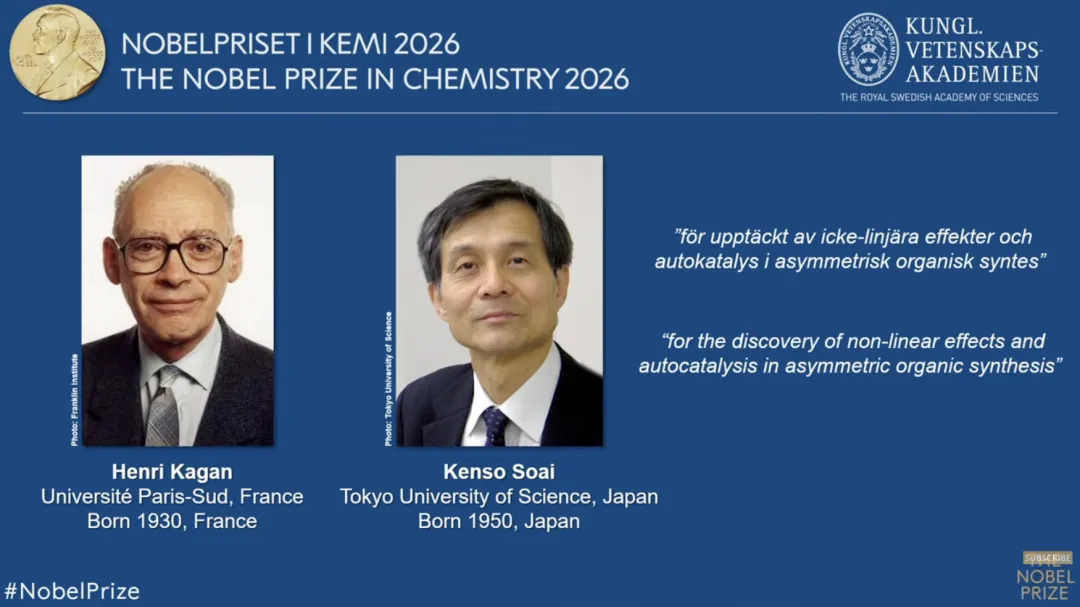
These two findings answer the ultimate question that has plagued humanity for more than a century: Why is life so "biased"?
Their research not only deals with the origin of life on Earth but has actually saved countless lives and radically changed the modern pharmaceutical industry.
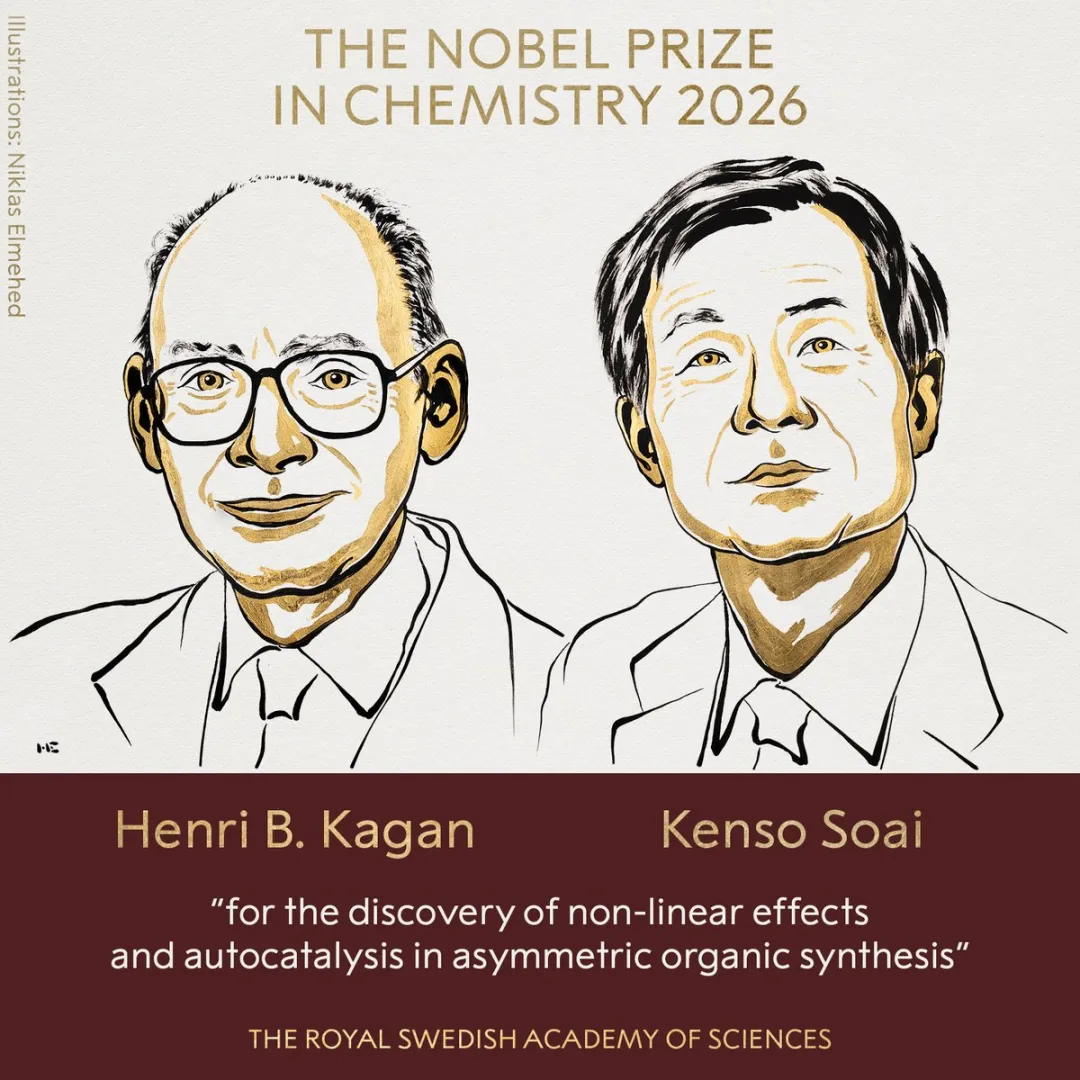
Kagan turns 95 this year!
Twenty-five years ago, two of his teammates took the Wolf Prize with him to the Nobel Prize podium, but he was left behind. Twenty-five years later, he finally returned with the Nobel Prize!
Kenso Soai was born in Hiroshima in 1950 and was a visiting professor at Jilin University for five years from 2010 to 2015.
Chinese chemists such as Xi Jinping and Xi Jinping shoulder to shoulder with the Nobel Prize this time.
What's more, the Nobel Prize in Chemistry was just awarded to AlphaFold two years ago, but to this day, AlphaFold 3 still reverses the left and right hands of the molecule!
"Twice" is a deadly play by the creator.To understand this year's Nobel Prize in Chemistry, we need to understand "manuality".
The left and right hands look the same, but no matter how rotated, the left and right hands cannot be put together again. In the world of chemistry, this phenomenon is called "manuality".
Many chemical molecules, like the hands, have two mirror-like variants, called "reflective isomers", called "left-hand molecules" and "right-hand molecules".
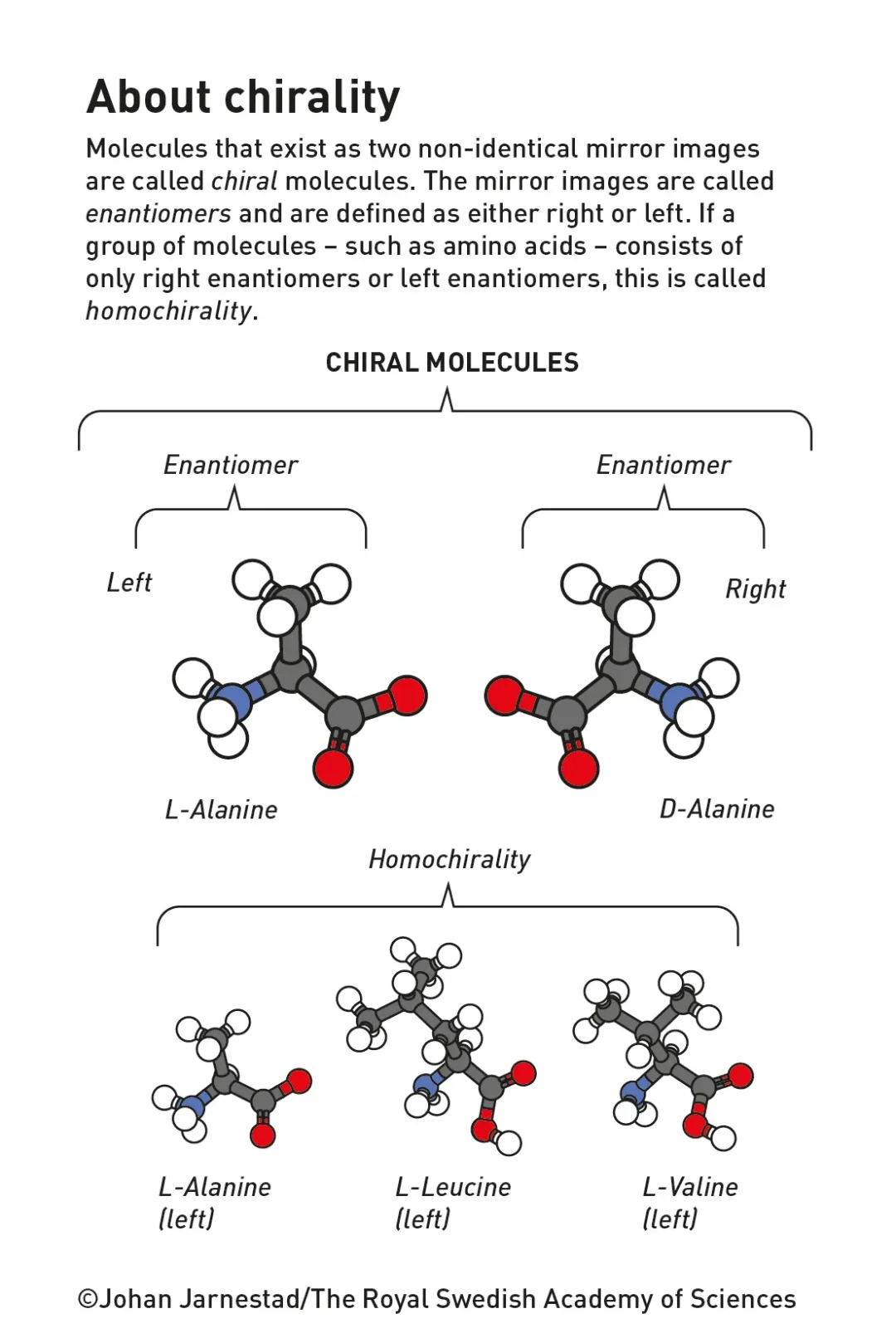
But the problem is that the key to life is "knowing".
If a "left-hand key" and a "right-hand key" are created at the same time, the client's lock can only be opened with one of them, and if forced to insert the other, the lock may not only be unlocked, but also completely destroyed.
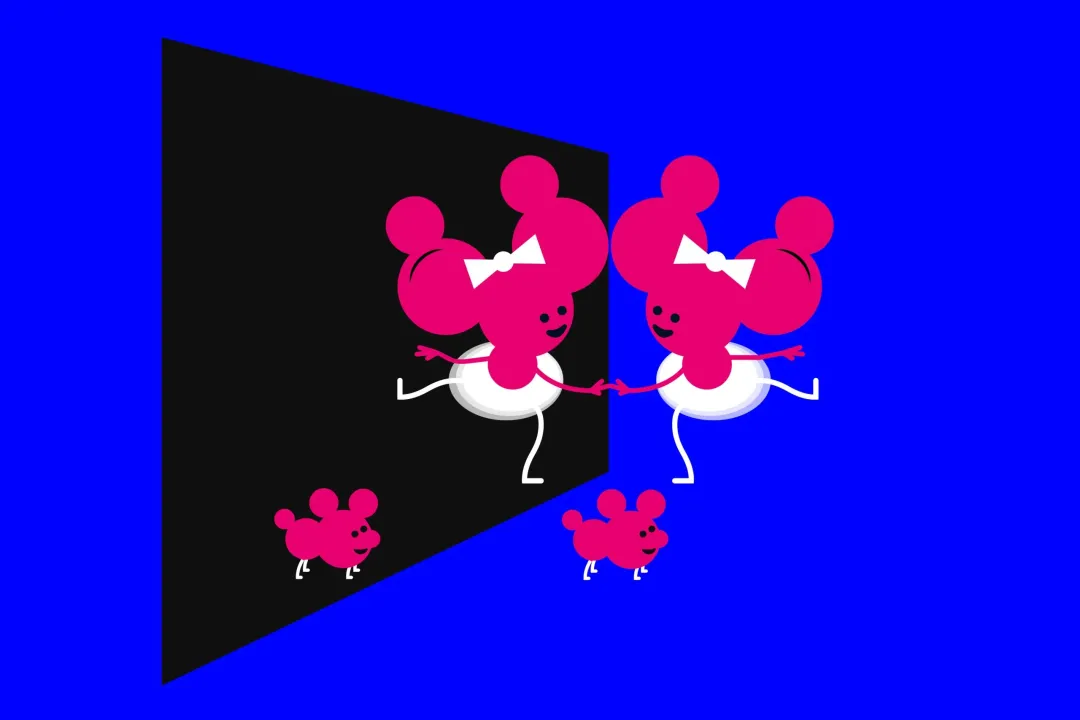
This was once a nightmare in the pharmaceutical industry.
In the 1960s, a sleep medication called "reaction stop" (salidamine) was widely used to relieve morning sickness in pregnant women. However, tragedy struck: thousands of babies were born with severe birth defects (such as amyotrophic lateral sclerosis) worldwide.
Why is this happening?
Scientists later discovered in panic that salidomine was a "hand drug". Its "right-hand molecule" was an angel, which was effective in sedating sleep; but its "left-hand molecule" was a demon, which would cause fetal paralysis. At the time, pharmaceutical techniques could not separate the two molecules, and angels and demons accounted for half of the pills swallowed by pregnant women.
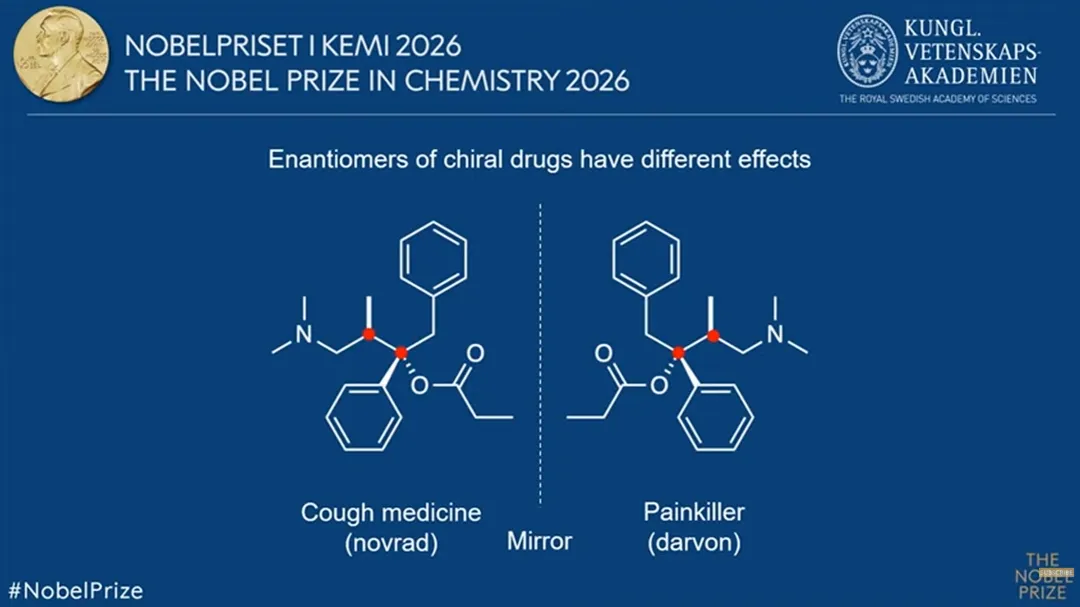
This tragedy, known as the "Salidity Amine Disaster", demonstrated to humans the importance of the "manual" control molecule. The chemists were devastated: we had to find a way to make "right-handed molecules" or "left-handed molecules" in the test tube!
But how easy is that?
Nature's bias: the "five-five" in the test tubeWhen chemists tried to manufacture hand-held molecules in the laboratory, they found in despair that without the intervention of outside hand-held forces, the chemical reaction would always be a perfectly fair hydrogen-generated "left-handed molecule" and "right-handed molecule" would always be 50% to 50%.
However, this is not the case in nature.
All life on Earth is an extremely pure "single-handed" organism. All of the amino acids that make up our body's proteins are "L-type" left-handed; and all of the sugar molecules that make up our DNA and RNA skeletons are "D-type" right-handed.
Why isn't even a right-handed amino acid mixed into our bodies?
If random synthesis in the laboratory is always 50/50, how did the original molecules of life break this balance in the primordial oceans of the Earth billions of years ago, forming a 100% pure, single-handed world like it is today?
This problem has been called the "biological homosexuality dilemma".
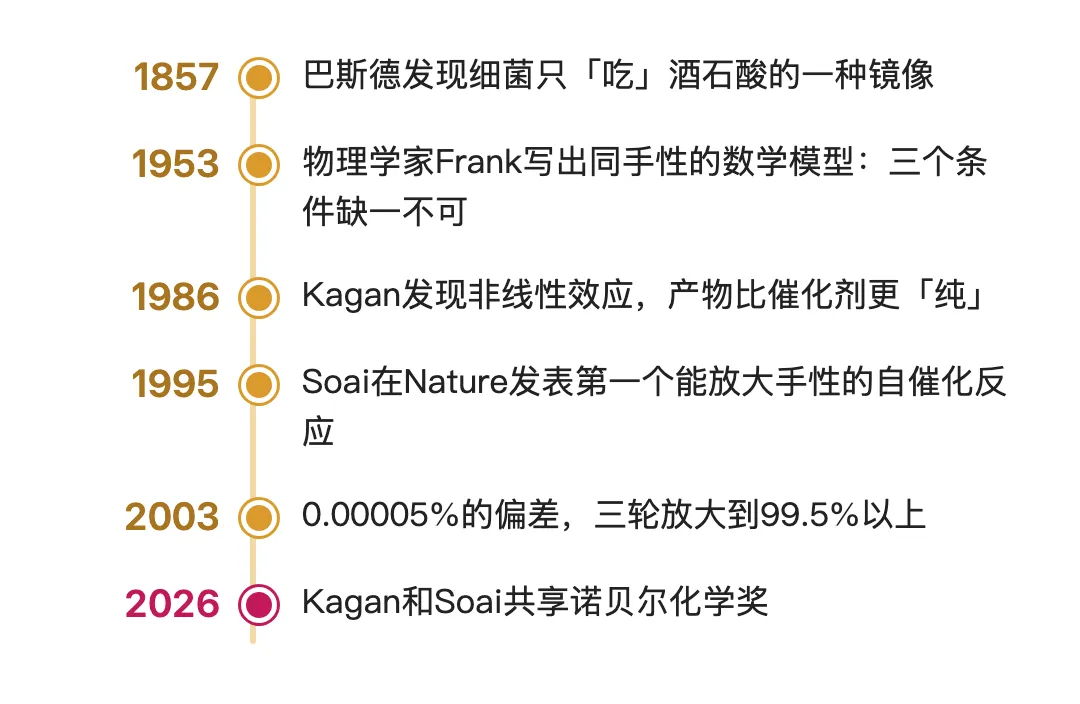
In 1953, Sir Charles Frank, a theoretical physicist at the University of Bristol in England, "mocked" chemists with a mathematical paper.
He proposed that life must go through an extremely special chemical process. To achieve the leap from 50/50 to 100% unilateral, three demanding conditions must be met:
1. Self-catalysis:The product must be able to catalyze its own formation, its own birth.
2. Asymmetrical reactions:The reaction must be one-sided.
3. mutual suppression and mutual harm:When left-handed and right-handed molecules meet, they must be able to offset or inhibit each other's growth.
Frank's mathematical model was perfect, and at the end of his paper he coldly put it this way: "Probably not impossible to prove this in the lab".
This is the ultimate challenge of physicists to chemists.
Over the next few decades, the model became a "conundrum of inexplicability" hanging in the heads of all chemists. How could this magic be replicated in a real burning glass with real molecules?
The two winners of this year's awards came to the limelight.
In the 1980s, Henri B. Kagan of the University of the South in Paris, France, came up with a question.
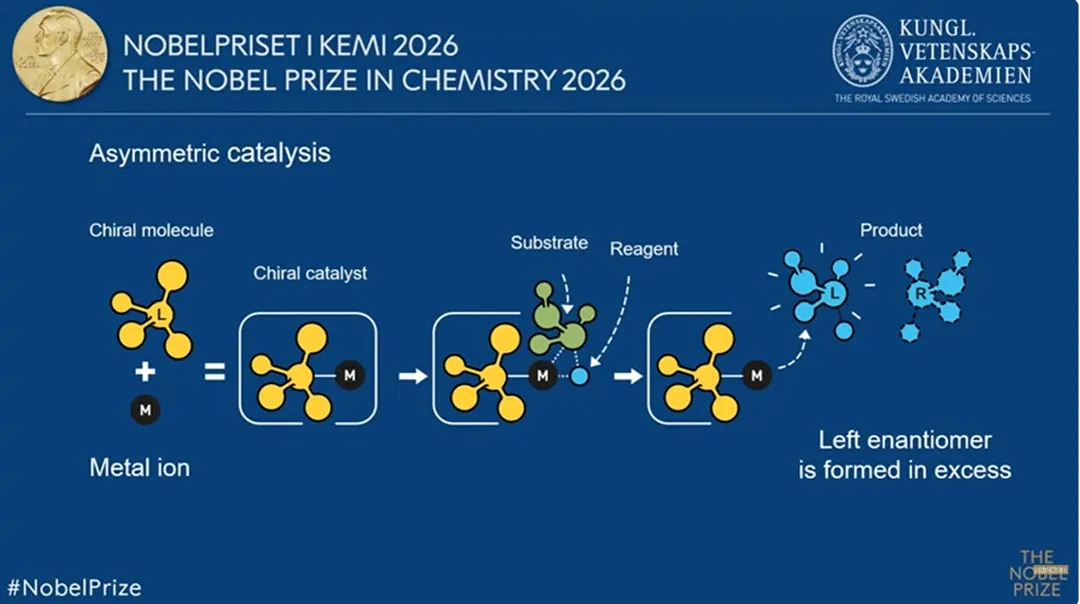
At the time, chemists had invented the technique of "asymmetric catalysis" to produce pure single-handed drugs, using an already manual catalyst to guide the reaction to produce a specific manual product.
There was a deep-seated "common sense" in chemistry at the time: the purity of the catalyst determines the purity of the product.
If the catalyst you use is 80 percent left-handed and 20 percent right-handed, then the product you produce must be 80 percent left-handed and 20 percent right-handed.
But Kagan was a man who liked to break sandwiches and ask questions. He began to think: What if the catalysts were not fighting alone, but working in a "group"?
When many metal catalysts react, the central metal ion attracts two hand molecules at the same time. Cargan suggested: If we mix left-handed and right-handed catalytic molecules in a burning glass, they combine to form three combinations:
Left-left combination(Pure left-handed squad)
Right and right combinations(Pure right-handed squad)
Combined left-right(Mixed squad)
Miracles are hidden in this mixed subgroup.
Through careful experiments and calculations, Kagan found that the combination of "left-left" and "right-right" catalysts were extremely efficient; however, the "mixed subgroup" made up of left and right was extremely lazy, even not working at all!
This resulted in an extremely magical consequence: the nonlinear effect (NLE).
Let's say that 75% of the catalysts you use are left-handed and 25% are right-handed.
The "left-right" blend is likely to consume large quantities of the "right-handed" molecules, resulting in a "left-left" blend of the remaining catalysts that can actually act.
The result is that you only use a left-handed catalyst with 75% purity, but miraculously you get left-handed products with 90% or even higher purity!
The official illustration of the Nobel Prize recounted the left and the right in reverse: the right hand accounted for 75%, the left for 25%, and after random matching, "right-right" accounted for 56%, "left-left" accounted for only 6% and the remaining 38% were all "left-right" combinations.
Combining that basic strike, which really fueled the reaction, became 90% "right-handed" and 10% "left-handed!"
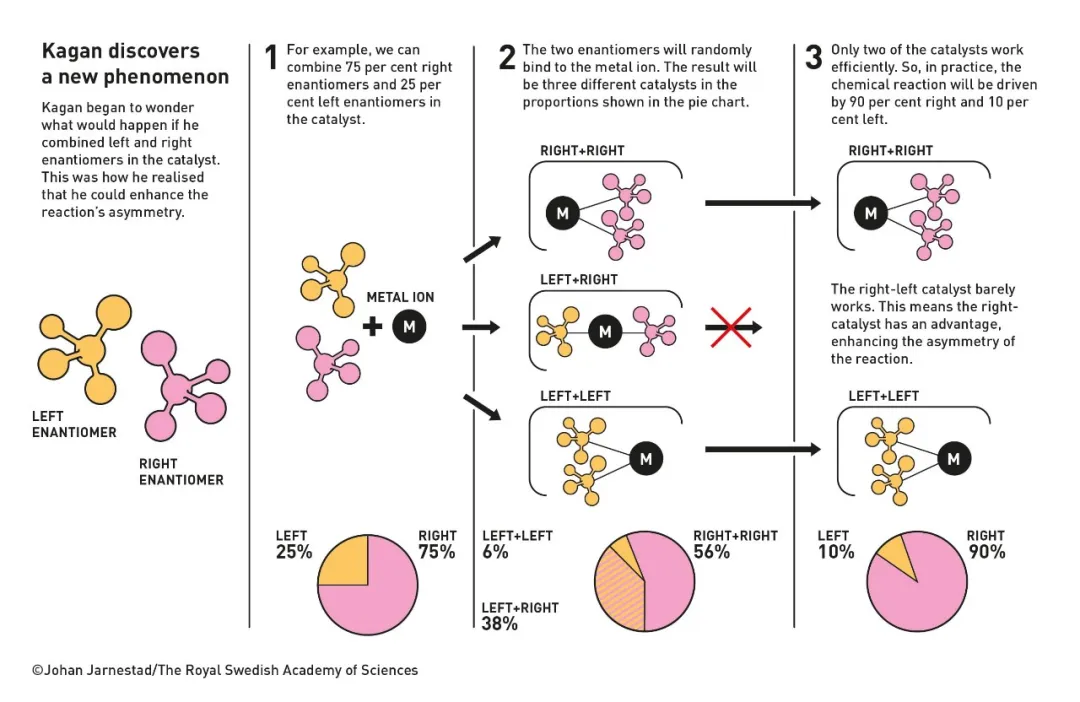
Kagan's reasoning: The catalyst mixed on the right hand side almost doesn't work, so the right hand version takes the wind.
In 1986, Kagan officially published this astonishing discovery to the chemistry community.
In the same year, Kagan reported three asymmetrical reactions in which the purity of the product and the catalyst was incomparable.
In one of the asymmetric oxidation reactions, the purity of the product is even higher than the catalyst itself! The scientific background material of the Nobel Prize Committee says that this was "unthinkable" at the time.
The catalyst is intentionally "dirty" and the product is purer. This is a possibility that Kagan has been working on since the late 1960s.
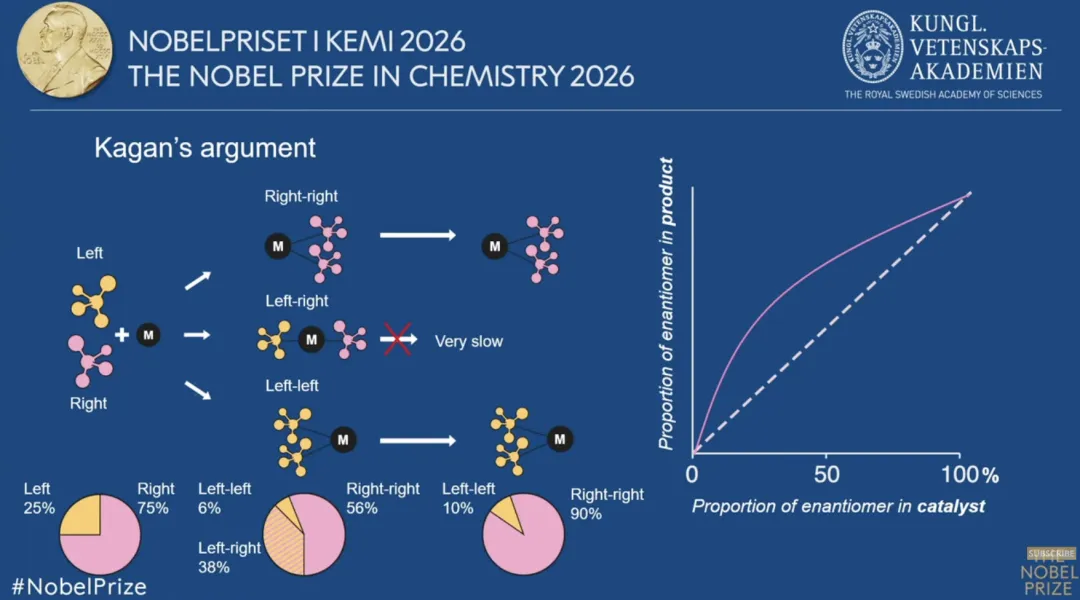
He broke the linear hypothesis of purity transmission in chemistry.
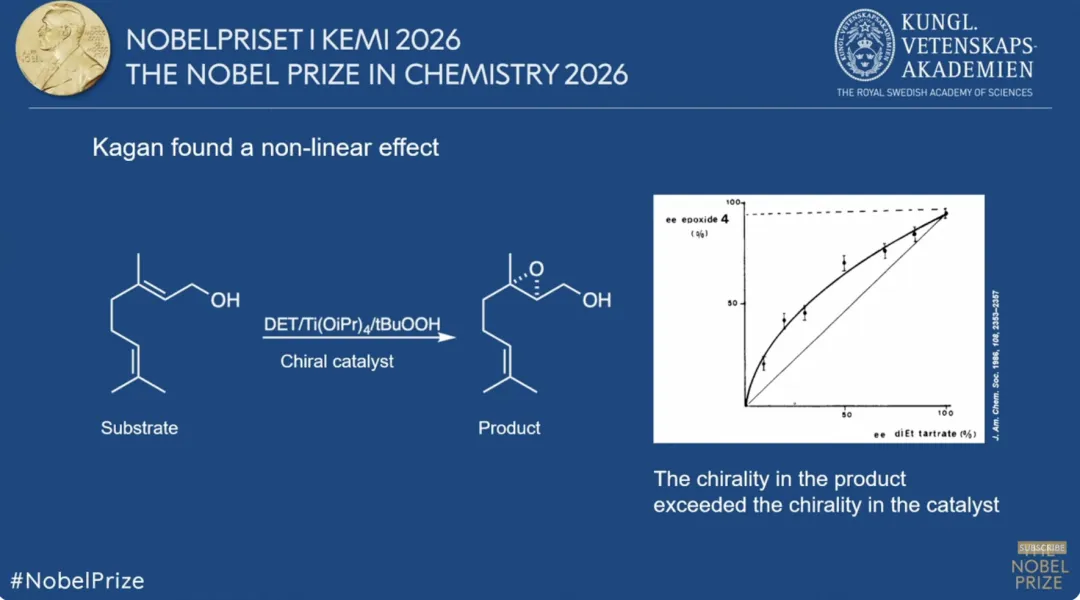
More importantly, he perfectly demonstrated the third condition, which physicist Frank proposed that year, called "mutual suppression". The combination of heterogeneous molecules would cause the catalyst to become inactive, which is "mutual harm" in the micro-world.
Kagan's discovery provided a powerful weapon for the modern pharmaceutical industry. Today, pharmaceutical companies can synthesize life-saving drugs of extreme purity by analyzing nonlinear effects with very low cost and low purity catalysts.
But that's not enough - Cagan is simply proving "asymmetric amplification" and he hasn't realized the most central element of Frank's model: "self-catalyzing".
The power rod was handed over to Japanese scientists.
Kenso Soai's "Fountain of Youth"Kenso Soai received his Ph.D. in 1979 from the University of Tokyo, where he was an instructor in organic synthesis. He then went to the University of North Carolina at Chapel Hill, USA, where he worked for two years as a postdoctoral fellow with the stereochemist Ernest Eliel, before joining Tokyo University of Technology in 1981, where he has been ever since.
Kenso Soai of Tokyo University of Science and Technology in Japan saw Kagan's paper and suddenly thought: Since asymmetrical magnification is possible, can we not find a molecule that is both a catalyst and a product and can continuously magnify its "manuality" in the process of self-replication?
In the early 1990s, Kenso Soai experimented madly with mistakes. He tried a combination of a myriad of molecules and failed thousands of times.
In 1990, he made the first asymmetric self-catalyzing reaction with isocyanate and phosphate-3-methane. The purity of the product was only 35% and 86% lower than that of the catalyst.
In the official Cop material for the Nobel Prize, the subtitle of this section is "Trying to make mistakes".
Finally, in 1995, he knocked on the door.
He found that in the reaction of dihydroxychloroethane with hydrogen-5-methane, the resulting product, chlorine, could act as a catalyst to catalyze its formation.
This is not only self-catalysis, but also "asymmetrical self-catalysis".
The result was published in Nature. The initial manual deviation of only 2% was amplified by self-catalysis to 87%!
But Kenso Soai didn't stop, and it worked for eight years.
The most incredible experiment took place in 2003. Kenso Soai and his team performed a demonstration of a remarkable chemical epic.
In a reaction system, they added a purity-low to inflammatory initial catalyst: its left-hand molecule produced only 0.00005% less than the right-hand molecule! This is not even detectable in ordinary instruments, almost equivalent to a completely neutral 50/50 mixture.
And then a miracle happened.
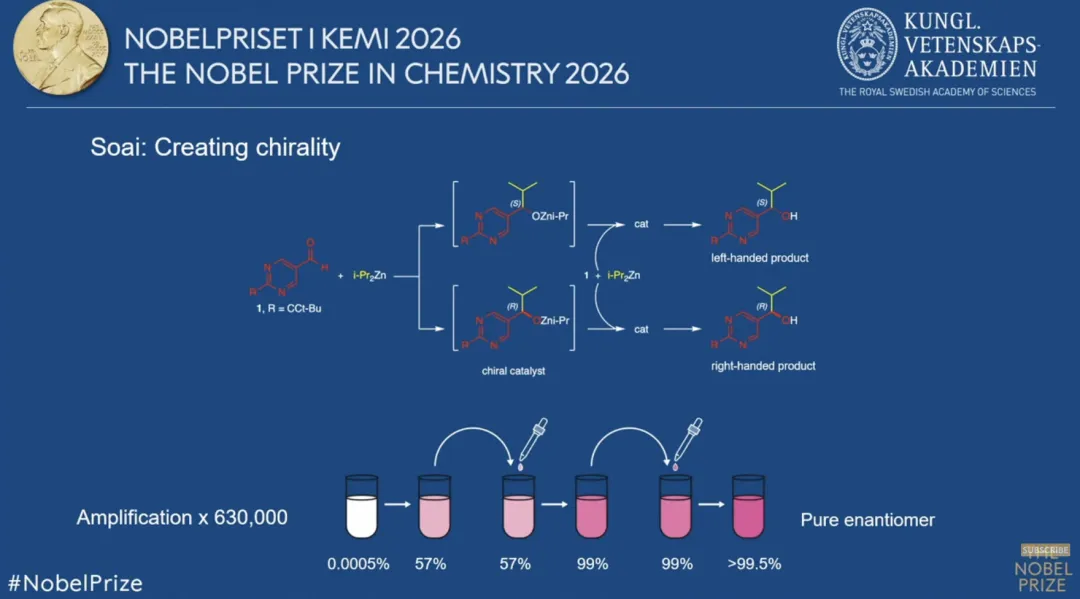
After the first round of reactions, the weak preference was amplified and the left-handed advantage of the product became 57%. They took the product out and put it in as a catalyst for the next round.
At the end of the second round, the advantage was 99%.
At the end of the third round, the purity of the product exceeded 99.5%!
In just three consecutive cycles, the initial insignificant imbalance of only 0.5 of a million points was magnified 630,000 times, ultimately creating a purely one-handed world!
This reaction is called the "Soai reaction" by the academic community.
The Nobel committee directly called it "one of the most surprising chemical experiments ever!"
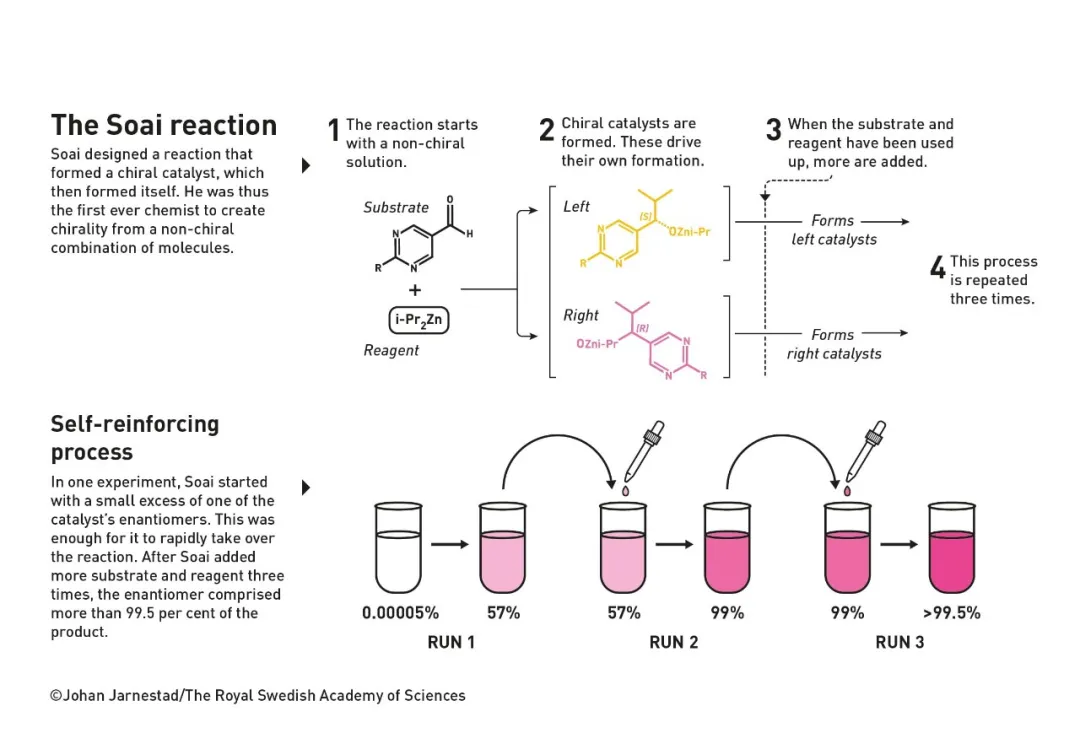
Soai's reaction: At the start, the deviation is barely visible, and after adding three times, a mirror makes up more than 99.5%
This is the first and so far only time in human history that the leap from almost non-manual to absolutely homogenous has been made by relying solely on the mechanisms of the chemical system itself without the intervention of strong external manual forces.
Even worse, Kenso Soai doesn't even give a hint of bias.
The initial solution was completely unmanufactured, and he did it 37 times: 18 times one mirror won, 19 times the other won, and the final purity ranged from 15% to 91%.
It's a random reaction that starts at the beginning of the moment, and then catalysis makes it all the more random.
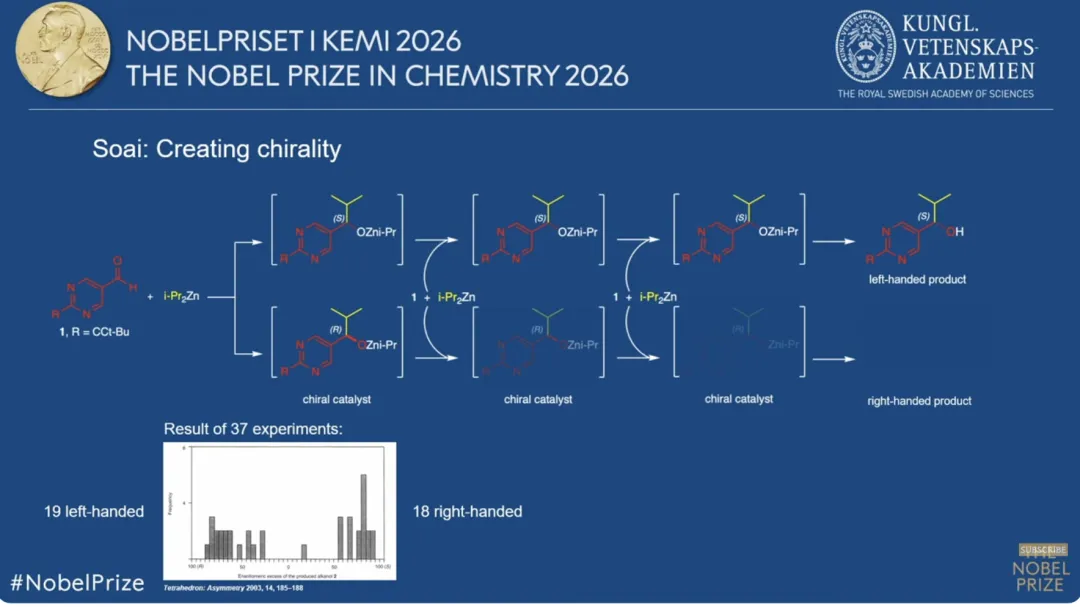
In 2009, he pushed the trigger signal to the limit in Science: a molecule would simply convert one carbon 12 into carbon 13, a slight difference that would be enough to determine which hand the entire hydrogen product is headed to.
A prediction by physicist Frank in 1953 was made a half-century later by Kenso Soai.
Breaking the ultimate code for the origin of lifeWhat does Soai's reaction have to do with the "why is life biased" we mentioned earlier?
It's too big.
There were no high-tech tools to purify molecules in the early "primordial cells" of the Earth. The primary amino acids and sugars of life were inevitably "left" and "right" halfway open.
However, as long as the cosmic rays, or the absorption of certain crystalline surfaces, or even pure "statistical random falls" lead to some very small localization, the left hand has even 0.00001% more amino acids than the right hand.
In the face of the mechanism revealed by the Soai reaction, this 0.00001% difference is enough to change everything.
By self-catalyzing and nonlinearly amplifying the "inner curve" effect, the proliferating "left-handed" molecules reproduce themselves madly while ruthlessly suppressing the generation of "right-handed" molecules. After hundreds, thousands of cycles, the "right-handed" molecules in the entire original pot will be completely eliminated, leaving behind a 100% pure "left-handed" world.
Kagan and Kenso Soai's findings have not only enabled modern pharmacology to break down "handed ghosts", but also, in the most basic logic, to show humans how the incredible "prejudice" of the origin of life came about.
Maybe God doesn't really have a caterpillar, he's just playing a non-linear game of "self-catalysis" in a burning glass called Earth.
A.I. won the Nobel Prize, but he turned left and right.Interestingly, the Nobel Prize in Chemistry has been linked to the previous one.
The Nobel Prize in Chemistry was awarded two years ago to David Baker, the designer of the protein, along with Demis Hassabis and John Jumper behind AlphaFold.
In the same year, Google DeepMind and Isomorphic Labs released AlphaFold 3. The paper admits in the section that discusses the limitations: the output of the model does not always follow the manual, even if the input has given the manual the correct reference structure.
The team specifically added manual punishment to the ranking formula on the PoseBusters benchmark, with a manual error rate of 4.4%.
It's a more difficult question, a more outrageous one!
Duke University's Bruce Donald team conducted 3,255 experiments with AlphaFold 3 that specifically predicted the composition of the right-handed amino acid-containing D-type zinc and protein complexes.
The original thesis of the paper was: on average, the accuracy of the model and each residual random guess is about L or D. The confidence given by AlphaFold 3 does not distinguish which predictions are manual correct and which are incorrect.
Chemists are also teaching AI.
In 2019, a team at the University of Illinois, Scott Denmark, published a set of machine learning processes in Science: when training, they intentionally remove more than 80% of all selective responses, and deep neural networks predict those that are the most selective.
In 2025, a Chinese chemist at Scripps Institute and his colleagues minimized a chemical language model that had been pre-trained on 1 million molecules, using 220 published reactions and 77 known manual couplers, to produce an entirely new manual coupler.
Today, AI can give a protein structure in a matter of minutes, but the left and right hands of the molecules are not clear.
In fact, Kagan should have been the winner of the Nobel Prize in 2001.In 2001, the Nobel Prize in Chemistry awarded an asymmetrical catalysis, with three winners, none of whom were Kagan!
In 2013, Kagan admitted that he was disappointed at the time: "What disappointed me more is that I was recently awarded the Wolf Prize to Noyori, Sharpless and me, which is considered to be the front-runner for the Nobel Prize".
He later lectured abroad and described himself in the posters as: "The man who should have won the Nobel Prize in 2001".
Twenty-five years later, 95-year-old Kagan is finally waiting for his own reward!Tribute to the Unknown Leaders
The 2026 Nobel Prize in Chemistry was awarded in recognition of his achievements.
Heiner Linke, chairman of the Nobel Committee for Chemistry, commented: "Henry Kagan and Kenso Soai have solved a century-old chemical mystery: how homosexuality came about spontaneously.
Henry B. Cargan, an old Frenchman born in 1930, who, with his keen insight, dared to question the book's morals, made a major discovery.
Kenso Soai, a Japanese scholar born in 1950, who, with a decade-long deadbeat and astonishing intuition, found the perfect "self-replicating and evolving" magic molecule, accomplished "the feat that no one but life itself has ever accomplished".
The prize of 12 million Swedish kronor will be divided equally between the two masters of science.
Today, whenever you swallow a handheld medication that is safe and effective without serious side effects, you should remember these two chemists.
Let's pay the ultimate tribute to the 2026 Nobel Laureates in Chemistry, Henry B. Kagan and Kenso Soai!