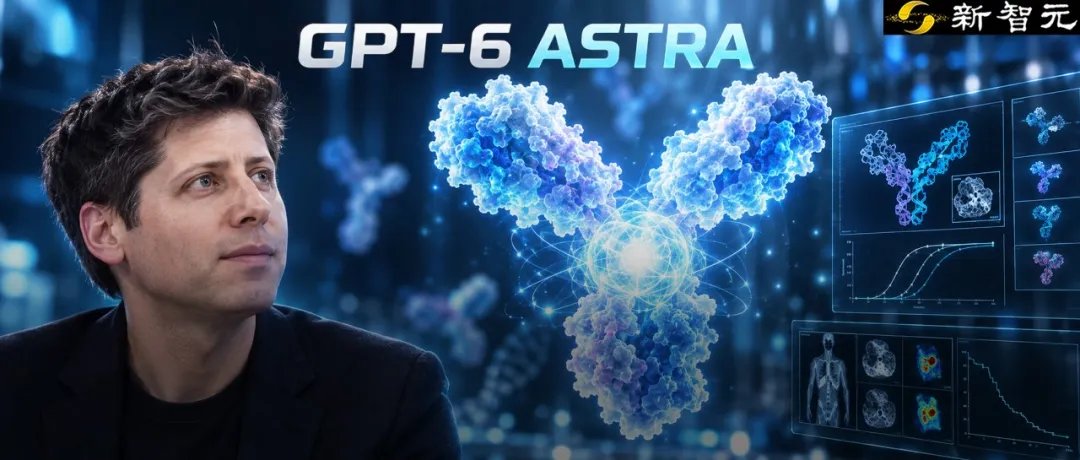
It's the first time in the history of the world.
The biggest shock since AlphaFold has come.
Just now, Greg Brockman, President of OpenAI, has sent a message that is enough to blow up the entire tech and medical world.
Renowned scientist Andrew Aiginin posted an exciting news story on X.
In a rigorous independent benchmark test, the GPT-6 Astra has just defeated all front-end models, becoming the most powerful AI to predict antibody development!
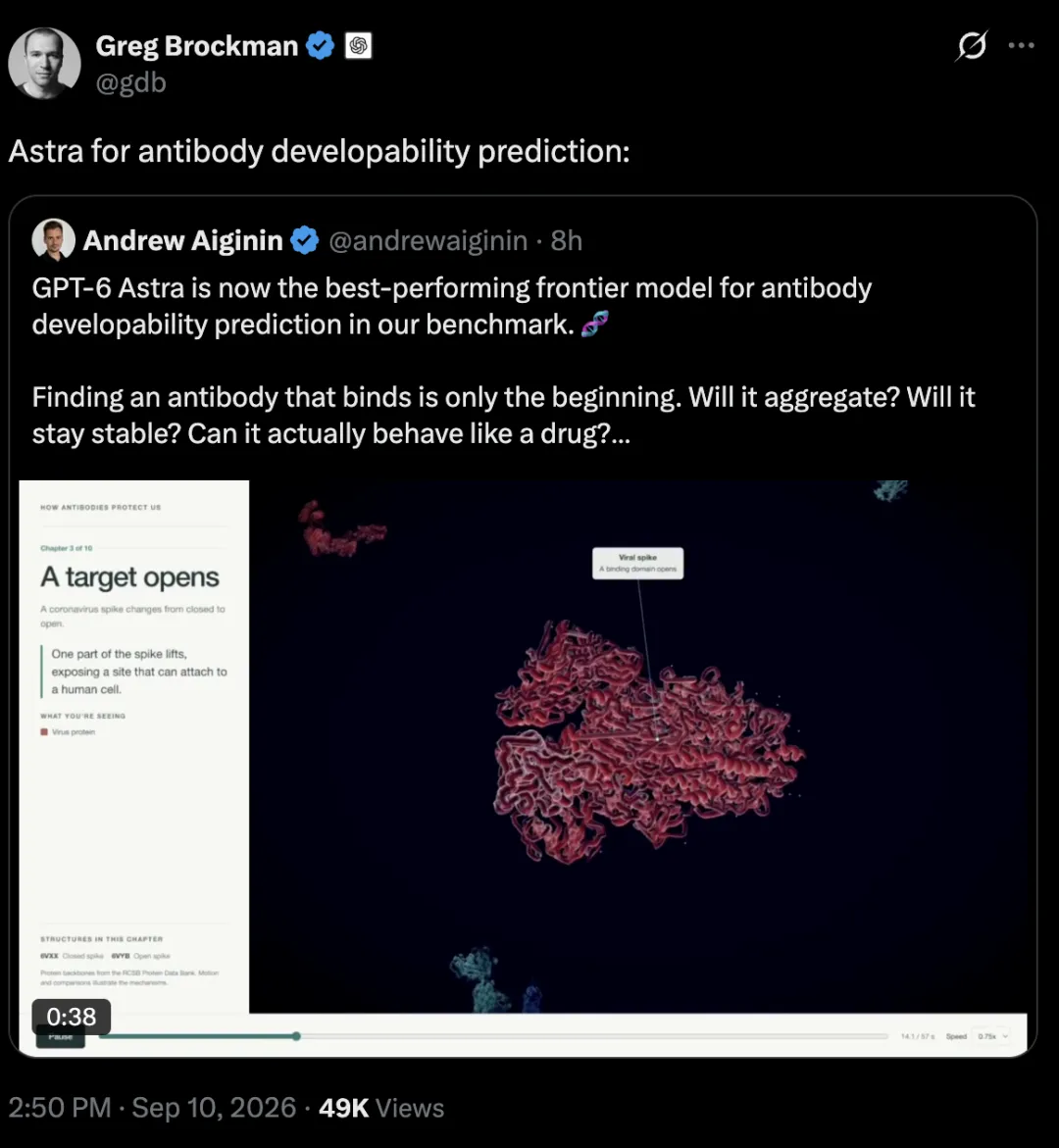
Not only did Astra score first in the race, but in less than an hour, she directly grabbed a complicated antibody interactive visualization page.
There has always been a consensus in the circle: "AI for Science must be a special problem with special models".
For example, AlphaFold refers to protein folding, LLM is usually only used as an auxiliary tool for writing code and reading literature.
But today, the GPT-6 Astra has ripped a huge hole in this consensus!
It relies on general intelligence to cut directly into the most difficult to quantify, most headache-making, preclinical dead end in biomedical research and development.
And it's not all a coincidence. Insilico Medicine, the top AI pharmaceutical team that built the test benchmark, released a 21-page paper on arXiv.
Training Chemical Plausibility - Aware of Large Language Models for Single-Step Retrosynthesis
The paper:
This paper, not only reveals for the first time the rigors of the DDD Benchmark for testing GPT-6 Astra, but also shows us: from small-molecule chemical synthesis to large-molecule antibody prediction, the General Large Model is fully taking over the scientific frontier of the hardest nucleus!
The scientific paradigm shift after AlphaFold may have just begun.
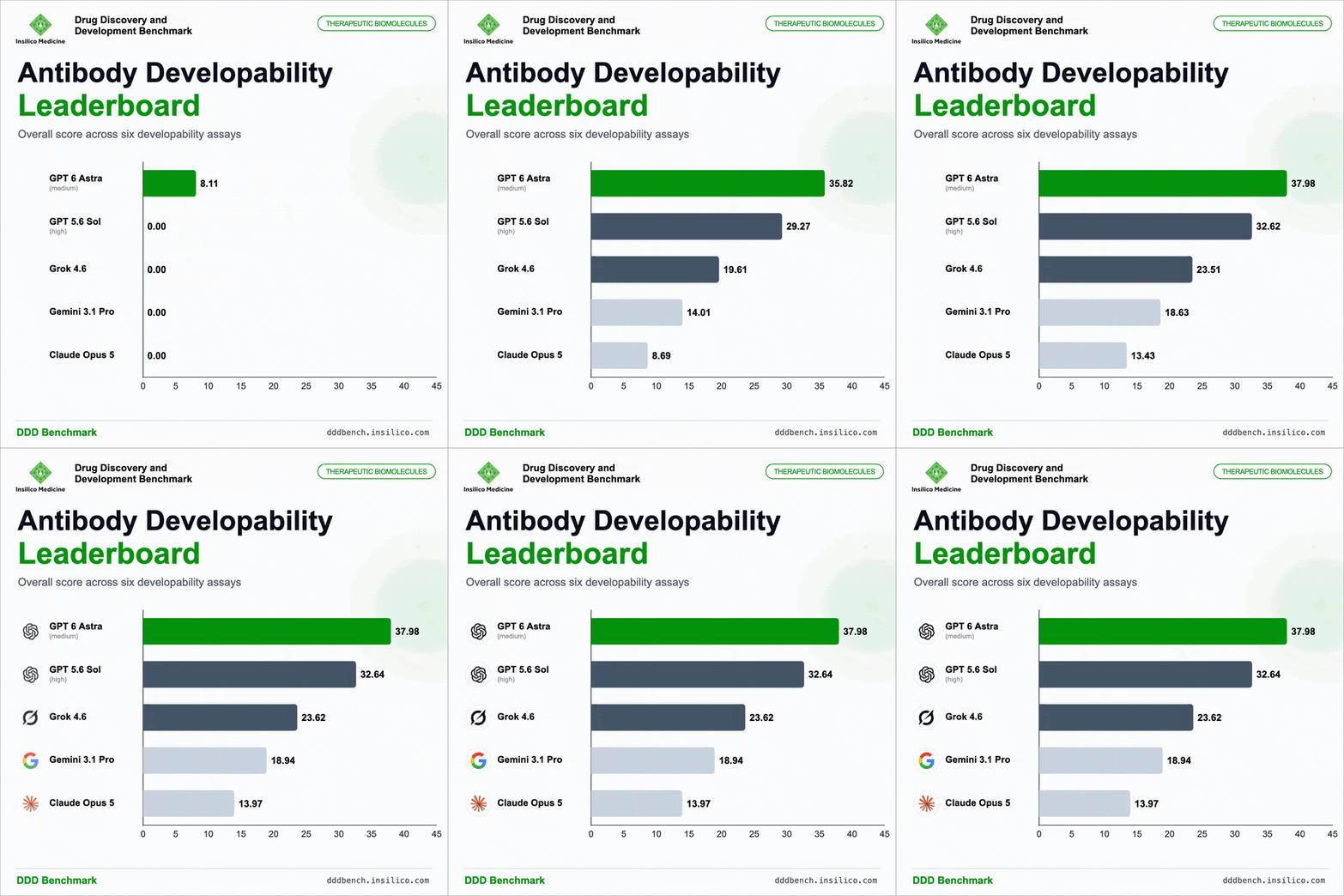
GPT-6 is at the top of the authority "DDD benchmark test".GPT-6 Astra's access to antibody developmental test modules in the DDD Benchmark (which combined six different antibody experimental data) yielded a staggering 37.98 points, compressing all tested models.
An AI scholar, Rim Shayakhmetov, has made an incredible comment:
The results are so interesting that it's hard to see a large-scale language model on the cutting edge of a drug discovery benchmark test that it shines so brightly without relying on 'external special tools.'"
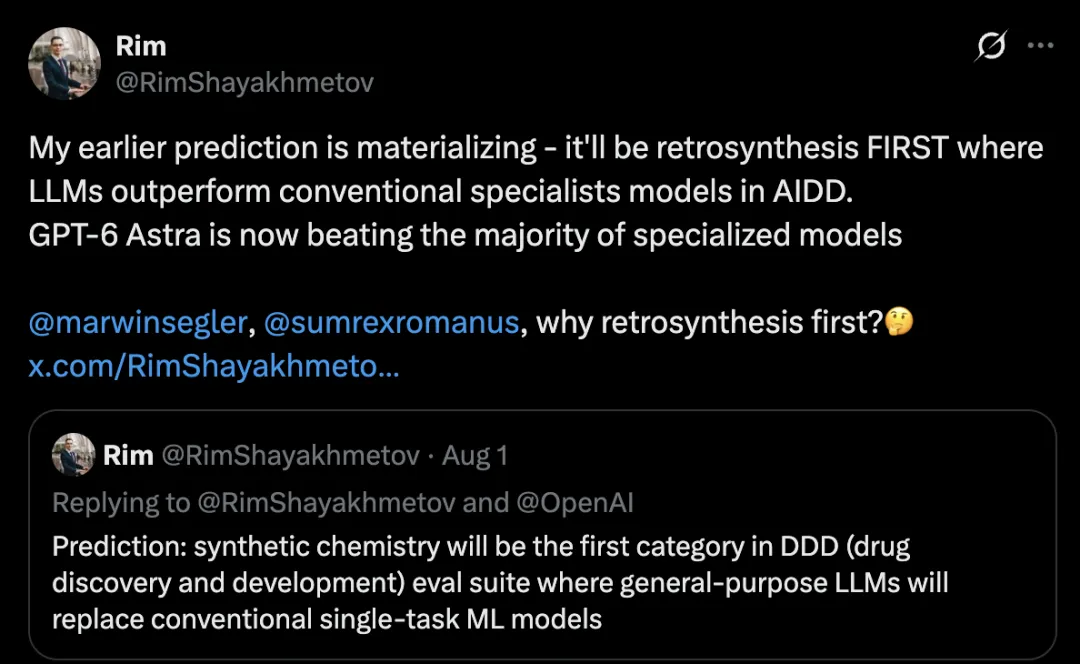
It's exciting to see a general-purpose model that directly cuts through the antibody-to-drug veins without specialized bioinformatics plug-ins, without specific antibody data mitigation.
The discovery of antibodies is just the beginning, and "medicine" is the real valley of death.To understand the gold content of GPT-6 Astra, we must first understand the harsh realities of a medical community.
Andrew wrote a heart-wrenching statement: "Finding an antibody that can bind is just the beginning. Will it accumulate? Will it stay stable? Will it really function like a drug?"
These words reveal the bloody history of countless new drug developers around the world.
In the past, when we talked about the development of antibody drugs, the focus was on "binding power".
A common misconception is that the antibody cannot identify and bind to the target of a virus or cancer cell as accurately as a key is inserted into a locking hole.
Early AI models (such as AlphaFold) have done a great job of "predicting combinations".
But! can combine ≠ can turn into medicine.
It's like talking about love. Both men and women look each other in the eye and see love, it's only the first step. Can you enter the marriage hall of fame? Can you stand the test of diesel salt?
In pharmaceutical research, this "test of cinnamon salt" is known as "perfectiveness".
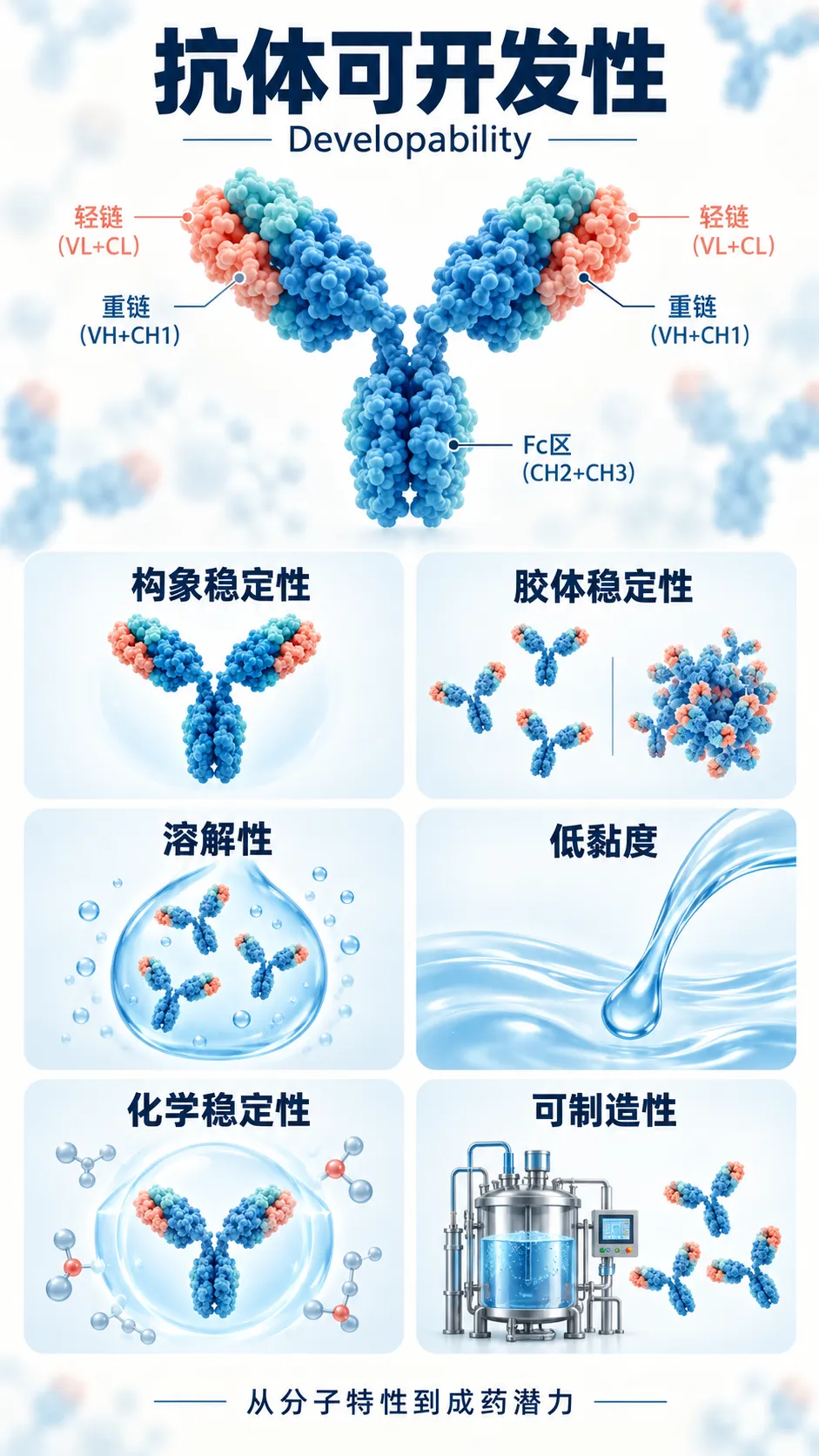
In reality, numerous "perfect antibodies" that appear to be highly binding are exposed to deadly defects once they enter the real physical environment or industrial production link:
Will it come together as a group?
It's structurally unstable?
Can it really act like a "medicine"?
These properties are collectively known as antibody development.
This is the "Death Valley" of the entire biopharmaceutical industry.
It has led to an extremely dire situation: thousands of antibody molecules perform well in the laboratory each year worldwide, but ultimately fall into the "medicinal" evaluation phase.
Drug companies have burned billions of dollars, spent years or even decades, and ultimately the particles have not been harvested.
Today, GPT-6 Astra announces that it can predict these pharmacological characteristics more accurately than any other cutting-edge model in the world today.
GPT-6 Astra faces a "hell-level" benchmark testSome might ask: Is this going to be another "brushlist" score?
Absolutely not.
Dr. Bogdan A. Zagribelnyy points out that the platform on which Astra climbs is the DDD Benchmark they built.
In the paper they published, we saw how hard the test system is.
While the tweets discussed "major molecular antibodies", the paper showed the depth of the team's horror of setting standards for assessment in the field of "major molecular chemistry". Understanding this context will help you understand how incredible Astra's victory is.
In the paper, the research team focused on another century's challenge in the pharmaceutical industry: single-step reverse synthesis.
Simply put, reverse synthesis is a "chemistry reversal" that gives you a target drug molecule, and you need to reverse-engineer what available, inexpensive chemicals you can use to synthesize it.
How was AI evaluation done in the past?
To give an AI a target molecule, the AI spits out a synthetic pathway, if it is the same as in an existing patent database (e.g. USPTO), even 100 points.
But this is hardly possible in the real world, because synthetic paths are inherently "one-to-many" and traditional "one-size-fits-all" evaluation methods that severely limit AI's ability to explore the unknown.
To this end, the Insilico team has created an inspiring test environment:
1. URSA-expert-2026 benchmark:This is an all-new molecular dataset containing 100 machine-generated and manually confirmed synthetic molecules available by top human chemists. It is completely isolated from any public training data, completely eliminating the possibility of a "background" model.
2. ChemCensor scoring system:They did not see the model as a perfectly reproduced patent, but instead developed the ChemCensor framework, starting from the most basic rules of chemical physics, such as "reaction center mapping" and "sensory group compatibility", to judge whether a reaction generated by the model has real chemical rationality.
It is under this "disembodied" examination of the physical/chemical laws that almost all traditional LLMs fail.
In early Top-1 testing, even stronger than the GPT-5.5 √ Gemini 3.1 Pro, its performance was still not superior to the top-of-the-line specialized traditional chemical models such as MHNreact √ LocalRetro.
The general LLM of "Mighty Miracles" seems to have hit a dead end.
45 million data, LLM is "forced out" by the scientific intuition?What about a general LLM instead of a private model?
The paper's answer shocked the industry not to change the model, but to use a method that inspires the potential of a general model.
In the paper, the team proposed three deadly tricks that completely unlocked the seals of large models in chemistry:
Tip one: Top-K suggestions for word order
Since reverse synthesis is "one pair more", don't let the LLM guess just once.
The team explicitly asked in the Prompt: "Give me 15 different answers".
Miracles have emerged, with only the switch to Top-K mode, and almost all large models (GPT-5.5, Claude Opus series) have seen explosive growth in chemical rationality and diversity.
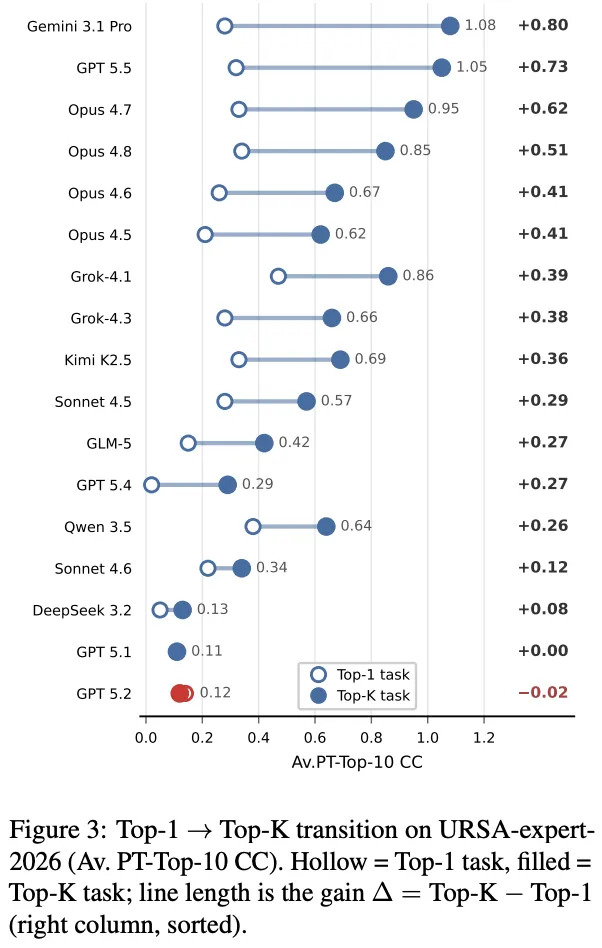
The Gemini 3.1 Pro performed well in the Top-15 mode, becoming the strongest LLM baseline.
This proves that the big model has scientific knowledge, but the way the past has been asked is incorrect.
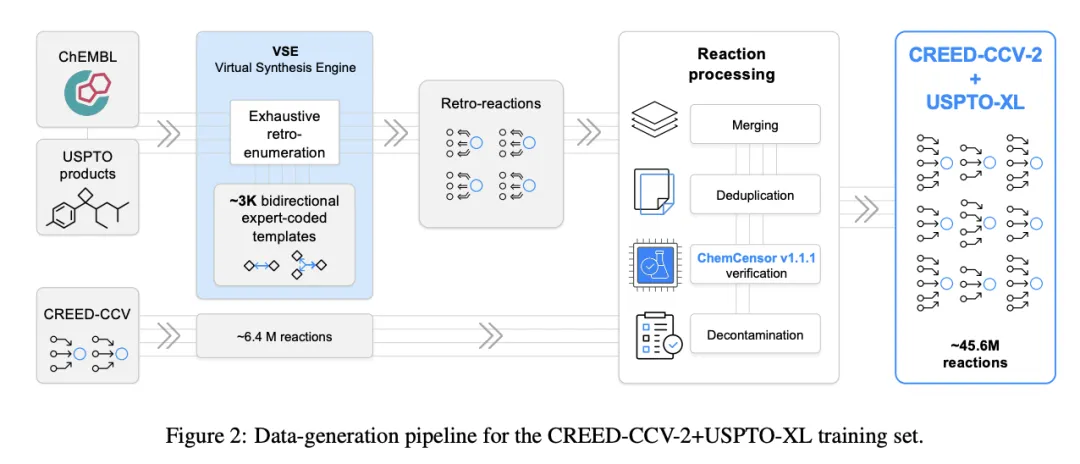
The second tip is to build a supermassive test data set of 45.6 million (CREED-CCV-2+USPTO-XL)
In order to train language models specifically targeted at chemical constraints (C3LM), the team reluctantly used virtual synthesis engines and the ChemCensor framework to build a super-large dataset containing about 45.6 million verified real chemical reactions.
The third trick: reinforcing learning「Neoconsistency」Rewards
In the C3LM model, they introduced the GRPO reinforcement learning algorithm.
The reward function is extremely rigorous: the synthesis path given by the model will not only be in line with ChemCensor's chemical rationality, but it will be rewarded enormously if the model can come up with a completely new reaction that doesn't exist in even 45 million training sets, but is still rational.
What is the result?
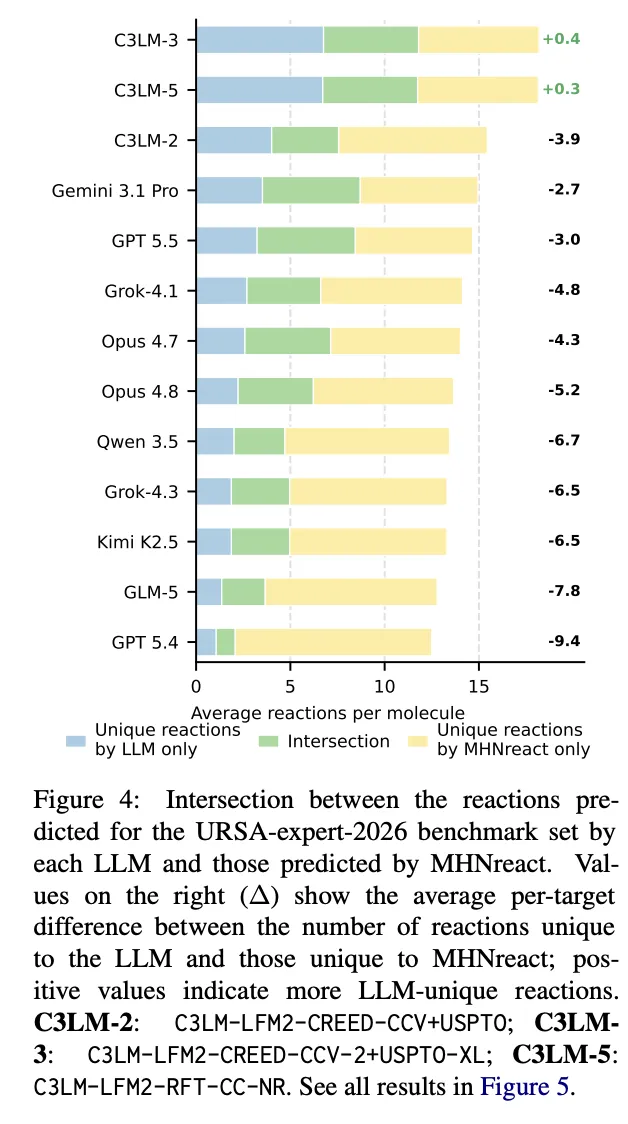
After this "hell level" training, the C3LM model finally defeated all the traditional exclusive SSRS models like MHNreact in the URSA-expert-2026 blind test!
Data analysis shows that C3LM and other basic models are able to explore the reaction space that is completely complementary to traditional models, producing a large number of unique pathways that traditional models would not have imagined.
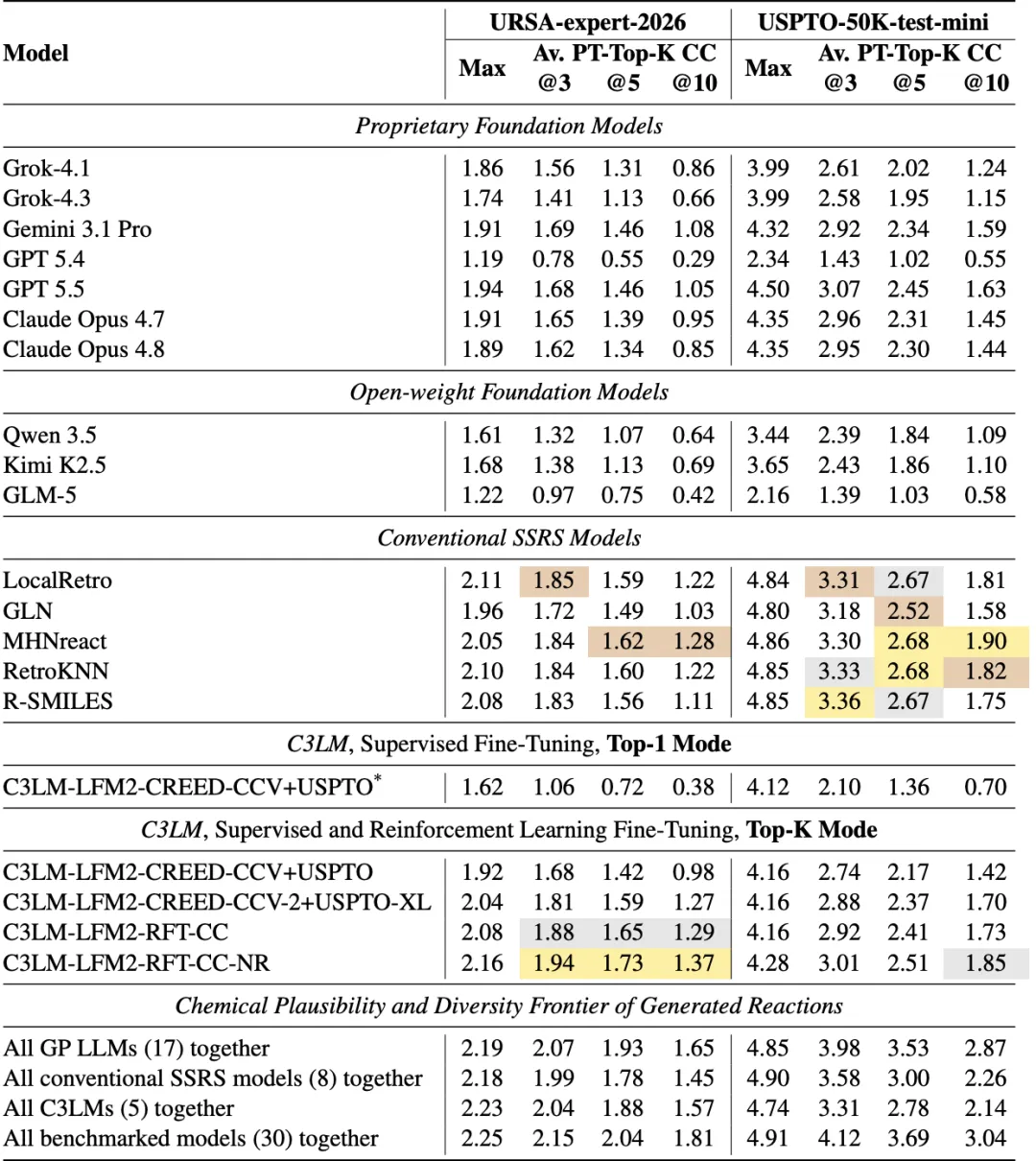
The paper's central conclusion is that big language models are not only capable of handling natural language, they can master the deepest chemical bonds, organs and synthetic logic as long as they are given the right environment and motivation!
Reduced impact: from C3LM to GPT-6 Astra, comprehensive takeover of general intelligenceIf you read the paper above, you will understand why Dr. Bogdan associates GPT-6 Astra's results with this paper.
In this paper, the Insilico team worked hard, using 45 million bits of data, coordinated reinforcement learning, guided by Top-K tips, to finally defeat the big model in small molecule chemistry synthesis.
However, when the test track switched to a more sophisticated, higher dimensional molecular developmental prediction, the GPT-6 Astra climbed to the top directly under the same DDD Benchmark test system without the use of "external tools", taking 37.98 points!
It's definitely a reduction in wages.
In the past, to solve the problem of antibody stability, we needed a team of professionals to design a dedicated 3D neural network.
The current GPT-6 Astra, in its general world model, seems to have internalized the underlying logic of physics, chemistry, and biology.
After reading papers, patents, experimental data, and even studying the physical laws of the microscopic world through multimodality, it has been able, like human experts, to "intuitively" determine why a protein molecule accumulates in a solution.
In addition, the engineering efficiency shown by Astra is equally chilling.
Andrew Aiginin notes: "By the way, this interactive visualization of how antibodies actually work is a page that was built with Astra in about an hour".
In traditional pharmaceutical companies, to make such a system, the whole process should take two or three weeks.
Now, one hour, one person, a general model, can solve it.
After AlphaFold, the real paradigm shiftGPT-6 ranks first on the antibody benchmark, announcing that the General Large Model has revealed the AGI curvature and substantial dominance achieved in the most advanced intellectual activity in human beings.
This list is number one, announcing the coming of a new era.
Over the next decade, the key driver of scientific discovery may no longer be customizing a specific AI model for each isolated scientific problem; it may be learning how to present the right prompt to a divine ASI.
The small molecule reverse synthesis is broken, and the large molecule antibody pharmacology is broken.
From new drug development to materials science, from fusion control to quantum physics, the surplus dividend of a general large model is about to sweep across the entire hard-core industry like a tsunami.