By 2023, industrial robot giants such as ABB, Genetics, and Genetics were the most prominent names at the time. By 2026, these former star companies had faded from the main narrative of the exhibition, being replaced by dense humanoid robots, sleek hands and large-sized models.
In addition to exhibitors' replacements, the leap forward in robotics capabilities is equally impressive.
By 2023, robots will be able to stand and walk, enough to attract crowds. Three years later, robots at the WRC have started boxing, playing table tennis, playing instruments, and completing crawling operations in more complex environments.
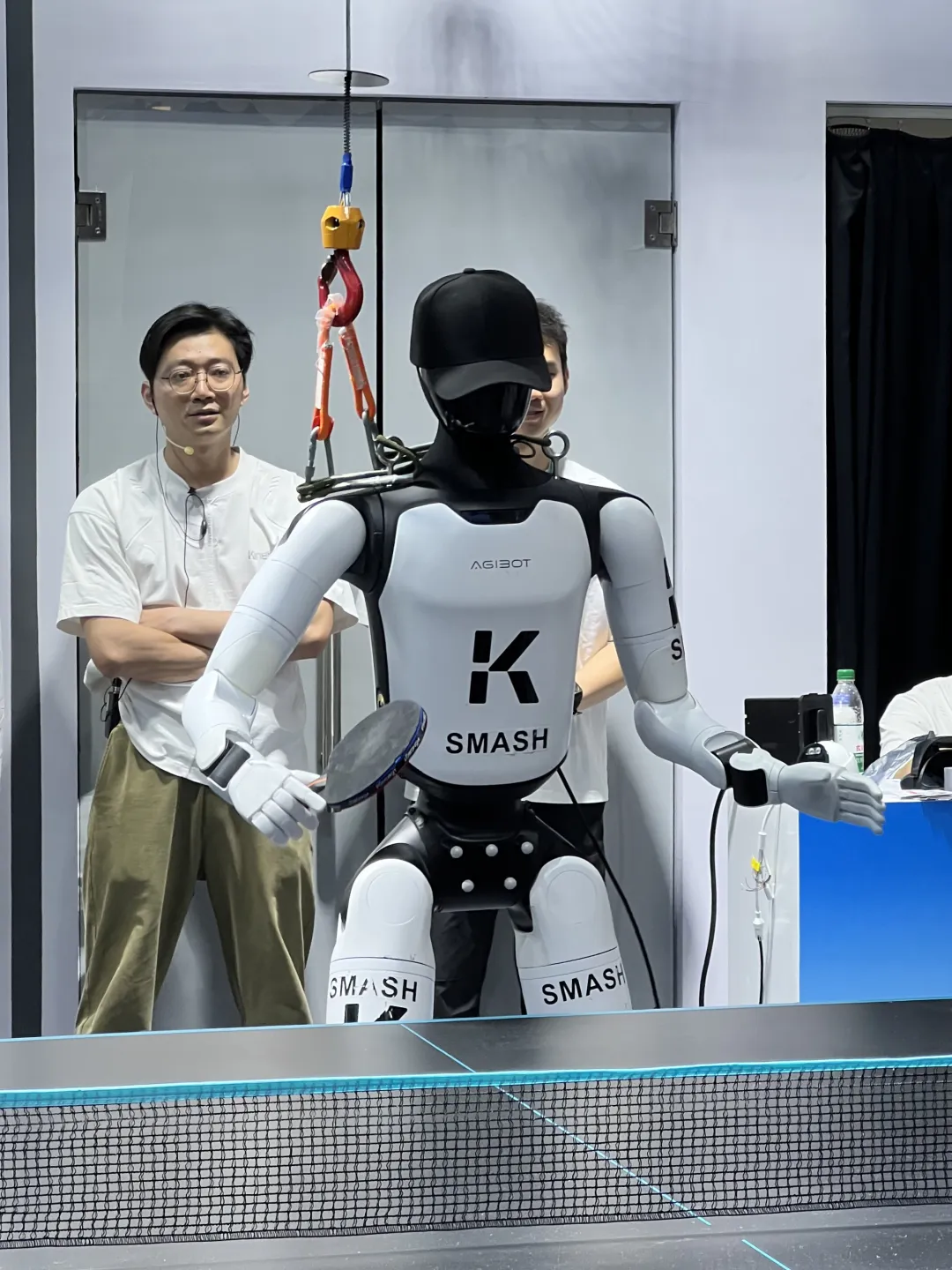
Superpower KAI Bot playing table tennis with humans on the ground
These demonstrations are still a long way from real productivity, but the progress of robots can already be captured with the naked eye. Their movements will still be suspicious, operations will still fail, long-term work will still be difficult, but every year when people return to the WRC, they will find that the ability to repeatedly explain the past year is still needed, and this year has become a basic movement that is visible everywhere in the gallery.
With the change in capabilities, there is also a rapid migration of industry focus.
Initially, people were concerned about whether robots could stand up; then they began to compare dynamic capabilities, dexterity and price; by 2026, the discussion was unquestionably focused on the robotic brain: where it gets the data from, what architectures can significantly improve the capabilities of robots, and how to work stably in real-world scenarios.
Commercialization has thus become another main focus of the WRC.
Almost all companies have built homes, logistics, cafes and convenience stores on the platforms, and are anxious to emphasize that others are still staying at the show, and their robots are already working hard. The robots on the platform are making drinks, sorting packages, and companies are trying to prove with these scenes that physical intelligence has reached a critical point in achieving value.
But according to our observations and interviews, the real progress of commercialization is still less than the urgency created by the stand. The heating phase of the entire industry has just begun. At this point, any claim that robots have already calculated ROI, with scale replication conditions, is closer to publicity and far from industrial reality.
Thus, world models, data and commercialization, are the three key words of WRC 2026. These three main lines together point to one of the most striking contradictions in the physical intelligence industry: the future has a huge imagination and there are still a lot of unproven problems ahead.
The more the future is hopeful, the more uncertain the real path, the more technology, capital and industrial forces want to enter in early to find their place and answers.
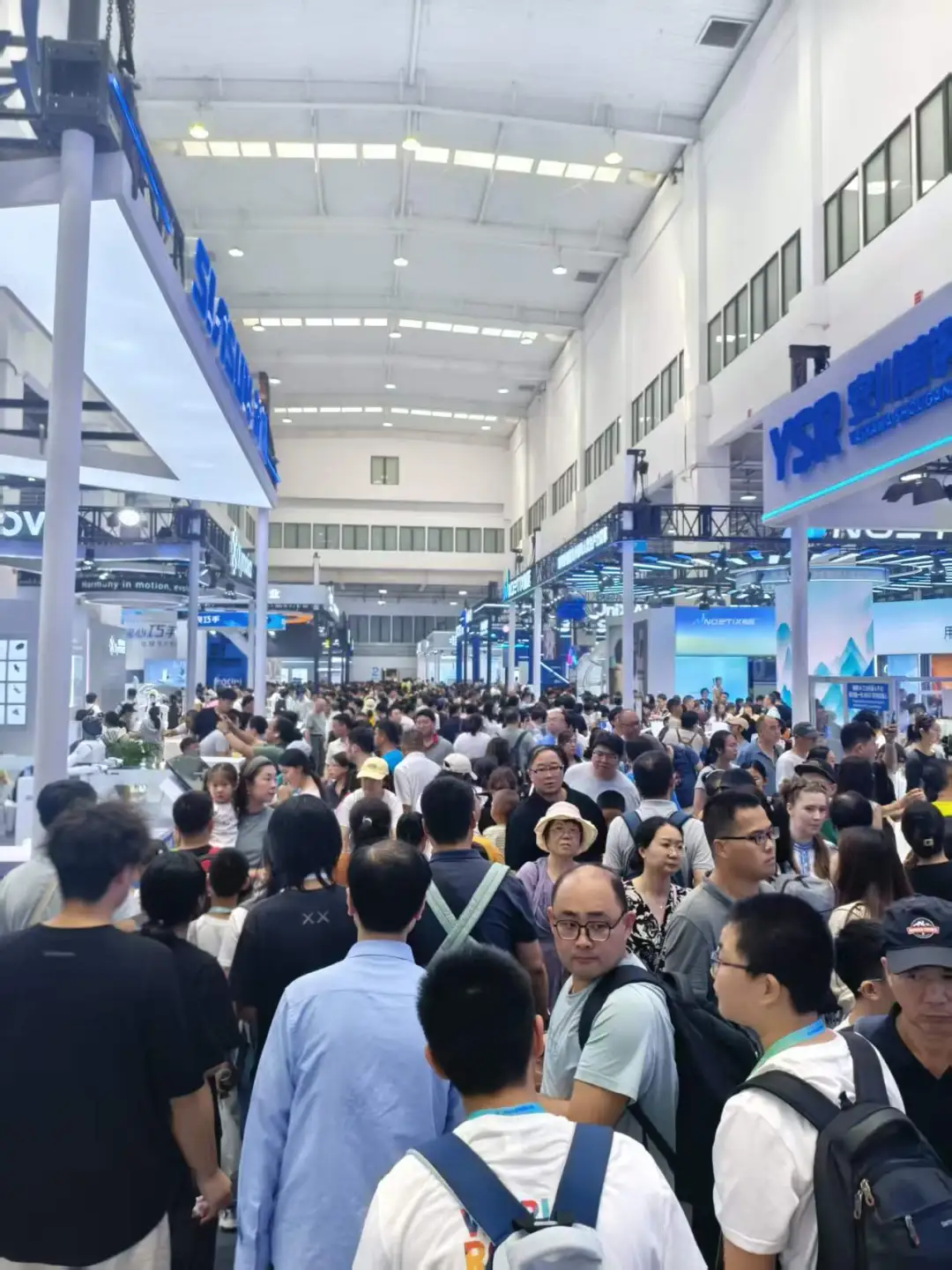
The growing number of people in the WRC is the most intuitive sign of this sentiment.
Engineers, entrepreneurs, investors, industry customers and general audiences are clustered in the same showroom. Some are looking for orders, others are observing technology routes, others are worried about bubbles, and others are trying to seize the next round of industry opportunities.
The enthusiasm and suspicion flowed at the same time, even pushing each other. The more people asked when robots could really work, the more companies tried to provide answers with new models, data and products; the more demonstrations exposed the limits of capability, the faster resources poured into these unresolved problems.
Of course, there are bubbles with physical intelligence, and they are destined to go through long and twisted explorations, but bubbles do not conflict with long-term values, and technology accumulates power over longer cycles. As Bill Gates is often quoted as saying, we always overestimate the changes of the next two years, but underestimate the changes of the next decade.
This is perhaps the most real sentiment left by WRC 2026 in the industry:
The movements of robots are still awkward, but there are increasingly intense footsteps in the exhibition halls. Doubts have not dissipated, enthusiasm is still pouring in, and China is physically intelligent at the intersection of these two forces, a long way ahead.
The three key words surrounding the world model, data and business makeup, we will document the industry changes reflected in WRC 2026 in three articles.
It starts with the hottest and most obscure model of the world, and then goes on to talk about the excitement of data and computing devices separately, and how far away the real commercialization of physical intelligence is.
World models are on fire, industry doesn't have a common language
Of the three key words of WRC 2026, the world model is at the center of the technological boom, with the most blurred conceptual boundaries.
In the first half of the year, more and more companies began to write the world model into their own technical routes; at the WRC, the excitement was concentrated in the exhibition halls.
The latest world model results from JEPA-WAM have been released by StarSourceWise, while the latest world model results from JEPA-WAM have been released, while the latest world model models from JEPA-WAM have been unveiled by JEPA-WAM, and the first time startups have unveiled an underground world model demo, while the long-term focused service robot engineer Lang Intel has also released the KOM 3.0, which is integrated into the underground world model.
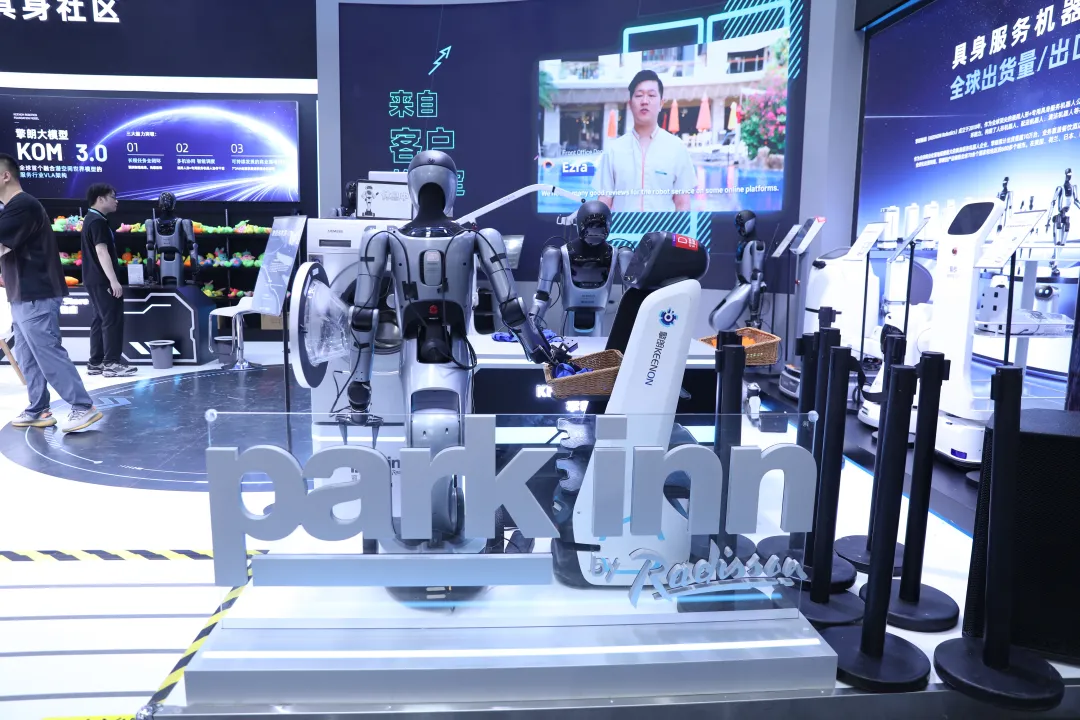
People are doing a demo of washing their clothes
It's not a coincidence that the world model is going red at this time.
On the one hand, the advances in video generation and multi-modal models have allowed the model to gradually be able to simulate changes in the environment based on robot actions;
On the other hand, VLA has not yet fulfilled the expectations of the industry for generalisation in the past year, and the growth of capacity with physical intelligence has begun to face bottlenecks.
From corporate model companies, corporate manufacturers, to service robot giants, world models are rapidly becoming a common language in the industry. Star Wars founder Chen Yiwu even judged that the world model could become the core paradigm for the next generation of corporate intelligence.
However, the convergence of the names does not lead to the convergence of the technical routes. Under the same label, companies may do things completely differently.
A head of a body-modeling company once jokingly told us that the name "World Model" sounded so good, that it was probably the most successful of its kind. Because the name was imaginative enough, many concepts liked to fit in, and ultimately the world model became increasingly blurred.
The phrase highlights one aspect of the global model boom: the industry is increasingly convinced that it is important, but it is difficult to reach a consensus on exactly what it is.
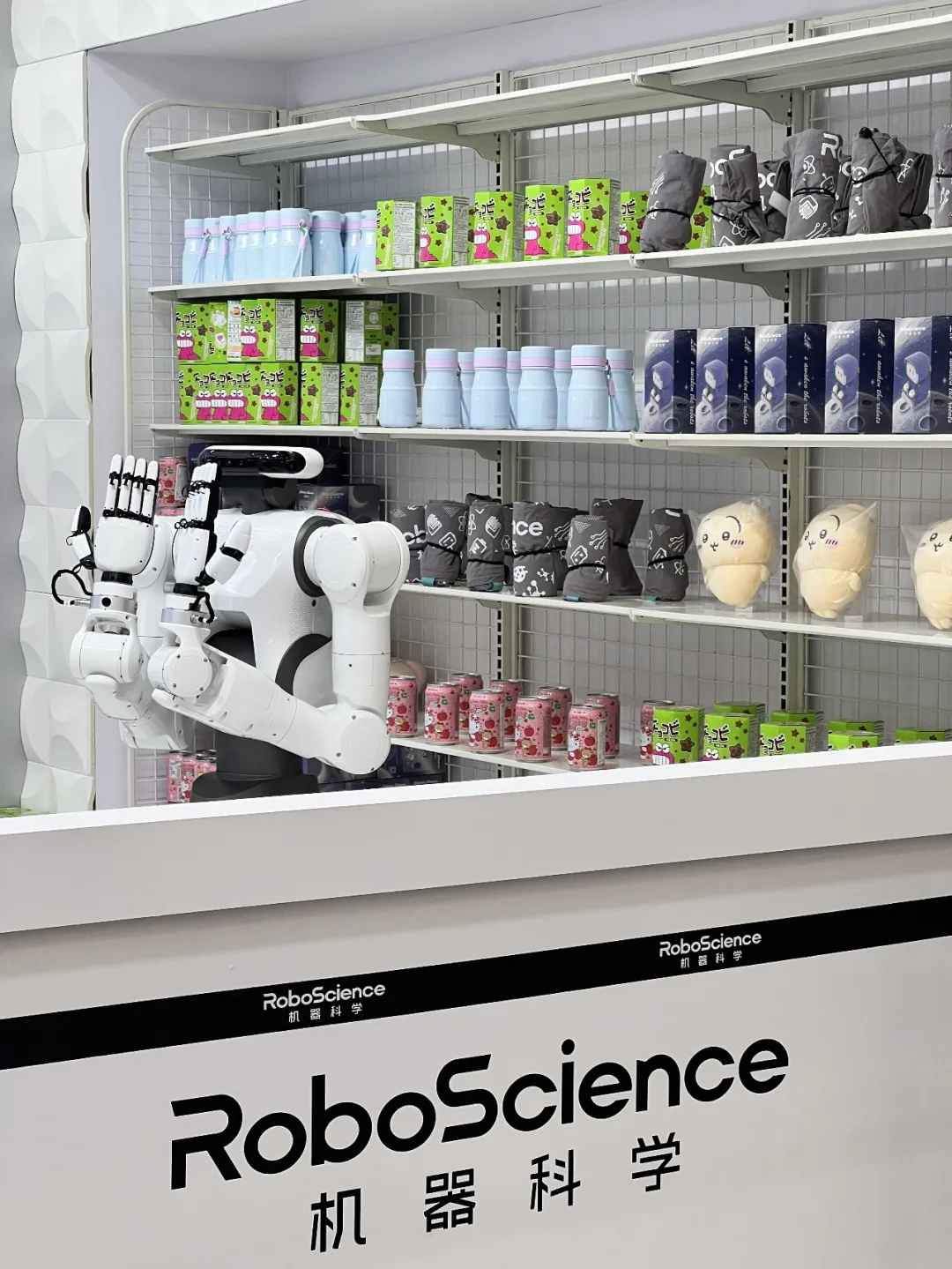
Machine Science calls the first wheeled robot REX G1 to showcase retail scene operations
From the broadest definition, a world model wants a robot to understand how the world changes: given the current environment and an action, the model tries to predict what happens next. For example, a robot extends its hand to throw a cup, and the model needs to predict in which direction the cup will tilt.
This predictive ability, seen as an important foundation for robotics' move towards general intelligence, carries a tempting idea: if robots can anticipate the results of different actions internally, they have the opportunity to move from mechanical execution to prediction, planning and autonomous decision-making.
However, this expectation is too vague to predict what the future will bring, and the whole industry is debating it.
Don't mess with the world model.
A relatively pragmatic industry view is to temporarily put down architectural labels and go back to what capabilities robots can ultimately derive from models.
The co-founder and CTO of Merch Intelligent Yellow Frog told us: "VLA, the world model, and what we call the native body model, are often used to describe a model at different levels.
In his view, it is difficult to directly compare between different architectures, and what is the capability of the silicon model, which is more important than what is the size of the model structure.
This view provides a more specific coordinate for observing world models: rather than discussing whether enterprises use the world model, it is more important to ask what it is used for and what capabilities it brings to robots.
The yellow frog refers to a larger use of the two types.
One class is to use world models as a training tool. Models predict the next video, future state, or hyperspace feature during training to help robots learn the relationship between movement and environmental change.
This is the kind of technique we use. The Yellow Frog suggests that we don't overemphasize it, because in our view it's just a tool and means of training.

MORPHI KINO showcases a wheeled robot with Mercy Smart clothing overlapping
At this level, world models can be embedded in VLAs or other model architectures as a link in an entire training system. Techniques such as video prediction, hidden space prediction can be adopted, depending on which method is used to improve the actual capabilities of robots.
It is also a way of thinking closer to current distance model training and industrial applications.
Another type of world model carries even greater expectations: training a set of highly realistic general-purpose physical simulators that allow robots to predict the future, attempt action, and acquire new capabilities through large-scale trial and error.
The Yellow Frog calls it the "God-in-Waiting Engine". In his view, if such a system could be implemented, the frog could be a greater technology than physical intelligence itself.
Many of the leaders of large-scale model technology recognize the long-term value of this direction, while being cautious about its difficulty in achieving it. The real world contains complex geometric relationships, object properties, contact changes and laws of dynamics.
As Yellow Frog says: "It may be more difficult than being physically intelligent". To solve a physical problem first, and then to solve a more difficult one, I don't think it's logically right.
Two types of applications correspond to different time scales for world models: at the current stage, it enters the body model more as a training tool; put into longer cycles, it may become the infrastructure for robots to understand, simulate and explore the physical world.
This also means that judging the value of a world model requires leaping out of the technical labels and looking further at exactly what it predicts and ultimately improves the capabilities of the robot.
The meaning of the world model can continue to expand, but the capabilities of robots cannot be proven by name alone.
Can it do that?
It's worth noting that using it as a simulator is one of the industry's clearest directions of exploration among many world models.
Lifeifei and his team at World Labs see the simulator as a key support for connecting the three world models. The renderer is responsible for generating visual observations, the planner is responsible for producing the movements, and the simulator connects the two: both to project how the post-movement world changes, and to provide the basis for robots to judge the consequences of the movements.

Li Feifei's classification of the world model
This judgment is gaining increasing resonance in the corporate intelligence industry, with the guinea pig robot being one of its participants. Its forthcoming world model, Uranus, can present its action results in the form of future video streams based on current images, historical information, and robot actions. The technical route it represents is to allow models to learn the laws of environmental change directly from data.
This route has attracted attention and is closely linked to the limitations of traditional robot simulation.
Traditional simulation requires building 3D assets, predicting the material, quality and friction coefficients of objects, and then replicating real-world environments through physical engines. The more complex the scenarios, the higher the cost of modeling and debugging. Data-driven world models attempt to reduce the work of artificially defined physical parameters and expand the coverage of virtual environments with data and algorithms.
Thus, the redshift in the world model also reflects the industry's dissatisfaction with the boundaries of traditional simulation capabilities. Businesses want lower production costs, wider scenery coverage, and a rapidly expanding robot training environment.
The world's models are used in three ways: to evaluate robotic strategies, synthesize training data, and provide an environment for reinforcement learning that can repeatedly test mistakes. All three point to one goal: to expand the speed and scale of robot experience.
This also leads to an easy-to-understand analogy: Can a world model provide a chip like AlphaGo for a robot?
AlphaGo is able to evolve rapidly, partly due to the virtuality of its near-zero-cost virtual environment. Numerous chess tables can run in parallel, and models accumulate successes and failures far beyond that of human chess players in self-defense. Robots have the opportunity to break free from the constraints of the number of devices, locations, and physical time if they can also try and make mistakes at high speed in world models, which is what the industry expects of combining world models with reinforcement learning.
However, the game has closed rules, definite status and clear win-loss criteria, which the physical world of robots faces does not.
Many technologists point out that physical intelligence is still lacking in two fundamentals: first, the physical body itself is not yet a realistic enough universal physical simulation.
The second question is how to evaluate the outcome of the action. The results of the task are either good or bad, or not so simple. They explain by the example of clothing folding, that even when the robot completes the action, it is difficult for the system to automatically judge whether the clothing folded is good enough.
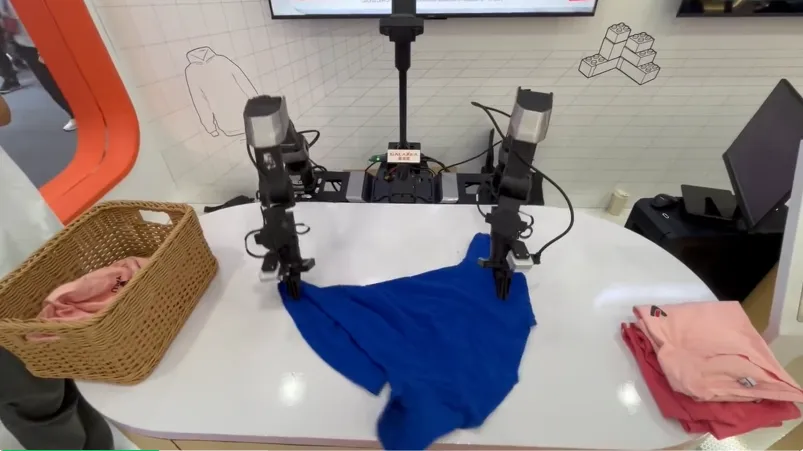
R1 Lite with G0.5 models in clothing
This corresponds to two barriers to robotic reinforcement learning: the world model needs to reliably predict the outcome of an action, and the incentive mechanism to determine whether the outcome is worth pursuing. The first determines whether the virtual environment is credible, and the second determines whether robots can form the right ability from trial and error.
Of these, it is already very difficult to build a credible virtual environment alone. The friction force, material, weight and object shape changes affect the outcome of the action, and a video that seems reasonable may violate real physical laws. As a model of the world of simulators, the Sim-to-Real Gap remains untouched.
A more engineeringly feasible approach to this is to reduce the requirement for single prediction accuracy and instead examine whether large numbers of predictions can be closer to the real environment in statistical distribution.
In the case of a single case, we don't want the square to slide exactly like the real thing. What we want to do is push 1,000 times in a simulation environment and the distribution is roughly the same as the real machine.
This means that world models do not need to reproduce the only known reality, but to cover the many possible outcomes of reality. Simulators have training value as long as the strategies learned by robots in these virtual environments are able to migrate to real machines.
From the current progress, evaluation, data synthesis and reinforcement learning will not mature at the same time. The more likely use in the near future is model evaluation. Today's robot models still rely heavily on real-machine testing, and each update strategy requires redeployment and task-by-task execution.
If a world model can first evaluate multiple strategies in parallel in a virtual environment, enterprises can filter out better versions and then enter real-world verification. Data synthesis further requires virtual data to truly enhance model capabilities; large-scale reinforcement learning also requires a credible physical environment and reliable reward mechanisms to achieve greater difficulty.
From this point of view, the simulator route reflects the industry's anxiety about the robot experience of bottleneck production.
In the short term, it is more likely to be used to reduce the cost of assessment, supporting data production; in the long term, the goal is to support large-scale reinforcement learning, allowing robots to self-test in virtual environments. Whether virtual experiences can migrate to reality, and whether training results can be reliably evaluated, will determine how far the world model is from the real robot training ground.
The world model, still waiting to be proven
From the WRC's perspective, the industry has seen the potential of the world model, but it has not yet waited for the real potential to emerge.
One of the world's top models admitted: "We haven't even seen the moment that pops up at the moment. The object we've seen in the training set performs better, but it can't do it if we let it do a task we haven't seen before".
This means that the current world model is better at projecting the future within the scope of training data coverage. In the face of familiar objects and tasks, it can predict the outcome of movements; the reliability of the model may decline rapidly once the properties of objects, environmental conditions or task combinations go beyond what is already experienced.

Self-variable display sorting packs, sorting speeds of up to 1911 pieces/hour
The industry expects world models to abstract general physical laws from limited data and then migrate them into unfamiliar environments and tasks. However, this generalization capability has not yet emerged.
It may just be late, or it may never come.
Shenzhen's co-founder, Huang Kang, attributed the world model to Shenzhen's pre-training, post-executing model. In his view, such models can perform better on some tasks, but how far the future can go still needs to be questioned.
While the emerging emergencies remained in anticipation, the more realistic shields of enterprise fell outside the model architecture.
Yellow Frog said: "Knowledge of the architecture of Zen models will eventually be shared by the entire industry. But the underlying infrastructure, the formulation of the data to train the models, how to produce the data, and the experience of a group of people who can convince the models, these are the real barriers to enterprises".
This judgment also provides a definitive landmark for observing the global model boom. As papers, personnel, and open source models flow rapidly, the gap between enterprises is increasingly reflected in the ability to build infrastructure such as data production capacity, model training, and assessment systems.
WRC2026 makes the world model a common language for the smart industry, but it doesn't provide a common answer.
Maybe we should put the spotlight on the data first?
—END—
 The latest annual data on GGII Intelligent welding has been released: penetration has doubled, and technology has been merged to accelerate the commercialization of smart devices with core components and integrated innovation.