Who says infrastructure will be cheaper to build?
According to Bloomberg, some of India's biggest customers have been notified that prices for servers with India's AI chips will rise by more than 15 percent.
Pricing is expected to take effect in early 2027, covering flagship platforms such as Grace Blackwell, Vera Rubin, and specific increases will vary with chip and memory configuration.
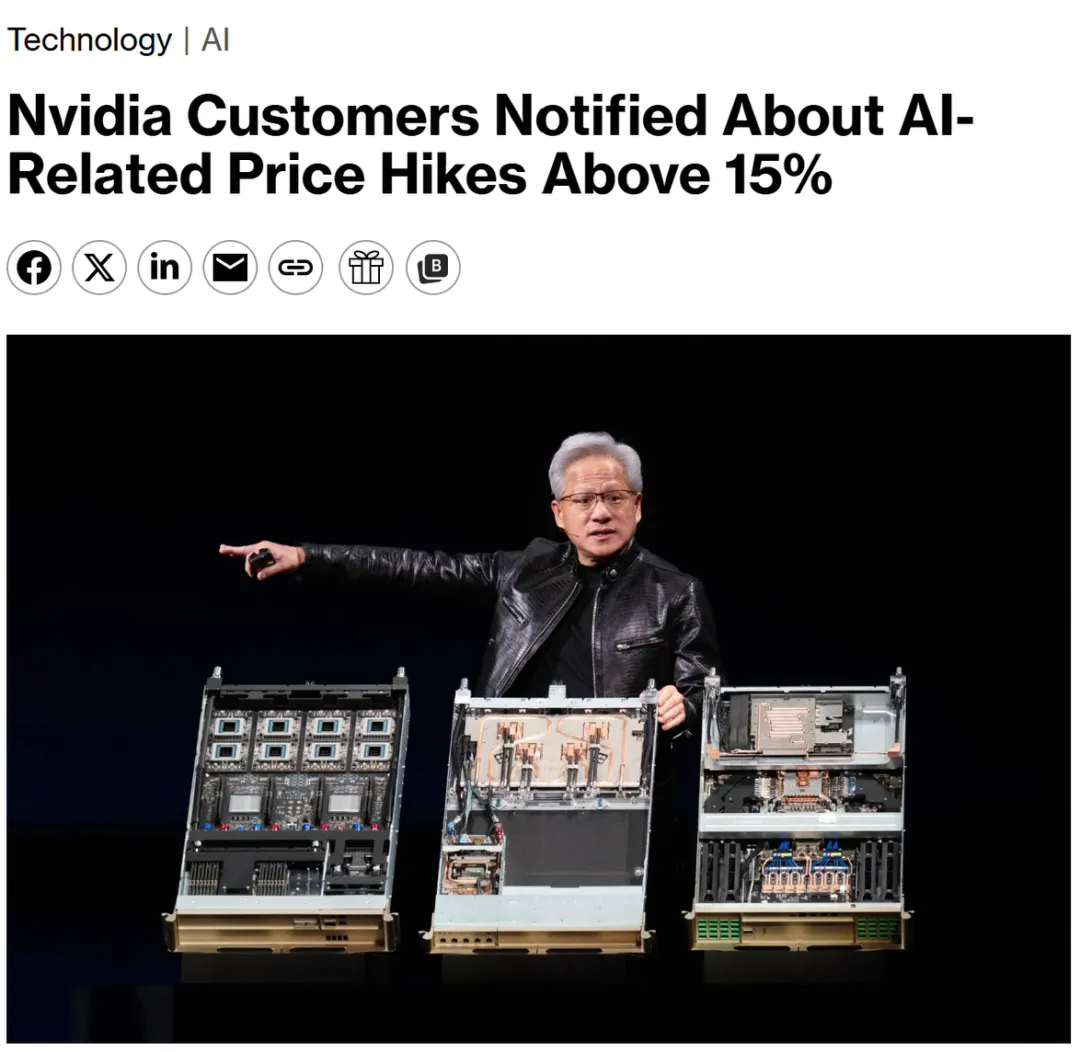
The price tag is aimed at complete servers with Invidia chips and suppliers of servers for data center operators such as Microsoft, Google, Oracle and others who have recently communicated the price tag information to customers.
It is difficult for even the richest and largest technology companies to keep up with their prices.
In comparison to the previous generation of Blackwell, Vera Rubin primarily focused on larger model training and reasoning tasks, focusing on improving the sync efficiency of multiple GPUs and reducing the computing costs of each token.
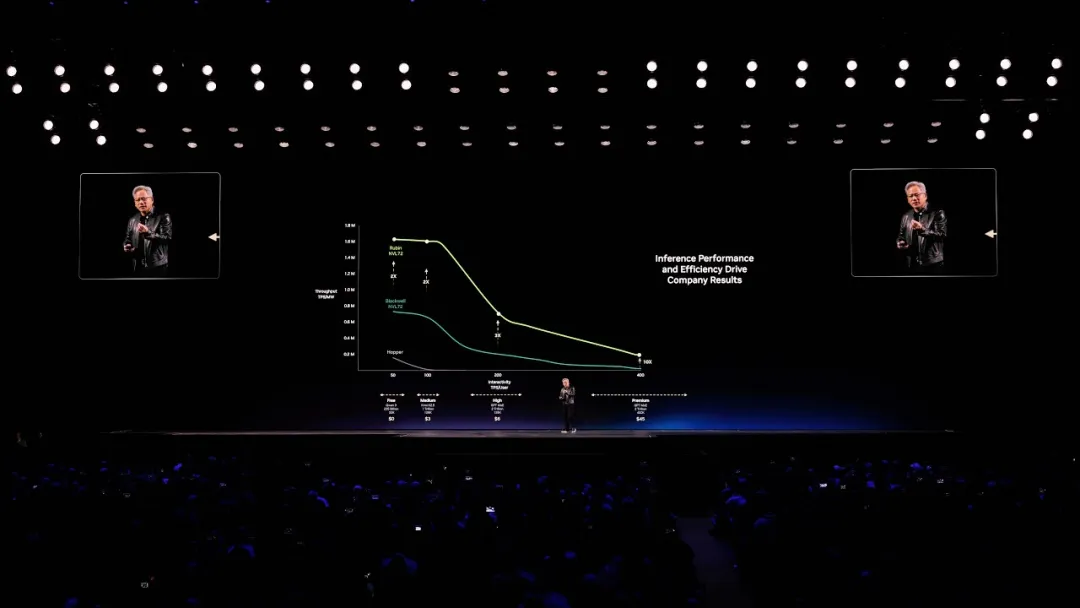
Huang Yi introduced the Vera Rubin platform at GTC 2026 and highlighted its advantages in AI reasoning and cost per token. Source: NVIDIA
According to the plan, the platform will be deployed on a large scale in the coming months to become the core equipment for Microsoft, Google, AWS, Oracle, and CoreWeave to build the next generation of AI infrastructure.
In other words, the new platform is in the promotional period, while the old platform has not dropped its price. It is likely that with the launch of Rubin and a new round of computing expansion, Intel will raise the price of the entire computing product line together.
The memory pioneer is crazy.
The direct driver behind the price hike is memory.
A set of AI servers requires both HBMs packaged with GPUs and a large amount of system memory. With model training, context-development and Agent reasoning, memory demand is pushed to unprecedented heights.
As early as 2025, Counterpoint predicted that the price of server memory might double by the end of 2026.
In July, the CEO of SK Helix also gave a more radical ruling: "27 may be the most tense year in the supply of storage chips in the industry, and demand overcapacity may continue even beyond 2030".
Intel's own financial statements also acknowledge that the supply of memory and other components is strained, and that rising prices may continue to drive up the cost of building data centers.
10 billion AI infrastructure to pay 15% more
15% is already on a server, put in a data center, and the numbers are even more surprising.
Epoch AI estimates that a typical 1GW AI data center will require an initial investment of about $37.9 billion, with servers worth about $2.2 billion, accounting for more than half.
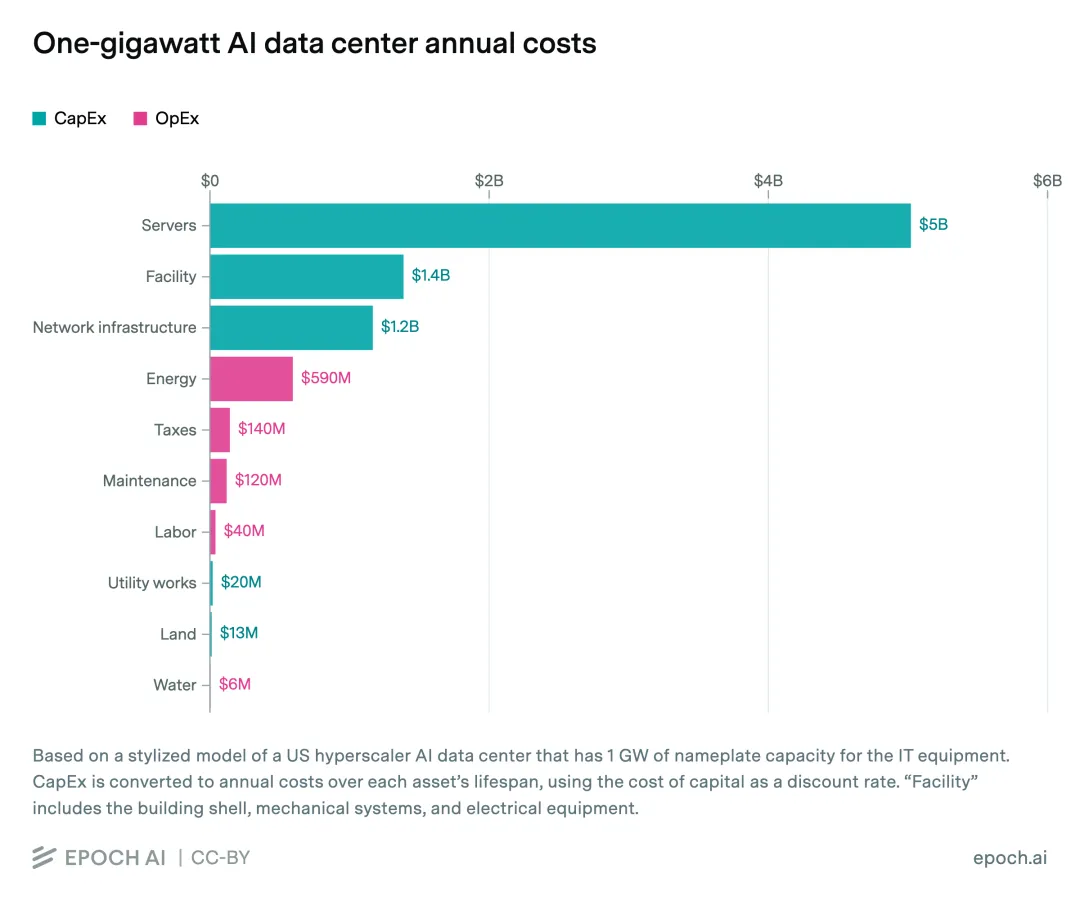
1GW of data center cost
According to the rough calculations of this model, if the overall cost of servers increases by 15%, the upfront investment in data centers of the same size could increase by about $3.2 billion.
Meanwhile, Microsoft, Amazon, Google, Meta, and Oracle are expecting capital expenditures of about $730 billion this year. Rising server prices will undoubtedly make this trillion-dollar AI infrastructure competition more expensive.
Of course, an increase in the price of a server does not necessarily mean that the cost of each token will increase simultaneously.
But higher upfront thresholds mean smaller companies are struggling more. Giants can continue to add budgets, while AI companies with limited funding can only cluster down, delay deployments, or rely more on cloud providers.
The AI gold rush is still going on, but the prices are going up again.
The link is as follows: