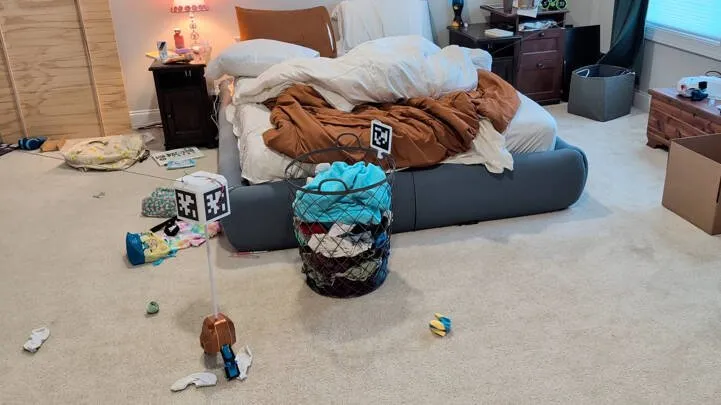
"Help you pick up debris from the sky.
Not long ago, Figure AI put Figure 03 equipped with Helix 2.5 into 30 unseen houses without collecting on-site data or fine-tuning the model. Its overall success rate for the three tasks of tidying up the living room, folding towels, and making the bed is 56%, including 40% for tidying up toys—this is the current industry-leading achievement.
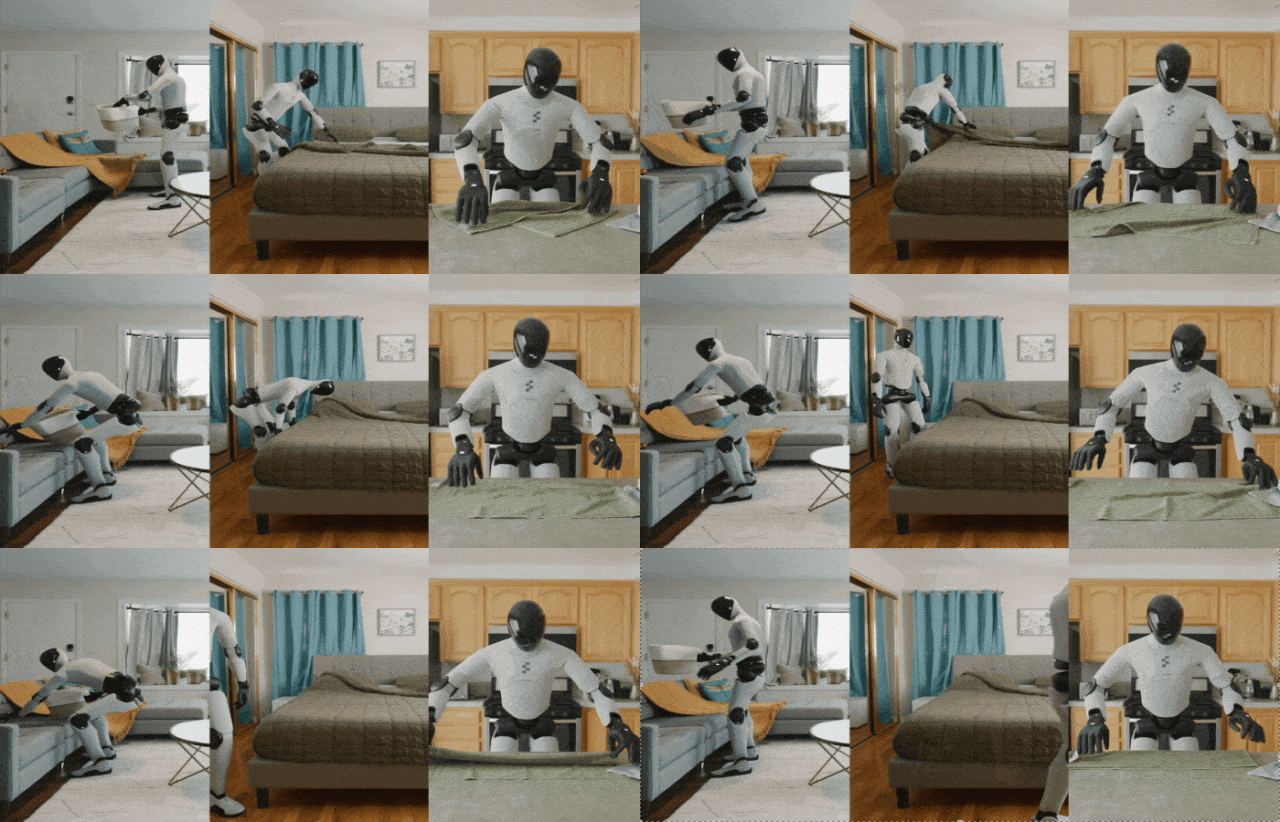
Stanford's "AI Index 2026" shows that the control success rate in a controlled simulation environment is 89.4%, which drops to 12.4% in a real home. At this stage it is not a reliable domestic worker, but closer to a prototype with limited capabilities.
While everyone was waiting for the humanoid robot to "graduate", an engineer thought of another way: Why must the robot walk on the ground? Can it be hung from the ceiling?
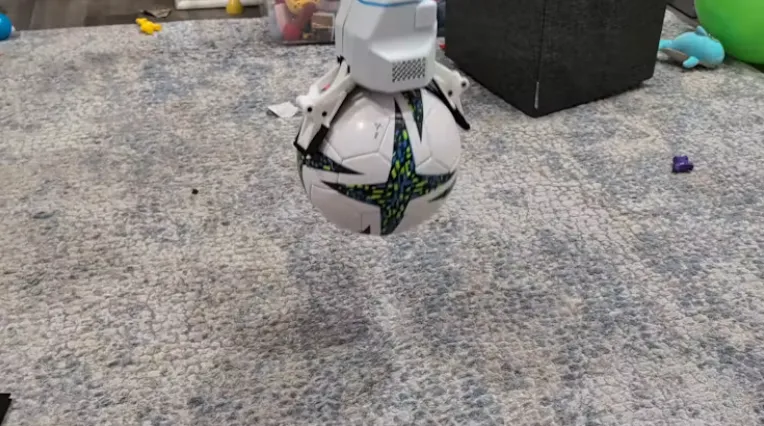
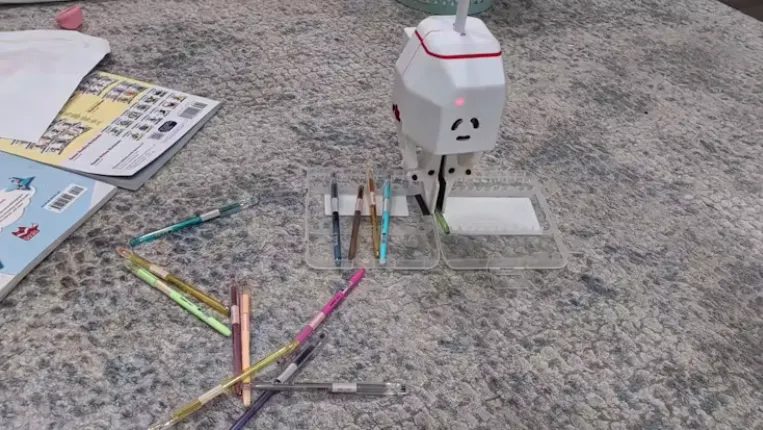
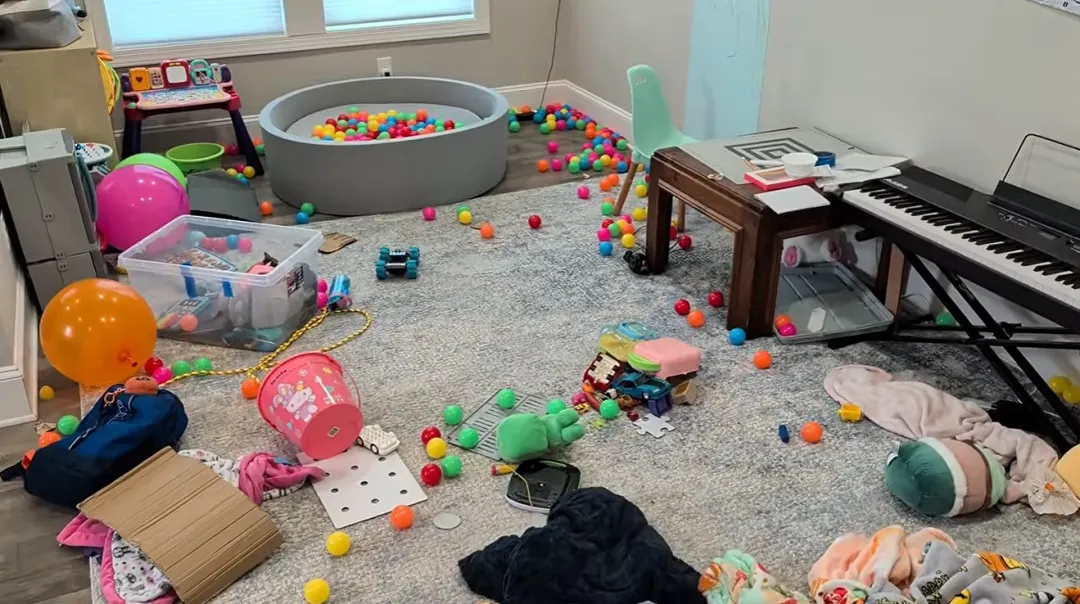
His answer is Stringman. Four thin wires are pulled from the four corners of the room to the center, and a two-fingered mechanical claw is suspended in the room. It "fishes" clothes and toys on the floor and puts them into the laundry basket or toy box.
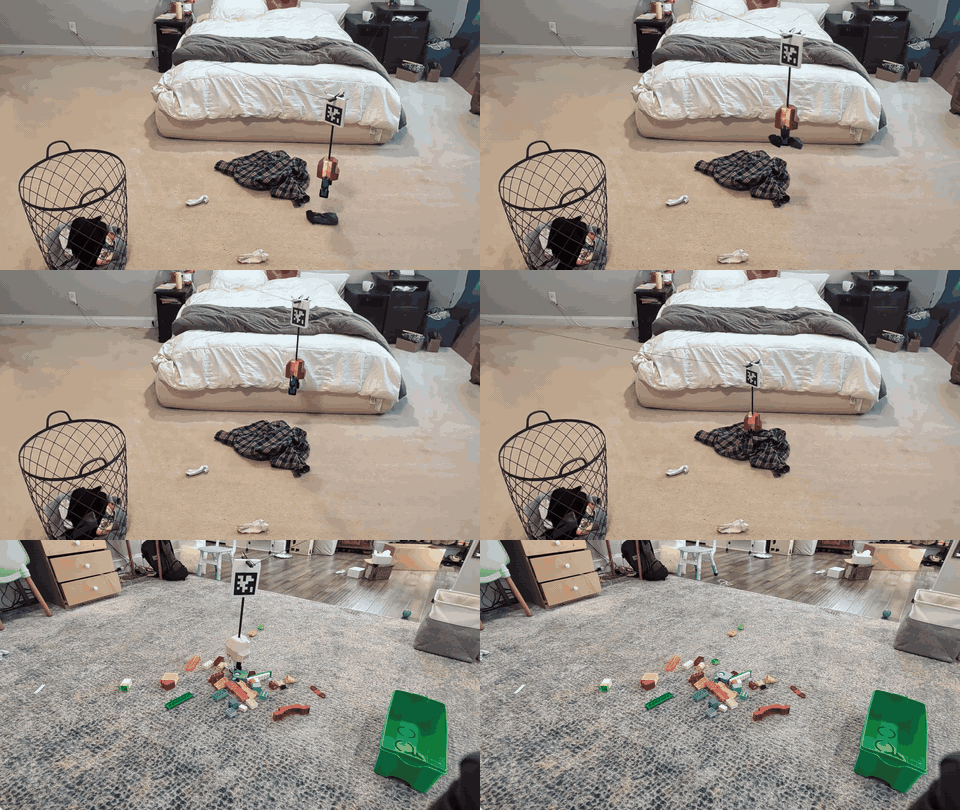
To put it simply, it turns the bedroom into an oversized AI claw machine.
The prebuilt kit costs $795 and is available to order now.
01.
Four wires, running an entire room
The technology used by Stringman is called Cable Driven Parallel Robot (CDPR), which is also the principle behind the Spidercam camera system that flies back and forth over the stadium.
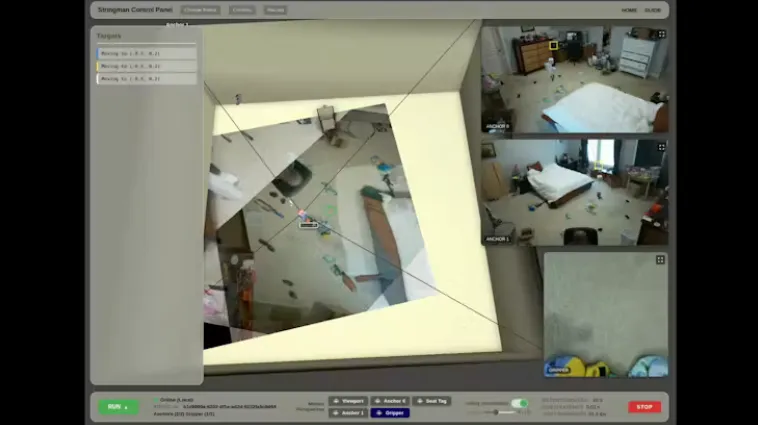
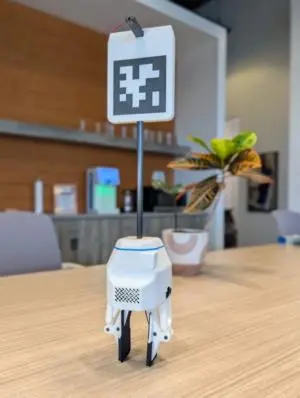
The structure is not complicated. Each of the two opposite corners of the room is equipped with an electric anchor point, which looks like a corner line. Each anchor point is responsible for retracting and releasing two wires; the other two corners are only equipped with holes for guidance. The four wires converge to a small box in the middle, and the clamping jaws are hung below the box. By changing the length of each wire, the claws can reach almost anywhere in the room.
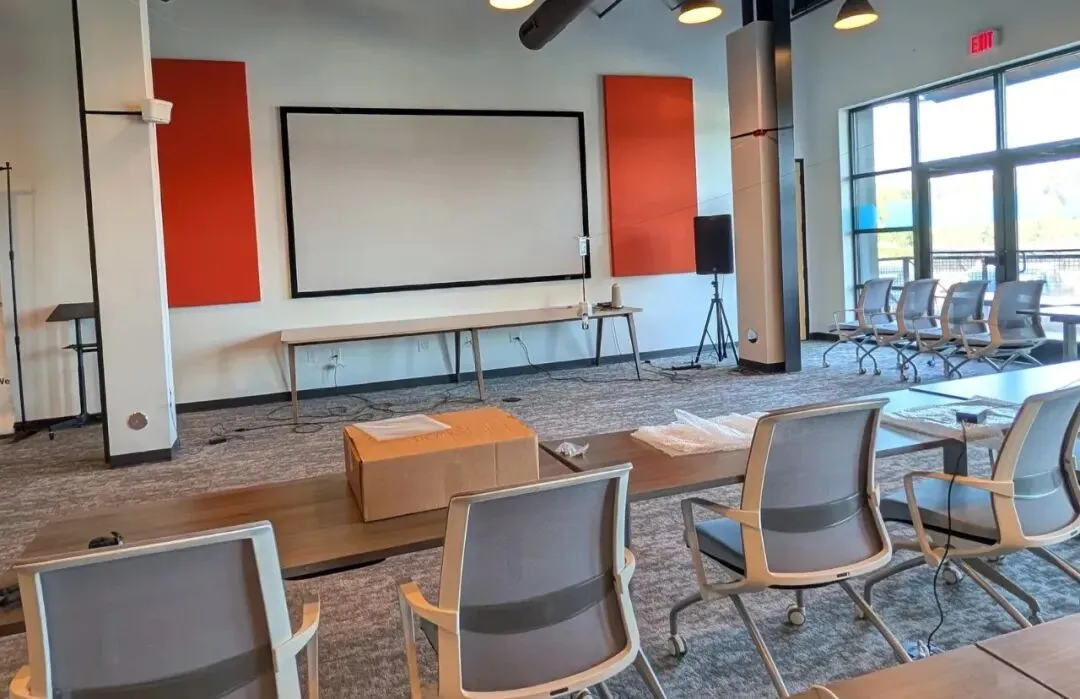

Positioning relies on two channels of information. The camera in the anchor points at the mark on the box, and the motor simultaneously reports how long the wire has been released. The software combines the two, calculates where the gripper is, and suppresses the shaking at the same time. The jaws hang approximately 50cm below the suspension point, so they can reach beside the bed, table or even under furniture.
The key to why it's so cheap is that the motor is used sparingly. The price of the robot depends largely on the number of actuators, and the Stringman controls four wires using only four DM-H6215 direct-drive motors. An official calculation has been made: In a 7×7×3 meter room, its working space is 147 cubic meters; a 0.75-meter desktop robotic arm has only 0.88 cubic meters. Based on US$2,500, for every US$1,000 spent, Stringman can cover about 185 cubic meters, and the robotic arm only has 0.35 cubic meters.
The strength is not small either. The four wires share the weight together. Within the upper limit of tension of 28 N, and deducting 638 grams of clamping claws and markers, it can lift up to 2.2 kilograms when close to the ground, and the entire working space averages 1.9 kilograms. For comparison, if you use the same 1 N·m actuator to build a seven-axis series robotic arm, not counting the weight of the connecting rod, it can only lift 0.32 kilograms on average.
In addition, it is powered directly from the wall socket without batteries, so there is no need to stop to charge.
02.
Large models can now "reach out" directly
The software part is what geeks are most interested in.
Stringman provides a Python API, LeRobot control, and an MCP server for agents. In this way, the large model calling tool can not only read files and check databases, but also grab a sock on the carpet.
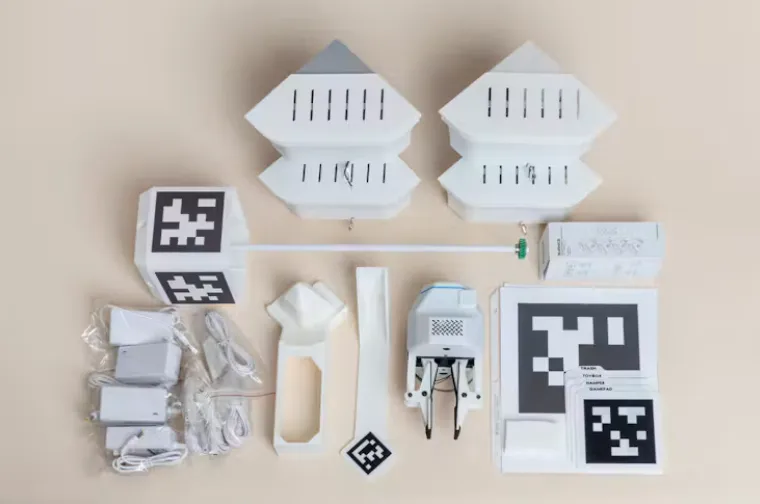
After unpacking, it can complete one task independently: picking up clothes off the floor and putting them into the laundry basket. Other skills, such as putting away toys and shoes, require you to use the handle to remotely demonstrate several times, record the data and then train, which is imitation learning. According to the official introduction, LeRobot supports Pi0.5, JEPA, Multitask DiT and other models. Some DiT behaviors can be learned in about 50 rounds. There are also MuJoCo simulations and the publicly available Hugging Face dataset.
Setting up the placement is also simple: just clip a reference label to the laundry basket, toy box, or trash can. The visual system will list the items it is ready to collect. You can add or delete items in the interface, or you can directly click on an item to have it picked up.
In terms of privacy, it can run completely offline in a local area network. The model runs on your own computer and the data will not leave the home network. If you want to control it remotely, you can connect to the official cloud and share the robot with other logged-in users to control it together.
Best of all, the entire system is completely open source: Apache 2.0 licensed, OSHWA certified, and the CAD files, PCB, bill of materials, and firmware are all on GitHub.
03.
"Engineering solutions" from former Google engineer and dad of three children
The developer, Nathaniel Nifong, is a father of three and has worked at Garmin, Google, and Synopsys. The children made a mess every day at home, so he simply used engineering methods to solve the problem.
Neufangled Robotics, which he founded, has a simple mission: to help people have a neat and orderly home. The company's choice is to build a robot that can be used now and do one thing well, rather than betting on a general-purpose machine that may take many years to develop.
He also responded head-on to the safety issues that everyone was most worried about. He has two installed at home. If they hit the line, in his words, "it will shock you, but it won't hurt. The line is very light and will get out of the way." According to official instructions, once the cable tension reaches 28 Newtons (about 6.25 pounds of force), all motors will loosen and the cables can be pulled directly off.
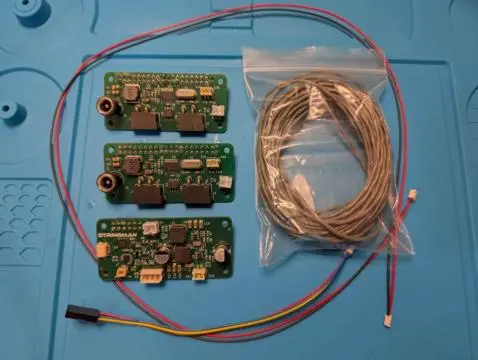
Prices are also falling. When it was first unveiled in June this year, there were reports that the price of the complete machine was US$965; now the pre-installed version is US$795, shipping charges are extra, and the delivery cycle is 4 weeks. It can be shipped to the United States, the United Kingdom, Japan, South Korea, Australia and other places. The $655 hardware kit is currently out of stock. People with strong hands-on skills can also buy only customized PCBs and wires ($55) and Raspberry Pi expansion boards ($22), and assemble the rest of the parts themselves.
Officials say this is a public prototype that can automatically calibrate and perform tasks in a new room, but it is not reliable enough.
The installation threshold is not low either. There must be wooden keels or structural columns in the wall that can be screwed. The room diagonal is between 3 and 10 meters, and the floor height is between 2.3 and 4 meters. If there is a very low chandelier in the center of the room, it may not be installed. In addition, a computer with an NPU or GPU is needed to serve as its brain. When working, cables will run across the entire room; flat and narrow objects such as books cannot be grasped firmly by its claws; currently, it can only place items in designated containers and cannot return them to their original positions.
Fortunately, there is already some actual measurement data: calibration takes about 5 minutes, moving speed is about 0.4 meters/second, and it has been tested for about 1,000 hours in a real home environment.
Today, the humanoid robot in the laboratory can tidy the living rooms in 30 houses, but it fails to complete the task half the time. And a robot hanging from the ceiling has entered ordinary people's bedrooms, doing the only thing it can do for $795.
It dares to sell it now, not because it has already been done, but mainly because the task is narrow enough and no one will be hurt if it fails.