It's the first time I've ever been to a temple in China.
QbitAI is public.
When will quantum computers help people develop new drugs, find new materials?
These applications have been discussed for many years and researchers have been advancing a basic task: to enable machines to reliably perform more complex computations.
Today, superconducting quantum computing has crossed an important threshold in experimentation to expand the scale of correction errors, and the rate of logical error can decrease.
In order to place the progress of error-correcting experiments in a larger system, packaging, lines and measurement must follow. How more bits are connected, how control signals are transmitted, and how accurately the results are read, need to be considered together from the design of the whole machine.
The right quantum selection fromUnderlying connectivity and control of chipsCutting in, targeting the next stageKbit superconducting quantum computerOn 10 November, the company, founded in 2026, announced its completion.400 billion angel rounds of fundingInvestors include venture capital, Pudong Capital, Dening Capital, Zhejiang Trust, Shenzhen Angel Mother Fund, and Multi-Dimensional Capital as an exclusive financial advisor.
This round of funding will mainly be used for research and development of gigabits-superconducting quantum computers, accelerated three-dimensional packaging, low-temperature interconnection, and verification of key technologies such as integrated measurement. Whether these links can keep up with scale expansion will also affect how much the bits on the chip ultimately play.
It's a bit more, and the whole machine has to keep up.
In 2023, IBM released a 1121-bit Condor processor. In the same year, Heron started with 133 bits, focusing on improving operational performance.
Increase quantity, improve qualityIt has always been two things that superconducting quantum computing needs to do at the same time.
To judge a machine's ability, see how accurately these bits can be operated, how they can be connected, and how complex computations can be supported.
The superconducting path is used to manufacture circuits on the chip, which are composed of capacitance, electrical sensitivity and critical lithium-ion Josephson freeze, and are placed in environments close to absolute zero, where the low temperature environment allows the quantum characteristics of the circuit to be preserved, with two energy levels as 0 and 1, followed by precise microwave pulse control states.
Compared to ordinary bits, qubits can also be in a superimposed state of 0 and 1, and multiple bits can become entangled. These properties constitute the resources of quantum computing and bring with them special control requirements.
When it comes to superimposition, many people think of a cat that has a curved curve.
In this thought experiment, a cat and a set of devices controlled by radioactive atoms are locked in a box, and the decay of the atom determines the cat's life and death. If the superlative laws of the microscopic world are directly used to describe the whole system, a confusing result is obtained: the cat appears to be in a superlative state where the cat lives and dies.
To build quantum computers, these laws need to be turned into controllable physical processes. Researchers need to keep quantum states from being disrupted by the environment as much as possible, while controlling and measuring them accurately through signals. Superconducting chips therefore need to work in environments close to absolute zero, and materials, lines, and external equipment must be tightly controlled.
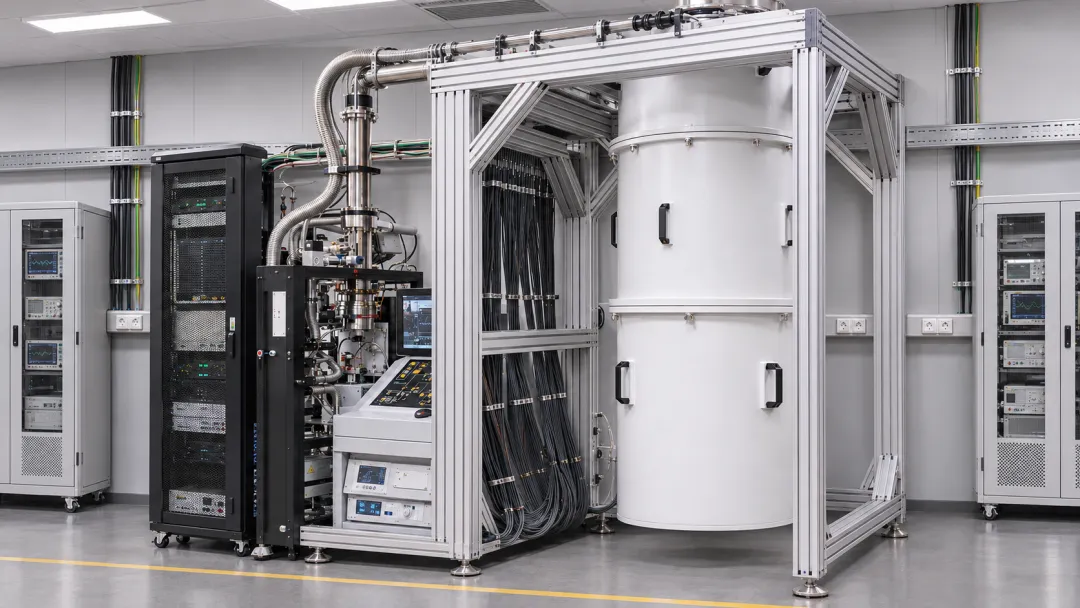 △Integrating superconducting quantum computers
Even so, errors remain unavoidable. Material defects, external noise, controlling biases can affect computation; operations accumulate and the results can become increasingly unreliable.
The idea of quantum error correction is to code a logical bit together with multiple physical bits, repeatedly check the signs left behind, and then process them accordingly. The problem is that the correction error itself also requires operations and will introduce errors. Only devices and operations with high enough accuracy are expected to continue to improve reliability.
Research by the Chinese Academy of Sciences on the 3rd wave of Zhengzhou, and Willow's study by Google, have subsequently verified key advances in superconducting quantum computing under their own experimental conditions:Expand the size of the surface code correction error and decrease the logical error rateThis is also the significance of the crossover to China.
For quantum computers to support more complex error-correcting and computational tasks, the system also needs to accommodate more high-quality bits and allow them to work together accurately. Kbit integrated circuits typically say the number of physical bits; how many reliable logical bits can be formed also depends on error rates, correction algorithms, and connectivity.
Performance requirements also vary with operation. Operating a single bit separately while operating many bits simultaneously, the conditions faced are not exactly the same. Control signals may affect nearby devices, and multi-directional readings also need to handle interference. The whole machine needs to maintain high enough accuracy when these operations are performed together.
The scale pressure is also transmitted beyond the chip.
Assuming the bit density on the chip remains the same, doubling the edge length of the square chip to four times the area can accommodate more bits; but if the signal is mainly drawn from the surroundings, the line boundary only doubles.
It's getting more and more crowded inside, but it's not keeping up with exports.
If the line continues to be narrowed, compacted, and to deal with interference, loss, and processing issues. After leaving the chip, the line will need to pass through different temperature zones of the cooling equipment, while transmitting the signal accurately, controlling the heat that enters the low temperature end.
IBM has incorporated this problem into its system architecture. In August 2026, the company announced the progress of connecting and running two modular low-temperature systems, with new designs adding wiring space and creating conditions for connections between processors.
There are a number of enterprises in the country that are continuously investing in superconducting quantum computing, layout covering chips, measurement controls, integrated machines and cloud platforms. Many years of research and development and project practice accumulated process, control and system integration experience, also laid the foundation for further expansion.
For the new team, the kilobit goal needs to be implemented as a set of engineering choices. Expanding a single chip will raise higher requirements for processing and signal generation; connecting multiple chips will require processing the operational accuracy and system coordination between the chips. Different programs have their own costs and require different verification methods.
The quantum chips, signal connectivity and system controls that are centrally focused, are among these problems of scale.
To move the connection to the third dimension
The starting point for the development of quantum mechanics can be traced back to Liu Xiaobo's previous experience.
He graduated from the Institute of Physics of the Chinese Academy of Sciences and has been engaged in superconducting quantum computing research since his studies. During his doctoral and postdoctoral studies, he was a professor at the University of Science and Technology of China. As the first author, he participated in experiments to solve linear equations on superconducting quantum chips and participated in the research of quantum experiments and related wiring technologies.
Prior to his founding, he was responsible for the research and development of superconducting quantum hardware in China's leading Internet company, leading the team to advance chip design, processing and testing.
From chip design, process manufacturing, to packaging, measurement and system integration, the team's experience covers many key areas of quantum computer research and development.
The collaboration between these links is an important work in the development of the whole machine. Whether the design parameters can be achieved through the process, whether the device meets the expectations, and how the test results are returned to the next version of the chip, all need to be repeatedly verified. The chip wants to gain more flexible control, which often means adding signal channels; packaging needs to accommodate these connections, and low-temperature systems must bear the corresponding burden.
Internationally, there is also a team based on its experience of re-selecting engineering entry points. Among Kolab's founding team, John Martinis and Alan Ho were previously involved in the Google quantum computing project; after the startup, the company will focus on recyclable manufacturing and hardware integration, and work with Applied Materials to advance the manufacture of superconducting devices.
The performance gained in experiments, which can be done steadily on more devices and larger systems, is a common test for this type of R&D work.
It's important to note that there is no such thing as a free lunch.Turn the chip connections verticallyThrough TSV, a vertical electrical connection is established in the silicon base structure, and then coupled with a three-dimensional integrated packaging, some of the signals can be extracted from the vertical direction. The connection thus has the opportunity to be distributed to a larger area, mitigating the limitations of the mainly dependent chip edge output.
The VIO architecture of QuantWare in the Netherlands also explores vertical signal transmission, and combines chip stacking and inter-chip connectivity to extend the processor. The specific structures of the different schemes have their own characteristics, but all deal with connectivity issues after scale expansion.
Changing the direction of the connection is just the first step in the design.
Three-dimensional structures require new processing and packaging combinations. Whether the connections can be made stable, the lines will not interfere with each other, and whether they can maintain qubits after integration will be tested on a case-by-case basis.
According to Liu Xiaobo, the company is currently advancing the development of TSV, 3D integrated packaging and high-density integrated wire beams, and spectrum performance verification is also underway. Superconducting connectivity tests are used to test whether the required superconducting connections can be formed at low temperatures, while RF performance verification further examines the transmission performance of high-frequency signals in relevant structures.
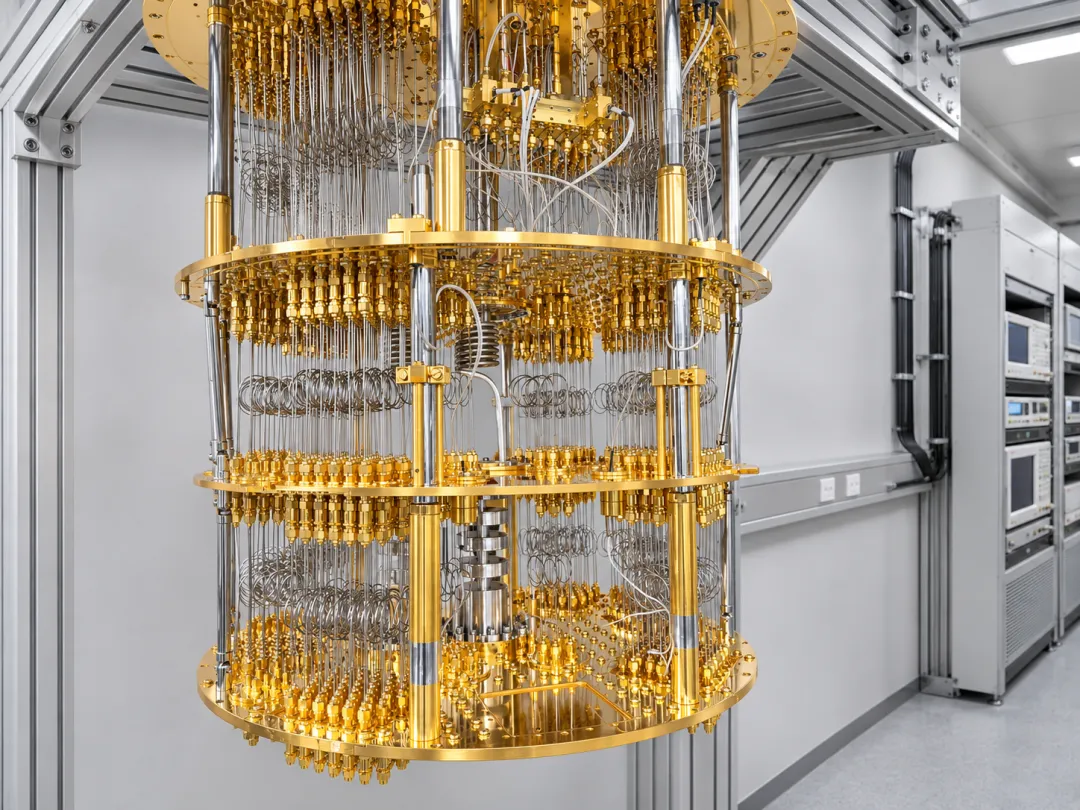 △Quantum Microwave Cable Components
After the connection is established, the loss, reflection and performance of the signal after passing still needs to be measured. Subsequently, the relevant structure must be combined with the chip, control and read the link, to test the effect under system conditions.
The high-density integrated beam and control system of the standard layout continues to address issues outside the chip: how to get more signals through different temperature zones, how to organize under limited space and cooling capacity, and how to maintain control accuracy.
The design ends are also synchronized. When the number of bits is small, researchers can directly draw printed charts, or generate structures using scripts. After the scale is expanded, adjusting the position of a device may affect the surrounding lines, connectivity relationships and processing requirements.Quantum EDA has been incorporated into the R&D system to support chip design and wiring in preparation for larger chip development.
These R&D efforts have also begun to respond to specific procurement needs.
According to Liu Xiaobo, the company has received orders for core parts such as line wavelength amplifiers and quantum chips, and talks with potential customers about overall machine needs. Among them, low-noise amplifiers take on the important task of reading the links: to amplify the weak signals sent by the chips while adding as little additional noise as possible.
Device orders, machine requirements and long-term R&D are at different stages, but can share process and test accumulation. Subsequent delivery, adaptation and use feedback will also help teams test the reliability of products across different systems.
From design tools to core devices, to machine integration, the R&D capabilities that NGOs are building need to be built together at the scale of Kbit.
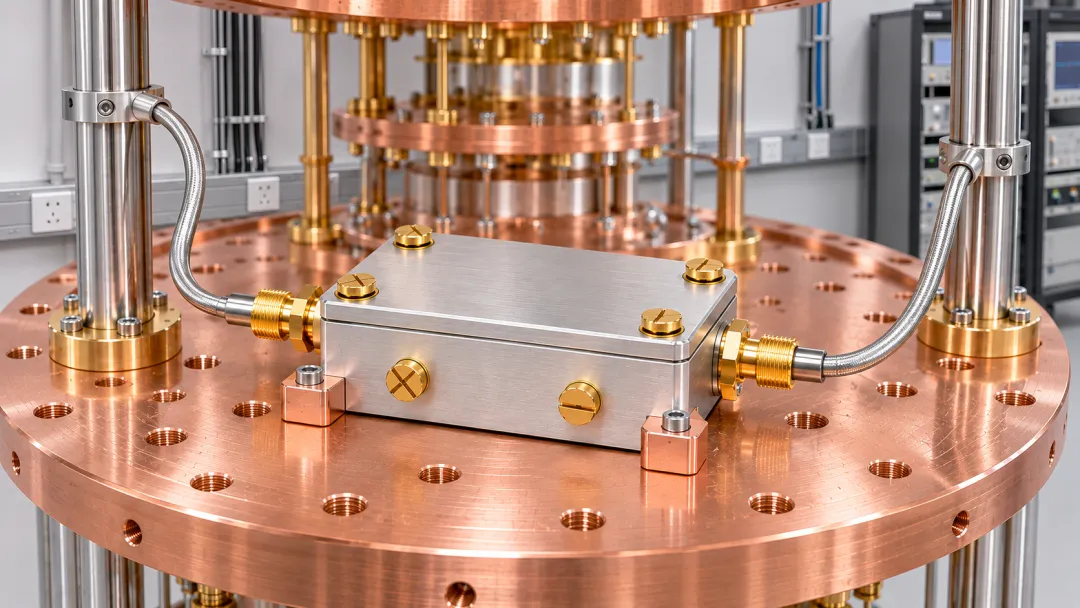 △TWPA quantum line wave parameter amplifier
From integrated parameters to molecular complexity
A quantum computer is actually in the hands of the user, and the task is just getting started.
For researchers in the field of materials or pharmaceuticals, the focus will shift further to specific issues:Whether the calculations can be more accurate, how large a system can be, whether the results can help decide what to do with the next experiment.。
This is why quantum computing invests a large amount of resources in improving hardware. Superposition and entanglement provide computational resources, and algorithms also need to arrange the evolution of quantum states, using the probability of occurrence of interference to improve target results. Final measurements are still definite results that need to be extracted through repeated operations and analysis.
It's not.Chemicals and MaterialsIn the field, there is no shortage of such tasks.
Whether a catalyst can cause a reaction to occur under milder conditions and whether a battery material can store energy more steadily are all related to the interactions between atoms and electrons. How electrons are distributed, how chemical bonds form or rupture, will affect the nature of matter, and will affect the researchers' subsequent judgments.
The difficulty is that electrons interact with each other. The computational resources needed to accurately describe these interactions may increase rapidly as the system grows larger. Classical computation has already played an important role in chemical and material research, but in the face of complex systems, researchers still have to make a trade-off between accuracy and computational costs.
Quantum computing provides a new means of research:Using a controlled quantum system to simulate the behavior of another quantum system。
This type of exploration has entered concrete experiments. IBM and the Japanese Institute of Physics combine the Heron quantum processor with the supercomputer Fuyu Fuyu, to study molecular system electronic structures including iron sulfate. Quantum processors provide sampling results, classic supercomputers undertake follow-up processing, and jointly complete computing processes.
It presents a possible use: quantum processors collaborate with classical computing resources to enter the scientific research process and provide new tools for some of these difficult steps.
Traditional planningQuantum cloud platforms and computing servicesIn the future, researchers will be able to use cloud platforms.Submit tasks, obtain results, access quantum computing to material simulations or drug research and development processesThere is no need to personally purchase and maintain equipment.
To get to this point, hardware, algorithms, and software need to come together. The Kbit integrator can provide space for larger quantum corrections and calculations, allowing researchers to test larger error-correcting codes, and explore how multiple logical bits work together.
For Core, the Kbit integrator is an engineering node that brings together the test chips, connectivity and control capabilities. More bits can work together reliably, but only if larger-scale error-correcting experiments are conducted to support more complex computational tasks.
The long-term value of these capabilities will come down to specific scientific judgments: whether a reaction pathway is feasible, why a material exhibits specific properties, which candidate structures deserve to be included in the next round of experiments. More accurate molecular simulations are expected to provide researchers with more thorough evidence before expensive experiments begin.
He used a cat to ask how quantum laws interacted with everyday experience. Today, researchers are trying to turn these laws into usable computing abilities.
It is a step on this path: to provide reliable answers to more complex material problems, to help people understand why materials are so, and to find the basis for designing new materials.
*This text is licensed for publication by Qubit, and the views are solely those of the original authors.