Yeng-yu was born in the temple of Zhengfei.
QbitAI is public.
China's Physical AI company, this time with a global training ground.
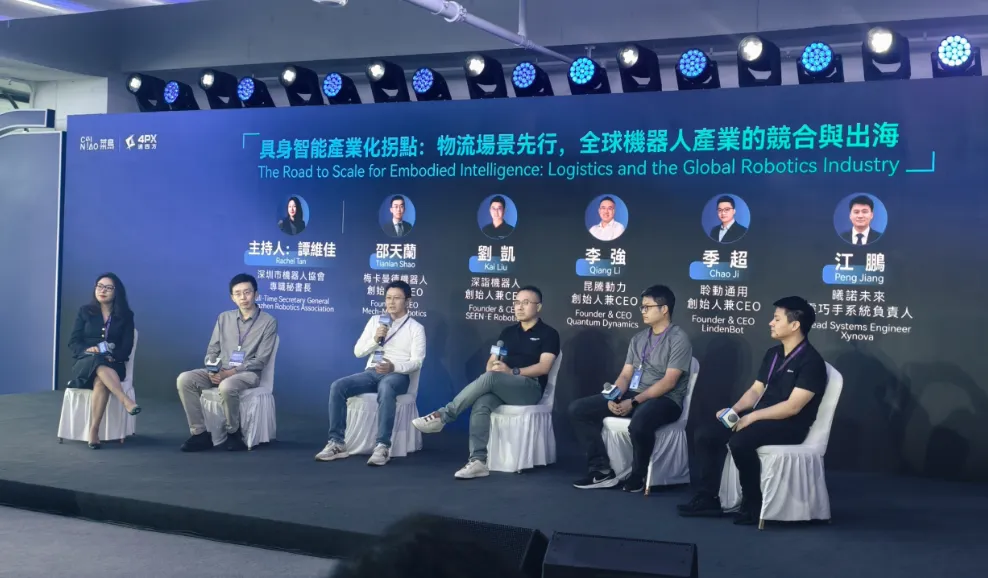
On 5 November, Bird hosted a conference on AI and Intelligent Industry Cooperation in Hong Kong's Smart Port.Opening up a global warehouse network for AI and intelligent enterprises, building a real-world training cluster for AI and intelligent logistics.
The logistics tasks that can be accessed by robots are quite complete. From warehouse selection, decoding, to autonomous navigation distribution, high-altitude patrol, covering many aspects of logistics operations.
In addition, the birds also provided robots with a seafood package.
At the event, Bird launched an initiative aimed at AI and physically intelligent enterprises.Technology out to sea three daysServices to extend the global reach to high-tech products overseas.
From cross-border transportation, overseas deployment, to spare parts replenishment, repair flow, local transportation, to a whole suite of service arrangements.
At the same time, AI hardware and AI-enabled intelligent products have also gained logistical support from cross-border transportation, overseas deployment to repair operations.
Using a global warehouse network and logistics system, it takes physical AI from R&D verification to commercial deployment to connect the first half and the second half of industrialization.
This time, the bird grabbed both hands.
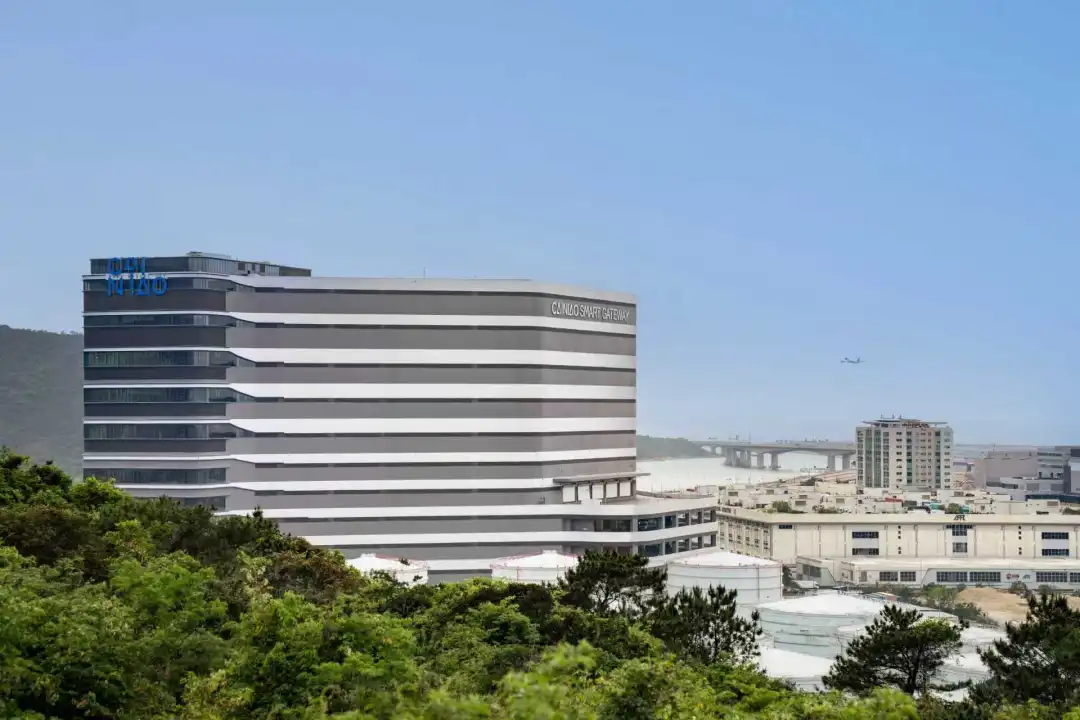 △Hong Kong's smart port building
What scenes have birds opened up to robots around the world?
This time around, it's not uncommon for the birds to prepare robots for a global drill.
Based on a logistics network covering more than 200 countries and regions around the world, as well as multi-level storage infrastructure, Nestlé will open up retail, 3C, aviation, automotive, fashion, fast food, and more to industry partners.Logistics scenes in dozens of industries.
At the moment, the seagulls are ripe.There are dozens of categories, hundreds of productivity enhancement scenarios PoC (Concept Verification, Proof of Concept)It covers areas such as warehouse selection, autonomous navigation delivery, high-altitude patrol, security maintenance, aerospace logistics, and automotive spare parts.
Specifically, there are roughly three categories of tasks in which robots can participate.
Works in warehousesFor example, high-frequency optical synchronization, such as packing, pasting, decompressing, decoding, etc.
Mobile robot missionsDynamic mobile operations such as autonomous navigation delivery, high-altitude patrol, security monitoring, etc.
The vertical industry sceneIn-depth exploration of professional barriers such as aviation logistics, automotive spare parts, and higher segmentation.
From simple repetitive operations, to multi-step precision operations, to long-range planning in complex environments, these tasks essentially cover several important directions for the expansion of physical intelligence from basic operations to complex tasks.
Simulation can complete pre-training, but the continuous operation of real warehouses, environmental changes and packaging diversity are key to the ability to generalize.
The President of Bird Bird International, Bear WeiA very specific example was given in a media interview.
In real warehouses, robots may need to run continuously for 1,000 to 2,000 hours, processing tens of thousands of packages a day.
In addition, changes in the environment such as lighting, temperature, humidity, and dust in the field also provide different data inputs to the robot's hardware and models.
In his opinion, such things.The potential for generalization from real-life scenarios could be more than 1,000 times greater than in a laboratory environment.
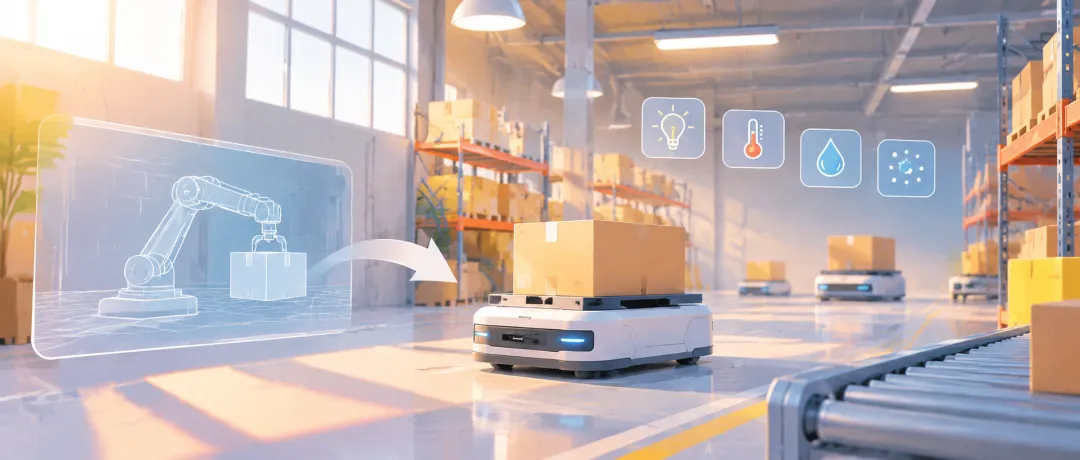 △Images generated by AI
The value of real-world data is also reflected in it.It's about the successes and failures of robots.
Data that the robot performs correctly can be used for model training, data that is corrected after an operation error, and is also an important learning experience.
According to Bear Wei's understanding, the general model may already have a capacity of 80 points after pre-training. After entering specific industry scenarios, it continues to be refined through parameter adjustment, post-training and contextual capabilities, gradually improving to 95 to 98 points, then moving forward to 99 points, 99.99 points.
From the initial to the industrial level, stable operation requires a large number of real-world tasks to grind.This is exactly the kind of training and verification environment that is provided.
In the round table discussions,Li Jing, founder of Kunxi PowerSpeaking of the peculiarities of the logistics scene, the logistics task has a certain error space, and the robot can try again without picking up the package once; at the same time, packaging shapes in real warehouses are very diverse and can provide a rich sample of operation.
This explains to some extent why logistics is one of the industry scenarios that smart enterprises prioritize to explore.
And of course, the value that birds can offer comes from them.Logistics technology capabilities accumulated over the long term.
From the early layout of unmanned warehouses, to container dressing, cargo to human systems, to small car collaboration and high-flying crawler robots, birds have been involved in logistics automation for more than a decade.
As of October 2026, Bird Logistics Technology has deployed more than 1,100 projects in 29 countries around the world, serving more than 400 customers.
It has a long history of industrial practice in the field of robotics, from R&D, piloting to engineering deployments and scale operations.Some specific robot warehouses have also been put into operation.
Bird is continuing to advance the global deployment of the robot warehouse network, providing local storage, shipping and delivery support for cross-border e-commerce platforms and merchants. Currently, China Hong Kong has a robot warehouse in use, and crawler robot warehouses have entered normal operation.
On the European side, the Dutch robot warehouse is about to be opened, and the Spanish robot warehouse is under construction.
Among them, the self-developed ZeeBot crawler robot, after landing in a cross-border warehouse, improved storage density by 40%, and the efficiency of in-store operators by 100%.

The advantage of the bird is that its warehouse is not an empty space waiting for robots to test it.
Long-term service manufacturing and global e-commerce, which have accumulated a large amount of commodities, complex orders, high-speed traffic and cross-regional scenarios, can provide robots with diversified samples and conditions closer to real production.
In his speech, Bhumibol said:There are significant differences in logistics in China and abroad.
For example, China has developed a large-scale separation system for small parts, but packaging specifications and weight distribution may be completely different in different markets overseas. These changes will affect the identification, operation strategies and handling capabilities of robot hardware at the same time.

Commodities that are rich enough, working conditions that are complex enough, multiple scenarios of long-term globalization accumulation, combined with the production environment that can provide the continuous operation needed by robots... these are valuable training resources for physically intelligent enterprises that want to improve their ability to generalize.
Equipment delivery and overseas deployment and after-sales must be arranged.
The open warehouse network solves the scenarios of robotic research and verification.High-tech products are becoming more difficult to deliver overseas, and Bird is preparing a solution.
The supply chain challenges faced by Bird are different: consumer-grade robots, AI computing equipment and off-shore services with physical and intelligent products, which are currently dominated by birds.
Consumer robots and 3D printersIn addition to accepting bulk orders, there is also the need to cope with scattered orders and outbreaks of high season.
AI computing equipmentHigh value, large volume, delivery and strong linkage to data center construction;
Body-smart productsIt involves long-term needs such as samples, exhibitions, bulk deliveries, and spare parts, repair and local maintenance.
He said Bird has been working with a number of smart enterprises to explore long-term offshore projects. As robots move from one-off demands such as scientific research, exhibitions and more towards sustainable industrial applications,Overseas services also need to be extended from single transport to long-term guarantees.

In response to these questions,Caterpillar is upgrading the three-day launch of Silicon Tech, the world's top three high-speed rail, global air transport and global warehouse network capabilities.It also provides overseas support for technology products at different stages.
The Global Fast LineIn addition to this, it is important to ensure that the products are delivered in a timely manner.
Whether it's R&D testing, customer demos, overseas exhibitions, or small batches of supplies, they can be transported in a flexible combined way depending on the characteristics of the goods.
Global air transportIt is primarily focused on AI computing devices, control systems, core modules, high-value, and superheavy goods.
These products have high requirements for transportation safety and delivery times. Bird can schedule global air transport resources, provide customized door-to-door services, and support sophisticated operations such as booking, take-up, and unboxing.
Global warehousing networkIt is aimed at mature companies that need to operate in the overseas market for a long time.
Relying on a global warehouse network, Bird can provide services such as regional spare parts, multi-national warehouses, local delivery, after-sales spare parts management, and connect directly to contract and reverse repairs, enabling businesses to build more stable inventory and service systems overseas.
The combination of the three services covers not only shipments of equipment from China to overseas, but also the entire process from sample testing, bulk delivery to overseas inventory management and after-sales security.
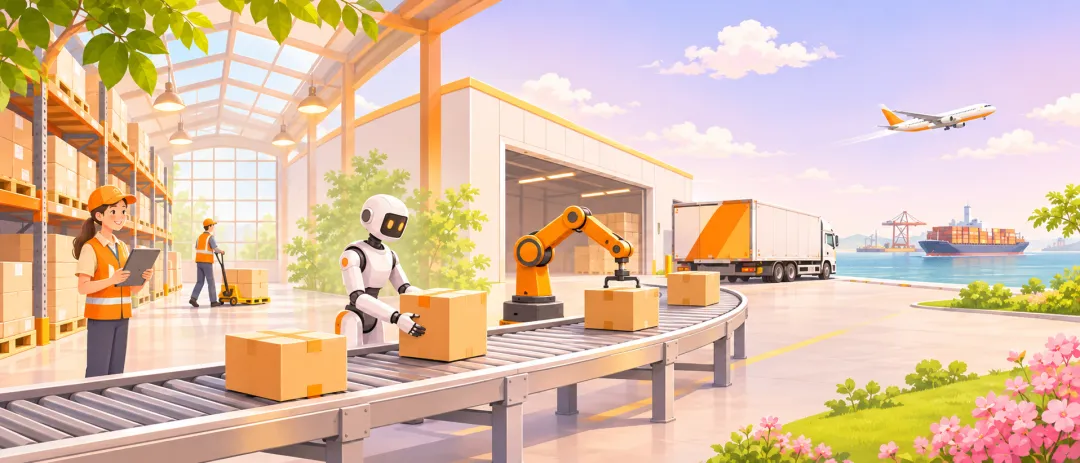 △Images generated by AI
This is a service that is already running its business.
In the 3D printing business, Nestlé has helped customers reduce delayed sales by more than 20 percent, end-of-life costs by 15 percent, and time efficiency by one to three days by planning the storage capacity of their North American and European warehouses in advance.
In the Smart Scanner business, Bird is able to track and dismantle single-service inventories through SN-level management, independent storage and insurance programs.
The services provided by AI computing devices are a more accurate representation of the system.
Faced with unstable shipping frequency and diverse equipment categories, Bird needs to coordinate domestic ports, air transportation, overseas cleaning service providers, data centers and equipment manufacturers to ensure consistency across time and processes.
Once the equipment arrives, the professional end-team must also complete the reservation, dispatch and unloading as requested by the customer.
Data from the relevant AI computing project revealed by Caterpillar showed that the entire link was more than 95% up-to-date, the cleaning was more than 98% up-to-date, customer complaints were 0%, and logistics cost savings were more than 10%.
This is what the bird does, and he has a bill.
In a circle so busy, the bird of course has its own little calculator.
In the past, Nestlé has relied on global warehouse networks, time-efficient networks and supply chain capabilities to mainly serve cross-border e-commerce and global commodity distribution.
Today, AI computing and the AI-enabled industry have brought new customer demands, and Bird has begun to extend its original logistics technology, scenic resources and supply chain capabilities to the hardware industry.
The bear revealsRelatively mature technology genres such as consumer-grade robots have already accounted for 10% of the revenue generated by the international business, doubling this year.
The combined revenues of consumer-grade robots, AI computing and embedded robotics in several offshore tech sectors have more than doubled from last year.
The global growth of birds in the future is generalised as the dual-wheel drive of e-commerce outbound and technology outbound.
For the birds, open warehousing networks, working with smart enterprises, have their own considerations.
In the face of the increasing complexity of the logistics field and the diversity of job demands, Bird Bird wants to introduce more robotics technology, allowing robots to better assist humans and improve the efficiency of human-machine collaboration.
Specifically, Bird can combine their accumulated real logistics tasks and operational experience with partner models, hardware and operational capabilities to conduct joint R&D and business verification.
On the one hand, it helps robotic enterprises hone their products in real-life scenarios, and on the other hand, it also gives them the opportunity to upgrade their own scheduling systems, in-store automation systems and robot capabilities.
At the same time, the new demands of offshore hard-tech enterprises are also becoming a worthwhile business.
The range of technologies involved in physical intelligence is long, ranging from the robot kernel, the base model, to the vertical model, Agent, Harness, to the SOP combined with actual operations, with different technical input requirements at each level.
Bird is looking to invest in technology areas that are closely related to their own scenarios and collaborate with partners in the right places.Avoid rebuilding.Working together to develop solutions that can work continuously on the ground.
Currently, the company operates millions of square meters of logistics scenery around the world, has installed tens of thousands of professional robots and hundreds of thousands of frontline employees.
Over the next decade, Nestlé hopes to achieve at least 50 percent robotic assistance in tens of thousands of first-line physical work environments, allowing robots to take on more complex, temporary and high-intensity jobs to help people increase productivity.
The industry support for physical AI is expanding from R&D and training to verification, delivery and maintenance.The opening of the global warehouse network, the upgrading of the technology to the sea, and the arrival of the three-day launch of Cranberry Bird are two important links in the process of industrialization of physical AI.
In real-world business, refining technology and moving to a broader market through global supply chains.
In addition to research and development, there are a number of scenarios and logistics resources that can be borrowed for Chinese AI and smart enterprises.
In terms of how big the business can be, Bird's own accounts have already given the first indication: technology revenue from overseas has more than doubled, and profitability is higher than e-commerce overseas business.
All of you win-win!
With more technology companies and upstream partners joining hands with the birds, we are working together to build a sustainable industrial and global support network.
From R&D verification to overseas delivery, the ability to build one-by-one could be gradually complemented through industrial collaboration.The technical team also has more energy to solve the problem of the product itself.