On August 9, OpenAI's ChatGPT Atlas AI browser officially reached the end of its life cycle.
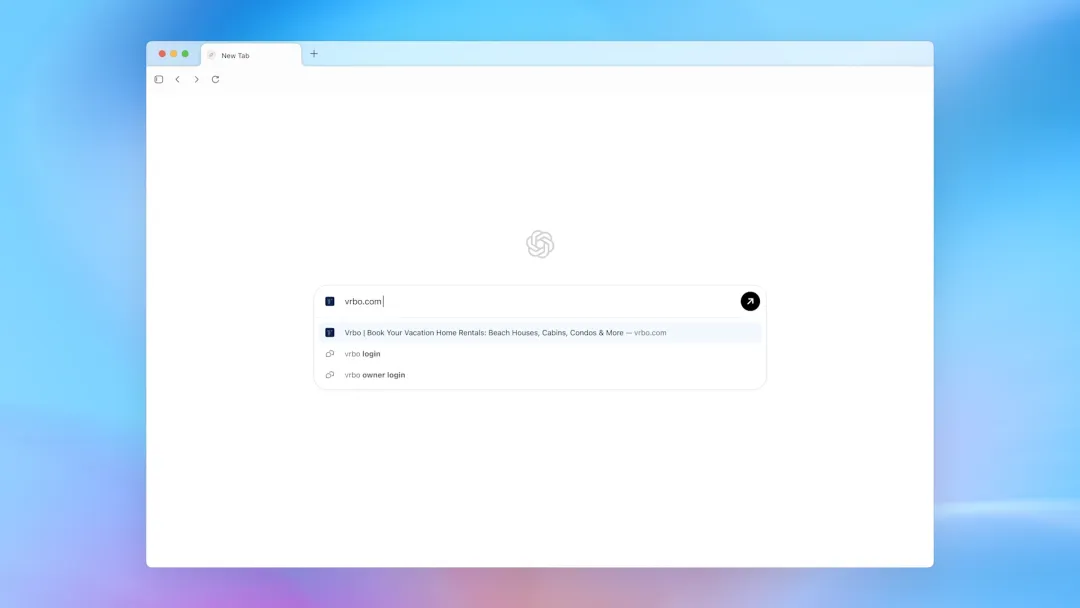
From its launch on October 21, 2025, until its shutdown on August 9, 2026, Atlas had existed for a total of 292 days. In less than a year, it ended its independent browser career as a product that was once seen as OpenAI challenging the Chrome and AI browser ecosystem.
However, the only thing that OpenAI has abandoned is the Atlas product form, not the ability of the browser Agent itself to explore. Atlas is moving to the ChatGPT desktop application, Chrome extension/sidebar, and continuing to integrate with ChatGPT, Codex.
292 days of AtlasLike many AI browsers of the time, Atlas tried to redesign the way people interact with browsers.
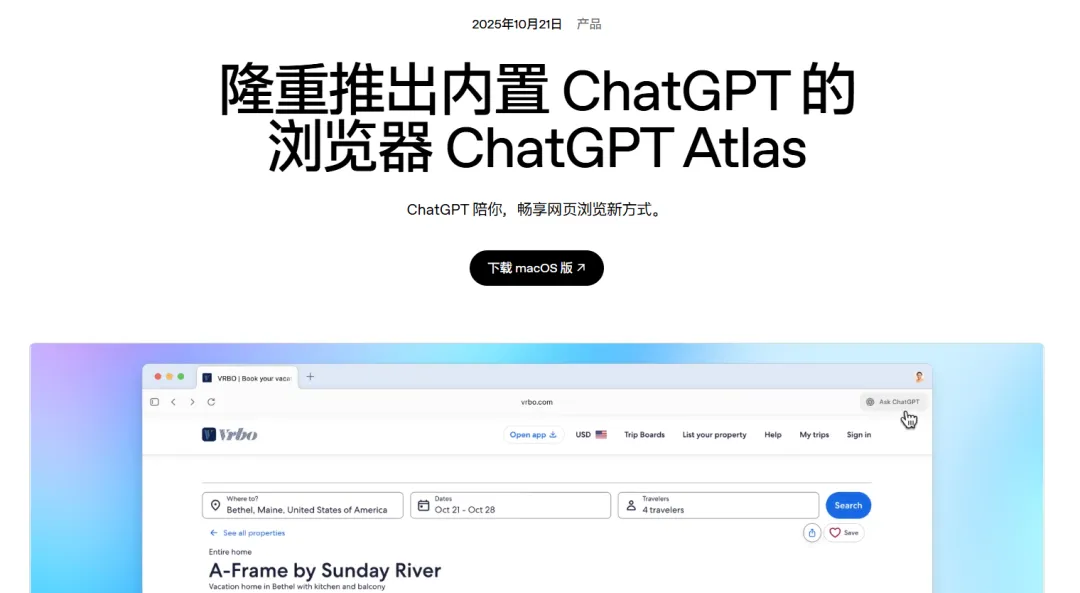
Users can ask ChatGPT questions directly at the address; Ask ChatGPT sidebar can read, summarize, analyze, and write current web pages; Browser Memories can save context based on browsing history; and Agent Mode can be used to open tag pages, click, enter, and perform multi-step tasks such as shopping, booking, and research.
In the underlying architecture, OpenAI still uses Chromium, but also builds the OWL (OpenAI Web Layer), separating the Chromium browser process from the native interface rebuilt using SwiftUI, AppKit, and Metal.
Thus, the goal of Atlas from the outset was not simply to "add an AI assistant to the browser", but to allow ChatGPT to participate directly in browsing, understanding the context, and further operating the web.
But soon after the launch of the product, OpenAI encountered a more basic problem: being a full-fledged browser is far more than just AI.
In late October, OpenAI continued to fix issues such as the Japanese IME, historical removal of confirmations, 1Password, extension buttons and pop-ups; in November, it added a vertical tag page, Google default search, extension import and iCloud Passkeys.
After entering 2026, Atlas will continue to complement the capabilities of website data migration, Tab Groups, Auto Search, Saved Prompts, DevTools, Multi-Profile, and more.
These updates reflect that maintaining a browser means that OpenAI not only solves problems with models and agents, but also deals with extensions, passwords, cookies, logins, input codes, developer tools, security updates, and so on.
At the same time, Atlas's core Agent experience is also unstable.
The Verge found in early tests that there was an instability in the search results, location understanding, and the speed at which Agent was executed. In an Amazon acquisition mission, Atlas took about 10 minutes, compared with the Perplexity Comet in the same test for about 2 minutes.
Later cross-sectional testing of multiple AI browsers also showed that as the task process progresses, the Agent will often still require continuous user inspection and intervention. In other words, it can replace the user performing some of the operations, but there is a significant distance to truly reliable "take-over tasks".
The security issue is even more fundamental.
On the one hand, the browser Agent can read the contents of a web page, and on the other hand, it can perform operations on websites that users have already logged in. This makes the risk of Prompt Injection more direct than ordinary chatbots.
Malicious instructions can be hidden in web pages, emails, or other content. If the Agent is unable to accurately distinguish between "instructions that the user actually came down to" and "instructions that the web page attempts to induce the model to execute", it may take action without the user's knowledge.
At the time of its release, OpenAI acknowledged that such attacks could not be completely stopped. In December 2025, the company disclosed a methodology for using reinforcement learning training attacks and defense models, saying that Prompt Injection could be a problem that needs to be addressed for years to come.
Until 2026 on the eve of Black Hat, Zenity's research was still able to induce some AI browsers to log on to WhatsApp and Amazon pages. However, the research also suggested that Atlas set relatively more security boundaries for the products being tested.
In addition to reliability and security, Atlas has a more realistic problem: its platform coverage is always limited.
At the time of launch, the product only supported Apple Silicon Mac. OpenAI had said that Windows, iOS, and Android versions would be released later, but until discontinuation, Atlas had not formed a full public multi-platform version.
This is particularly unfavorable for a product that tries to challenge mainstream browsers.
What's even more troubling is that Google and Microsoft can directly overlay AI capabilities in existing browsers, while Atlas must first convince users to enter a new browsing environment.
When users change browsers, they migrate bookmarks, extensions, passwords, cookies, log-in status, and usage habits that have developed over the years. New browsers are not only "better" but must be good enough to offset these costs.
As of July 2026, StatCounter data shows that Chrome still has a global market share of 68.22%, Safari 16.47% and Edge 5.37%. Products such as Atlas, Comet, Dia have not even entered the independent statistical classification of major browsers.
After entering 2026, the focus of Atlas's updates gradually shifted to Agent, memory and workflow. In January, it joined Tab Groups and Auto Search; added Saved Prompts in February; added personalized quick action, and the ability to automatically organize tag pages based on Browser Memories; and on February 24, the official update specifically optimised Agent's continued performance in long-range tasks.
On March 10, Atlas released Build 1.2026.63.7, the last public feature update in its official Release Notes. In April, media began reporting that OpenAI plans to further integrate ChatGPT, Codex and Atlas.
On July 9, OpenAI officially announced the Atlas downloadable and offered a 30-day migration period.
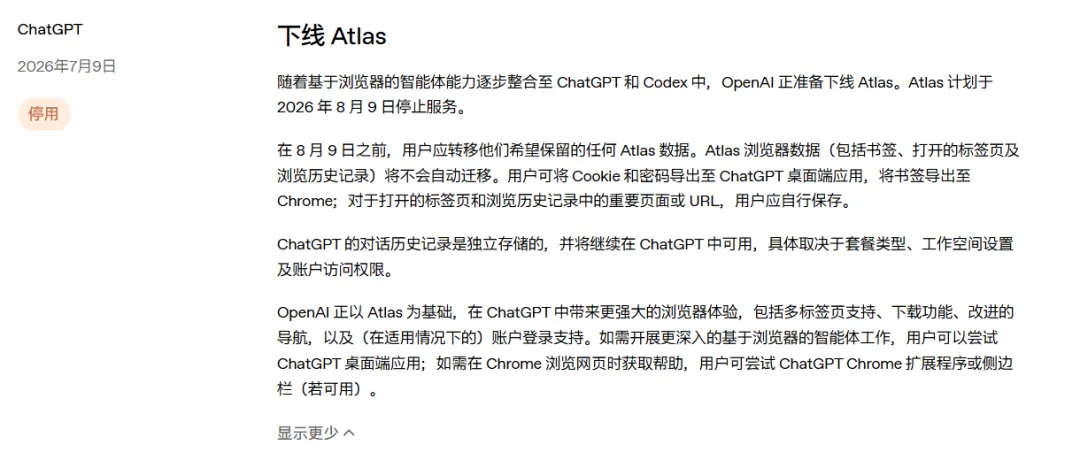
On the 9th of August, Atlas stopped working.
OpenAI has so far ended this independent AI browser experiment, but the problem Atlas represents is not over.
Do we really need an AI browser?The AI browser was hot once, forming roughly two types of routes.
One category is independent products such as Atlas, Comet, Dia, Neon, Felou.
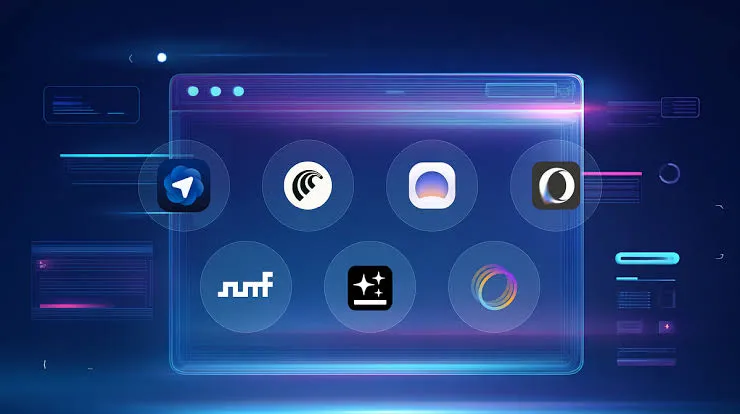
Sources: Medium
Their common idea is to redesign AI interaction from the browser itself. AI is no longer just a sidebar attached to a web page, but is able to read the current page, understand multiple tag pages, remember the context of browsing, and further click, fill, and execute tasks for users.
Comet is one of the relatively complete representatives of Perplexity. It already covers Mac, Windows, iOS, and Android, and extends Perplexity's original search and reference capabilities to browsing scenes such as mailboxes, shopping, research, and travel.
Dia also emphasizes the connection between web pages, tag pages, and context at work, rather than simply pursuing Agent automation. In September 2025, Atlassian acquired The Browser Company for $610 million in cash.
Opera Neon and Fellou put more emphasis on task execution. Neon puts Tasks, Agents, and code generation into the browser; Fellou focuses on Deep Action, automated research, and programmable Agent workflow.
The advantages of this route are straightforward: since AI needs to understand web pages, tag pages, cookies, log-in status, and the tasks that users are doing, designing from this layer of the browser can theoretically provide more complete contexts and make it easier to make the Agent part of the browsing experience.
But Atlas' experience has shown that maintaining a browser from scratch is itself a far-reaching engineering burden for AI development. More importantly, independent AI browsers must also cross another threshold: Why should users switch browsers?
For those who already have stable browsing habits, the cost of migration is real. Therefore, new AI browsers cannot simply be "more AI functionality" than the original browsers, but must provide a jump experience large enough to allow users to rebuild their own browsing environment.
This is also the structural challenge facing independent AI browsers.
Other categories are Chrome, Edge, Brave, QQ browsers and AI storage browsers such as 360.
Google has integrated Gemini into Chrome and continues to add multi-tag understanding, context and automatic browsing capabilities on Google Apps.
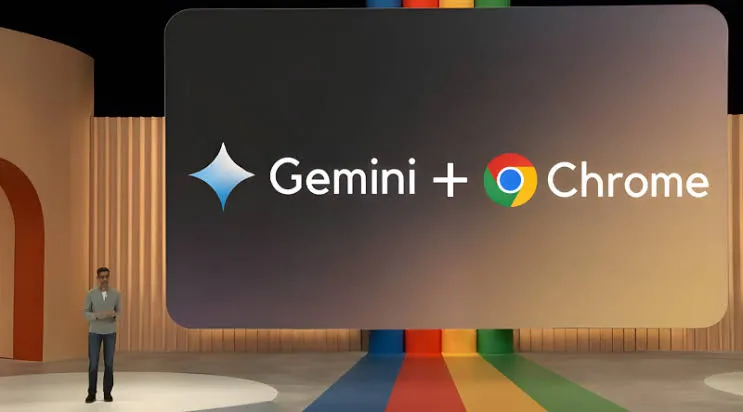
Microsoft has introduced Copilot Mode in Edge.
Brave tested Agentic Browsing, QQ Browsing, and 360 AI Browsers on the basis of existing browsers, using a similar approach to add AI search, web understanding, and Agent capabilities to the original product.
The biggest advantage of this route over redesigning a browser is that users barely have to pay for the cost of migration. The original extensions, passwords, accounting systems and workflows can be retained, and AI capabilities only need to be gradually superimposed on existing products.
It also raises the question: What users really need is an "AI browser" or an AI in a browser?
If the core needs are just to summarize web pages, cross-tag queries, assist search and writing, then the sidebars, plugins, or browser native functionality can do most of the work. Even further into the Agent stage, AI can click on web pages, fill out forms, and complete cross-site tasks, which is not a natural requirement for users to install a completely new browser.
Therefore, what an independent AI browser really needs to prove is that it can't "put AI in a browser", but that it can provide some storage experience that is difficult to achieve through the superimposition of AI functionality.
For example, a more complete context in the long run, deeper task management, or a redesign of the tag page, permissions and workflow around the Agent from the bottom up.
Atlas has not proved this to be enough to move a large number of users, but Comet, Dia, Neon and others are still trying.
At present, AI access to browsers has become almost a common direction.
Do you normally use an AI browser?