
It's the first time in the history of the world.
All the big AI frameworks are wrong!
PyTorch is wrong, JAX is wrong. Even the standard formula in textbooks is wrong.
Research scientist Jon Barron, director of DeepMind at Google, has revealed the massive bomb!
This week, Google DeepMind showed a problem: in PyTorch, JAX, and other textbooks, every standard version of the algorithm has been pushing a certain number to zero.

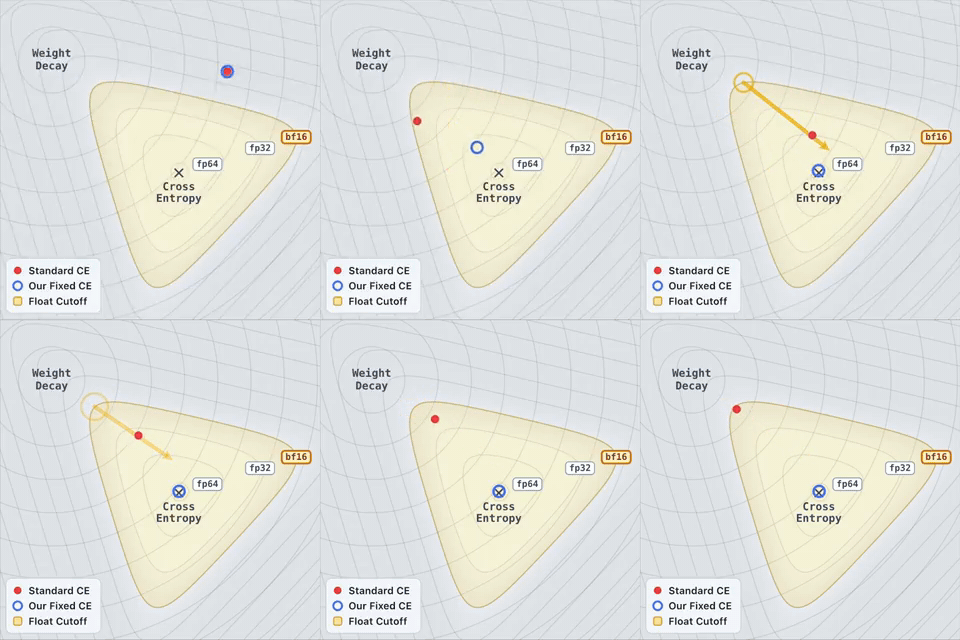
The more confident the model is, the more likely the correct training signal is to disappear out of thin air.
But the most shocking and exciting thing is:This is an underlying logical flaw hidden beneath the human eye.AI(Gemini) I got it myself.
This time, humans are only responsible for the subsequent replication and reproduction.
Disappearing numbers, collapsing models
This bug is hidden in the most basic AI calculations:SoftmaxandCross-cutting。
If you've ever been exposed to machine learning, you're no stranger to these two words.
Softmax is responsible for converting the original score (logits) of the model's output into probabilities.
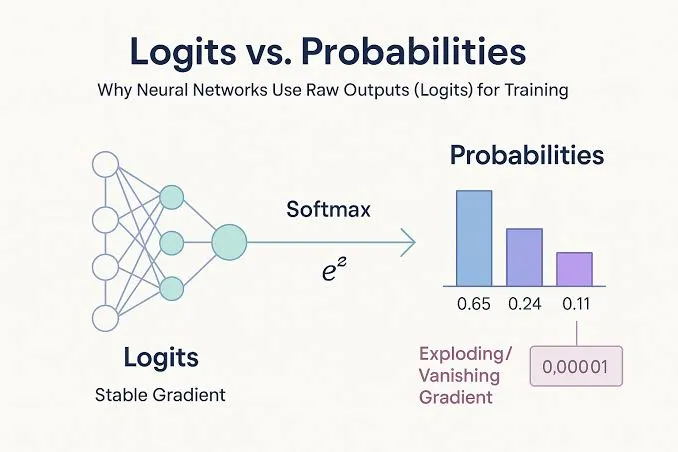
All the classifiers, all the big language models, call on this function every day, hundreds of millions of times.
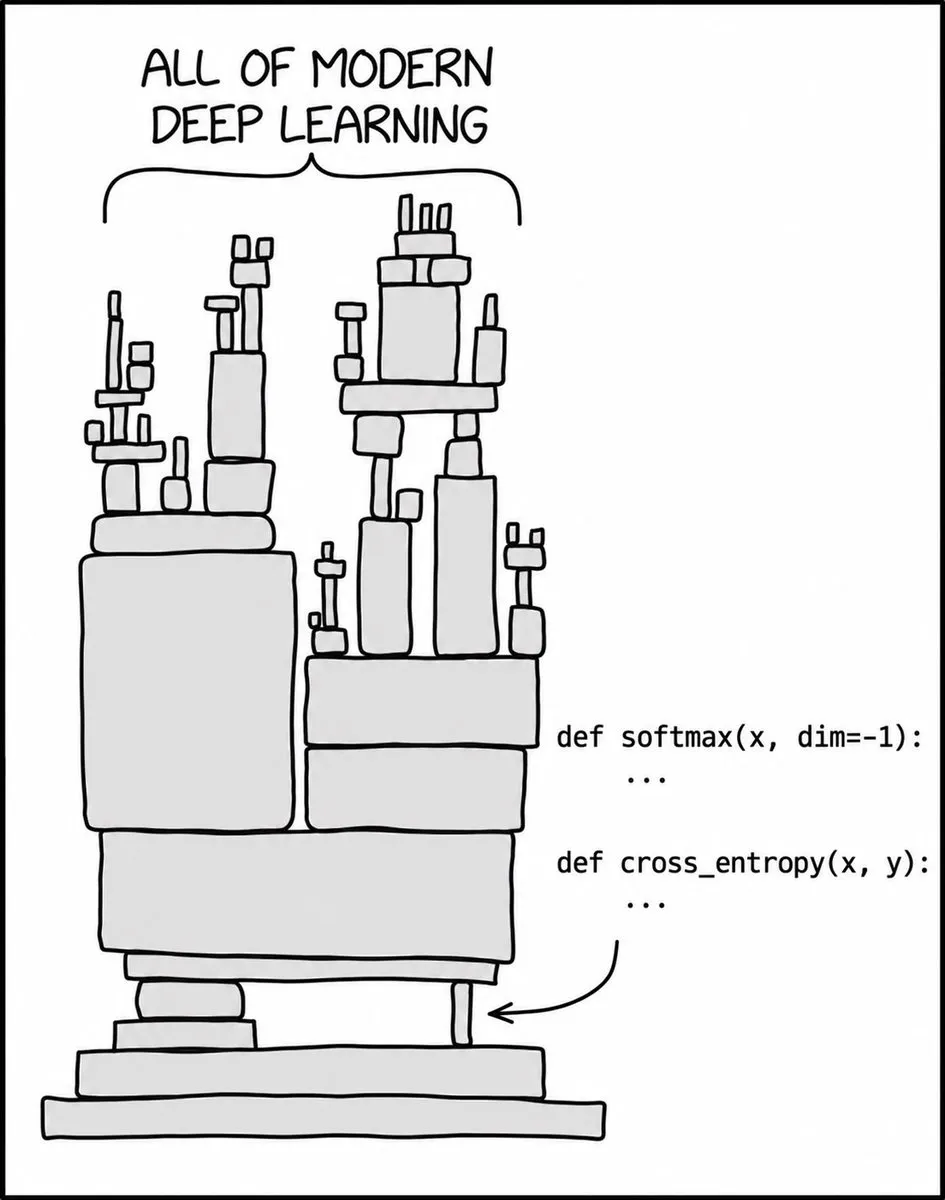
How can they be wrong?
The problem is "the limit".and"Four and five in".
In order to prevent computational overflow, existing standard frameworks (either PyTorch or JAX) perform a standard action:
First, subtract the highest score.
This decrease would transform the denominator into a structure similar to "the 1 + minuscule number".
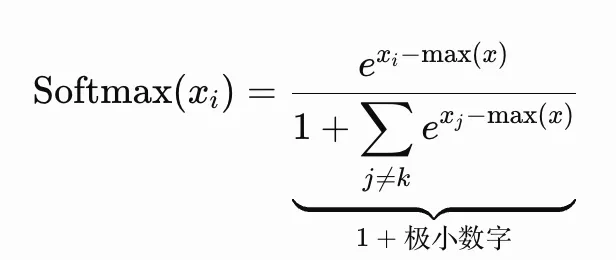
This "extremely small number" depends on how confident the model is.
The more confident the model is, the higher the score on the correct answers than the others, the smaller the number.
But here's a crucial detail: Mathematical equivalence does not represent a complete equivalence of the results of a floating-point computation.
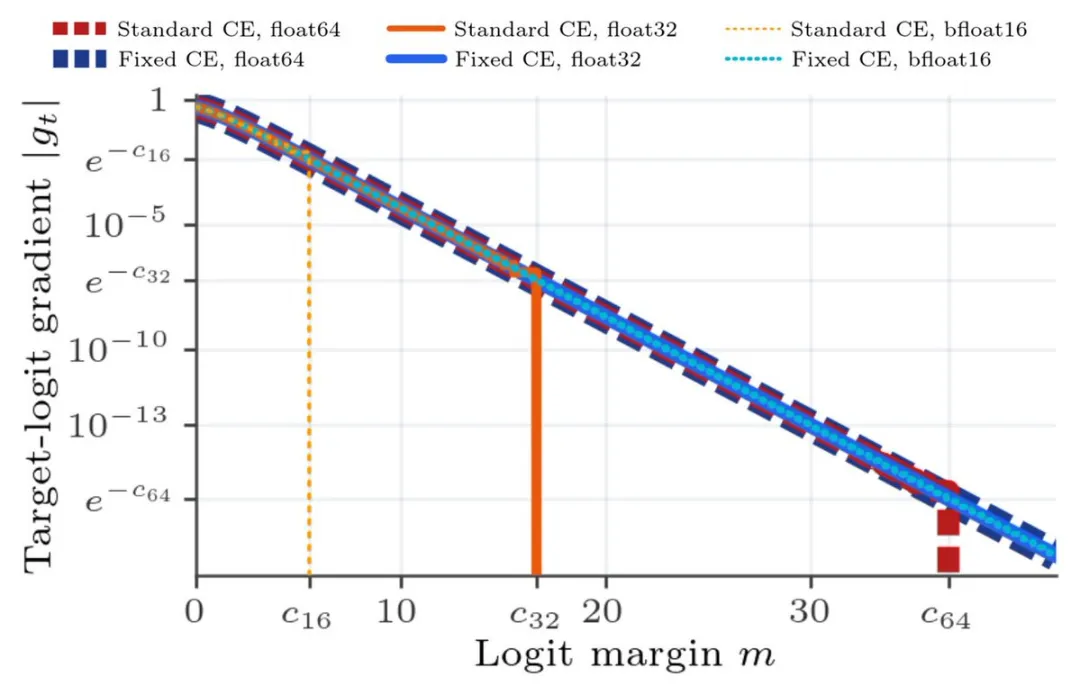
In the floating-point world of computers, if you add a small enough number to 1.0, the computer feels "it's too small, it's not necessary to calculate" and directly puts the result into an accurate 1.0.
In the bfloat 16 format, the cliff appears at about 5.5 degrees. In fp32, it appears at about 16.6 degrees.
What happens when you cross this cliff?
The right gradient instantly becomes absolute zero.
The model is clearly still being studied, but feedback on the correct answer is directly erased by the computer's input mechanism.
DeepMind's paper calls thisIt's the first time we've had a softmax collapse.。
And optimizers make things worse.
The principle of the mainstream optimizer Adam is to divide each update step by the mean of the recent gradient. When the gradient becomes zero due to Bug's longevity, this mean will infinitely approach zero.
When the real ladder finally reappears, Adam divides the ladder by a very small number.
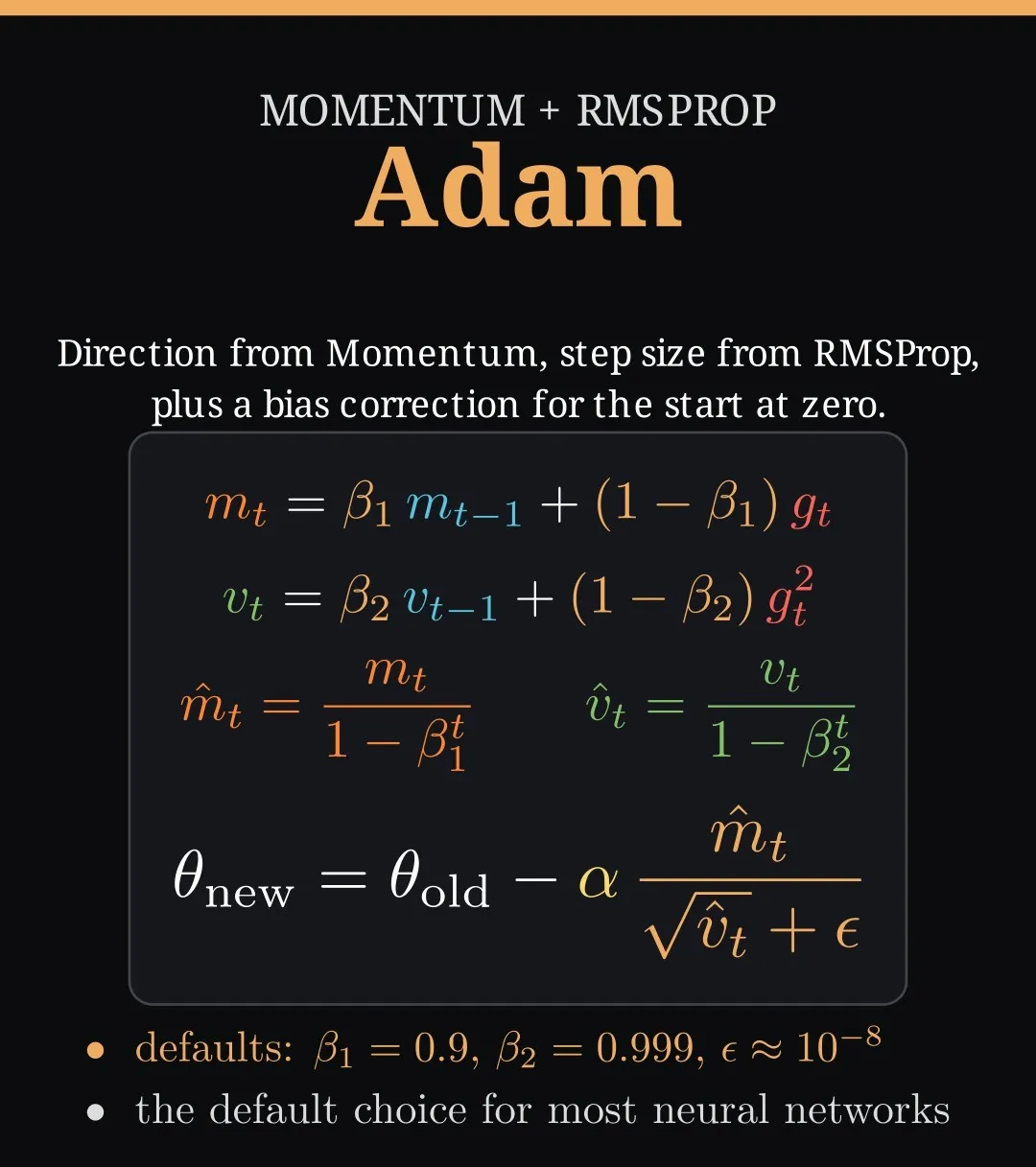
The result is that the model takes a big step forward, and the loss function (Loss) rises instantly.
The academic community had previously observed this phenomenon and gave it the familiar name "Slingshots effect" because it was thought to be an advanced feature of the model in the process of "grokking".
It's not a feature, it's a bug.
In addition to the collapse,Softmax cancellation offset。
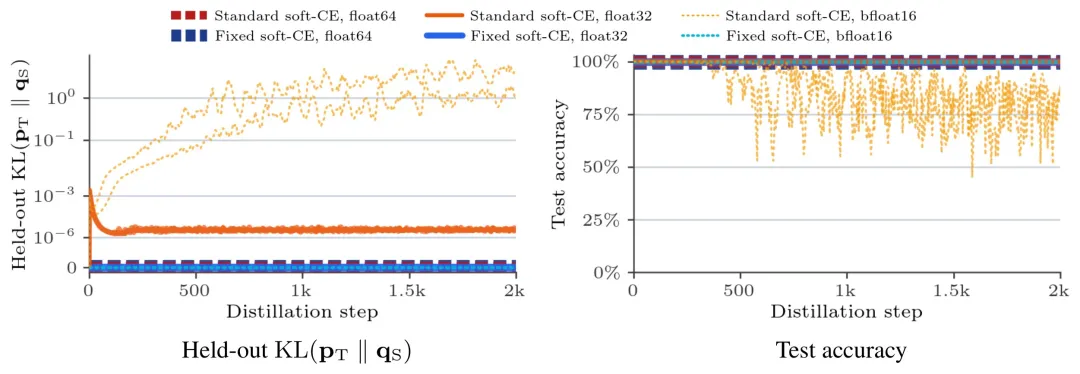
When learning is distilled, the theoretical gradient should be zero if the student model completely replicates the teacher.
However, since the standard code is a decrease in the probability of computation, the "ghost ladder" is left behind. The student model is surprisingly deviating from the correct answer.
This is all because of the loss of a very small number.
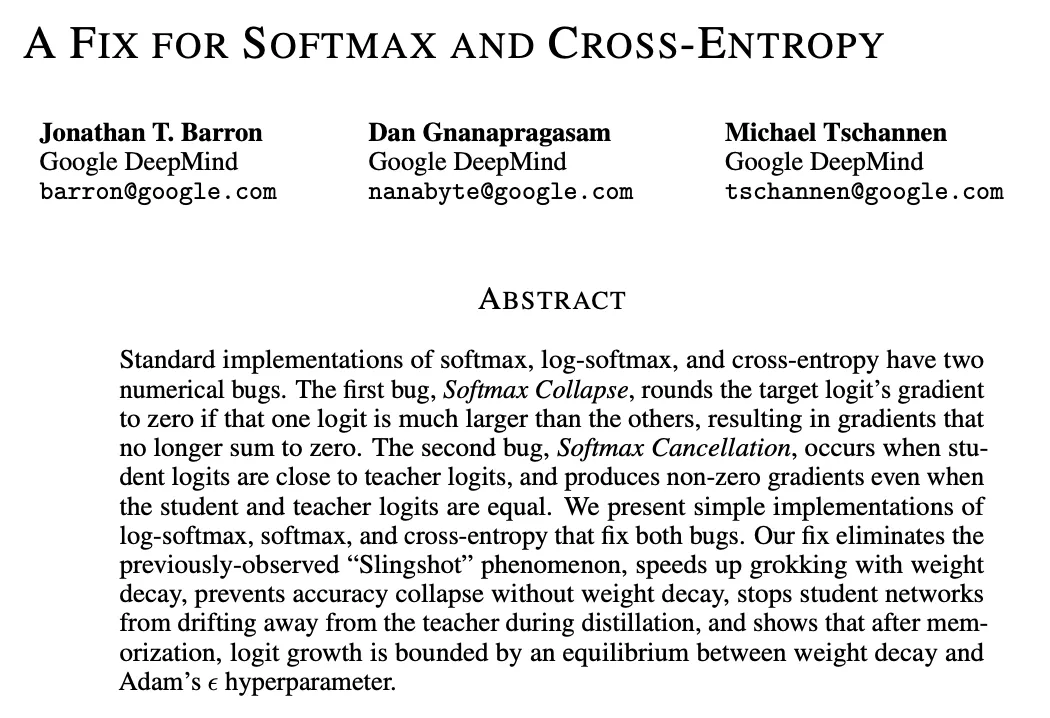
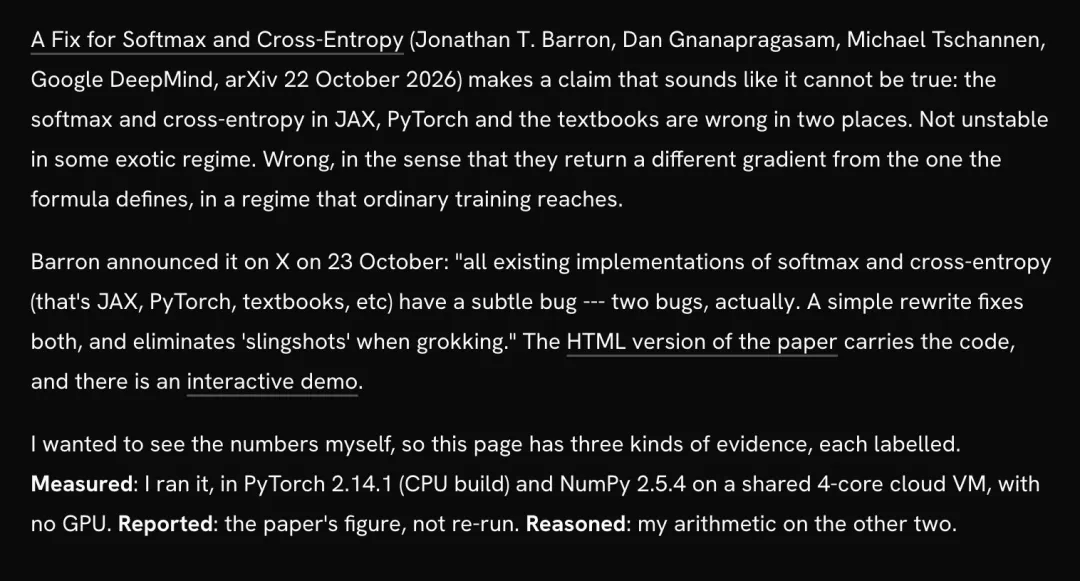
DeepMind's Jonathan T. Barron team submitted a paper on arXiv entitled "Softmax and Cross-Cross-Cross-Cross Repair".
The next day, Barron threw a powerful message on platform X:
It turns out that all existing Softmax and cross-platform implementations -- including JAX, PyTorch, textbooks, etc. -- have a subtle bug that is actually two.
Simple rewriting can repair them and eliminate the "bubble bow effect" of meditation.
For example,Cross-cutting(Repaired collapse):The goal is to get the goal out of the total and use it directly.
log-sum-expCalculate the margin and then return the negative margin.softplus• The core principles:Never add a very small number to 1.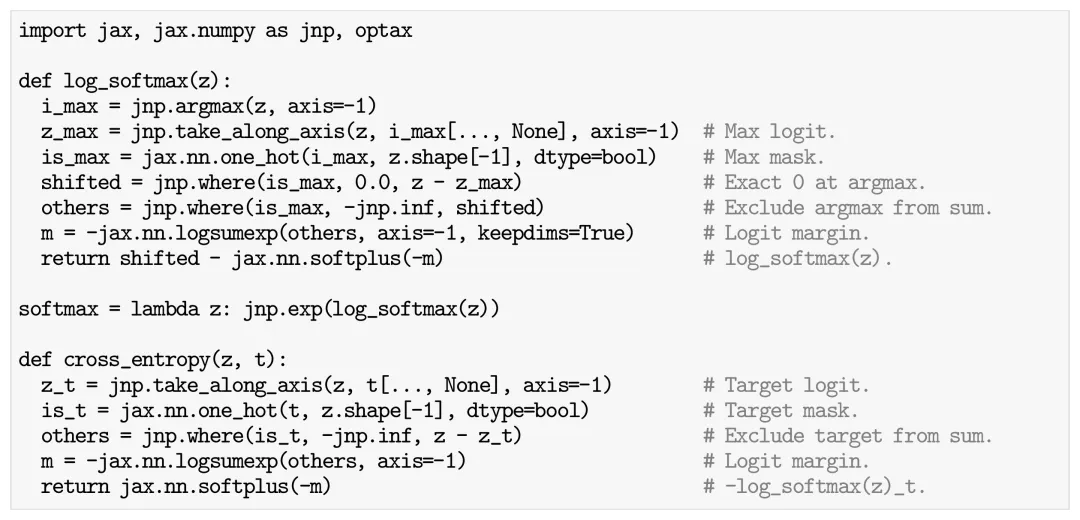
For distillation (repair compensation):Used in numerical space
expm1andlog1pWhen a student perfectly matches a teacher, the gradient is absolute zero and there is no ghost left.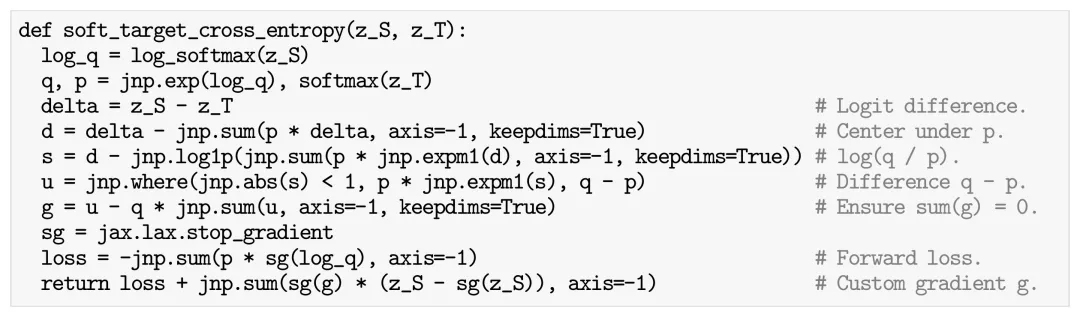
The paper gives intuitive data testing: using standard code in a + b mod 31 task, the accuracy of the test under bfloat 16 accuracy is only 93.3% and is extremely unstable.
It's a good idea to replace the repaired code.The accuracy rate directly rose to 100.0%, as in Thailand.
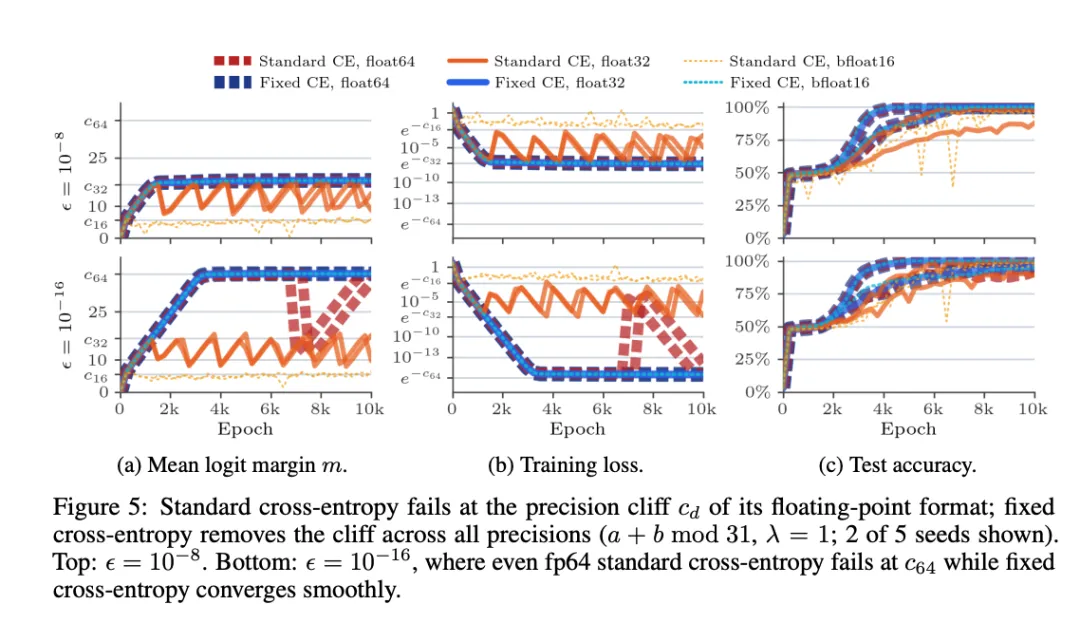
In the distillation test, the repaired code keeps the scatter between the student model and the teacher model at zero, and the accuracy rate is 100% perfect.
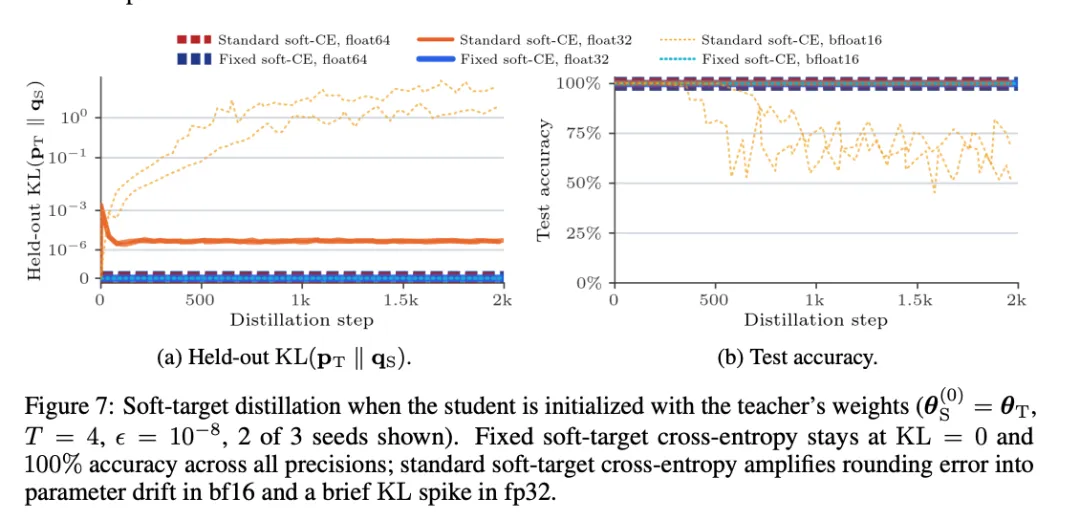
But what really shocked the whole tech world was what Barron added in the comments section:
The bug was originally discovered and corrected by Gemini Flash 3.7. Most of the experiments in the paper were done by Flash 3.8.
I'm just sticking it out very hard until it's hard.

On October 24, Satyajit Ghana, an independent engineer, performed a full restoration in PyTorch.
He reproduced both bugs with printed values on the CPU, ported the repair program, and confirmed the fp32 accuracy results in the paper.
He concluded: "Whatever the other details, the mechanism has been confirmed without reservation".
The tragedy of history is that machines always lose numbers.
It's not the first time that a number has been thrown out. Every time it happens, the cost is terrible.

In 1965, Professor William Kahan of the University of Toronto issued a warning on the ACM message board.
He pointed out that every time a computer adds thousands of numbers together, it produces an error of approximation. Adding a million numbers, you may lose six valid numbers.
His solution is extremely simple: add a variable, save the previously lost error, and add it back the next time. This is the famous "Kahan queries and algorithms".
Professor Kahan leaves behind a prophetic mockery in the article: "Double precision will soon be universally accepted as a substitute for the smart mind when solving numerical problems".
Today, 61 years later, AI has been downgraded to 16-bit bfloat 16 in order to achieve faster chip speeds.
In 1991, it led to the loss of lives.
During the Gulf War, an American "Patriotic" missile failed to intercept an incoming "Flying Ham" missile. The missile hit a military camp, killing 28 American soldiers.
The U.S. GAO's subsequent investigation report revealed the cause of the disaster. The system's internal clock is timed to one tenth of a second. However, when this time is converted to a real number, the register is only 24 bits long. As the system runs, conversion errors accumulate.
The missile has been running continuously for more than 100 hours. It has been running for 8 hours, 0.02 seconds, at a distance of 55 meters. It has been running for 100 hours, 0.34 seconds, at a distance of up to 687 meters.
An unseen four-and-a-half-in, four days later, turned into a deadly deviation of 687 metres.
In 1994, it was acquired by Intel.LossesIt's a lot of money.
In October 1994, Thomas Nicely, a mathematics professor at Lynchburg College, discovered that the results of his two computers were different.
He calculated the regression of the number of microbes and the same procedure, the Mercedes chip and the old 486. A few days later, he locked the culprit: when calculating 1 minus 824,633,702,441, the floating-point computing unit of the Mercedes processor was wrong.
The reason for this is that the Mercedes-Benz decoder used a search table and missed five entries in the table.
The problem was discovered not only by Professor Nicely's two computers, but also by rigorous cross-checking.
In the end, Intel was forced to agree unconditionally to replace the chips for all users. In January 1995, Intel reported a huge loss of $475 million.
In 1994, the loss of numbers caused a huge loss for Intel. In 1991, the loss of numbers caused a loss of life. In 2026, the numbers were lost in the most commonly used AI functions.
A lesson is more profound than a lesson, but it is also more useful than a lesson.
Numbers don't disappear by chance, they just go where you don't notice.
This is the worst moment in AI underlying mathematics, but it just got a little better.
And the most exciting thing is that this time, machines have found their own flaws, and humans are responsible for the final lock.
RoboInd editorial channelResearch, robotics companies and market intelligence for cross-border sourcing.Explore the channel ↗
Share this
End of editorialExplore more from Global Robotics News ↗