As AI's imaging capabilities continue to improve, how to really get AI into the creative process becomes a new industry issue. A large model of intelligent AI based on UniWorld-Design's visual AI has been launched, RabbitVis, in an attempt to push visual AI from image generation to an editable, delivered creative process.
The intergenerational time span of the AI industry is getting shorter!
From ChatGPT to text graphics to video generation, big models are constantly refreshing people's understanding of AI's capabilities.
But at the same time, a new change is beginning to emerge.
What we're concerned about is no longer just big model parameters or generating effects, but a more realistic question: can AI really do a job?
Today, most AI is able to generate an image that is beautiful enough; but true creation does not end at the moment the image is generated.
Whether the dimensions are accurate, whether the layers can be edited, whether the material can be reused, how many people can continue to collaborate... The work that really affects creative efficiency still needs users to go back to traditional software and continue to do it.
The real-world pain point is that the competition for visual AI is also entering a new stage.
If in the past it was "who generates more like", then today it is who can really get into the creative, design and production process.
RabbitVis is officially online and you can instantly experience the AI design and production tools:
Click on the official link to join the official community and explore new ways to design and produce AI with more users.
In this context, the expansion of intelligence has given its own answer.
Previously, UniWorld-View, developed jointly by Intelligent Beijing University and Beijing City Laboratories, topped the WorldScore World Model List, showing the team's technological accumulation in the field of visual AI.
Based on years of accumulation of visual AI technology, AI has transformed AI's large-scale model capabilities into practical applications. For the design and production scenarios, AI has developed UniWorld-Design, further strengthening the combination of visual generation and editing capabilities, and based on this, has created an important product for its product modeling strategy, RabbitVis.
AI is starting to answer a new question: How do we really get a job done?
If you draw the evolution of AI over the past few years into a timeline, it's easy to see that the issues that matter at each stage are changing.
At first, people were talking about "Can AI understand?"
Subsequently, the big model began to enter a phase of rapid development, and the industry's focus gradually shifted to "Can AI generate?"
In recent times, both text, images and video, large models have been pushing the boundaries of capability. More and more real characters, more and more natural photos, and more and more rich visual effects allow AI to be produced gradually from technical demonstrations to practical applications.
But as AI becomes more closely intertwined with everyday life, more demands are being placed on AI.
What happens after production? Can I continue editing? Can I export the material?...
In terms of creativity, what is really needed is never just an image, but an end result that can be delivered.
This is how design is, this is how marketing is, this is how every industry is...
More and more AI products are shifting from "display capability" to "task completion"; from answering questions to reorganizing capabilities around specific industries: some entering healthcare, some entering finance, some entering manufacturing, and some entering design production.
In other words, AI is competing from general capabilities to working capabilities.
And visual AI, too, is entering its next stage.
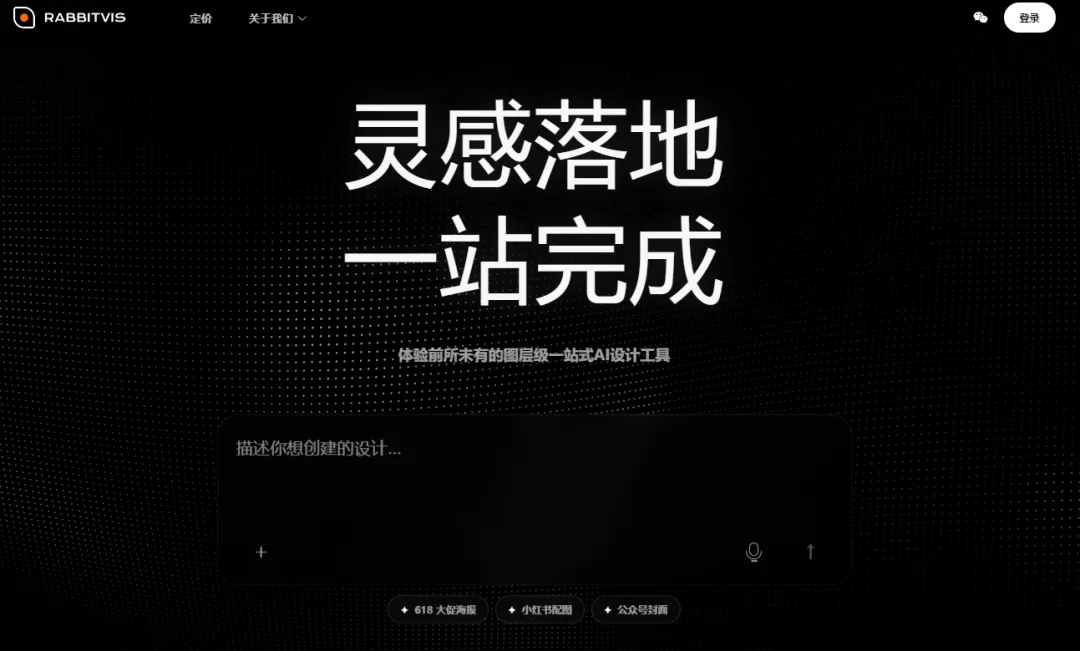
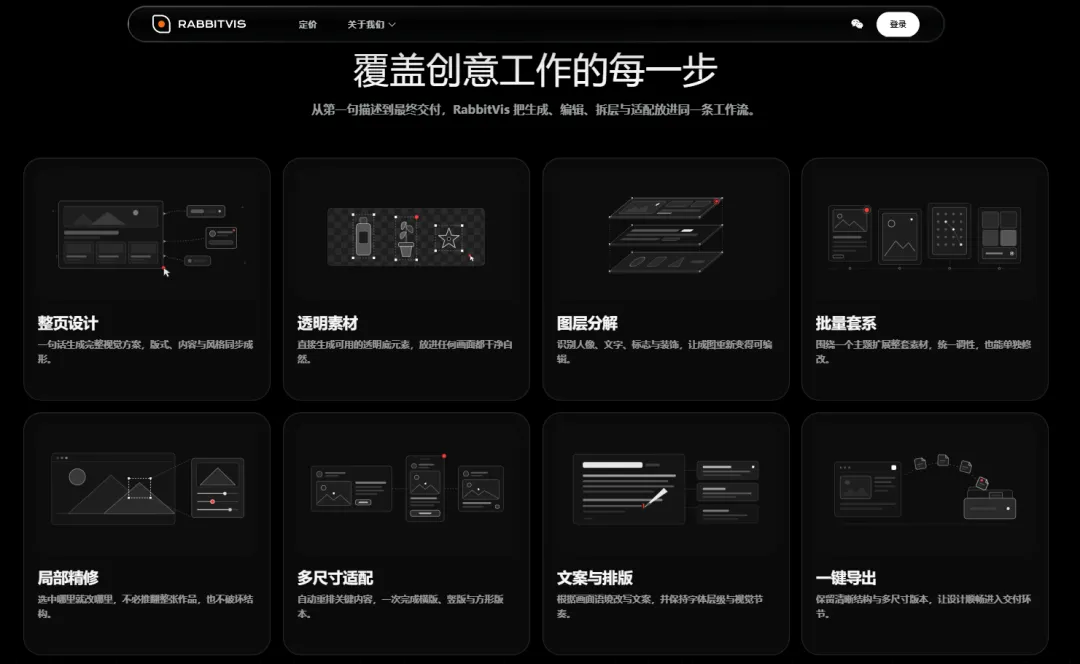
RabbitVis: Inspired landing, one-stop design tool at an unprecedented level
RabbitVis was born in this context.
Instead of focusing on "producing more images", it focuses on another question: how to get AI really involved in creating, designing and producing rather than just completing one generation.
From a picture to a complete work.
As big models continue to evolve, the biggest change in AI design is that it is increasingly "painting".
People are more realistic, more logical, more natural, and even more sophisticated in style, detail, and material.
For many users, a high-quality image has already met some of the creative needs.
However, when content enters the real creative scene, users often need to continue to make changes, adjustments, and adaptations.
A product details page, not only completes the visual presentation, but also needs to continue to adjust the text, print, size and material; a set of branded materials, not only generates a poster, but continues to complete multi-dimensional, multi-specific, multi-scene designs around the same topic.
It's not the first time AI has been created that it's really time consuming, but a lot of modification, adjustment, editing and delivery after it's created.
For example, AI generates a satisfactory image, but it still needs to be re-imported into professional design software such as Photoshop, Illustrator, and more; layers need to be re-divided, text needs to be re-edited; and even different specification files need to be exported to different platforms.
RabbitVis ability to break down smooth layers
In other words, AI has completed "generation" but has not really entered the second half of the creative process.
At the same time, generation, editing, sequencing, and collaboration are often scattered across different tools, and users still need to switch back and forth between multiple software programs to gradually process the AI output into the final outcome.
RabbitVis streamlined generating design that displays generated results in real time
But the advent of RabbitVis solved this long-standing "breakdown" in the creative process.
Rather than continuing to enhance single-generation effects, RabbitVis enables AI to transition from image generation to the creative design and production process.
It's all about background, image editing, text editing, scrubbing, all of which can be done in a single word.
The following are some of the best RabbitVis posters:
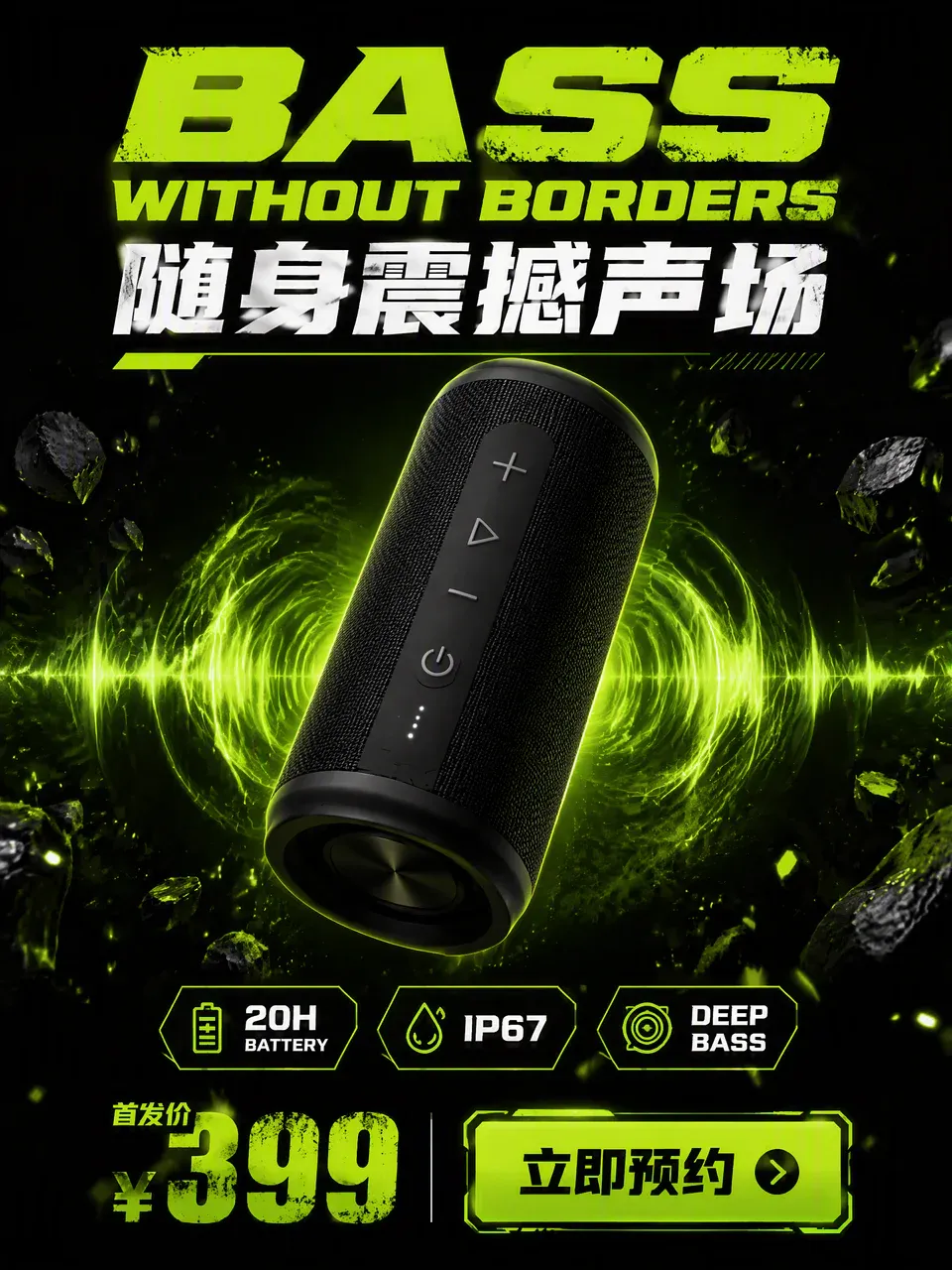

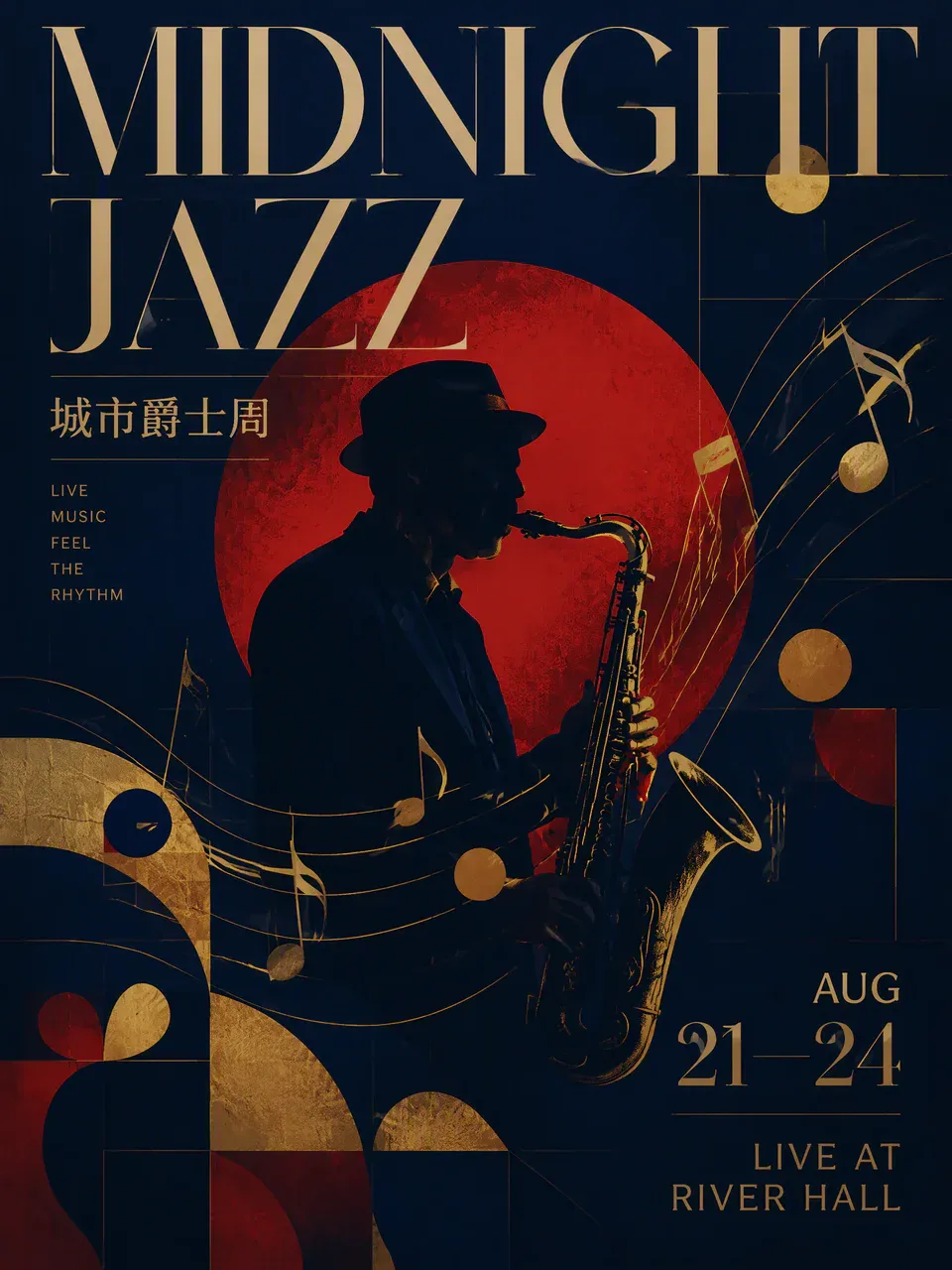
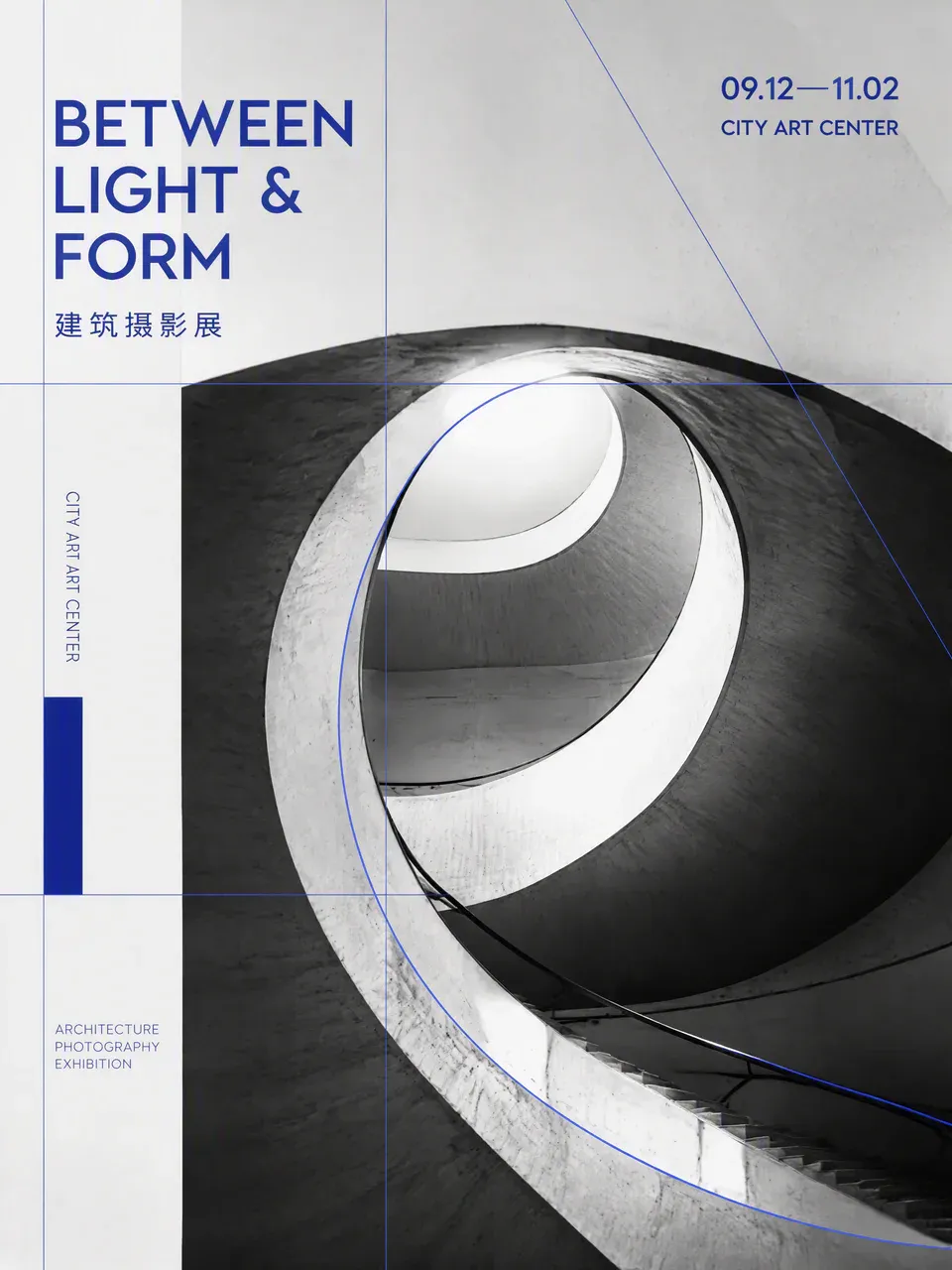


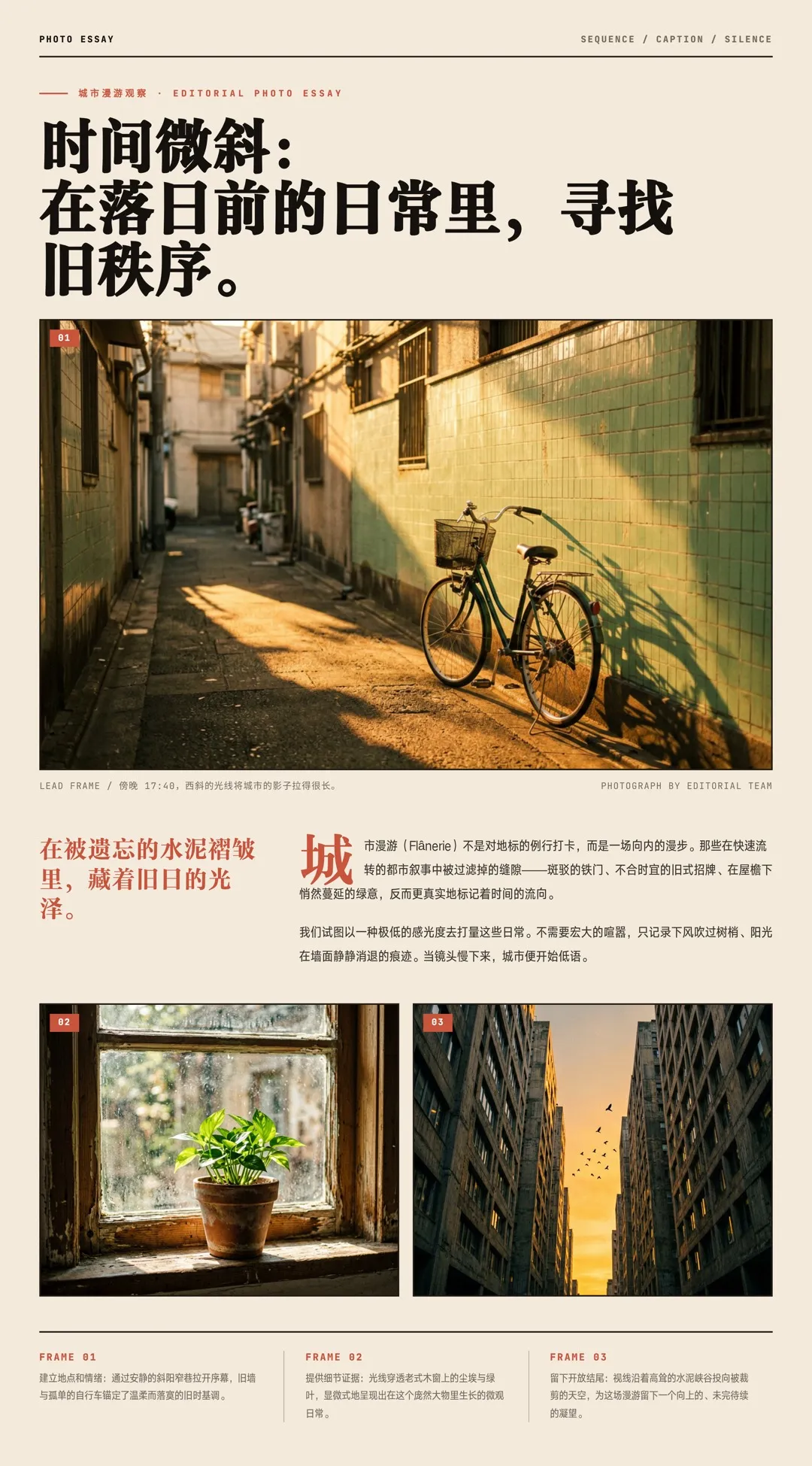
The results of RabbitVis magazine's in-page creation
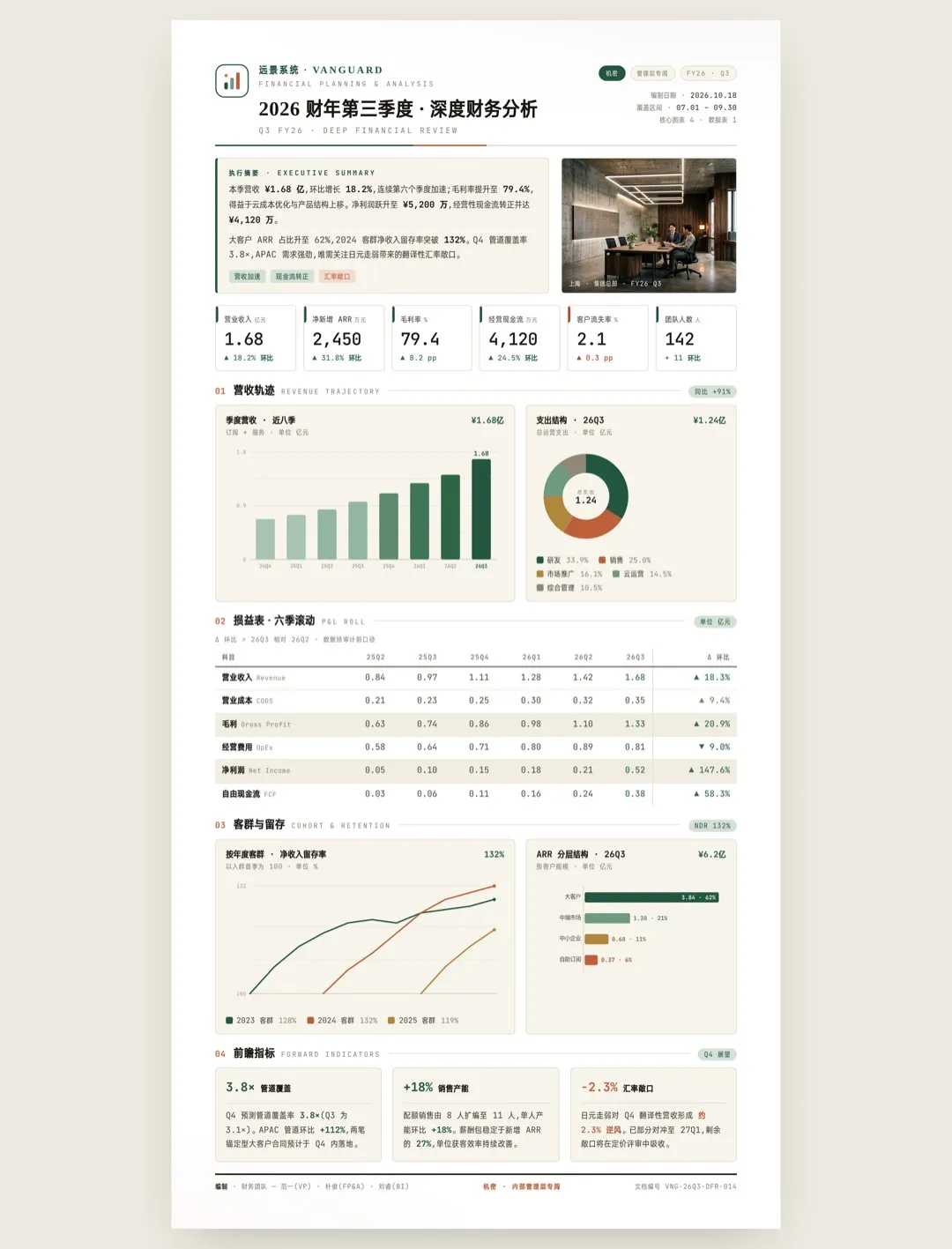
RabbitVis financial analysis reports generate results
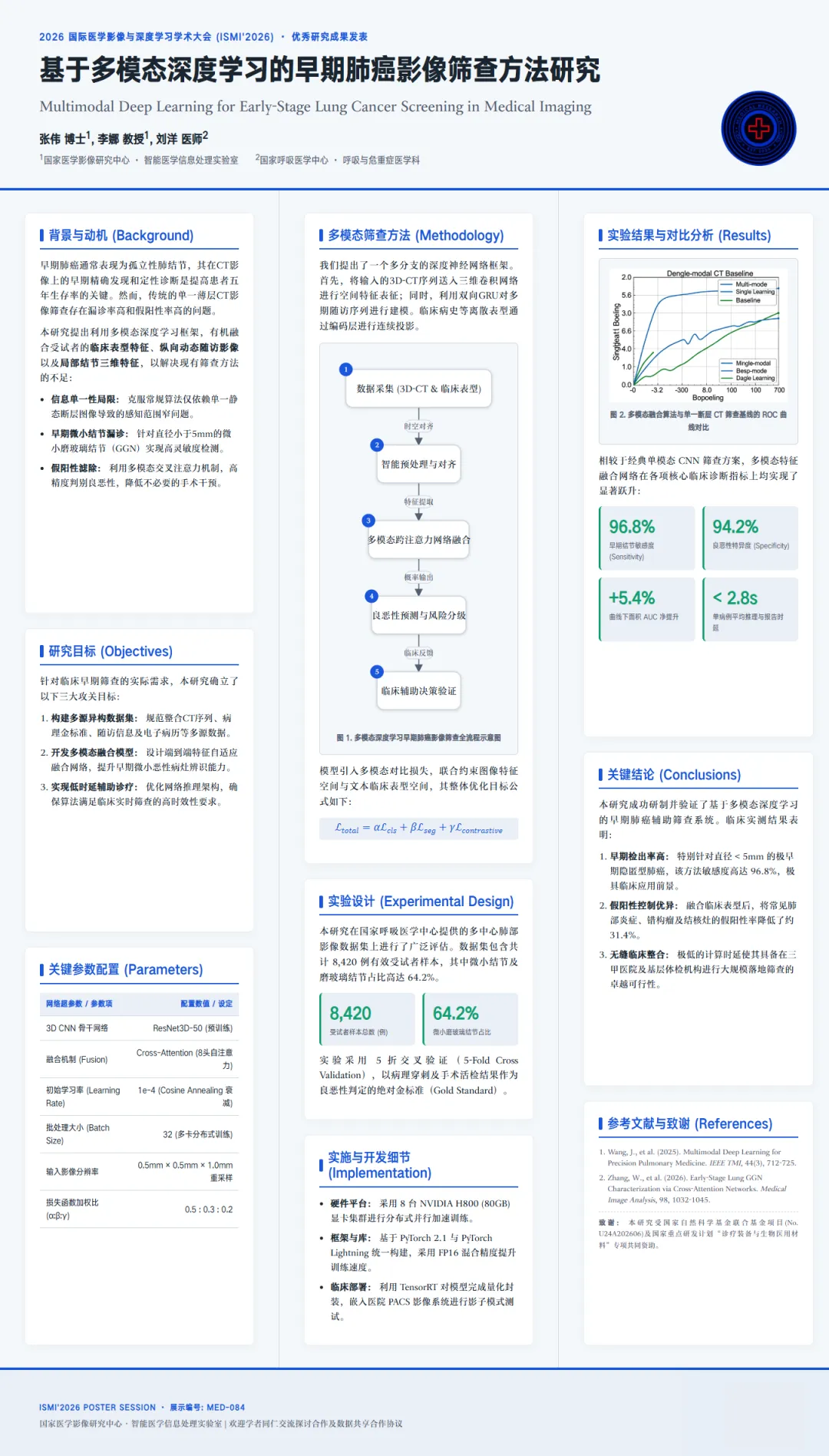
RabbitVis academic poster generates effects

RabbitVis infographic generates effects
In RabbitVis, users can not only generate different types of design content, such as transparent background materials, product details pages, magazine cross-pages, etc., but also continue to modify, continuously edit, and gradually complete subsequent design work around the same project.
This shift from generation to creation is driven by the continued accumulation of technological capabilities in the field of visual AI.
Traditional AI graphics typically produce a complete image, but the actual design process is not simply showing an image, but requires continuous adjustment of its various elements. Background, subjects, text, decorative elements, etc., all need to be edited as independent objects.
Based on this need, UniWorld-Design uses image layers as an important way of organizing visual content, enabling models to not only generate images, but also understand structural relationships in images, and support image-level generation and editing.
In design tasks, UniWorld-Design's transparent material generation capability can generate transparent design elements that can be used directly depending on the text description; while image layering capability can break down the entire image into multiple editable levels to provide the basis for subsequent adjustments, combinations, and replications.
Uniworld-Design technical report links to:
In the I2L image layer evaluation, UniWorld-Design has been validated around tiered visual quality, Alpha Soft IoU, editability, and other indicators, including 0.1264 ((the smaller the better) in tiered visual quality indicator RGB L1, 0.7325 ((the larger the better) in Alpha Soft IoU, and 1.32 ((the smaller the better)) in the VLM subjective rating, where UniWorld-Design has an overall score of 20.43 ((25 points, the larger the better), and 0.817 ((the greater the better)).
In the T2RGBA Transparent Materials Generation Assessment, UniWorld-Design further improved the semantic matching capability of the material and text descriptions produced, reaching a CLIP Score of 33.03.
These capabilities were further encapsulated in RabbitVis, providing a technical basis for AI to enter more complex design tasks.
Why should AI be embedded in creative design workflow?
Of course, it's important to continuously improve the quality of AI's output.
But the RabbitVis R&D team, in continuous observation, research, and user feedback, found that for real creative design scenarios, simply making AI "generate better" still doesn't solve all the problems.
Because what users really need is not an AI-generated final image that can't be adjusted, but a design draft that can be continuously modified, evolved, and finally delivered.
As a result, RabbitVis' product design has always revolved around the idea of "leting AI-generated images be the starting point for continuing to create until the final product is delivered".
This idea is first reflected in the production of materials.
In the past, both design teams, corporate operators, and content creators often spent a lot of time working with AI to create images, cutting, edge processing, and so on.
The work itself is not complicated, but it is time consuming.
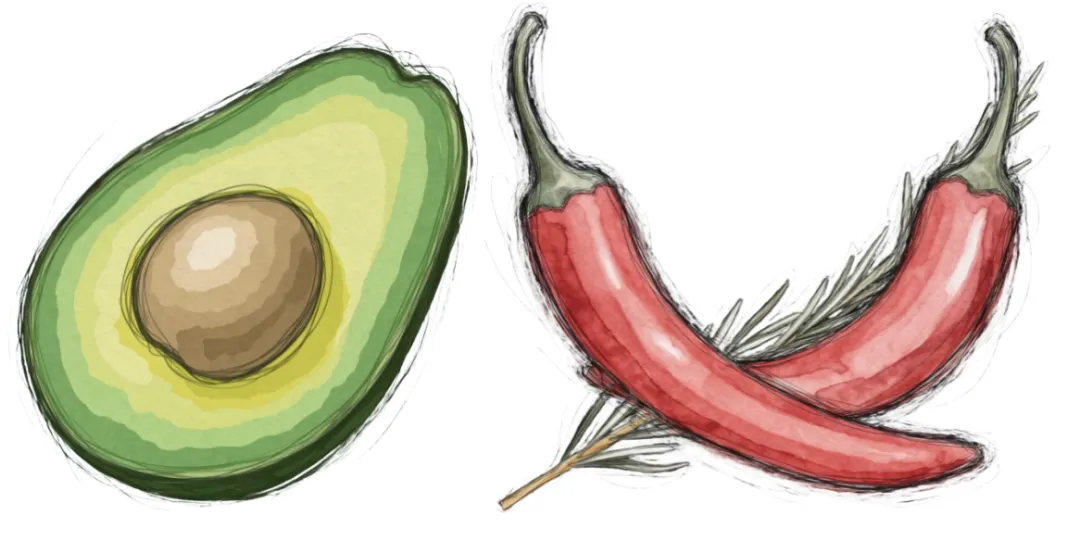
RabbitVis complex hand-painted PNG transparent bottom material
PNG transparent bottom material produced by RabbitVis
RabbitVis opts to start from a true creative process, supporting the creation of transparent underlying materials that can be designed directly, allowing AI to produce results directly into subsequent editing, editing and compilation links.
Another change came from "editing".
In the past, most AI-generated products were essentially finished when the task was completed.
If the user needs to change the content, they can often just re-enter the Prompt and wait for the larger model to be generated.
In real life, change is often not a reversal.
More often than not, it's just: the title moves to the next point; the logo is enlarged a little bit; the image changes a little bit; the colors are unified...
These modifications are essentially pre-drafted adjustments, rather than re-generating images.
Experience RabbitVis: A new way of designing and producing AI.
Therefore, RabbitVis focuses on continuous editing capabilities after generation, connecting the design processes that were originally cracked in different software, in different links, so that users can continuously adjust around the same design instead of continuously re-starting, cycling back and forth.
The user enters a natural language, RabbitVis, and completes the initial design; then continues to modify the version, change the material, modify the text, and export the corresponding specification files according to different scenarios.
From this perspective, RabbitVis is more about reorganizing creative design processes than just adding AI functionality.
After the big model, AI products enter the value verification stage
There is no denying that the pace of development of AI big models far exceeds many people's expectations.
It's all about chatting, programming, translating, creating images, creating videos...
More and more jobs that require expertise in the past are being taken over by AI one by one.
Industry confidence is growing and the blueprint for the future is becoming clearer.
People are constantly pursuing bigger parameters, stronger reasoning, better generating effects, and constantly refreshing the boundaries of AI's capabilities.
However, the fact that the big model is getting smarter does not mean that the user's work efficiency actually gets the same level of efficiency.
The reason is not complicated.
A smarter, larger model is important, but more important is a set of AI products that can get into real business processes and continue to create value.
It's time to move from solving "can't do it" to focusing on:
Can it really be delivered?
Can we get into the creative design workflow?
Can we continue to improve productivity?
After all, what really determines the value of AI products is not just the big model itself, but how the big model combines with industry experience, business processes and product experience to ultimately help users do a real job.
The rise of the entire AI industry may mean a new beginning.
When the big model becomes the new infrastructure, it's not necessarily who owns the bigger model that really creates the gap, but who transforms the model capabilities into truly affordable, deliverable, and sustainable AI products.
RabbitVis' exploration is also answering the question of how to let AI not only generate content, but actually enter specific industries and participate in real workflows.
From generating images to completing designs; from single output to continuous editing; from model capability to production capability.
The next stage of AI competition may not just be "who will produce more", but "who can do better".
And this could be the post-AI era of graphics, a new direction in which visual AI really deserves attention.
Click on the official link to experience RabbitVis instantly, join the official community and witness AI design from generation to production!
The official link: