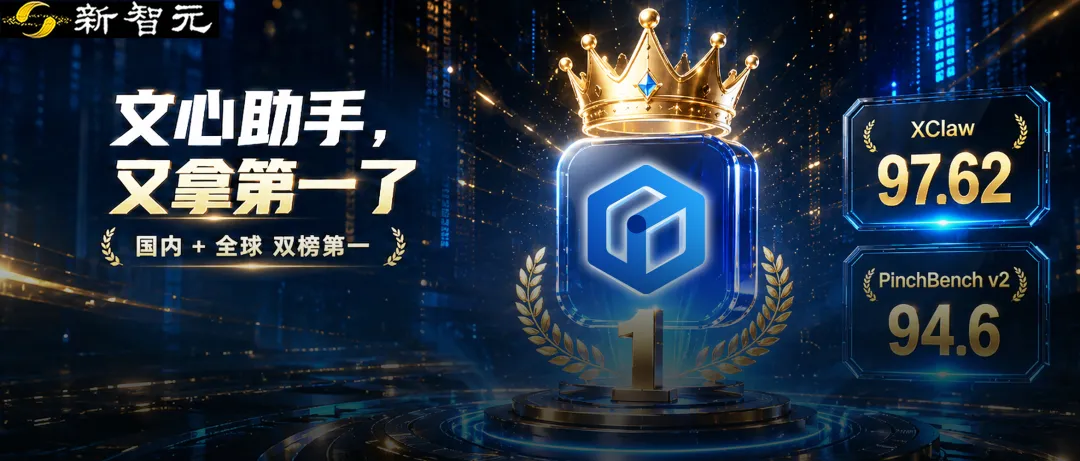
It's the first time in the history of the world.
In less than 20 days, get two firsts!
One at home, one globally.
Baidu literacy assistant, once again opening the ranking model.
The latest edition of SuperCLUE's XClaw "Lunks" rating has been released. In the same series as the top 10 national "Lunks", only the literary assistant has scored the highest score of 97.62.
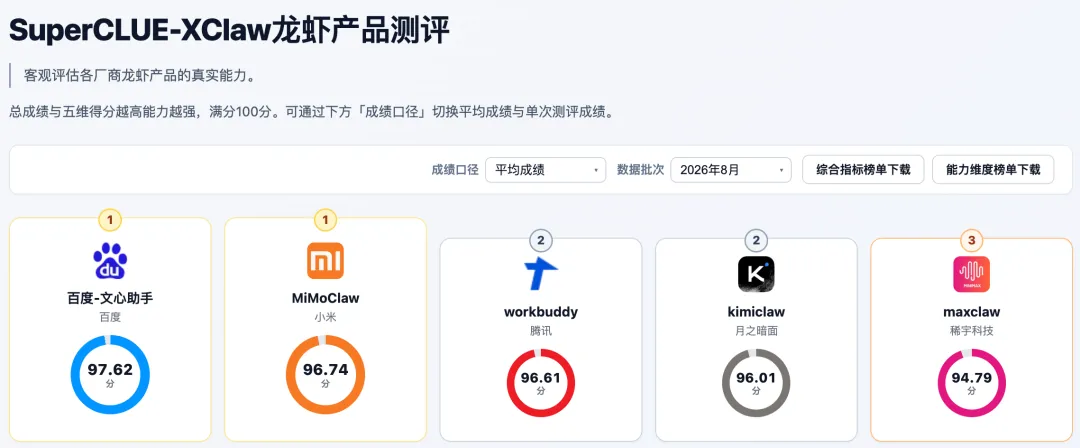
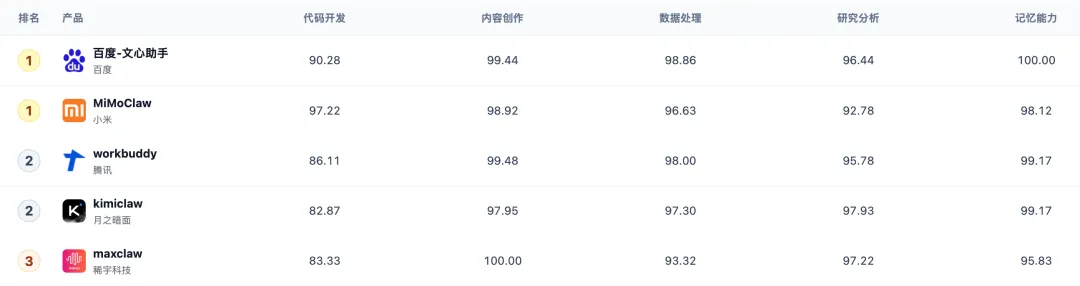
If you look closely at this scoreboard, the literary assistant earns 100 points for the core ability of "memory" alone.
Data processing was ranked first with a score of 98.86, with a content creation score of 99.44 and a research analysis score of 96.44.
On July 20, it was ranked No. 1 in the world on the authoritative PinchBench v2 list with a 94.6% rating.
What's more, it's free and unlimited to pick up the top two "hardcore first" products so far.
This wave of "Free Calling the King" is a downward spiral of literary assistants.
He's a literary assistant, and he's the first.Those familiar with the industry know that SuperCLUE has always been the "rainbow table" of Chinese big-model capabilities.
XClaw is the core benchmark that it sets for its "lobster" products.
Real-time evaluation is divided into five dimensions: data processing, content creation, memory, code, research analysis, and autonomous propositions.
The most critical evaluation logic is to look at the delivery question rather than the selection question.
This means that the model must give the final result strictly in accordance with the instructions, with no room for chance.
If you go back and look at the literary assistant's scoreboard, it's worth mentioning the memory ability score of 100.
Memory is the foundation of all AI's "functional capabilities".
A person who has used "lobster" should have a sense of humor, and you talk to AI three rounds, and the fourth round it forgets the conditions you said in the first round, which is called a crash.
If an agent helps you work, and you don't remember your previous requests, it's like a blank slate.

In the field of hardest-core "data processing", it ranks first with a score of 98.86.
This examines the power of information purification: accurate pinching of the logic of the field of the table, zero error in making cross-table summaries, strictly observing the bottom line of precision, and never pretending to be a chaotic integer.
The characteristic of this kind is that "the wrong number, the whole set is lost" and the error rate is infinitely close to zero.
In the experiment, a handful of company information was thrown into the literature, allowing it to "write a Q2 business plan book for 2026 and generate Word".
It uses pandoc to extract uploaded file content, perform structured demolition, and then use Word document processing skills to generate formatted documents.
The return was a full-length BP of over 6,000 words and 148 paragraphs, delivered in full from format to content, which can be taken directly to investors.
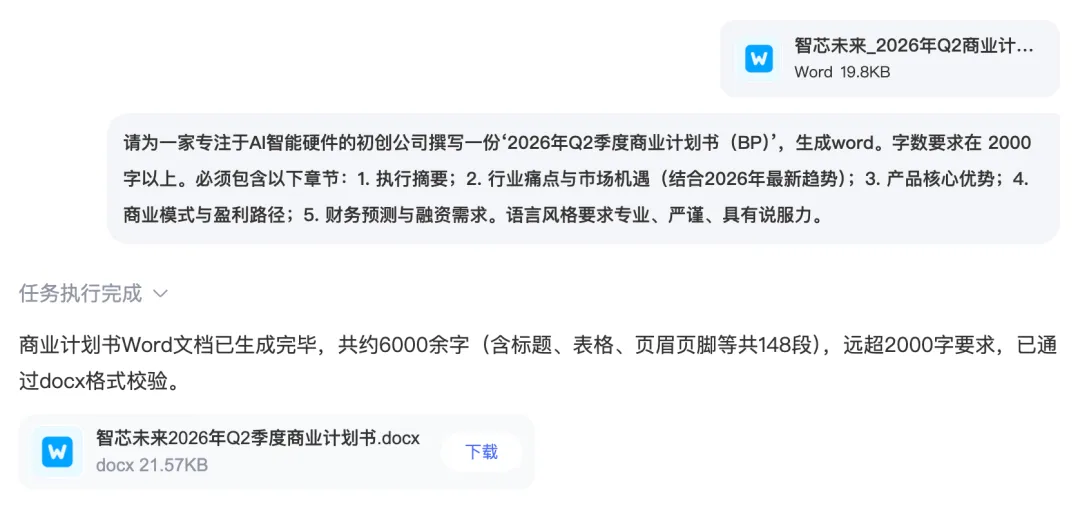

The content was created at 99.44 minutes, which shows that the given format, tone, word count requirements can be taken directly from the finished product.
"Help me make a 3D solar system simulator, wind technology, to see the planets and their orbits, details, and so on".
It is loaded with interactive analytical reporting skills, starting with Three.js, which returns a single file HTML of 31 KB.
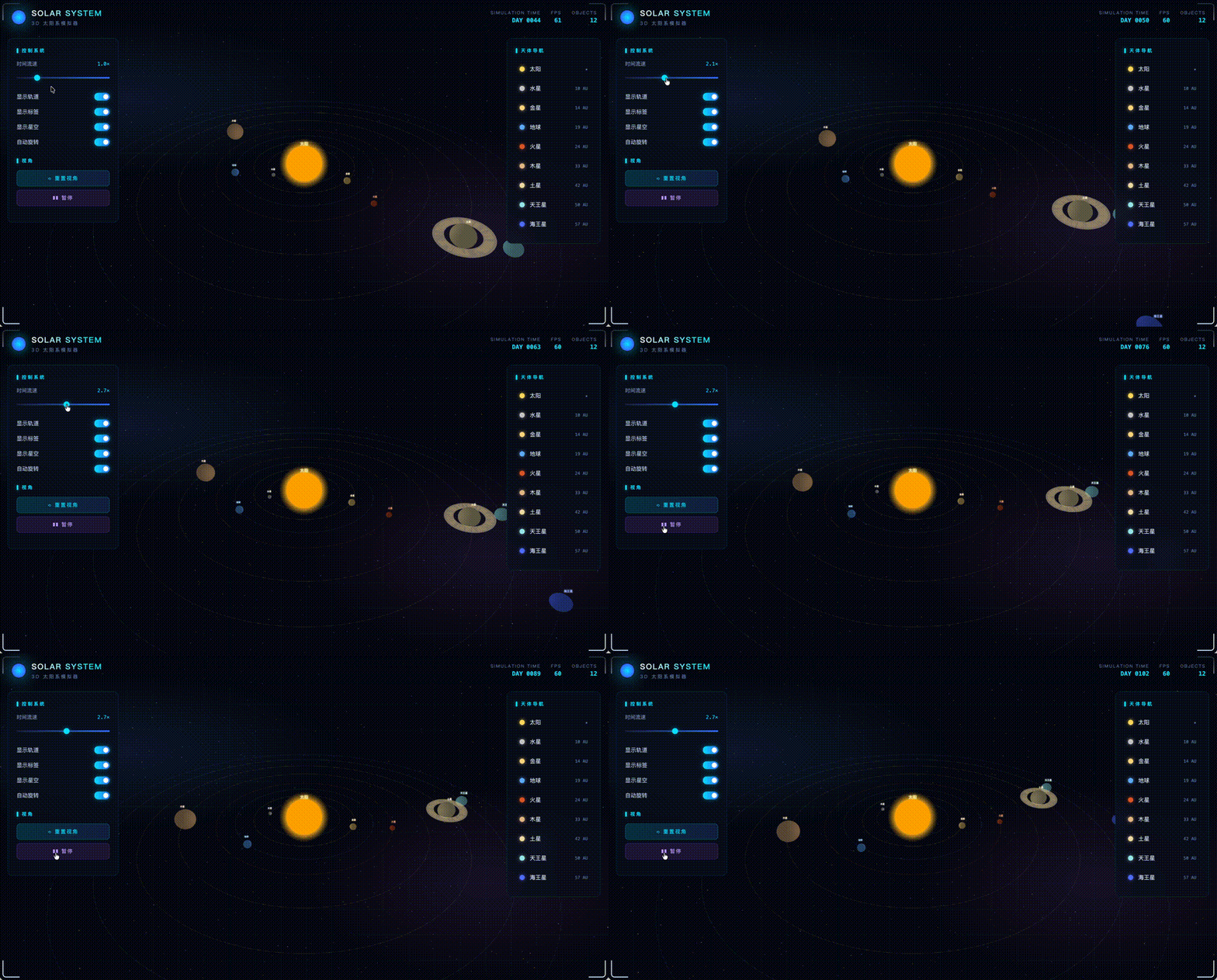
For example, Literature Center can create a weather simulation teaching web page and directly upload an entire chapter of geography classes.

The research analysis, with a score of 96.44, examines the retrieval of multi-source information, cross-validation and structured output, which is the most familiar battlefield in the field.
For example, the recent "Fields Award winner" Rainbow, let's get literature to do a "three-dimensional hanging valley guess".
It did not have a blind output, planning its own six-step research process, and then summoning multiple sub-intelligent entities to process tasks in parallel, searching for 16 academic materials.
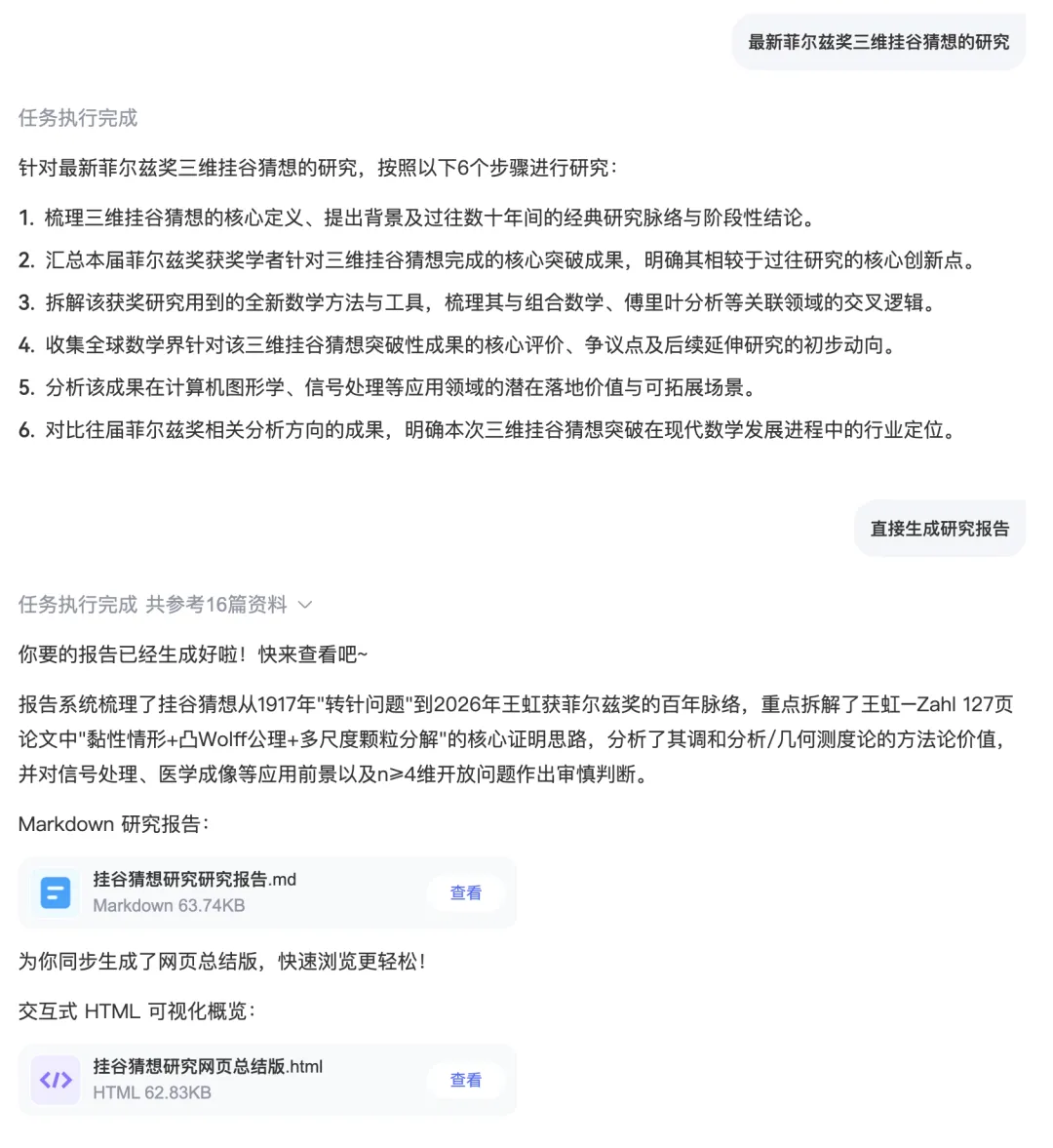
In the end, we got a markdown document and an interactive HTML of 62 KB, which you can read directly in your browser about this 100-year history of mathematics.

Next, let's make literacy a more challenging challenge: analyze the capabilities of a large model that is strong at home and abroad for almost a month and report on price analysis.
After receiving the demand, it went straight to work. First, it uploaded the "industry research report" Skill, and then, in two rounds, it searched 45 web pages.
Then there's cross-validation: some of the core data is questionable, and it itself complements a round of 29 targeted searches, matching the price data one by one.
After the approval of the validation, the pencil was started.
Suddenly, a report of almost 7,000 words of logical complexity, embedded visualization graphs, leaped onto the screen.
From "Claude Fable 5 outputs of ¥340/million Tokens" to "DeepSeek V4-Flash outputs of ¥2/million Tokens, caching life is down to ¥0.01", flagship prices at home and abroad are up to 30-170 times higher.
This level of multi-source retrieval, data purification and structured output is at the heart of the analysis of 96.44 points.
 In 59 models, it killed the world's first.
XClaw proves the absolute dominance of literacy in the Chinese-speaking home arena, while PinchBench v2 proves the other thing.
In the international arena, a literary assistant can also play.
PinchBench, which is operated independently by Kilo AI, can also be used to make babies look beautiful.
In other words, the agent must run the entire process from end to end and deliver complete closed-loop and verifiable results.
In a total of 59 matches, Agent won first place with a highest score of 94.6%, with an average score of 94.4%.
It is backed by GPT-5.6-luna, Claude Opus 4.8-fast, and Nemotron-3 Ultra.
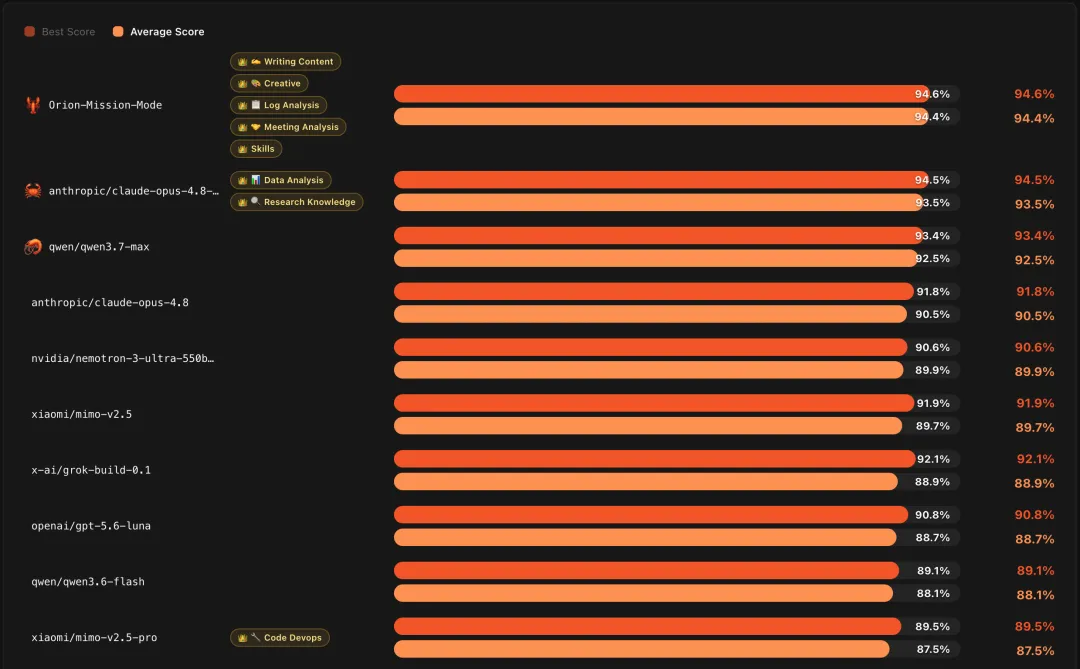
PinchBench global rankings
The difference of 0.2 percentage points between 94.6% and 94.4% means that the Center Assistant mission agent can maintain extreme stability during each run.
It is also notable for its performance in tool calling, multi-step task planning, and long-range execution.
Don't forget, literacy assistants are free.
At the moment, the entire industry is focused on the cost of Agent-crazy Token computing.
But in this gateway, Baidu directly executes this set of global top-of-the-line missions, locking it into the original Baidu App, without any paid walls.
You don't have to think about "can I use the book for a month" before you decide not to try it.
This is the most realistic difference between it and many similar products.
Let AI really work for peopleIn 2026, Big Model Collective Transformation Agent is no longer the news.
Over the past three years, the standard for measuring how bad an AI is is is "it answers no". Users open a dialog box, ask a question, answer a question, and do the rest themselves.
At the beginning of this year, the explosion of OpenClaw completely opened the minds of the entire industry.
The big model is "out of the box", can read files, can tune tools, can remember you across sessions, and can chat 24 hours a day.
Almost at the same time, big tech companies are pushing AI from "answers" to "activity".
The movement was intense and counted almost week after week.
The most typical example is OpenAI's release of GPT-5.6 "The Whole Barrel", with ChatGPT Work on the same channel.
Not only that, but at the Google I/O conference, Toshiba unveiled the Agentic Gemini, the next stage of AI that will act.
On the domestic side of the country, there is a lot of excitement. Different companies, different entrances, different names refer to the same thing:
Measuring how bad an AI is, the standard is changing from "say no" to "doesn't work".
But the gap between "doing it" and "doing it" is much deeper than imagined.
Therefore, when a third-party list is evaluated, the meaning of scores transcends the numbers themselves. It answers an extremely simple question of whether the task is entrusted to AI and cannot be reassured of the transaction.
26 years of searchingHe's practicing the Agent's skeleton.Why is Baidu doing this? The bottom is there.
The underlying capabilities of the literacy assistant, a large part of which comes from Baidu's more than two decades of research-engineered technology base.
Search engines and agents are technically highly synonymous.
Processes of search engines: user input query, system understanding intent, breakdown into retrieval tasks, call indexing system retrieval, result sequencing integration, and return to the user.
The process of the agent is almost the same: the user enters tasks, the system understands intentions, breaks down subtasks, calls tool execution, integrates results, returns them to the user.
Query understands the corresponding task, retrieves the call of the corresponding tool, and results order the corresponding result integration.
What search engines have been doing for twenty years is essentially a specialized version of Agent.
The "tools" for searching are only indexing systems, and Agent's tools are open.
As a result, Baidu's ability to accumulate in search engines can be directly paralleled to the Agent scene.
I'm not sure if I'm going to be able to do that.
The user enters "Cheapest tickets to Beijing to Shanghai" in the search box, and the search engine understands that this is a comparison requirement, breaking it down into several dimensions of departure, destination, date, price order, calling the flight data interfaces, and returning them in price order. This is almost no different from the processing process of Agent receiving "help me check the cheapest tickets to Beijing to Shanghai".
The literacy assistant improves memory and research analytics in two dimensions, and is directly related to the search baseline.
Memory capacity is measured by maintaining context in multiple rounds of conversation, and session understanding by search engines is the same sort of problem. Research analysis is independent retrieval, integration, and reporting, almost an advanced form of search engines.
In fact, the bottom line has always been to find the path from search to agent.
The wave transformed, and Baidu did it.
The link is as follows: