
It's the first time in the history of the world.
Claude, a former head of design, joined Musk's camp.
This is Jenny Wen.
Earlier this year, she was also responsible for the design of Claude and Cowork at Anthropic.
On October 23, Musk-owned Groc Bot launched its Vault insurance portfolio.
She posted the update on X, writing:
This is what we're up to today!
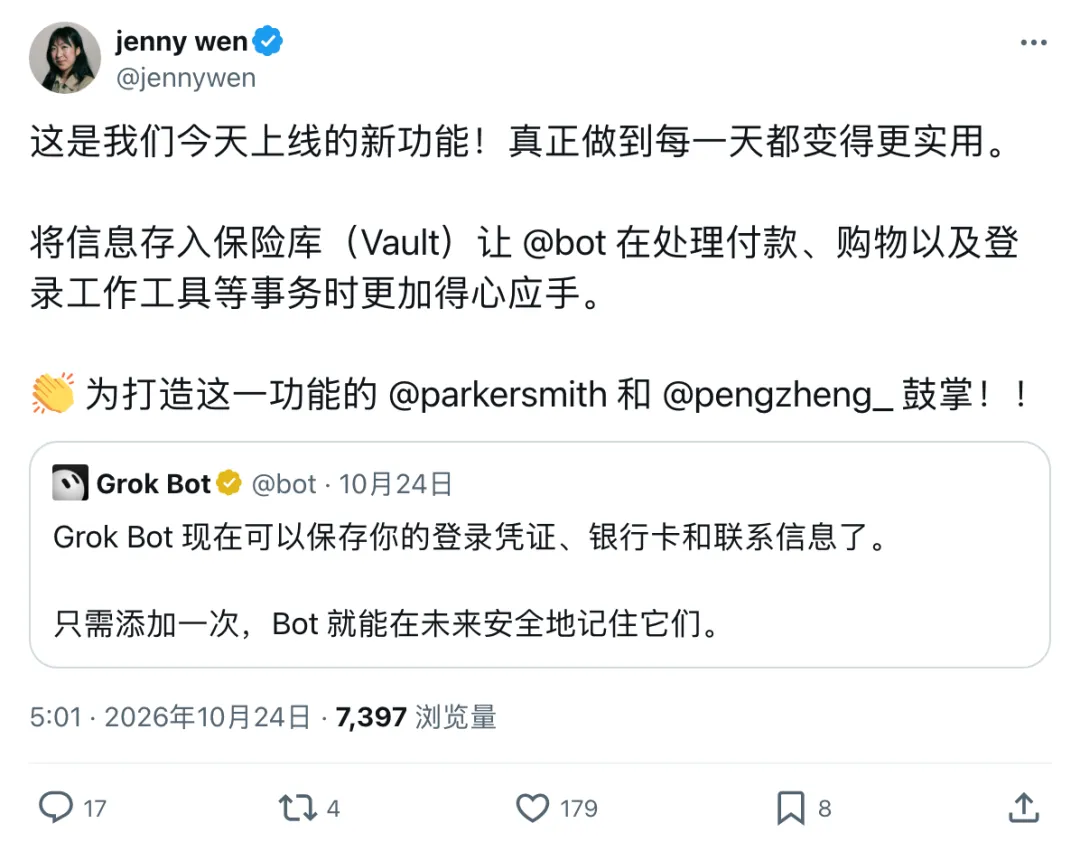
Jenny Wen's turn from Claude to Grock Bot began with a tweet in July this year.

On that day, she announced three big things about herself:
She left Anthropic, gave birth to a baby girl, and soon joined Cursor as head of design.
A month later, on August 14, SpaceX officially completed the acquisition of Cursor, and she joined the team at Camp Musk.
"Engineers in the wrong direction".Putting happiness on the whiteboard.In her self-introduction to X, Jenny Wen uses three words:
I'm a generalist, I'm a genius, I'm a realist, I'm an escapist, I'm an escapist.
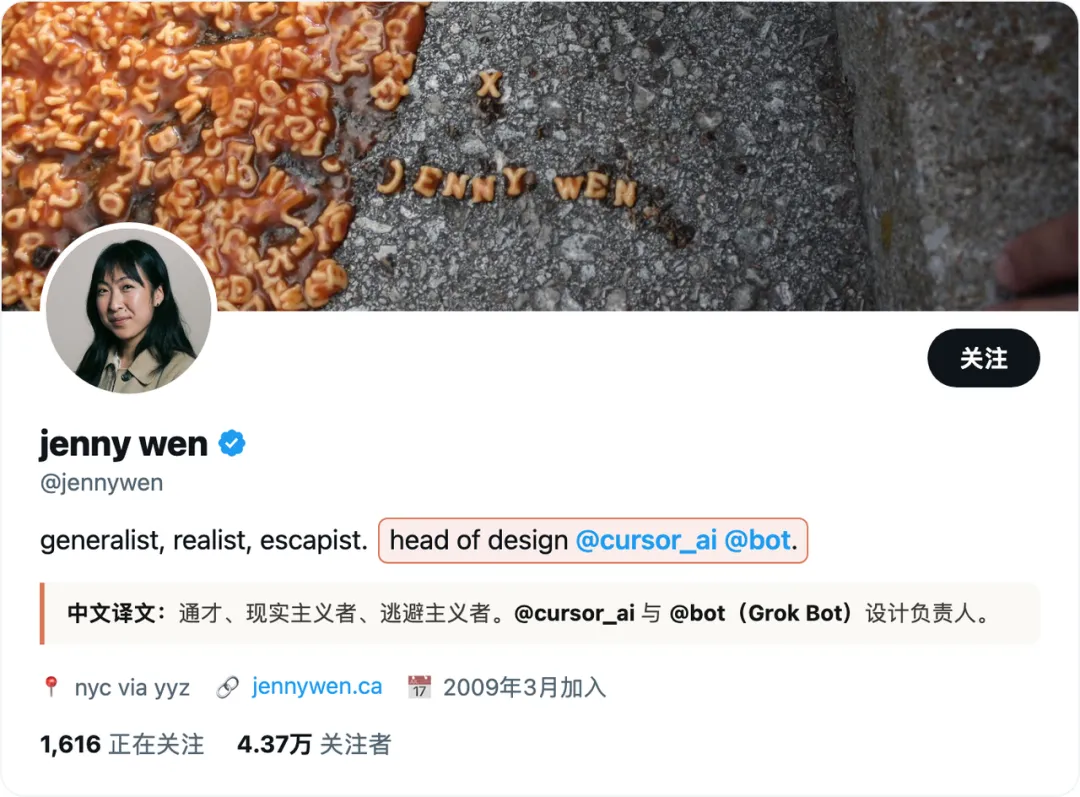
In her experience, these three words are wide-ranging and even contradictory, but they all speak well.
The so-called genius, her self-proclaimed "strange square designer", is deep enough.
The so-called reality, which is her motto, "It is what it is", is about listening to frustration and actually loosening oneself.
As for her escape, she spent a summer living in New York City, driving across Alaska.
It's been a long time since she's read a book, and it's been a long time since I've read it.
After studying urban planning at the University of Waterloo, she dropped out of school halfway through her studies and switched to systems engineering.
She later explained that she was bored and wanted to change to a more challenging, mathematical and scientific direction.
During her internship as a software engineer, working side by side with UX designers, she learned for the first time that there was a profession in the world that specialized in how to make fun of people.
Later in her career as a designer at Dropbox, she often mocked herself as a "misguided engineer" who tried to convince others, including herself, that she was a designer.
In 2020, she was the first designer to launch the whiteboard tool, FigJam, from scratch.
With no protracted PPT argument, she and the engineers directly used real-code handwriting to extract the prototypes of the stamps, facial expressions, and lighting chats, and a thick-skinned look into the meetings of her colleagues, please try it out there.
There was a lot of trouble, but the whole conference room was laughing.
"We know there's something good here". The colleagues laughed at the rough prototype, which was more persuasive than the number of matches.
In 2023, she hosted the main stage of the annual Figma User Conference Config, in front of a live audience of about 8,000 people.
Later, she worked as the Director of Design for Figma, in charge of designing products such as FigJam online whiteboards, Figma Slides presentation documentation tools, and more than a dozen designers.
Walk down the stage with 8,000 people.Return to the critically acclaimed review tableBeing the Director of Design at Figma and continuing to move up and down the management position seems to be the right choice.
She left Figma in January 2025 to join Anthropic as an independent contributor (IC) and redesign herself.
At the time, she was very clear: the middle management of the bowl will not have to be stable. It is difficult to understand what the team is going through without trying it first hand.
Instead of looking at the waves on the shore, it is better to jump into the water first.
After returning to the front line, her most boring assignment was to sit back at the judging table and be criticized.
It's really hard to be criticized, and it's so often criticized.
She admits that exposing the work to anyone is a very vulnerable thing in itself.
In September 2025, after spending most of her career on the sidelines, she opened fire on the conventional design community at the Berlin Hatch Congress, shockingly arguing that "the conventional design process is dead".
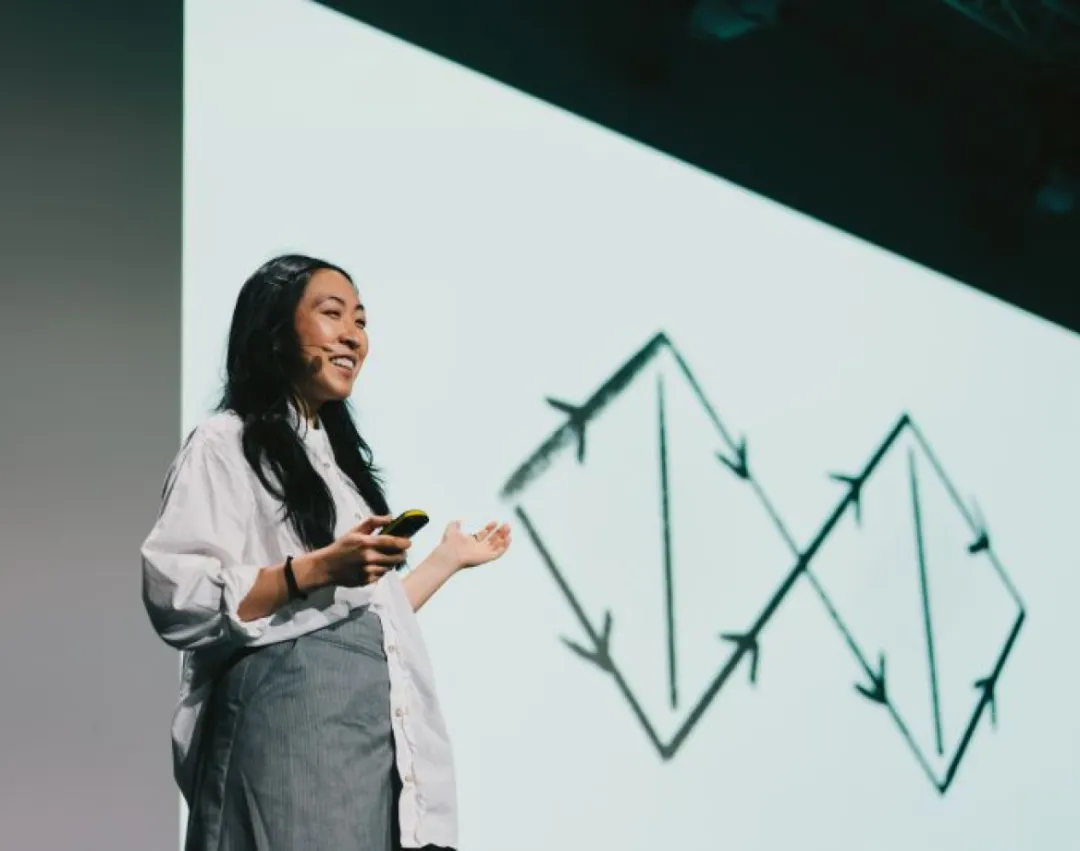
At the beginning of the show, she performed the entire course of the textbook and joked, "Congratulations, you've solved all the company's problems!"
Then she turned around and said, "That's not realistic, is it?"
She gave a vivid illustration: an old process like an IKEA manual can be spelled out like a billy bookshelf; when it comes to designing, you don't know what the final spelling is: a bookshelf, a desk lamp, or a hot dog.
More importantly, she said, the engineers at Anthropic were scrambling to write the "7 Claude" code at the same time, and even the engineers were worried about how to catch up.
Ironically, just three or four months after the speech, she looked back and thought it was "a little awkward".
Later, she spent the rest of her time painting and prototyping, cutting from 67 percent to 34 percent, spending the rest with the engineer or writing the code herself.
Someone in Slack said that some of the icons were distorted, and she went straight to @Claude and put the PR in.
The daughter of the self-deprecating "misguided engineer" turned around and forced herself to become a half-engineer.
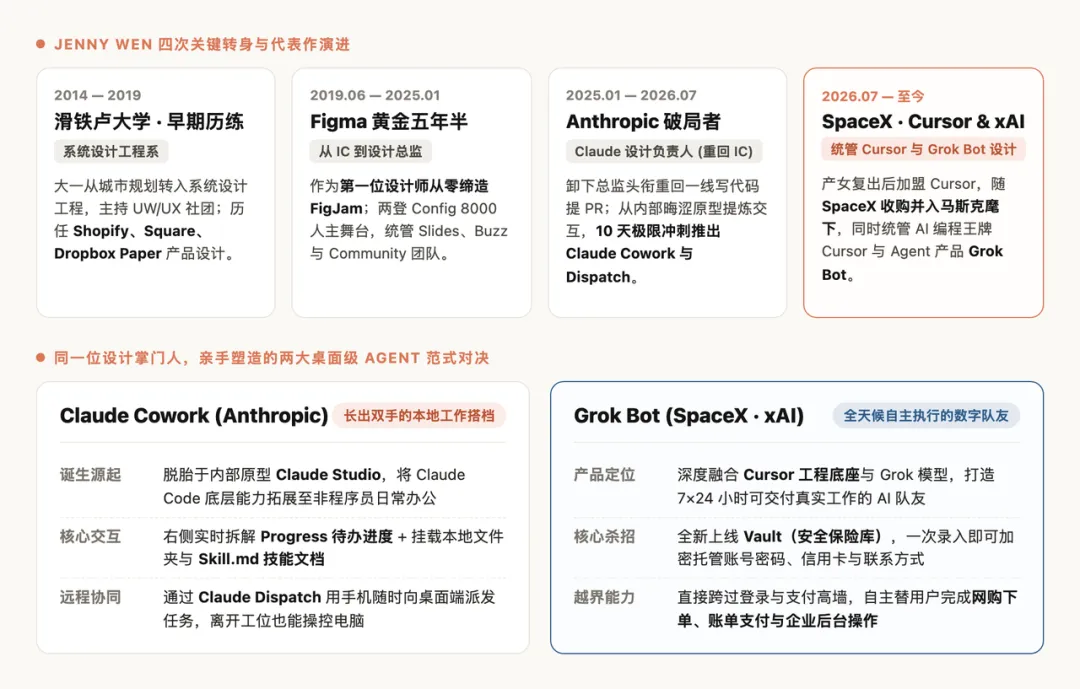
"I really don't understand" is a prototype.Covering the Shadows of CoworkIn January 2026, Claude Cowork was born in Yokohama.
One of the world's most beloved myths is that a small team of 10 days of lightning strike exploded in Silicon Valley.
She broke through the filter herself on the podcast:
It's not just 10 days, it's a lot more people.
Cowork's vision for what life will be like is what she first drew up in 2025.
The beginning of the story is a prototype Claude Studio within Anthropic in 2025, the interface is blurred, and the screen is full of skills, knowledge, and previews of Claude's work and production.
Her first reaction was honest: "I don't know why this is happening, I really don't understand".
Strangely enough, researchers and many colleagues were enthusiastic about it.
As an angel investor, she borrowed the "readability" sense from the venture capital circle: most of the things that people understand at first glance are not new enough, but they make the inner workings exciting, and it's worth continuing to dig and find out exactly where they are.
Later, the prototype team extracted the Skills Skills framework from the confusion.
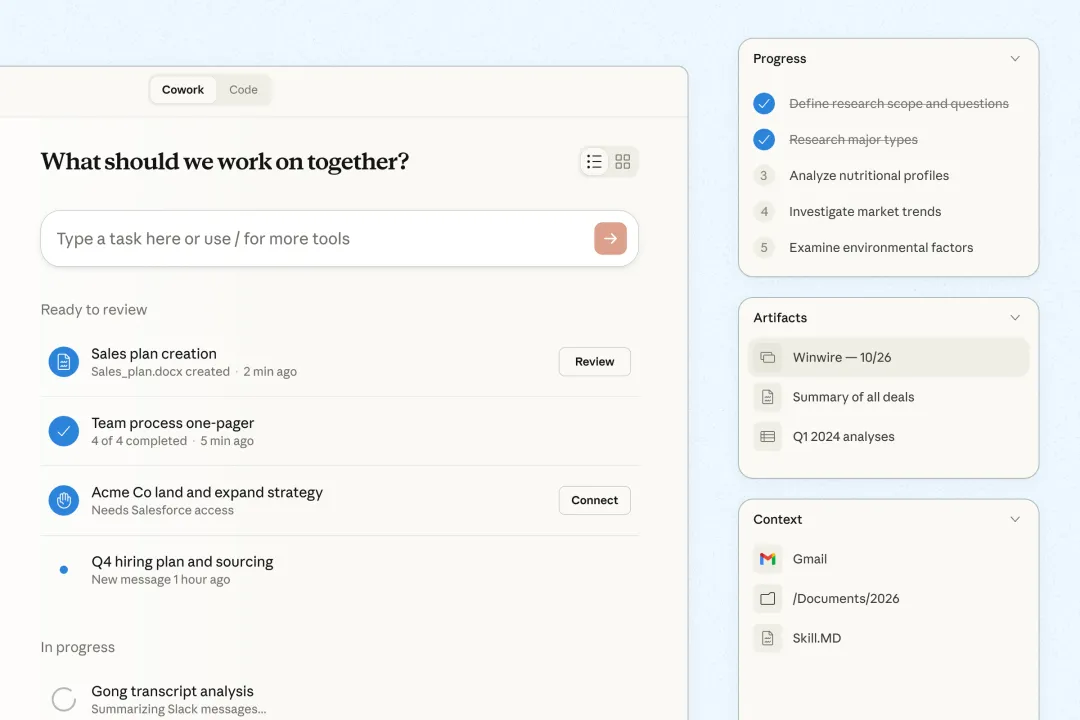
In Jenny's opinion, Claude was very good at organizing the scattered material that users had thrown away and organizing it into useful results.
But once the task runs long, the user wonders: What is it going to do? What files are they looking at? What steps are they taking now?
Therefore, when designing the Cowork, she focused on presenting two types of information: Claude's plans and assignments, and the context and documents it was using.
Putting the process in front of the eyes makes users feel more confident about delivering it live.
In March, this collaboration was extended to mobile phones.
Jenny participates in the launchClaude DispatchIt also allows users to switch tasks to Claude after he leaves the computer.
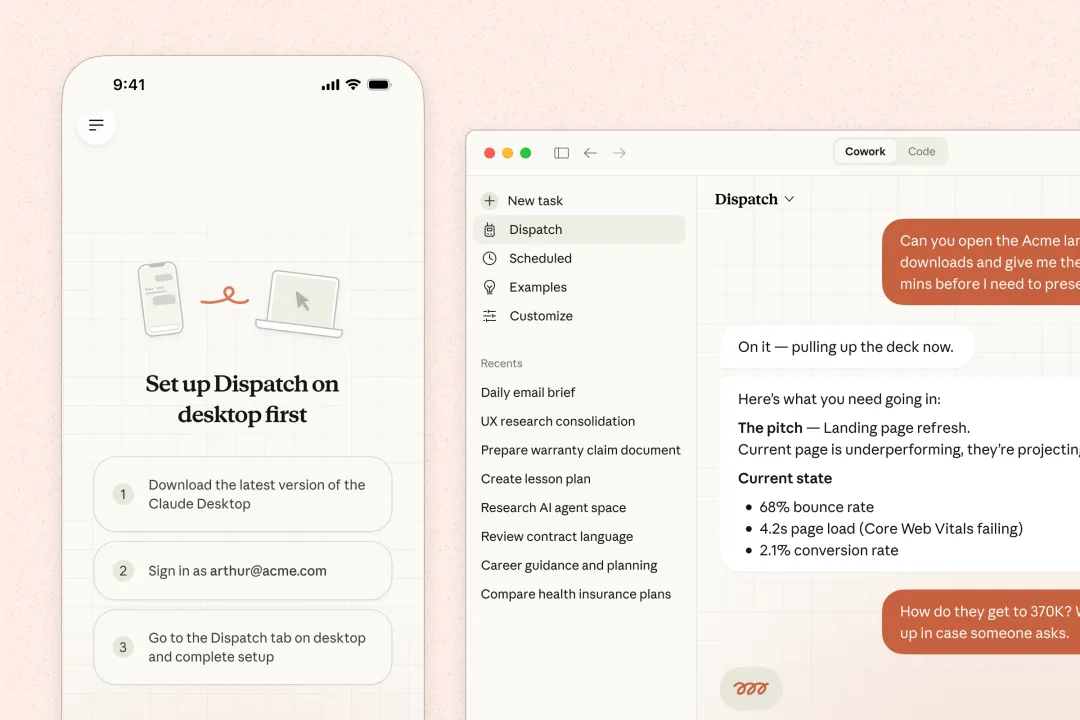
For example, when you go out to buy coffee, you can text and send the task to Dispatch. Claude Cowork or Claude Code on your computer is responsible for processing it, and you can view the results on your phone.
However, when asked what makes her most proud of Coork, the first thing that comes to her mind is that the product is finally online: "We've really sent it out".
She explains that if a product is made for too long, you can only see what's wrong with it. Putting it in the user's hands gives you a chance to see exactly what it can do and what needs to be improved next.
It's a one-way street.Next stop is SpaceX.Few people know that she is pregnant with her first child in the months that she has been working as a cowboy.
On March 23, 2026, she posted a somewhat reactionary note on her personal website:
Before that, she was a high-intensity roller coaster queen; after becoming pregnant, her body was the first to betray her ambitions.
She was tired of walking, sweating more easily than ever at a subway station; the exercise stopped, and her two muscles that she had trained hard seemed to be gone, and she didn't even want to go to a good crafts class.
Her hormonal changes made her sleepless at night, and she fell into a deeper fear when she couldn't sleep at night: the fear of having a baby would lead her into an irreversible "one-way door".
After becoming a mother, would the creativity, curiosity, urge and ambition that she cherished disappear? She even felt that the idea of pregnancy was almost "unclean".
It's good that the underbelly of realism in her personality helped her reconcile this feeling of contradiction and complexity.
She realised that mourning for the old days was true, and that it was true for the good motivations that were taking place in her body. "It is the most humane thing to be able to carry two seemingly opposite emotions at the same time".
In less than four months, her life and career have taken a new turn.
From being bored, dropping the title of director of Figma, returning to Anthropic, and joining the Cursor after becoming a mother, Jenny Wen has never followed the established promotion script of Silicon Valley.
When engineers are able to get multiple Claude-smart entities to write code and make prototypes of products at the same time, the more expensive it will be to stick to old processes and director titles.
What keeps you at the table is the courage to see change and start over again, and the ability to see opportunities and judgments from a variety of information.