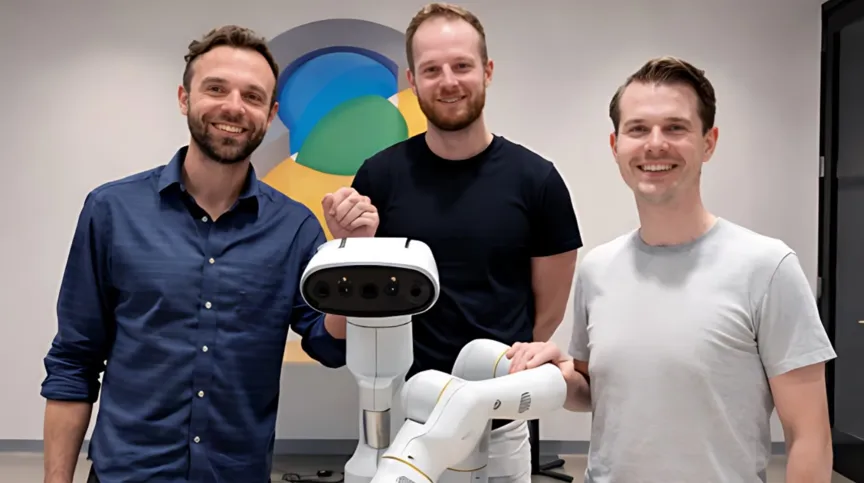
“ Physical AI's pricing power is slipping out of the hands of the giants.
Over the past six months, the overseas robot racetrack's funding list has been somewhat unusual.
But if you put a stamp on these deals, you'll find that the most valuable assets in this window are two software companies that don't have products, that don't have public revenues.
According to reports, Robotics General AI software company Physical Intelligence is talking about a new round of financing, with plans to raise at least $1 billion, and a post-investment valuation that could nearly double to about $20 billion, while the company has not yet released any commercialized products or generated revenue.
Almost at the same time, Robot Lab Machenta in London, England, took the $40 million seed wheel, setting the British seed wheel record in the field of basic robotic models, and it has not yet released a product.
The two companies share the same label in eight time zones: pricing for unverified capabilities.
But that's only half the story. Reading half a month of financing news, a clear migration trajectory is emerging. Overseas capital is undermining the valuation of the robotics industry, its ability to move from visible to invisible robots.
01.
The brain, the price of silicon itself
Physical Intelligence is the most prominent landmark in this price migration.
The roundup was led by former shareholders Avenir and Lux Capital. Before that, it had just completed its financing earlier this year with a valuation of about $11.2 billion; earlier this month, it opened up its latest robot model to external developers and allowed micromanagement.
From day one, PI has not bet on a single kernel, and the goal of the π series model is cross-tasking, cross-scenes, cross- kernel migration. Its self-positioning is always clear, and a general software layer for third-party hardware.
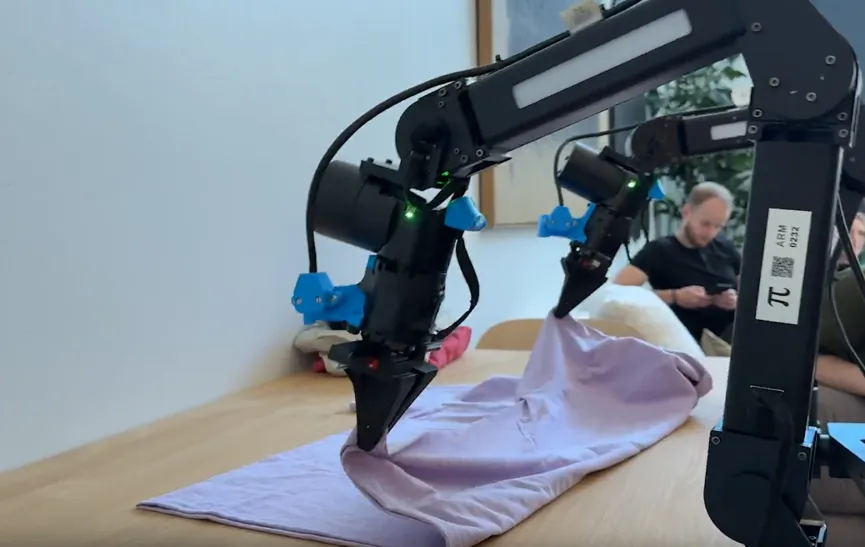
The market price tag for this position is about $20 billion, and the IP valuation in November 2024 is $2.4 billion. In less than two years, the valuation of the same zero-turnover company has more than doubled. Capital is paying a premium for an unrealized ability.
This is almost a script from the early years of the replicative language model. Commercialization can be postponed to take the place of the base model. The only difference is that this time the verification field switched from text to the physical world.
Looking downwards, the story of the seed wheel is more extreme. Robot Lab Machenta's core claim is to have only one sentence, allowing the robot to learn a task that requires only one demonstration. Creandum and USV are willing to jointly spend $40 million on this sentence, using plain and sincere funding, and building model stress testing with an early engineering team.
The seed cycle scale itself illustrates that in the context of early European investments, a more efficient robotic learning paradigm has been proposed as an independent infrastructure proposition.
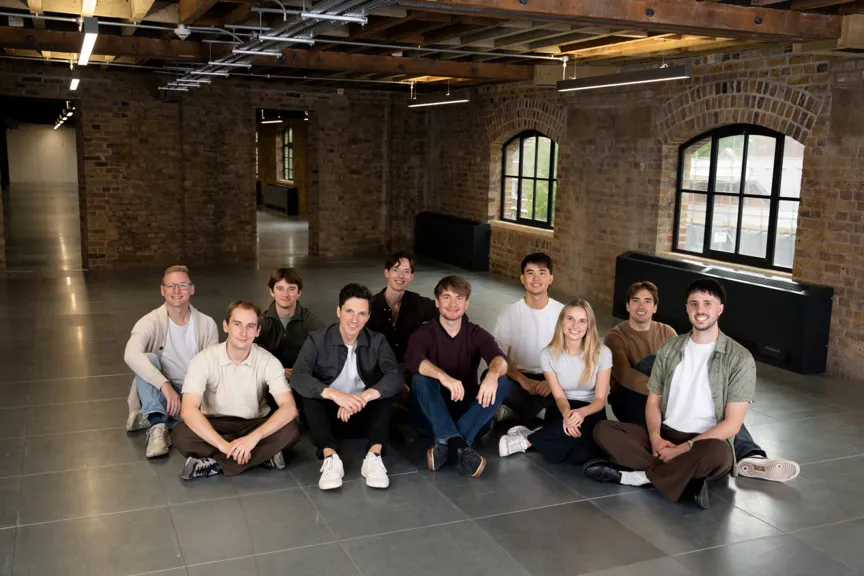
The same story continues to play out in Europe. French startup Bleu Robotics received a €5 million pre-seed to build an AI-powered general-purpose AI brainchild for industrial robotics, with the goal of reducing deployment time to an hour; Switzerland's Enact Intelligence in Zurich ended with a $30 million pre-seed in hiding, proposing to build an executor-based crawler robot neural system with a cranial crawler that would allow robots to have full body space perception.
It's easy to see that the real conventions of these four deals are not robots, but the cost of learning. A demonstration, an hour of deployment, a set of perceptual architectures based on executives.
The main battlefield of American brain companies was the general model of the scale rules, and early projects in Europe were more reliant on the learning efficiency curve itself, with the amount and density of funding deviating from the historical norm of European robot financing.
In traditional robotics economics, deployment costs are linear. Every new task has to be reprogrammed, re-labeled, re-modelled. The model company's bet is to compress this line into a number of curves.
02.
Layer of deployment: Capital starts paying for hours of open work
Formic's $50 million growth wheel provides a sample that can be digitally tested.
The Chicago-based company operates on a robot-as-a-service model, with customers paying monthly, no upfront capital expenditures, and Formic responsible for all aspects of robotics, software, maintenance, and financing. It operates hundreds of robots in more than 100 U.S. facilities, covering food, packaging, chemicals, aerospace, and defense customers, with a cumulative production runtime of more than 750,000 hours, claiming 99.6% of normal operating time and 97% of customer retention rates.
These figures mean that someone has already paid continuously for the operation of these robots, and the renewal rate suggests that this payment is not a one-time experiment. All the demos, papers and valuations in this round window may not have been realized for 750,000 hours.
The next step for Formic is to move from specific mission automation to general robotics platforms to metal processing, aerospace, defense and healthcare.
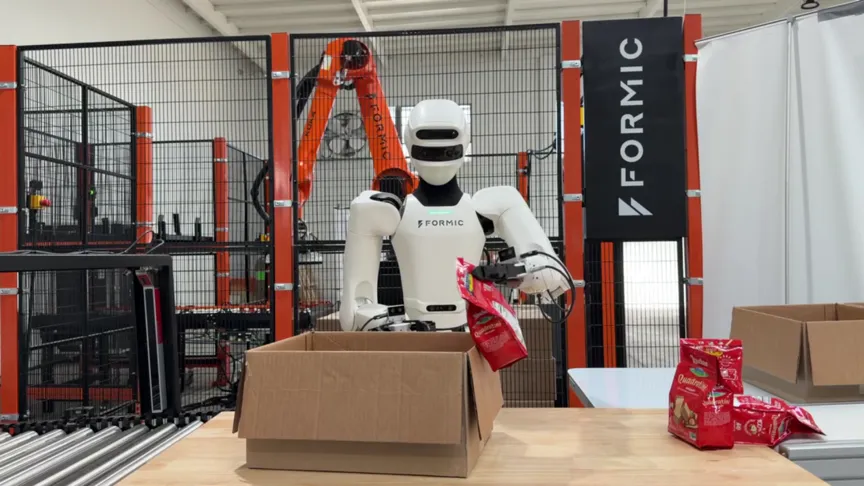
At the same time, Formic is collaborating with Physical Intelligence to use Formic's production data to adapt the basic model of IP to factory work. This collaboration reveals that the relationship is much more complex than the ability of the cerebrospinal cord to execute cerebrospinal fluid.
PI needs Formic's real output-line data to validate and fine-tune the model, and Formic needs PI's general ability to expand from specific task automation to general robotic platforms. The brain layer has an overwhelming premium on valuation, but the deployment layer has the most scarce fuel in the model, namely labeled, continuous, operational data generated under real production constraints.
This asymmetry means that the long-term power structure of physical AI does not necessarily have to be allocated according to the current valuation order. A deployment-level company with 750,000 hours of output line data, customer retention rates, and verifiable operational rates may increase its bidding power as its model capabilities gradually commoditize.
In addition, the $50 million structure of Formic is also noteworthy. $40 million in round B equity plus $10 million in asset support financing, which illustrates that deployment-level companies with real operational assets and cash flow visibility have begun to manage dilution with a more sophisticated capital structure rather than relying on equity financing.
On 29 October, American robotics company Foundry Robotics completed its oversubscribed $100 million A-Round financing. It operates its silicon-manufacturing, service silicon model, autonomous assembly plant, AI-powered robotic units with human manufacturing technicians, undertakes a total assembly of complex electromechanical products, with customers covering the defense and commercial sectors.
The funding will be used to expand the 130,000-square-foot plant to accelerate the deployment of AI models in real-world production lines.
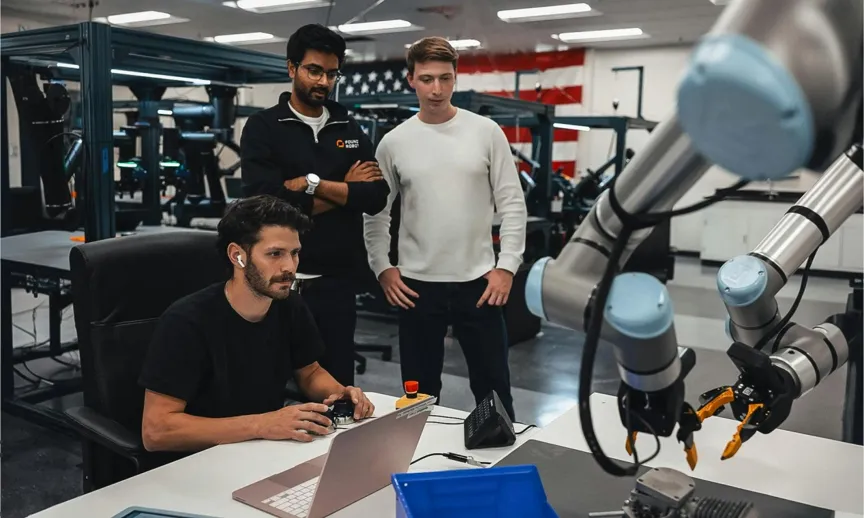
Bedrock Robotics' $600 million C-Round pushed the pricing of the plug-in implementation layer to the top of the window: after the investment was valued at $4.1 billion, a joint venture between CapitalG and Emergence, with a cumulative funding of nearly $1 billion. It is reported that its fully autonomous miners have completed payment operations in real commercial premises in August 2026.
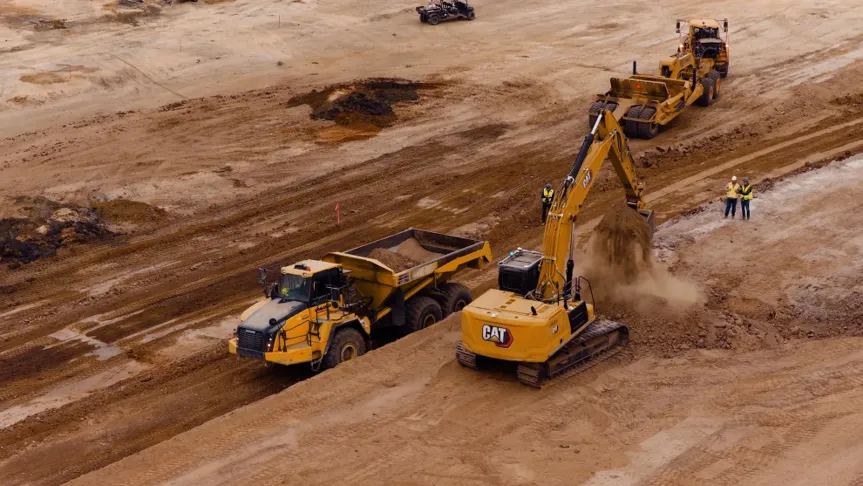
Taking these companies that have received funding in real-world applications together, it is easy to see that industrial automation is undergoing the same migration as cloud computing in the same year. From vending servers to vending machines to vending machines.
The robot's way of valuing is changing from trading to subscribing.
03.
Confirmation of payment
FORT Robotics has received approximately $20 million in additional funding from Tiger Global. The company, which provides a layer of trust for security and control of robots, also plans to land on NASDAQ through a merger with Newbury Street II, with the goal of becoming the first publicly traded company to be principally dedicated to physical AI security scale deployments.
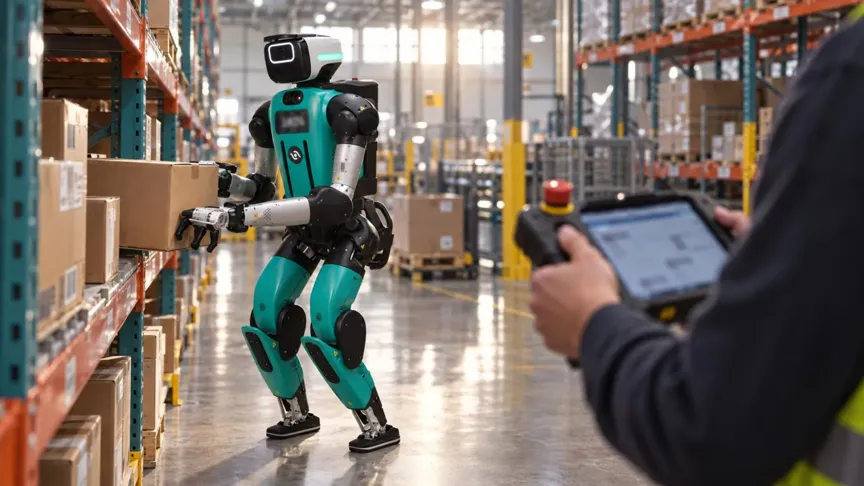
FORT's Trust Layer Layer Layer Layer is deployed in more than 19,500 units and more than 600 global customers, including Agility Robotics and Zoox. If it goes public, it will provide an open market pricing hub for the security infrastructure layer of physical AI.
Security protocols, control channels, fault response, these invisible layers of trust, are expected to become the payment channels of the robotic world. The more autonomous robots are, the more trust is needed.
On the application side, medical robot ZAP Surgical completed a $36 million financing, financed by Catalio, for the commercialization of its ZAP-X radiation surgical platform. Its self-protected, unprotected room design bypasses the site of traditional radiation equipment. It is a run-of-the-mill regulatory and clinical slow-track player, with capital buying certainty.
In the same window, the market opened up $20 billion for possibilities and $36 million for certainty.
Capital is fleeing Demo.