In recent years, there has never been a shortage of stories on the track of AI computing.
At this year's GTC conference in Berlin, Hu Jintao was featured with a group of adorable Microduck machines. The young Hu Jintao should stand up, sit down, turn their heads and blow the world by storm.
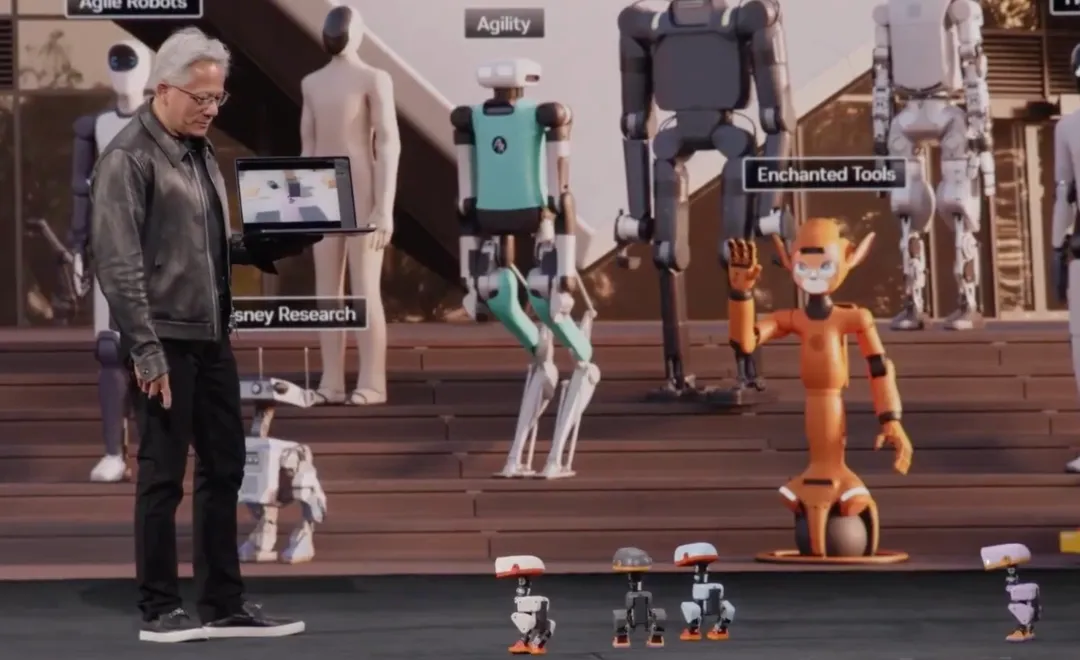
According to Huang Ren, the little yellow monkeys "were born on RTX Spark, trained on a bunch of supercomputers in the cloud, and learned the truth in digital learning".
Recently, the company held a media open day in Shanghai entitled "From the Model to the World". This is the first time since its launch that the company has systematically shown the full range of its products to the media.
A handheld version of "Microduck" was also featured on the Opening Day scene. It was a machine shooter made using 3D printing and manual assembly to perform "walk, knock, get up" and so on.
Unlike Ingrid's program, Ingrid's training for the Yellow Dragon is still dependent on the support of cloud computing; while the Intel Core's training for the Yellow Dragon Dragon completes the entire training process on one side device.
It is the newest end-to-end computing terminal of Zenfone TY1200, with a specific gravity rating of 300 TOPS, testing performance exceeding the Thor T5000.
On site, a centralized TY1200 terminal completed the entire process independently, from environment building, strategy training to real-time simulation, and the process of learning to walk in a virtual environment was presented in full. This was the first home-end product to implement GPU-accelerated physical simulation engine running locally.
In addition to the TY1200 edge-side computing terminal, the same platform was featured on the opening day, as well as the latest computing card bundle 300 cloud-side general-purpose GPU, a software bundle that "develops AI with AI".
Hardcore content warns. Next, we're going to focus on the edge and see what comes up with this little yellow-tailed train that will bring Invidia's cloud-based training to a local state-owned terminal.
TY1200: Fold cloud capabilities between dimensions
The emergence of lateral opportunities is primarily related to changes in model capabilities.
The Stanford HAI2025 AI Index cluster recorded a change: the smallest model with a score threshold of over 60% on the MMLU, a parameter scale that decreased from $540 billion in 2022 to $3.8 billion in 2024. It indicates that the model volume required to reach a certain capacity level is shrinking rapidly.
In the recent release of Jetson's new module, Invidia said that general-purpose robots and autonomous machines are moving from research institutions to the mass market, prompting a need for AI supercomputers capable of operating on the edge of a basic model, compact and high-energy AI.
At the same time, the edge-side computing chip itself is also evolving rapidly, with edge-side computing density and energy efficiency improving gradually. The two curves are intersecting, and the centrifugal TY1200 stands at this junction, becoming a new milestone in domestic edge computing.
TY1200 vs NVIDIA Thor T5000
This time around, it has become the focus of the media teachers in the whole chain training on the TY1200 end-to-end computing terminal.
In terms of nominal parameters, it has a density of 300 TOPS, which is quite remarkable. But more surprisingly, in actual tests, the performance of the TY1200 is even higher than that of the British Thor T5000.
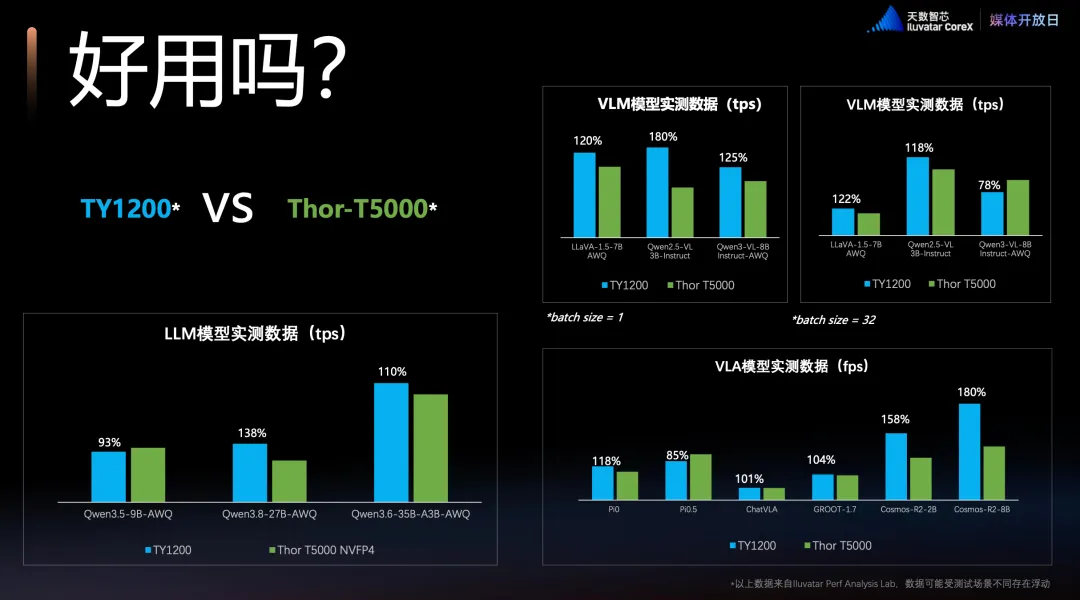
First, look at the LLM test data. Generate throughput is a measure of how many tokens can be generated in unit time, i.e. the basic unit for model processing and generating text. TY1200 runs the generation throughput of Qwen 3.8-27B-AWQ, reaching 1.38 times that of the Thor T5000 control program.
The TY1200 also achieved higher relative performance in visual language model tests capable of handling images and text. For example, when running Qwen 2.5-VL-3B-Instruct, it generated 1.80 times the throughput of the Thor T5000; and 1.18 times the batch size at 32.
In VLA-related tests, the performance of the TY1200 on Cosmos-R2-2B and Cosmos-R2-8B was 1.58 and 1.80 times that of Thor respectively.
TY1200 returned the first Token in 0.223 seconds after the two devices received the same prompt, the Tor T5000 in 0.411 seconds; the TY1200 then generated 30.21 Token per second, while the Thor produced 24.46 Token per second.
Unlimited space on the opening side
As computing moves from cloud to local, the boundaries of AI applications expand as well.
More and more models that are free of cloud computing and even able to train locally not only mean fewer delays, better data privacy protection, but also give AI more real-world scenarios like labs, hospitals, and robots.
In the lab, AI is changing the way researchers process data.
In conjunction with the University of Haifa's Institute of New Energy and the Permanent State Battery Association, the Institute has developed a vertically oriented AI smart body for energy storage and power generation, and has deployed a battery material analysis experimental platform on the campus of the Golden Gate University of Haifa. With the computational support of the TY1200, the system opens the entire process from professional instrument data collection, cleaning tests, structured repositories to intelligent analysis, report generation, and can generate analytical reports in only about two minutes.
In complex dynamic environments, machine dogs demonstrate the real-time perception of end-to-end AI.
The live video simultaneously presents the first view of a third-person image and a machine dog. After the camera captures a human face, the system completes target identification, the machine dog follows the target immediately.
In the museum, a device can also be used for "day work, night training".
TY1200 is an intelligent guidance service that supports vision, voice and large models during the day, and is used at night to train small models in CV. This model enables end-to-end devices to perform daily reasoning tasks as well as to participate in model updates during the off-peak period, improving the utilization of computational resources.
In hospitals, end-to-end AI has entered the real service scene.
Calculator-supported companion robots provided by TY1200 have been deployed in Shanghai's Solar Rehabilitation Center to provide path guidance, diagnostic process guidance, and other services to the visually impaired. These applications also need to combine environmental perception, information understanding, and on-site action with simple voice interaction, which places higher demands on end-side computing.
End-to-end computing consumption patterns are shifting from "connected cloud reasoning" to "independent training - reasoning - deployment of the entire chain".
It's a perfect blend of edge products with "calculation layering".
Why would a general-purpose GPU manufacturer bring its computing capabilities even further to desktops, labs, or even robots?
On the opening day, Chen Feng, head of the Tianjin Zhejiang product market, gave three reasons: business has changed, technology has changed, and commercial resources have changed.
First, with the rise of physical AI, more and more data is generated directly from the real world, and the demand for real-time response to scenarios such as robots and industrial devices is also increasing. At the same time, businesses place greater emphasis on data security and privacy, and the demand for sensitive information such as contracts, finances, and source code is greater.
Second, models are becoming increasingly "small and strong". In the past, tasks that required a larger parametric scale to complete can now be handed over to smaller models. This means that end-to-end devices are now able to carry more and more truly useful AI capabilities.
Finally, there is an economical note. As AI moves from fresh to large-scale applications, enterprises begin to seriously calculate Token costs, device inputs and long-term efficiency. For high-frequency, stable local tasks, end-to-end deployments have the opportunity to reduce the cost of continuously calling cloud APIs.
The three forces together drive the real-world demand for "alignment layering". Not all AI needs require cloud services, complex tasks are taken over by the cloud, real-time requirements are high, and tasks that are suitable for on-premises processing sink to the edge, so that each AI is used in the most valuable position.
For general-purpose GPU manufacturers such as Intel Core, the edge of the layout also has an important foundation: the GPU architecture, software packaging and model optimization experience accumulated in the cloud can be replicated further to the edge.
This is also the reason why the company's central product line emphasizes "end-to-end cloud homologation". Models are trained in the cloud, deployed at the edge, and reduce the cost of model migration and application adaptation through a unified GPU architecture and software ecosystem. For customers, what is gained is no longer just a computing device, but a set of computing capabilities that can penetrate the cloud edge.
Layered computing opens up the possibility of more commercialization and poses different requirements for the shape and capability of the end-side product. Different scenarios vary greatly in the size, power consumption, shape of the equipment and deployment, and end-side products need to have sufficient choice.
As a result, the gradientation of the product matrix is becoming a common choice for end-to-end computing manufacturers. For example, Invidia's Jetson product line covers different computing ranges from 70 TOPS to 2000 TFLOPS to accommodate the diverse demands of computing from lightweight edge AI to high-performance robots.
For this reason, the Zen Center series introduced by Zenith Intellect is not a single arithmetic terminal, but constructs a complete product matrix that covers different scenarios, different arithmetic requirements, and can be summarized as "one set of ecologies, two forms, five products", so that the concept of arithmetic layering really falls to the product level.
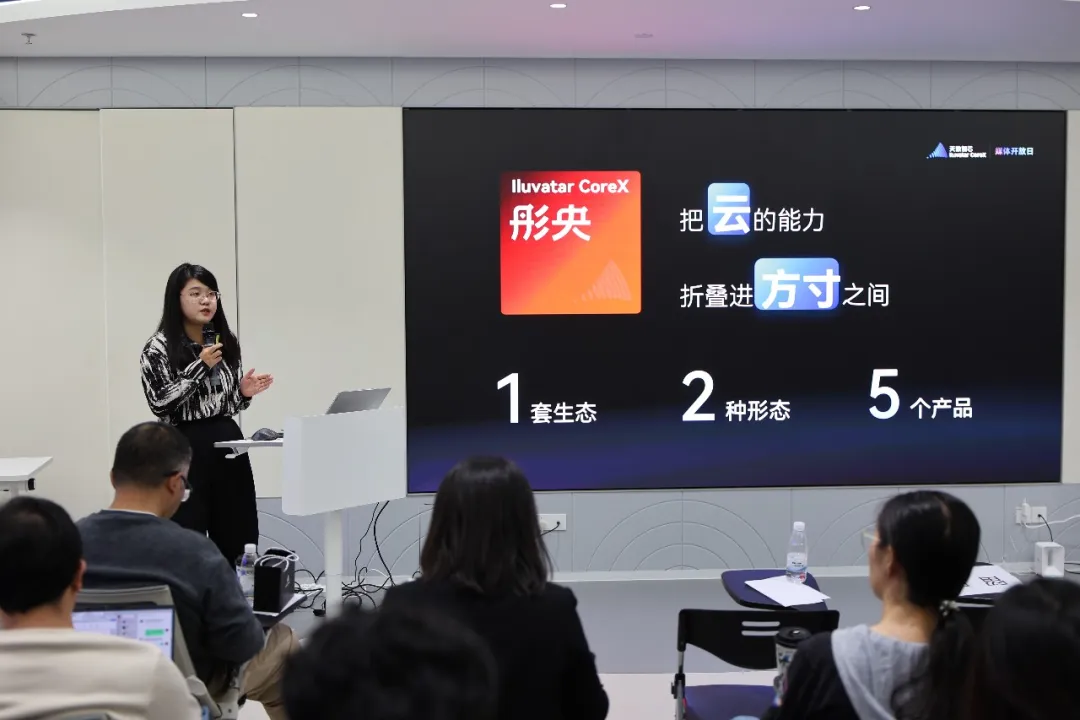
Among them, "one ecosystem" refers to an end-side that uses the general GPU architecture and complete software packages of the cloud to allow the cloud and the end-side to share a technical ecosystem; "two forms" are for R&D clients, supporting flexible integration modules, and end-to-end computing for business customers; "five products cover different computing ranges from lightweight to flagship, meeting diverse end-side computing needs".
Using AI to develop AI, engineering experiences to serve millions of developers
For a long time, CUDA's ecosystem has been built largely on decades of accumulated arithmetic and millions of developers' experience.
The programming capabilities of large models are changing everything. In February, byte-bouncing Seed and Qingdao University AIR released CUDA Agent to write a high-performance CUDA Kernel using a large-scale AI reinforcement training model, generating Kernels that are 100%, 100% and 92% faster than PyTorch, respectively, in three difficulty sub-sets of KernelBench.
In addition, how much code needs to be modified when the model moves from the cloud to the local area, whether tools can continue to be used, and whether subsequent versions can be upgraded smoothly. For general-purpose GPU manufacturers such as Intel Core, cloud-accumulated software chips and model optimization experience are the basis on which the layout edge can continue to be used.
With the launch of Jetson Thor in 2025, InVida focused on physical AI and robots, and emphasized cloud and edge development by supporting software plugins. Its JetPack 7 support for the unified installation of CUDA on the Arm platform also reflects the direction of reducing cross-platform development costs.
In a wave of rapid development of the smart body, Intel is introducing Agentic AI into GPU software development, making the development, adaptation and optimization of previously highly reliant on engineer experience gradually move towards automation.
The core idea behind software development is the three levels of "easy to use, easy to optimize, easy to develop".
In the past, configuration of GPGPU environments often took several hours. By optimizing the deployment process, daytime computing software makers shortened the deployment time of a large model PD to 10 minutes, allowing developers to enter the modeling phase faster.
Easy to Optimize makes performance optimization more efficient. GPU performance optimization has always been a highly reliant on engineering experience. With the help of the automation toolchain, the day-to-day computing software shortened 7 days of optimization work to 2 hours under typical scenarios.
Easy to Develop is the most noteworthy breakthrough. As the first domestic GPGPU manufacturer to have deep access to FlyDSL, Intel has combined FlyDSL with the Agentic AI development paradigm, which would have taken 10 people a day to complete the Kernel development task, and is now expected to be completed at 1 person-hour level.
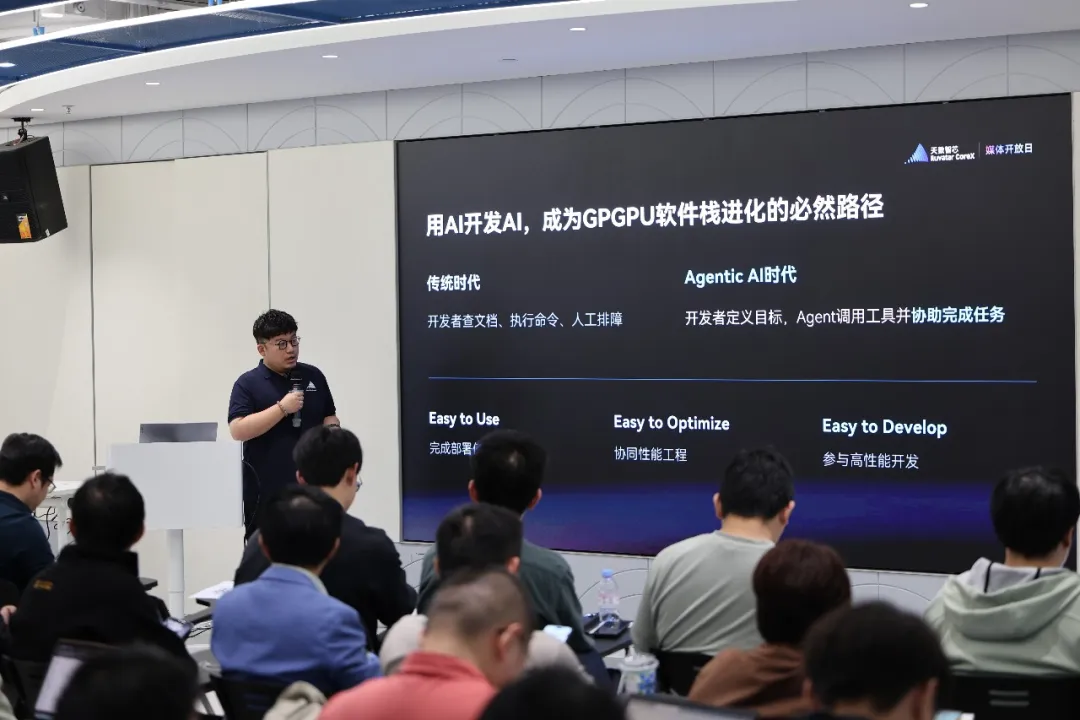
The methodology is summarized as "developing AI with AI". When the large model itself becomes a tool for GPU software development, the GPGPU ecosystem will shift from human-powered stacking to AI-driven automation, which is particularly important for a thriving domestically produced GPU ecosystem.
"Agentic AI enables an engineer's experience to continue serving tens of millions of developers".
Written at the end
National computing is undergoing a coming of age ceremony.
Over the past few years, the track has never lacked stunning parameters and performance indicators. But what's really scarce is the courage and courage to bring products to the stage, to make performance data public, to accept real testing and market testing.
A few years ago, domestic computing cards played more of a "back-up" role. When supplies were limited, customers were willing to make concessions in availability and give enough inclusion to performance gaps and ecological shortcuts. Today, the domestic computing industry is crossing an important threshold: it is pursuing rapid expansion from the past, increasingly focusing on real output and long-term use value.
According to the National Data Agency, Token has become the "settlement unit" for connecting technology supply and business needs. Since this year, some large model enterprises have exceeded the full-year revenue of 2025 in just 20 days. New business logic based on Token billing is accelerating.
Now, we're going to use the same metric to measure all the arithmetic products: "high-quality arithmetic".
High efficiency, predictability and sustainability are the core logic of high-quality computing, and the questions that must be answered when domestic computing moves from performance to real industrial competition.
Along this line, Intel is attempting to connect cloud GPUs, AI software chips and end products: the cloud is responsible for large-scale Token production, software chips reduce development and adaptation costs, deplete reusable capabilities, and the end-side really allows intelligence to enter more physical scenarios. As applications continue to land, new demands and feedback from real-world scenarios can in turn drive continuous model, software, and hardware transformation.
The celestial sphere refers to this mechanism of mutual promotion as the "reinforcement cycle".
When performance catch-up becomes the foundation, the real gap will be whether to convert computational advantages into application values, and then let applications in turn drive technological evolution.
When customers are neither tolerant of "domestic product" nor hesitant of "domestic product", our computing industry is truly successful.
Lastly, the next-generation TY2000 is predicted to be the next generation of home-side computing, which is expected to reach 600T!
© THE